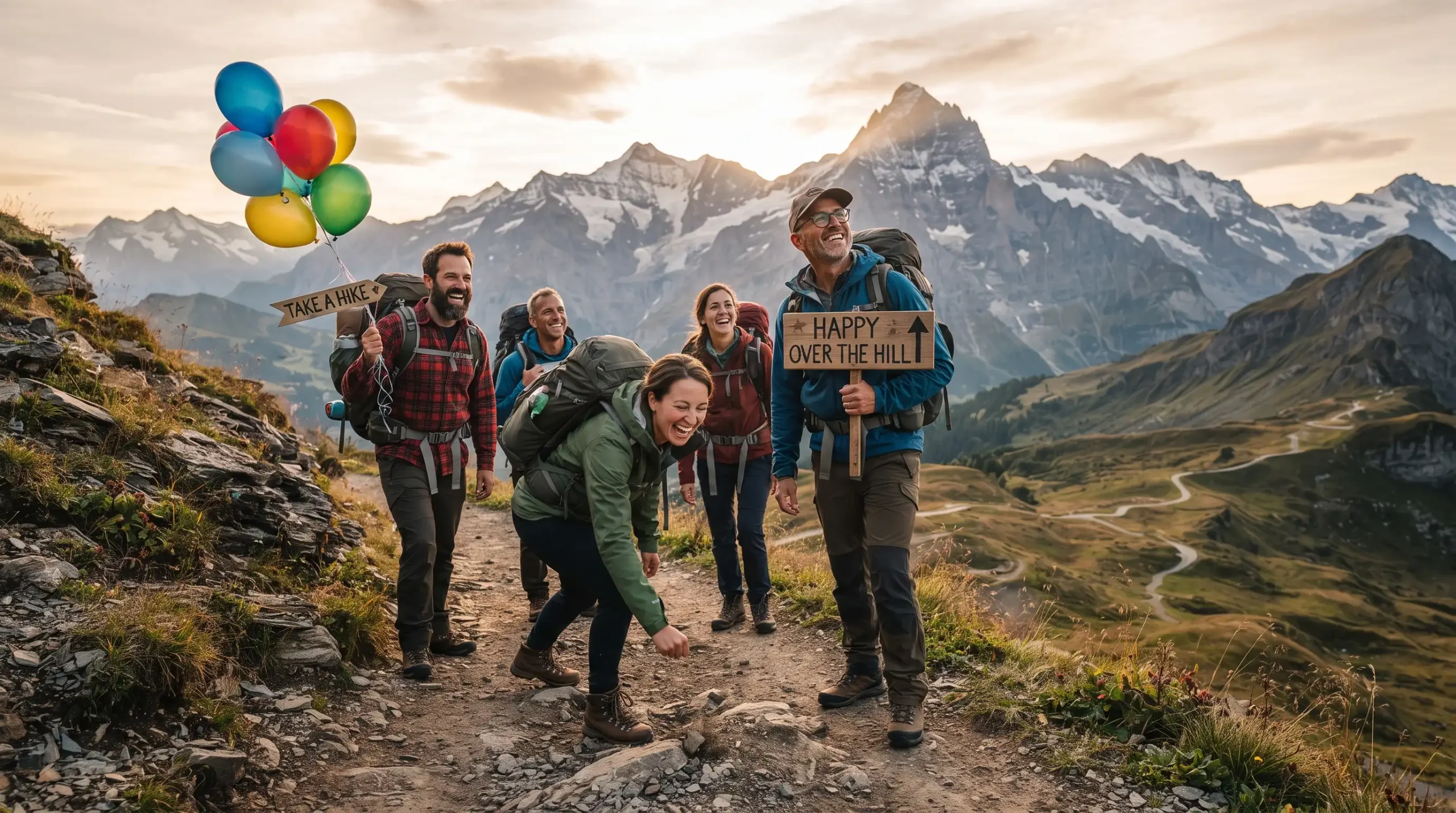
Hiking Idioms: 35 Common Expressions, Meanings, and Everyday Examples
Hiking idioms are expressions inspired by walking, trails, mountains, and outdoor adventures that have taken on figurative meanings in everyday English. While some idioms originated from hiking and travel, others simply use trail or mountain imagery to describe life’s challenges, decisions, or progress.
Whether you’re learning English, writing about the outdoors, creating social media captions, or simply want to sound more natural in conversation, understanding hiking idioms can help. Below are some of the most common expressions, along with their meanings and examples.

What Are Hiking Idioms?
A hiking idiom is a phrase that uses hiking, trails, mountains, or outdoor travel as a metaphor rather than describing an actual hike.
For example:
- “Blaze a trail” rarely means physically marking a hiking route. It usually means being the first person to do something new.
- “Take the high road” usually refers to choosing the more ethical or respectful response during a disagreement.
These expressions are common in American English and appear in everyday conversations, books, business settings, and media.
Why Hiking Idioms Are So Popular
Outdoor activities naturally represent progress, obstacles, choices, and achievement. Because nearly everyone understands the idea of climbing a hill or following a path, hiking-related language creates vivid mental images that make communication more memorable.
Many hiking idioms are used even by people who rarely spend time on hiking trails.
Common Hiking Idioms and Their Meanings
| Idiom | Meaning | Example |
|---|---|---|
| Blaze a trail | Be a pioneer | She blazed a trail for women in engineering. |
| Take the high road | Act with integrity | He took the high road instead of arguing. |
| On the right path | Making good decisions | Your career is on the right path. |
| At a crossroads | Facing an important decision | I’m at a crossroads in my career. |
| Uphill battle | Very difficult challenge | Winning the case was an uphill battle. |
| Down the trail | Later in the future | We’ll discuss that down the trail. |
| Rocky road | Difficult period | Starting the company was a rocky road. |
| Reach the summit | Achieve a major goal | After years of work, she reached the summit. |
| Climb the mountain | Overcome a major obstacle | He climbed the mountain of recovery. |
| Lose your footing | Lose confidence or control | The company lost its footing after the merger. |
35 Hiking Idioms With Examples
1. Blaze a Trail
Meaning: Be the first to create a new path or idea.
Example: She blazed a trail in renewable energy research.
2. Take the High Road
Meaning: Respond with honesty, maturity, and respect.
Example: Instead of arguing online, he took the high road.
3. On the Right Path
Meaning: Moving toward success or the correct decision.
Example: Your study habits show you’re on the right path.
4. At a Crossroads
Meaning: Facing an important life decision.
Example: After graduation, she found herself at a crossroads.
5. Uphill Battle
Meaning: A difficult task requiring significant effort.
Example: Convincing everyone was an uphill battle.
6. Down the Trail
Meaning: At some point in the future.
Example: We’ll revisit the budget down the trail.
7. Rocky Road
Meaning: A period filled with problems.
Example: Their first year in business was a rocky road.
8. Reach the Summit
Meaning: Achieve a major objective.
Example: Years of practice helped him reach the summit of his profession.
9. Climb the Mountain
Meaning: Overcome a major challenge.
Example: Recovering from the injury felt like climbing a mountain.
10. Lose Your Footing
Meaning: Become unstable or lose confidence.
Example: The team lost its footing after several key employees left.
11. Find Your Way
Meaning: Determine the right direction in life.
Example: College helped her find her way.
12. Follow the Trail
Meaning: Pursue clues or evidence.
Example: Investigators followed the trail of financial records.
13. Take One Step at a Time
Meaning: Make gradual progress.
Example: Learning a new language takes one step at a time.
14. Go Off the Beaten Path
Meaning: Try something unusual or less common.
Example: We chose a restaurant off the beaten path.
15. Stay the Course
Meaning: Continue despite difficulties.
Example: The coach encouraged everyone to stay the course.
16. Hit the Trail
Meaning: Begin traveling or hiking.
Example: We hit the trail before sunrise.
17. Leave No Stone Unturned
Meaning: Make every possible effort.
Example: The detectives left no stone unturned.
18. Light at the End of the Tunnel
Meaning: Signs that a difficult period is ending.
Example: We finally saw light at the end of the tunnel.
19. Go the Distance
Meaning: Finish something successfully.
Example: She had the determination to go the distance.
20. Clear the Path
Meaning: Remove obstacles.
Example: New policies cleared the path for growth.
21. Pave the Way
Meaning: Create opportunities for others.
Example: Early researchers paved the way for modern medicine.
22. Take a Detour
Meaning: Temporarily change direction.
Example: My career took a detour into marketing.
23. Back on Track
Meaning: Return to progress.
Example: The project is finally back on track.
24. Walk the Walk
Meaning: Support words with actions.
Example: Great leaders walk the walk.
25. Keep Moving Forward
Meaning: Continue making progress.
Example: Even after setbacks, she kept moving forward.
26. A Long Climb
Meaning: A slow path toward success.
Example: Building the business was a long climb.
27. The Home Stretch
Meaning: The final stage of a task.
Example: We’re in the home stretch before graduation.
28. Chart Your Own Course
Meaning: Make independent decisions.
Example: He chose to chart his own course.
29. Take the Scenic Route
Meaning: Choose a slower but more enjoyable approach.
Example: She took the scenic route through her career.
30. Peak Performance
Meaning: Performing at the highest level.
Example: Athletes train to reach peak performance.
31. Reach New Heights
Meaning: Achieve greater success.
Example: The company reached new heights this year.
32. Face an Uphill Climb
Meaning: Deal with a difficult situation.
Example: Small businesses often face an uphill climb.
33. Walk in Someone’s Shoes
Meaning: Understand another person’s perspective.
Example: Try walking in her shoes before judging.
34. Keep Your Eyes on the Trail
Meaning: Stay focused on the goal.
Example: Ignore distractions and keep your eyes on the trail.
35. Every Step Counts
Meaning: Small actions contribute to success.
Example: Saving a little each month proves every step counts.
Hiking Idioms vs. Hiking Quotes vs. Hiking Sayings
| Type | Purpose | Example |
|---|---|---|
| Hiking idiom | Figurative expression | Blaze a trail |
| Hiking quote | Memorable statement by someone | “The mountains are calling…” |
| Hiking saying | General phrase about hiking | Take only pictures, leave only footprints |
Idioms have meanings beyond the literal words, while quotes and sayings are often intended to be understood literally or as inspirational messages.
How to Use Hiking Idioms Naturally
The best hiking idioms fit naturally within the conversation. Instead of using several in one sentence, choose the one that best matches your message.
For example:
- In business: “We’re on the right path.”
- In school: “Final exams are the home stretch.”
- In personal growth: “I’m taking things one step at a time.”
- During disagreements: “Let’s take the high road.”
Using idioms appropriately makes your writing and speech sound more fluent without feeling forced.
Common Mistakes to Avoid
Some hiking expressions are often confused with similar phrases.
- Don’t use “blaze a trail” when you simply mean walking on a trail. It usually refers to innovation or leadership.
- “Take the high road” refers to behaving ethically, not choosing a higher hiking route.
- “At a crossroads” represents making a decision, not standing at an actual trail intersection.
- Avoid mixing multiple idioms together in a single sentence, as this can make your writing confusing.
FAQ
Conclusion
Hiking idioms bring outdoor imagery into everyday communication, making ideas about progress, determination, leadership, and decision-making easier to understand. Expressions such as “blaze a trail,” “uphill battle,” and “on the right path” have become part of everyday American English because they paint clear mental pictures while communicating deeper meanings.
Whether you’re improving your English vocabulary, writing creatively, or adding variety to your conversations, these hiking idioms provide practical expressions you’ll encounter regularly in both spoken and written English.






One Comment