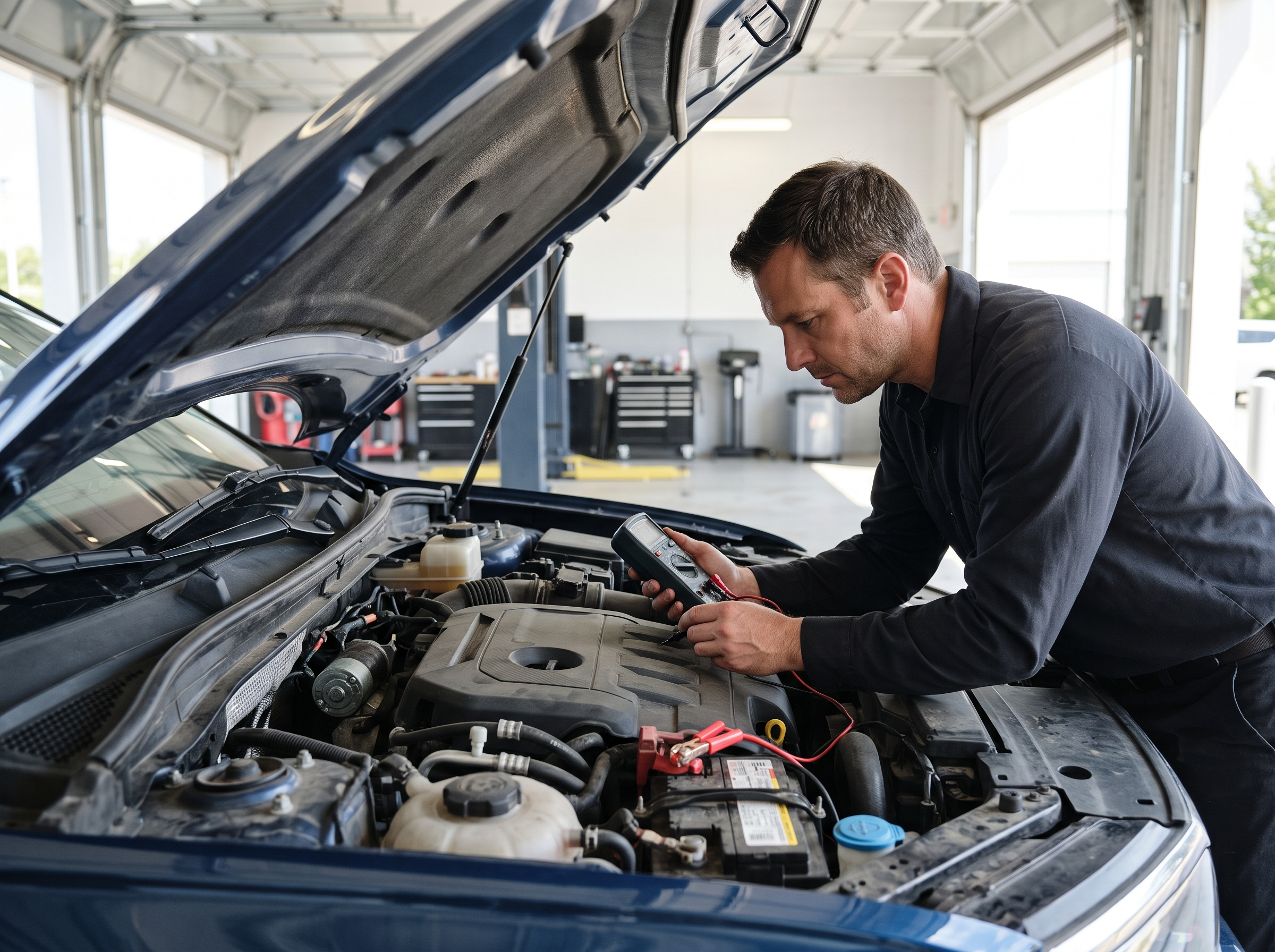
Starter or Battery? How to Tell What’s Wrong With Your Car
When your car will not start, the first question is often whether you have a bad starter or a weak battery. Both problems can prevent the engine from starting, but they often produce different warning signs. A weak battery may cause dim headlights, rapid clicking, or slow engine cranking, while a failing starter may produce a single click even when the dashboard lights still work.
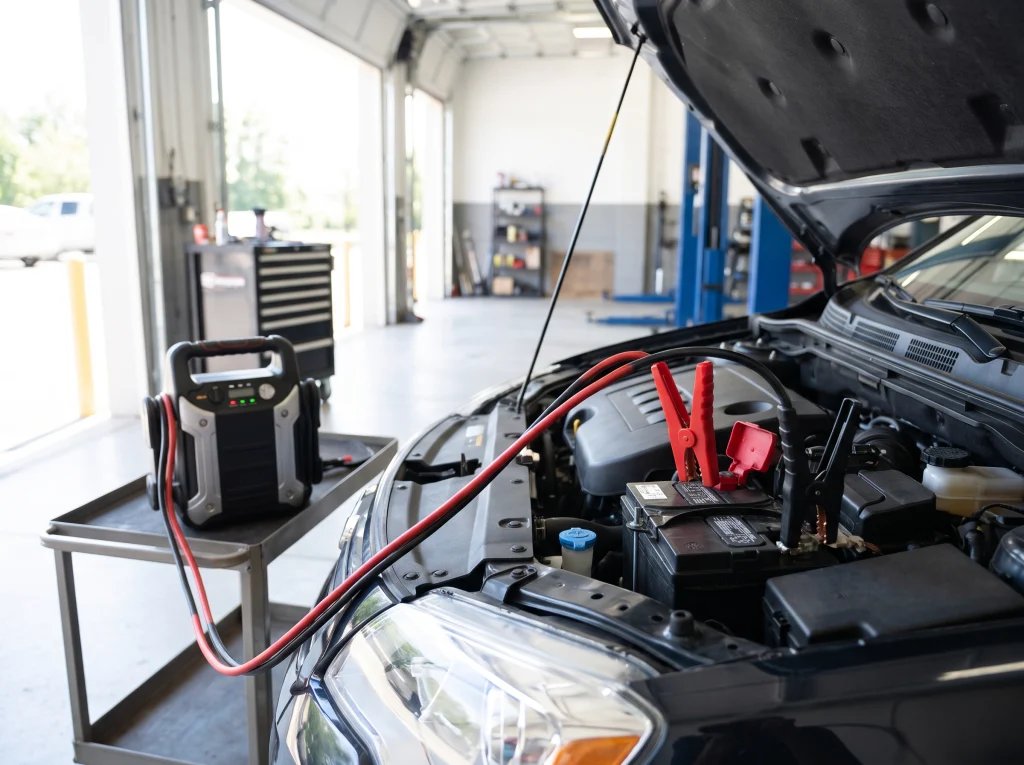
The easiest way to narrow down the cause is to pay attention to what happens when you turn the key or press the start button. A jump-start may also provide a useful clue, although it cannot confirm the diagnosis on its own. This guide explains the differences between starter and battery problems, the symptoms to watch for, and when professional testing is necessary.
Starter or Battery: What’s the Difference?
A car battery supplies the electrical power needed to start the engine, while the starter motor uses that power to turn the engine over. If the battery cannot deliver enough current, the starter may not work properly. If the starter fails, the battery may be fully charged but the engine may still refuse to crank.
The two components work together as part of the vehicle’s starting system. When you turn the ignition key or press the start button, the battery sends power through the starting circuit to the starter motor. The starter then rotates the engine until combustion begins.
Once the engine is running, the alternator generally supplies electrical power and recharges the battery. A problem with the alternator, battery cables, starter relay, or other electrical components can produce symptoms similar to a failed battery or starter. That is why testing the system before replacing parts is important.
AutoZone+1
Signs of a Bad Car Battery
A weak or failing battery often causes electrical symptoms throughout the vehicle because it cannot supply sufficient power when needed.
1. Rapid Clicking When Starting
Rapid clicking is a common sign of a weak battery or an electrical connection problem. The starter solenoid may engage repeatedly because the available voltage drops when the starter attempts to draw power.
However, clicking alone does not prove that the battery is bad. Loose battery terminals, corroded connections, or a faulty starter can produce similar symptoms.
2. Dim Headlights and Dashboard Lights
If your headlights appear unusually dim or the dashboard lights become noticeably weaker when you try to start the car, the battery may be discharged or failing.
Modern vehicles may also display electrical warnings or behave unusually when battery voltage is too low. These symptoms can sometimes result from poor connections or charging-system problems instead.
3. Slow Engine Cranking
When the engine turns over more slowly than usual, a weak battery is one possible cause. You may hear the engine turning sluggishly instead of producing its normal starting sound.
A worn starter motor, damaged cables, or poor electrical connections can also cause slow cranking, so further testing may be needed.
4. The Car Starts After a Jump-Start
If the engine starts after a properly performed jump-start, a discharged battery becomes a likely explanation. The battery may have lost its charge because of age, cold weather, lights left on, or a charging-system fault.
A successful jump-start does not necessarily mean the battery needs replacement. A battery and charging-system test can help determine whether the battery is simply discharged or no longer holds a reliable charge.
5. The Battery Is Several Years Old
Many conventional car batteries last approximately three to five years, although temperature, driving habits, battery type, and maintenance affect their lifespan. A battery that is several years old and repeatedly struggles to start the vehicle deserves testing.
ace.aaa.com+1
Signs of a Bad Starter Motor
The starter motor is more likely to be responsible when the battery has sufficient power but the engine still does not crank properly.
1. One Loud Click When You Start the Car
A single click followed by silence can indicate a failing starter motor or solenoid, particularly if the dashboard lights remain bright. However, a weak battery, faulty connection, starter relay, or other electrical fault can produce the same result.
This symptom is a useful clue, not a definitive diagnosis.
2. Dashboard Lights Work, but the Engine Does Not Crank
If the dashboard illuminates normally and accessories work but the engine does not turn over, the starter system deserves attention. The cause could be the starter motor, its solenoid, a relay, a cable connection, or a safety switch that prevents starting under certain conditions.
Working dashboard lights do not guarantee that the battery is healthy. Starting the engine requires substantially more electrical current than powering many dashboard accessories.
3. Grinding or Whirring Sounds
Grinding during startup may indicate a problem involving the starter’s engagement mechanism or the engine’s flywheel or ring gear. A whirring sound without the engine turning over can indicate that the starter motor is spinning without properly engaging the engine.
Stop repeated starting attempts if you hear grinding. Continued attempts may cause additional damage, so have the system inspected.
4. Intermittent Starting Problems
A starter may work normally on one attempt and fail on another. You might turn the key several times before the engine finally cranks.
Intermittent problems can also result from loose connections, worn relays, or other electrical faults. A technician may need to test the starting system while the problem is occurring to identify the actual cause.
5. A Jump-Start Does Not Solve the Problem
If the battery has been tested and has sufficient power, but the engine still refuses to crank after a properly performed jump-start, a starter or starting-circuit fault becomes more likely.
A failed jump-start does not automatically prove the starter is defective. Battery connections, the starter relay, and other components should be checked before replacing it.
AAA Automotive+2
Starter vs. Battery: Key Symptoms Compared
Use this table to compare common symptoms and identify which component may need testing.
| Symptom | More likely cause | Other possibilities |
|---|---|---|
| Rapid clicking | Weak or discharged battery | Loose cables or poor connections |
| One loud click | Starter or solenoid | Weak battery, relay, or wiring fault |
| Dim headlights | Weak battery | Charging or connection problem |
| Slow engine cranking | Weak battery | Worn starter or damaged cables |
| Dashboard lights work, but no cranking | Starter system | Battery, relay, or safety switch |
| Car starts after a jump | Discharged battery | Charging-system or connection issue |
| Grinding during startup | Starter engagement problem | Damaged flywheel or ring gear |
| Car starts, then dies while driving | Charging or engine problem | Fuel delivery or other faults |
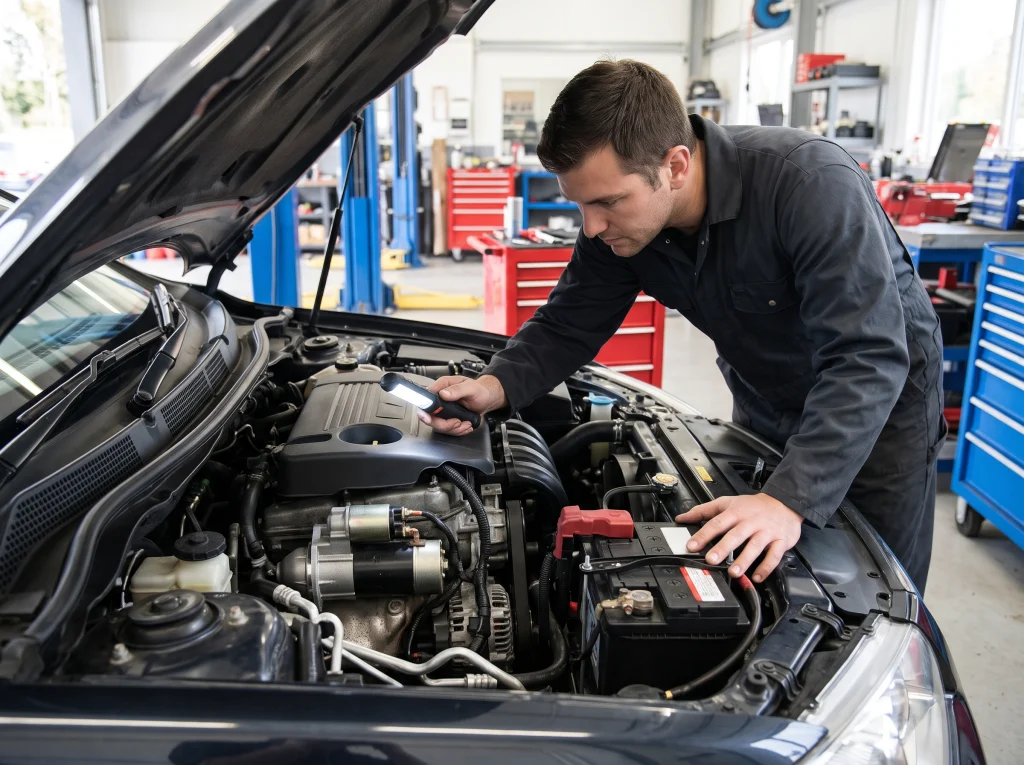
These symptoms are clues rather than guarantees. A professional battery, starter, and charging-system test is the most reliable way to distinguish between these problems.
AAA Automotive+1
How to Tell Whether Your Starter or Battery Is Bad
You can narrow down the cause by observing the symptoms and arranging the appropriate tests.
Step 1: Check What Happens When You Start the Car
Turn the ignition key or press the start button once and pay attention to the response. Notice whether the engine cranks slowly, clicks rapidly, produces one click, or remains completely silent.
Also observe whether the dashboard lights appear normal or become unusually dim. Avoid repeated starting attempts if you hear grinding or notice smoke.
Step 2: Inspect the Battery Visually
With the engine off, look for obvious corrosion, loose-looking connections, damaged cables, or a swollen battery case. Do not touch exposed conductors or attempt to handle a leaking or damaged battery.
If the battery is swollen, leaking, or emitting an unusual sulfur-like odor, do not attempt a jump-start. Keep away and arrange professional assistance.
Step 3: Consider a Jump-Start
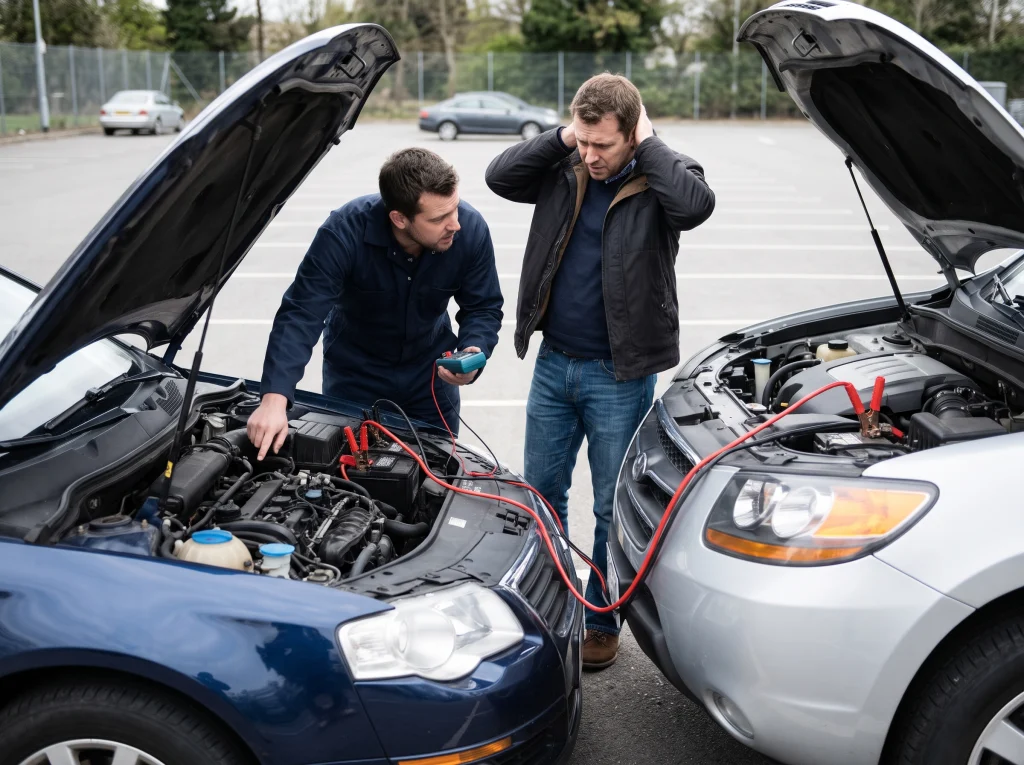
If the battery appears undamaged, a jump-start performed according to the vehicle manufacturer’s instructions may help identify a discharged battery. Use the correct procedure and designated jump points, especially on newer vehicles.
- The engine starts: A weak or discharged battery or a connection issue may be responsible.
- The engine still does not crank: The starter, cables, relay, or another part of the starting system may be faulty.
- The engine starts but soon dies: A charging-system or engine-running problem may be present.
A jump-start is a diagnostic clue, not a substitute for testing. Do not jump-start a damaged battery or a vehicle if the manufacturer prohibits the procedure.
Step 4: Get the Battery and Charging System Tested
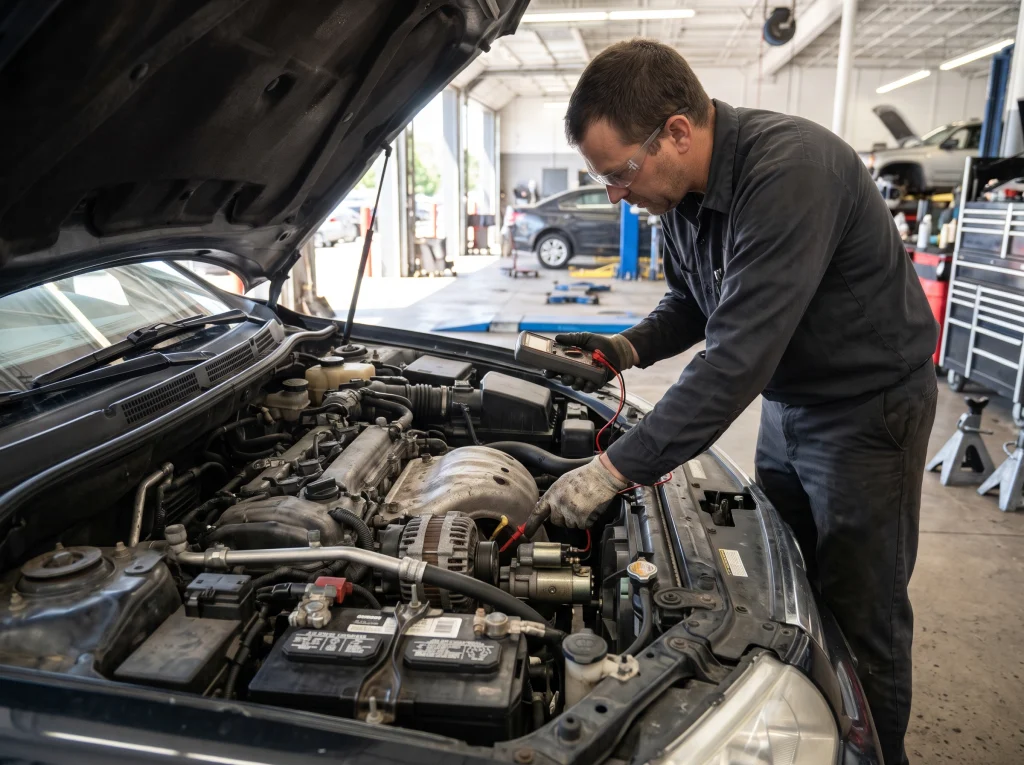
A battery test can determine whether the battery is adequately charged and capable of delivering the required starting current. A charging-system test can help identify whether the alternator is replenishing the battery correctly.
Testing should also include the battery cables and connections when appropriate. This helps avoid replacing a good battery or starter when the actual problem is elsewhere.
Step 5: Test the Starter if Necessary
If the battery and connections pass their tests but the engine still will not crank, a mechanic can check the starter, solenoid, relay, and associated electrical circuits.
This approach is generally more cost-effective than replacing parts based on symptoms alone.
Can a Bad Battery Damage the Starter?
A weak battery does not automatically damage the starter, but repeated attempts to start an engine with inadequate power can place extra strain on the starting system. Prolonged cranking can also cause the starter to overheat.
A failing battery may make the starter appear defective because the motor cannot receive enough current to operate correctly. Before replacing a starter, have the battery and its connections tested.
Likewise, a starter that draws excessive current or a charging-system fault can contribute to recurring battery problems. Diagnosing the complete starting and charging system helps prevent repeated repairs.
How Much Does It Cost to Replace a Battery or Starter?
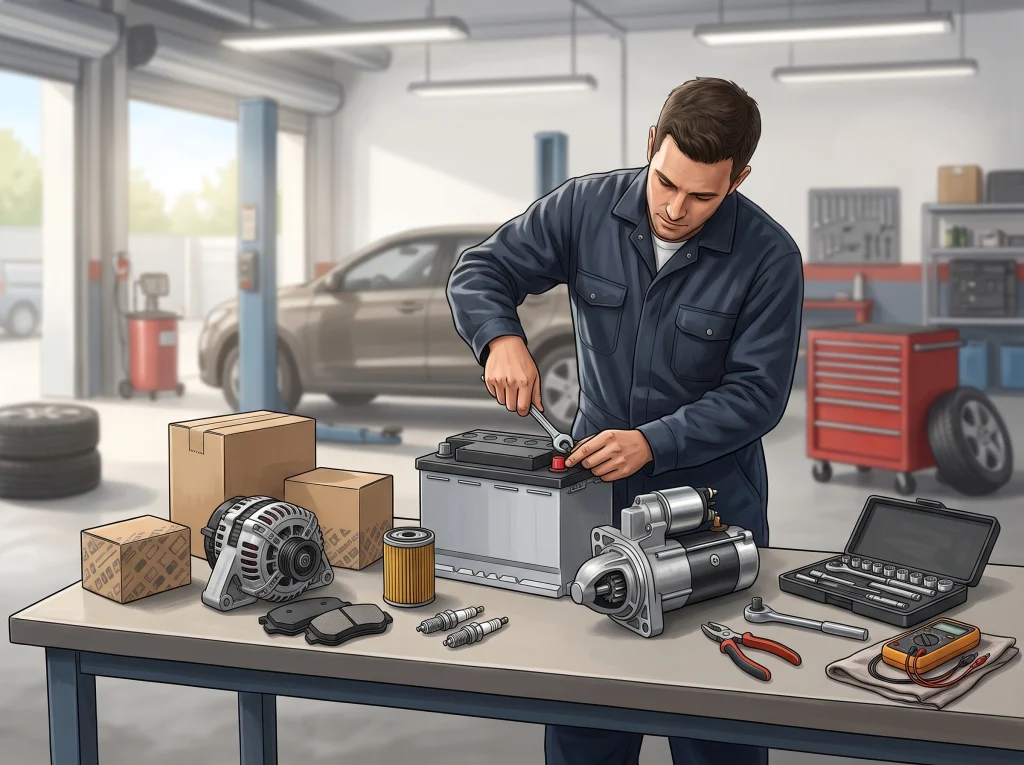
Repair costs depend on your vehicle, the parts required, labor rates, and your location in the United States. Battery replacement is generally less expensive than starter replacement, although premium batteries and difficult installations can increase the price.
| Repair | Typical cost considerations |
|---|---|
| Car battery replacement | Depends on battery type, capacity, and installation |
| Starter replacement | Often several hundred dollars, potentially over $1,000 on difficult vehicles |
| Battery and charging-system testing | May be free at some retailers or included in a diagnostic fee |
| Electrical diagnosis | Varies by shop and the complexity of the fault |
As a reference, AAA reports that complete starter replacement commonly falls between $350 and $1,100, while RepairPal’s September 2026 estimate places the average between $565 and $796. These are estimates, not guaranteed quotes.
AAA Automotive+1
For a battery replacement, the final price depends on whether your vehicle uses a conventional flooded lead-acid battery, an absorbed glass mat (AGM) battery, or another specified type. Vehicles with battery-management systems may also require registration or resetting after installation.
Before approving a repair, ask for a written estimate that separates parts, labor, diagnostic charges, and any additional work.
When to Call a Mechanic
Seek professional help when the battery and starter symptoms are difficult to distinguish, a jump-start does not resolve the problem, or the vehicle repeatedly fails to start.
Arrange prompt inspection if you notice grinding, smoke, burning odors, damaged wiring, or a swollen or leaking battery. Do not continue trying to start the vehicle when doing so could cause further damage or create a safety hazard.
If the engine cranks normally but does not start, the problem may involve fuel delivery, ignition, engine sensors, or another system rather than the battery or starter. A mechanic can diagnose the cause before you spend money on unnecessary replacements.
Frequently Asked Questions:
Conclusion
The main difference between a starter and a battery problem is how the vehicle responds when you try to start it. Rapid clicking, dim lights, and slow cranking often point toward a weak battery, while a single click with otherwise normal electrical power can suggest a starter problem.
Neither symptom provides a definite answer on its own. Battery testing, connection checks, and starter-system diagnosis can identify the actual fault and help you avoid unnecessary repairs. If the vehicle shows signs of electrical damage or still refuses to start, professional assistance is the safest next step.