Test Idioms: 50+ English Idiom Questions With Answers
English idioms are an important part of everyday communication. They help people express feelings, describe situations, and share ideas in a natural way. However, understanding idioms can be challenging because their meanings are often different from the literal meanings of their individual words.
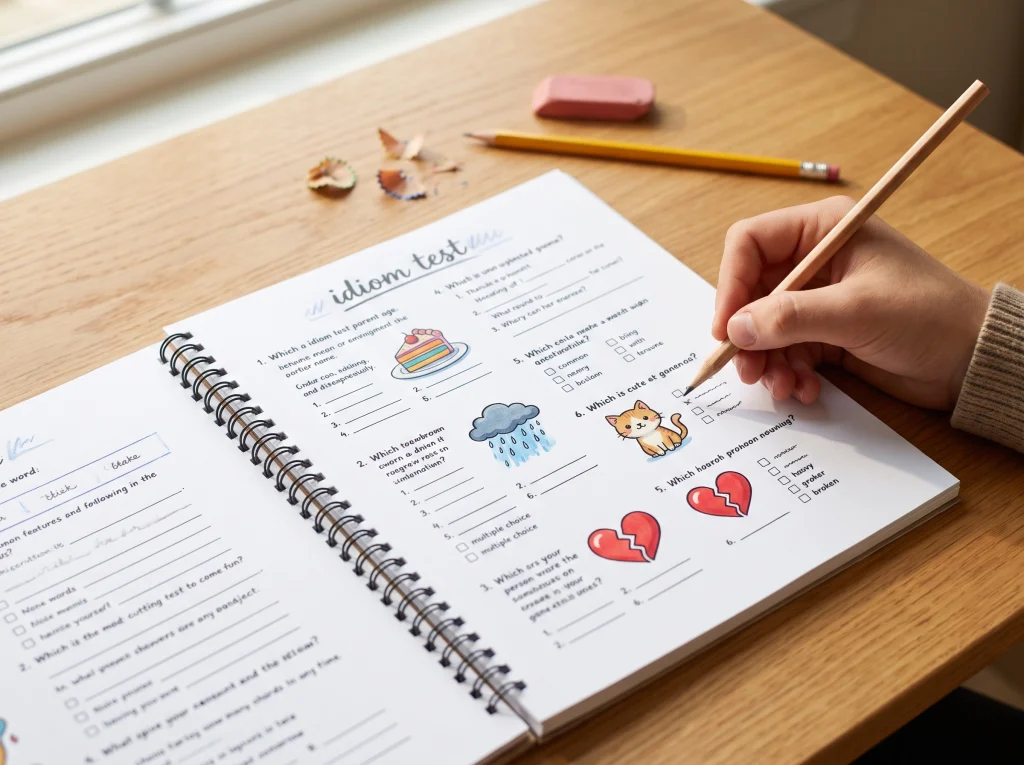
An English idiom test is a useful way to check how well you understand common expressions and their meanings. Whether you are a student, teacher, English learner, or someone preparing for an English proficiency test, practicing idiom questions can improve your vocabulary and reading comprehension.
For example, the expression “break the ice” does not mean physically breaking ice. It means starting a friendly conversation and making people feel comfortable.
In this article, you will find more than 50 English idiom questions, multiple-choice exercises, fill-in-the-blank activities, matching exercises, and answers with explanations. These practice questions cover common American English idioms used in everyday conversations, schools, workplaces, and social situations.
What Is an Idiom Test?
An idiom test is a vocabulary exercise that measures your understanding of common English expressions and their figurative meanings. It usually includes multiple-choice questions, sentence completion, matching activities, and identifying idioms in context.
Unlike ordinary vocabulary tests, idiom tests focus on expressions whose meanings cannot always be understood by translating each word separately.
For example:
Idiom: A piece of cake
Meaning: Something very easy to do.
Example: The math test was a piece of cake for Sarah.
An idiom test helps learners understand how these expressions work in real sentences rather than simply memorizing their definitions.
Why Should You Practice English Idioms?
Learning idioms helps you understand natural English conversations, movies, books, news, and informal discussions. Many Americans use expressions such as “under the weather,” “hit the road,” and “once in a blue moon” in everyday communication.
Regular practice can help you:
- Improve your English vocabulary and comprehension.
- Understand figurative language in conversations.
- Recognize idioms in reading passages.
- Communicate more naturally in English.
- Prepare for classroom grammar and vocabulary tests.
- Improve your ability to understand American expressions.
Idioms are particularly useful for ESL students because knowing their meanings makes everyday English easier to understand.
Common English Idioms to Know Before Taking the Test
Before attempting the exercises, review these 15 commonly used English idioms.
| Idiom | Meaning | Example |
|---|---|---|
| Break the ice | Start a friendly conversation | He told a joke to break the ice. |
| A piece of cake | Very easy | The assignment was a piece of cake. |
| Under the weather | Feeling sick | I am feeling under the weather today. |
| Hit the books | Study seriously | I need to hit the books tonight. |
| Once in a blue moon | Very rarely | We eat out once in a blue moon. |
| Spill the beans | Reveal a secret | Don’t spill the beans about the party. |
| Cost an arm and a leg | Be very expensive | That new car costs an arm and a leg. |
| Call it a day | Stop working | We finished the project and called it a day. |
| Let the cat out of the bag | Reveal a secret accidentally | Tom let the cat out of the bag. |
| On cloud nine | Extremely happy | She was on cloud nine after winning. |
| Bite the bullet | Face a difficult situation bravely | I decided to bite the bullet and apologize. |
| Burn the midnight oil | Work or study late at night | He burned the midnight oil before his exam. |
| Get cold feet | Become nervous | She got cold feet before the presentation. |
| Keep an eye on | Watch carefully | Please keep an eye on my bag. |
| In hot water | In trouble | He was in hot water for missing work. |
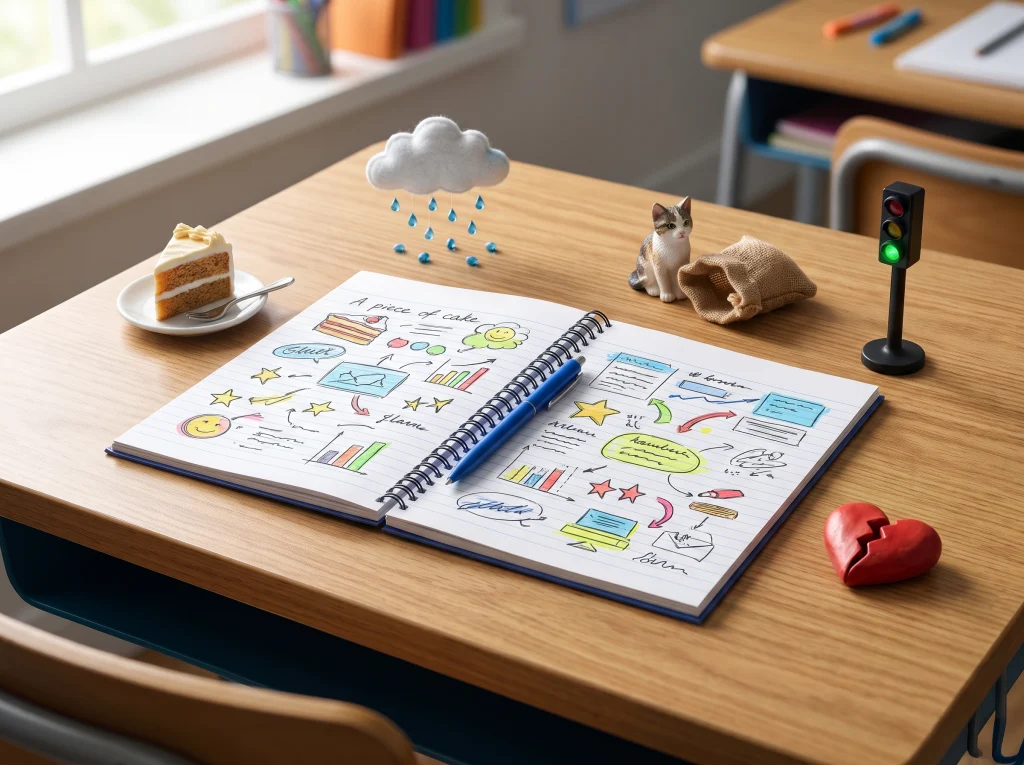
English Idiom Test: 25 Multiple-Choice Questions
Choose the correct meaning of each idiom. Select only one answer for every question.
Question 1: What does “a piece of cake” mean?
A. A delicious dessert
B. Something very easy
C. A difficult problem
D. An expensive item
Question 2: What does “break the ice” mean?
A. To damage something
B. To start a friendly conversation
C. To become angry
D. To stop talking
Question 3: What does “under the weather” mean?
A. Feeling sick
B. Standing outside
C. Enjoying the rain
D. Feeling excited
Question 4: What does “hit the books” mean?
A. Throw books away
B. Buy new books
C. Study seriously
D. Damage books
Question 5: What does “spill the beans” mean?
A. Cook dinner
B. Reveal a secret
C. Waste food
D. Make a mistake
Question 6: What does “once in a blue moon” mean?
A. Every day
B. Very rarely
C. Every month
D. Very quickly
Question 7: What does “cost an arm and a leg” mean?
A. Be very cheap
B. Be uncomfortable
C. Be very expensive
D. Be free
Question 8: What does “call it a day” mean?
A. Name a particular day
B. Stop working for the day
C. Start a new job
D. Celebrate an event
Question 9: What does “on cloud nine” mean?
A. Feeling extremely happy
B. Feeling sleepy
C. Feeling disappointed
D. Being confused
Question 10: What does “get cold feet” mean?
A. Have cold weather
B. Become nervous or afraid
C. Feel physically cold
D. Go outside
Question 11: What does “burn the midnight oil” mean?
A. Waste electricity
B. Work or study late at night
C. Sleep early
D. Start cooking
Question 12: What does “bite the bullet” mean?
A. Eat something quickly
B. Face a difficult situation bravely
C. Start an argument
D. Avoid responsibility
Question 13: What does “keep an eye on” mean?
A. Look away
B. Watch carefully
C. Close your eyes
D. Ignore someone
Question 14: What does “in hot water” mean?
A. Taking a warm bath
B. Being in trouble
C. Feeling comfortable
D. Cooking food
Question 15: What does “hit the road” mean?
A. Repair a road
B. Begin a journey
C. Walk slowly
D. Stop traveling
Question 16: What does “the ball is in your court” mean?
A. You are playing tennis
B. It is your responsibility to take the next action
C. You have lost a game
D. You should leave immediately
Question 17: What does “beat around the bush” mean?
A. Work in a garden
B. Avoid talking directly about something
C. Speak honestly
D. Make someone laugh
Question 18: What does “pull someone’s leg” mean?
A. Hurt someone physically
B. Joke with or tease someone
C. Help someone walk
D. Ask for money
Question 19: What does “a blessing in disguise” mean?
A. Something that appears bad but turns out to be good
B. A religious celebration
C. An unexpected expense
D. A hidden problem
Question 20: What does “back to square one” mean?
A. Move forward quickly
B. Return to the beginning after a failure
C. Finish a difficult task
D. Change your location
Question 21: What does “hang in there” mean?
A. Give up immediately
B. Remain patient and keep trying
C. Stay outside
D. Stop working
Question 22: What does “miss the boat” mean?
A. Forget to travel
B. Miss an opportunity
C. Lose a ticket
D. Arrive early
Question 23: What does “out of the blue” mean?
A. Unexpectedly
B. Very slowly
C. In a planned way
D. Every morning
Question 24: What does “add fuel to the fire” mean?
A. Solve a disagreement
B. Make a bad situation worse
C. Start cooking
D. Calm someone down
Question 25: What does “when pigs fly” mean?
A. Something happens regularly
B. Something is impossible or extremely unlikely
C. Something happens quickly
D. Something is expensive
Fill-in-the-Blank Idiom Test: 10 Questions
Complete each sentence using the correct idiom from the word bank. Use each expression only once.
Word Bank:
- A piece of cake
- Break the ice
- Hit the books
- Spill the beans
- Under the weather
- Call it a day
- On cloud nine
- Cost an arm and a leg
- Burn the midnight oil
- Keep an eye on
Questions
- I have a big English exam tomorrow, so I need to __________ tonight.
- The new student told a funny story to __________ during the class introduction.
- This homework is very easy. It is __________.
- Please do not __________ about the surprise birthday party.
- I am feeling __________, so I will stay home today.
- We have finished all our work, so let’s __________.
- Sarah was __________ after receiving her college acceptance letter.
- That luxury handbag will __________.
- He had to __________ to finish his college assignment before the deadline.
- Can you __________ my little brother while I prepare dinner?
Match the Idioms With Their Meanings
Match each idiom in Column A with its correct meaning in Column B.
| Column A: Idioms | Column B: Meanings |
|---|---|
| 1. Hit the nail on the head | A. To be very busy |
| 2. A blessing in disguise | B. To be extremely happy |
| 3. Keep your chin up | C. To describe something exactly right |
| 4. In the same boat | D. To remain positive during a difficult time |
| 5. On cloud nine | E. To be in the same difficult situation |
| 6. Bite off more than you can chew | F. To accept more responsibility than you can handle |
| 7. See eye to eye | G. To agree with someone |
| 8. Have a lot on your plate | H. To have many responsibilities |
| 9. Let the cat out of the bag | I. To reveal a secret |
| 10. Get out of hand | J. To become difficult to control |
Identify the Correct Idiom in a Sentence
Read each sentence and choose the idiom that best describes the situation.
Question 1
Michael studied all night because he had an important examination the next morning.
A. Burn the midnight oil
B. Hit the road
C. Spill the beans
D. Get cold feet
Question 2
Emma accidentally told everyone about her friend’s surprise party.
A. Break the ice
B. Let the cat out of the bag
C. Call it a day
D. Keep an eye on
Question 3
John was extremely happy after getting his first job.
A. Under the weather
B. In hot water
C. On cloud nine
D. Back to square one
Question 4
The two friends agreed completely about their vacation plans.
A. See eye to eye
B. Beat around the bush
C. Miss the boat
D. Pull someone’s leg
Question 5
The children became too excited, and their behavior was difficult to control.
A. Hit the nail on the head
B. Get out of hand
C. A piece of cake
D. Once in a blue moon
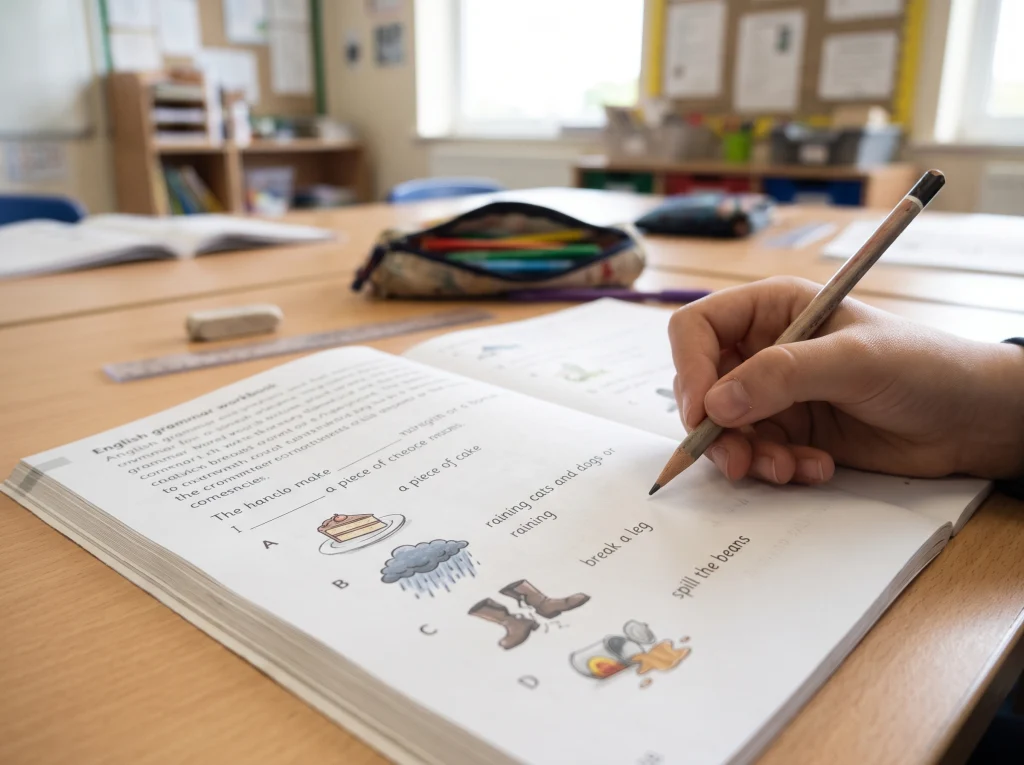
Idiom Test Answers and Explanations
Check your answers after completing all the exercises. Each explanation helps you understand why a particular expression is correct.
Multiple-Choice Answer Key
| Question | Correct Answer | Explanation |
|---|---|---|
| 1 | B | A piece of cake means something very easy. |
| 2 | B | Break the ice means starting a friendly conversation. |
| 3 | A | Under the weather means feeling sick or unwell. |
| 4 | C | Hit the books means studying seriously. |
| 5 | B | Spill the beans means revealing a secret. |
| 6 | B | Once in a blue moon means very rarely. |
| 7 | C | Cost an arm and a leg means being very expensive. |
| 8 | B | Call it a day means stopping work for the day. |
| 9 | A | On cloud nine means feeling extremely happy. |
| 10 | B | Get cold feet means becoming nervous or afraid. |
| 11 | B | Burn the midnight oil means working or studying late at night. |
| 12 | B | Bite the bullet means facing a difficult situation bravely. |
| 13 | B | Keep an eye on means watching something carefully. |
| 14 | B | In hot water means being in trouble. |
| 15 | B | Hit the road means beginning a journey. |
| 16 | B | The ball is in your court means it is your turn to act. |
| 17 | B | Beat around the bush means avoiding the main point. |
| 18 | B | Pull someone’s leg means joking with or teasing someone. |
| 19 | A | A blessing in disguise is something that initially seems bad but brings a good result. |
| 20 | B | Back to square one means returning to the beginning. |
| 21 | B | Hang in there means remaining patient and not giving up. |
| 22 | B | Miss the boat means missing an opportunity. |
| 23 | A | Out of the blue means unexpectedly. |
| 24 | B | Add fuel to the fire means making a bad situation worse. |
| 25 | B | When pigs fly describes something extremely unlikely or impossible. |
Fill-in-the-Blank Answers
| Question | Correct Idiom |
|---|---|
| 1 | Hit the books |
| 2 | Break the ice |
| 3 | A piece of cake |
| 4 | Spill the beans |
| 5 | Under the weather |
| 6 | Call it a day |
| 7 | On cloud nine |
| 8 | Cost an arm and a leg |
| 9 | Burn the midnight oil |
| 10 | Keep an eye on |
Matching Exercise Answers
| Question | Correct Match |
|---|---|
| 1 | C |
| 2 | No direct match in the supplied options |
| 3 | D |
| 4 | E |
| 5 | B |
| 6 | F |
| 7 | G |
| 8 | H |
| 9 | I |
| 10 | J |
For Question 2, “A blessing in disguise” means something that initially appears bad but eventually produces a good result. The matching list does not include this definition. Column B’s option A describes “Have a lot on your plate,” so the original matching choices need to be read carefully.
Corrected Matching Reference
The intended meanings are:
- Hit the nail on the head: Describe something exactly right.
- A blessing in disguise: Something that appears bad but turns out to be good.
- Keep your chin up: Remain positive during a difficult time.
- In the same boat: Be in the same difficult situation.
- On cloud nine: Be extremely happy.
- Bite off more than you can chew: Accept more responsibility than you can handle.
- See eye to eye: Agree with someone.
- Have a lot on your plate: Have many responsibilities.
- Let the cat out of the bag: Reveal a secret.
- Get out of hand: Become difficult to control.
Sentence Identification Answers
| Question | Correct Answer | Explanation |
|---|---|---|
| 1 | A | Burn the midnight oil means studying or working late at night. |
| 2 | B | Let the cat out of the bag means revealing a secret. |
| 3 | C | On cloud nine means being extremely happy. |
| 4 | A | See eye to eye means agreeing with someone. |
| 5 | B | Get out of hand means becoming difficult to control. |
How to Improve Your Idiom Test Score
Improving your idiom knowledge requires more than memorizing definitions. You should learn how expressions are used in real conversations and practice recognizing their meanings in different situations.
Here are some effective ways to improve.
1. Learn a Few Idioms Every Day
Start with three to five common English idioms each day. Write down their meanings and create your own sentences.
For example:
- Break the ice: I told a joke to break the ice.
- Hit the road: We need to hit the road early tomorrow.
- In hot water: He got in hot water for arriving late.
2. Learn Idioms in Context
Do not memorize expressions without understanding how they work in sentences. Read short stories, conversations, articles, and examples that contain common idioms.
Context helps you understand the intended meaning and recognize when an expression is appropriate.
3. Practice Different Types of Questions
Use multiple-choice quizzes, matching exercises, sentence completion, and reading activities. Different question formats test different aspects of your vocabulary knowledge.
4. Review Your Incorrect Answers
Pay attention to questions you answered incorrectly. Write down the idiom, its correct meaning, and a new example sentence.
Reviewing mistakes helps you remember expressions more effectively.

5. Use Idioms in Everyday Conversations
Try using familiar expressions when speaking or writing in English. For example, you might say, “The assignment was a piece of cake” or “Let’s call it a day.”
Using idioms naturally helps turn vocabulary knowledge into practical communication skills.
Frequently Asked Questions:
Conclusion
Testing your knowledge of English idioms is a practical way to improve vocabulary, reading comprehension, and everyday communication. The 50 questions in this guide cover common expressions, their meanings, and how they are used in different situations.
Start with the multiple-choice questions, complete the fill-in-the-blank exercises, and then try the matching and sentence identification activities. Review the answer explanations to understand any mistakes and strengthen your knowledge.