30+ Mad Idioms: Meanings, Examples, and Expressions About Anger
Mad idioms are expressions that describe anger, frustration, unusual behavior, strong emotions, and sometimes excitement. In American English, the word mad commonly means angry, but it can also describe someone acting foolishly or behaving in an unusual way. Expressions such as hopping mad, mad as a hornet, and drive someone crazy help speakers communicate emotions more vividly.
These expressions appear in everyday conversations, movies, books, workplace discussions, and informal writing. Learning mad idioms can help English learners understand native speakers and express their feelings more naturally. Below are more than 30 useful expressions, along with simple meanings and practical examples.
What Are Mad Idioms?
Mad idioms are figurative expressions that communicate anger, irritation, frustration, or unusual behavior. Their meanings are not always obvious from the individual words.
For example, when someone says, “I’m hopping mad,” they do not mean they are physically jumping. They mean they are extremely angry.

In the United States, mad is widely used as an informal synonym for angry. It is common to hear people say, “I’m mad at you,” or “That makes me mad.”
Some expressions containing mad also describe unusual or unreasonable behavior rather than anger. Understanding the context helps you identify the intended meaning.
Common Mad Idioms and Their Meanings
Here are some widely recognized expressions related to anger, madness, frustration, and strong emotions.
| Idiom | Meaning |
|---|---|
| Hopping mad | Extremely angry |
| Mad as a hornet | Very angry |
| Mad as a wet hen | Extremely annoyed |
| Mad as hell | Extremely angry |
| Mad as a hatter | Completely crazy or eccentric |
| Mad as a March hare | Acting wildly or strangely |
| Drive someone mad | Make someone extremely annoyed |
| Like mad | Very quickly or intensely |
| Stark raving mad | Completely crazy |
| Go mad | Lose control or become extremely upset |
| Get mad | Become angry |
| Make someone mad | Cause someone to become angry |
| Be mad at someone | Feel angry with someone |
| Be mad about something | Be extremely enthusiastic about something |
| Be mad about someone | Have strong romantic feelings for someone |
| Don’t get mad, get even | Respond to wrongdoing instead of simply becoming angry |
| Fly into a rage | Become suddenly very angry |
| Blow a fuse | Suddenly lose your temper |
| Hit the roof | Become extremely angry |
| Lose your cool | Stop controlling your emotions |
| See red | Become extremely angry |
| Blow your top | Lose your temper |
| Have a fit | React with extreme anger |
| Go ballistic | Become extremely angry |
| Have a short fuse | Become angry very easily |
| Get under someone’s skin | Annoy someone repeatedly |
| Rub someone the wrong way | Annoy or irritate someone |
| Drive someone up the wall | Make someone extremely frustrated |
| At the end of your rope | Have no patience or energy left |
| Blow off steam | Release built-up anger or frustration |
| Bite someone’s head off | Respond very angrily |
| Lose your temper | Become unable to control your anger |
| Keep your cool | Remain calm in a difficult situation |
| Get on someone’s nerves | Irritate someone |
Idioms About Being Extremely Angry
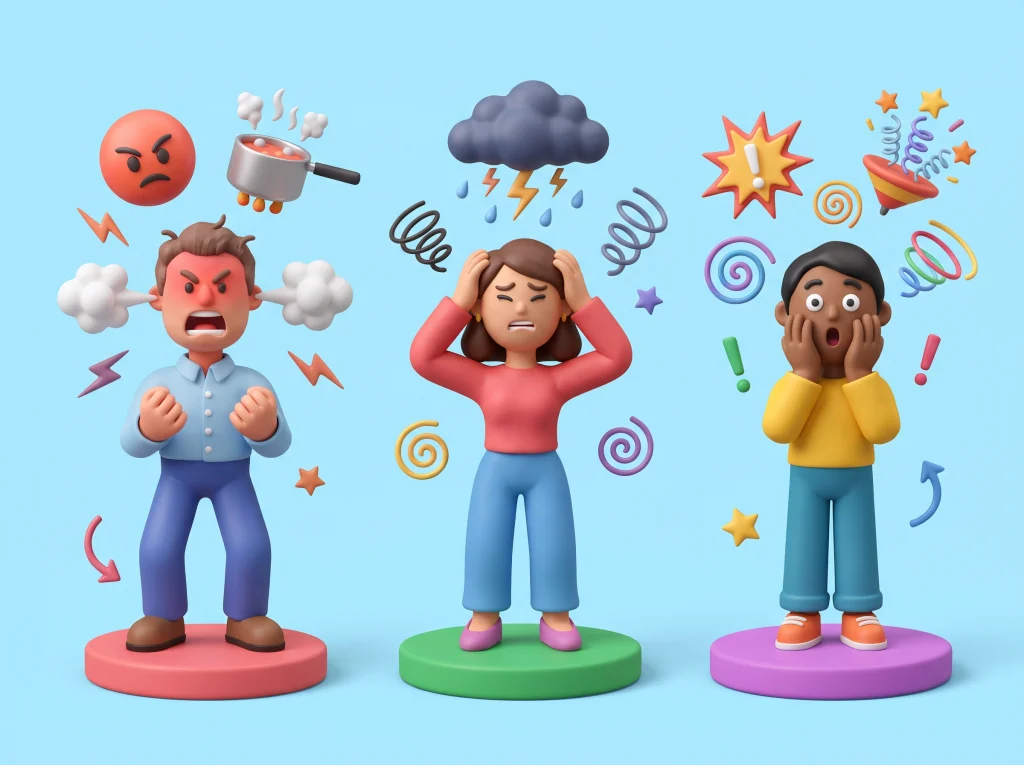
These expressions describe intense anger, frustration, and emotional reactions. They are especially useful in casual American English.
1. Hopping Mad
Meaning: Extremely angry about something.
Example: My dad was hopping mad when he found out that I had damaged his car.
2. Mad as a Hornet
Meaning: Very angry, especially when someone feels provoked or offended.
Example: The customer was mad as a hornet after receiving the wrong order.
3. Mad as a Wet Hen
Meaning: Extremely annoyed or angry.
Example: Sarah was mad as a wet hen when her brother borrowed her clothes without asking.
4. Mad as Hell
Meaning: Extremely angry about a situation or someone’s behavior.
Example: The employees were mad as hell when management canceled their promised bonuses.
5. See Red
Meaning: Suddenly become extremely angry.
Example: I see red whenever someone treats my family disrespectfully.
6. Hit the Roof
Meaning: Become extremely angry, often because of shocking or upsetting news.
Example: My mother hit the roof when she discovered that I had missed my final exam.
7. Blow Your Top
Meaning: Lose control of your temper because of anger.
Example: The coach blew his top when the players ignored his instructions.
8. Go Ballistic
Meaning: React with extreme anger.
Example: Dad went ballistic when he found out that someone had scratched his new truck.

Idioms About Losing Your Temper
Sometimes people become angry because of stress, disappointment, or repeated frustration. These idioms describe situations in which someone struggles to control their emotions.
9. Blow a Fuse
Meaning: Suddenly become very angry.
Example: My boss blew a fuse when the team missed another important deadline.
10. Fly Into a Rage
Meaning: Suddenly become extremely angry.
Example: He flew into a rage after discovering that someone had stolen his bicycle.
11. Lose Your Cool
Meaning: Stop behaving calmly because of anger or frustration.
Example: Try not to lose your cool during the argument.
12. Lose Your Temper
Meaning: Become angry and fail to control your emotional reaction.
Example: I lost my temper when my coworker blamed me for his mistake.
13. Have a Fit
Meaning: React with extreme anger, excitement, or distress.
Example: My sister had a fit when she learned that I had used her laptop without permission.
14. Bite Someone’s Head Off
Meaning: Respond to someone in a very angry or unfriendly way.
Example: I only asked him a simple question, but he bit my head off.
15. Have a Short Fuse
Meaning: Become angry very easily, often over small problems.
Example: Our new manager has a short fuse, so everyone tries to communicate carefully.

Idioms About Acting Crazy or Foolish
The word mad does not always refer to anger. Some expressions describe unusual, unreasonable, or foolish behavior.
16. Mad as a Hatter
Meaning: Completely crazy, eccentric, or behaving strangely.
Example: Everyone thought the old inventor was mad as a hatter because of his unusual experiments.
17. Mad as a March Hare
Meaning: Behaving in an extremely strange, wild, or unpredictable way.
Example: The children were running around the house like mad as a March hare.
18. Stark Raving Mad
Meaning: Completely crazy or behaving in a wildly unreasonable way.
Example: You must be stark raving mad to drive through that dangerous storm without checking the road conditions.
19. Go Mad
Meaning: Become extremely upset, lose control, or behave irrationally.
Example: I thought I would go mad waiting for the delayed flight.
20. Like Mad
Meaning: Very quickly, energetically, or intensely.
Example: Everyone was working like mad to finish the project before the deadline.

Idioms About Frustration and Annoyance
Not every expression about anger describes an explosive reaction. Some phrases communicate irritation, impatience, and the feeling that someone is becoming difficult to tolerate.
21. Drive Someone Mad
Meaning: Make someone extremely annoyed, frustrated, or impatient.
Example: The constant noise from the construction site is driving me mad.
22. Drive Someone Up the Wall
Meaning: Make someone extremely irritated or frustrated.
Example: My little brother drives me up the wall when he keeps playing loud music.
23. Get Under Someone’s Skin
Meaning: Annoy someone or affect them emotionally in a persistent way.
Example: His constant criticism really gets under my skin.
24. Rub Someone the Wrong Way
Meaning: Annoy someone because of your behavior, attitude, or words.
Example: His arrogant attitude rubbed everyone the wrong way.
25. Get on Someone’s Nerves
Meaning: Repeatedly irritate or annoy someone.
Example: The sound of that alarm clock is getting on my nerves.
26. At the End of Your Rope
Meaning: Reach the point where you have no patience, energy, or ability to handle a difficult situation.
Example: I’m at the end of my rope with these constant computer problems.
27. Blow Off Steam
Meaning: Release built-up anger, stress, or frustration.
Example: After a stressful day at work, I went for a long walk to blow off steam.

Idioms About Strong Feelings and Reactions
These expressions describe emotional control, personal interests, and reactions to difficult situations.
28. Don’t Get Mad, Get Even
Meaning: Instead of simply becoming angry, take action to respond to someone who has wronged you.
Example: His grandfather always told him, “Don’t get mad, get even.”
This expression can suggest revenge, so it is best understood as an informal saying rather than advice for resolving disagreements.
29. Keep Your Cool
Meaning: Remain calm even when something makes you angry.
Example: You should keep your cool when dealing with an upset customer.
30. Get Mad
Meaning: Become angry or annoyed.
Example: Don’t get mad at me just because I told you the truth.
31. Make Someone Mad
Meaning: Cause someone to become angry.
Example: It makes me mad when people break their promises.
32. Be Mad at Someone
Meaning: Feel angry or upset with another person.
Example: Are you still mad at me for forgetting your birthday?
33. Be Mad About Something
Meaning: Be extremely interested in or enthusiastic about something.
Example: My younger brother is mad about basketball and watches every important game.
In this expression, mad about communicates enthusiasm rather than anger.
34. Be Mad About Someone
Meaning: Have strong romantic feelings for someone.
Example: She has been mad about him since they first met in college.
How to Use Mad Idioms in Everyday English
Mad idioms can make everyday conversations more expressive, but choosing the right expression depends on the situation and the intensity of the emotion.
Here are some practical ways to use them naturally.
1. Describe strong anger:
Use expressions such as hopping mad, mad as a hornet, and hit the roof when someone is extremely angry.
Example: My neighbor was hopping mad when someone parked in front of his driveway.
2. Talk about everyday frustration:
Use get on someone’s nerves, drive someone up the wall, or rub someone the wrong way when describing irritating behavior.
Example: The constant interruptions are getting on my nerves.
3. Describe emotional control:
Use keep your cool and lose your temper when discussing how people respond to difficult situations.
Example: Even when customers complain, good employees try to keep their cool.
4. Describe unusual behavior:
Expressions such as mad as a hatter and stark raving mad can describe someone acting strangely or making unreasonable decisions.
Example: You would have to be mad as a hatter to spend all your savings on something you don’t need.
5. Express enthusiasm:
Use mad about when talking about something you love or enjoy.
Example: My daughter is mad about science and spends hours reading about space.

Common Mistakes to Avoid When Using Mad Idioms
English learners sometimes confuse the different meanings of mad. Understanding these differences can help you avoid misunderstandings.
1. Confusing mad with crazy
In American English, mad usually means angry in everyday conversation. For example, “She is mad at me” means she is angry with me, not that she is mentally ill.
2. Misunderstanding mad about
The phrase mad about can express enthusiasm or romantic interest rather than anger.
For example:
- I’m mad about chocolate. (I love chocolate.)
- I’m mad at my brother. (I’m angry with my brother.)
3. Using informal idioms in formal situations
Expressions such as mad as hell, go ballistic, and blow your top are informal. In professional emails, academic writing, or formal discussions, words such as angry, frustrated, or upset are often more appropriate.
4. Taking idioms literally
Someone who says “I’m hopping mad” is not necessarily jumping. The phrase communicates extreme anger.
5. Forgetting the context
Some expressions have different meanings depending on how they are used. For example, like mad usually means doing something very quickly or intensely, not behaving angrily.

Choosing the correct expression helps make your English sound more natural and prevents confusion.
Frequently Asked Questions:
Conclusion
Mad idioms are useful expressions for describing anger, frustration, irritation, unusual behavior, and enthusiasm. Phrases such as hopping mad, mad as a hornet, drive someone up the wall, and keep your cool appear in everyday American English and help speakers communicate emotions more clearly.
The best way to learn these expressions is to understand their meanings, study example sentences, and practice using them in real conversations. Pay attention to the context because the word mad can communicate very different feelings depending on the expression.