30+ Fish Idioms: Meanings, Examples, and Common Expressions
Fish idioms are figurative expressions that use fish, fishing, or aquatic imagery to communicate ideas that are not always connected to their literal meanings. They make everyday conversations more colorful and help speakers describe complicated situations in familiar language.
For example, calling someone a big fish means that the person is important or influential. Similarly, feeling like a fish out of water means being uncomfortable in an unfamiliar environment.

Some fish expressions are especially common in American English, including fish or cut bait, bigger fish to fry, and plenty of fish in the sea. Learning these phrases can improve your vocabulary and help you understand conversations, books, movies, and workplace communication.
Common Fish Idioms and Their Meanings
The following fish idioms are useful for describing people, opportunities, problems, and everyday situations.
| Fish idiom | Meaning |
|---|---|
| A fish out of water | Someone uncomfortable in an unfamiliar situation |
| A big fish | An important or influential person |
| A small fish | Someone with little influence or importance |
| A big fish in a small pond | An important person in a limited environment |
| Plenty of fish in the sea | Many other opportunities or potential romantic partners exist |
| Bigger fish to fry | More important things to do |
| A different kettle of fish | A completely different matter |
| A fine kettle of fish | A difficult or unpleasant situation |
| Fish for compliments | Try to get praise indirectly |
| A cold fish | An emotionally distant or unfriendly person |
| Fishy | Suspicious or questionable |
| Fish or cut bait | Make a decision instead of delaying |
| Drink like a fish | Drink alcohol excessively |
| Fishing expedition | An attempt to find information without a specific direction |
| Red herring | Something that distracts from the main issue |
| Fish in troubled waters | Take advantage of a difficult situation |
| Like shooting fish in a barrel | Something extremely easy to accomplish |
| Neither fish nor fowl | Something difficult to classify |
| A poor fish | An unfortunate or foolish person |
| Loose fish | An unreliable or irresponsible person |
1. A Fish Out of Water
Meaning: Someone who feels uncomfortable, awkward, or out of place in an unfamiliar environment.
Example: When Mark started working at the large technology company, he felt like a fish out of water.
This expression is useful when someone struggles to adjust to a new workplace, school, social group, or community.
2. A Big Fish
Meaning: An important, powerful, or influential person.
Example: The company hired a big fish from the financial industry to lead its new division.
The expression often appears in business, politics, and professional conversations.
3. A Small Fish
Meaning: Someone with little power, influence, or importance in a particular situation.
Example: Although he owns a small business, he is still a small fish compared with the major corporations in the industry.
4. A Big Fish in a Small Pond
Meaning: Someone who has considerable influence in a small group or limited environment but may not have the same importance in a larger setting.
Example: She was the most popular student at her old school, but she realized she was a big fish in a small pond after transferring to a larger university.
5. Plenty of Fish in the Sea
Meaning: There are many other potential romantic partners, so someone should not lose hope after a relationship ends.
Example: After her breakup, her friends reminded her that there were plenty of fish in the sea.
This expression is particularly common in American conversations about dating and relationships.
6. Bigger Fish to Fry
Meaning: To have more important responsibilities or matters requiring attention.
Example: I cannot spend the entire afternoon arguing about office decorations. I have bigger fish to fry.
It is often used when someone wants to focus on more significant priorities.
7. A Different Kettle of Fish
Meaning: A completely different matter or situation.
Example: Working for a small business is one thing, but managing a multinational company is a different kettle of fish.
8. A Fine Kettle of Fish
Meaning: A complicated, unpleasant, or troublesome situation.
Example: Forgetting the presentation on the day of the meeting was a fine kettle of fish.
The word fine is often used ironically here, suggesting that the situation is anything but good.
9. Fish for Compliments
Meaning: To behave in a way that encourages other people to give you praise or admiration.
Example: Sarah kept asking whether everyone liked her new haircut because she was fishing for compliments.
10. A Cold Fish
Meaning: A person who seems emotionally distant, unfriendly, or unwilling to show feelings.
Example: Our new neighbor seems like a cold fish because he rarely talks to anyone.
11. Fishy
Meaning: Something that seems suspicious, dishonest, or difficult to trust.
Example: The salesperson refused to explain the extra charges, so the whole deal sounded fishy.
Although fishy is technically an informal adjective rather than a traditional idiom, it is an important fish-related expression.
Idioms About Opportunities and Success
Fish and fishing expressions often describe opportunities, decisions, and the ability to achieve goals. These sayings are particularly useful in professional conversations and everyday discussions.
12. Fish or Cut Bait
Meaning: Make a decision or take action instead of continuing to wait.
Example: We have discussed the business partnership for months. It is time to fish or cut bait.
This is a distinctly useful American expression, especially when someone needs to stop delaying an important decision.
13. Like Shooting Fish in a Barrel
Meaning: Something that is extremely easy to accomplish.
Example: Finding mistakes in that poorly written report was like shooting fish in a barrel.
It is often used humorously when a task requires very little effort.
14. Fish in Troubled Waters
Meaning: Take advantage of a difficult or uncertain situation for personal benefit.
Example: Some dishonest investors tried to fish in troubled waters during the company’s financial crisis.
The expression usually suggests questionable or opportunistic behavior.
15. Other Fish to Fry
Meaning: To have other responsibilities or activities that deserve attention.
Example: I cannot attend another unnecessary meeting because I have other fish to fry.
This expression is closely related to bigger fish to fry and is often used interchangeably.
16. Plenty More Fish in the Sea
Meaning: There are many other possibilities or romantic partners available.
Example: Losing one job opportunity is disappointing, but remember that there are plenty more fish in the sea.
In American English, plenty of fish in the sea is also a common version of this expression.

Fish Idioms About People and Personalities
Several fish-related expressions describe someone’s character, behavior, or position in society. They can communicate an opinion without requiring a lengthy explanation.
17. Neither Fish Nor Fowl
Meaning: Something or someone that does not fit clearly into a particular category.
Example: The new restaurant serves a mixture of traditional and modern dishes, making its style neither fish nor fowl.
18. A Poor Fish
Meaning: An unfortunate, foolish, or easily pitied person.
Example: The poor fish believed every promise the dishonest salesman made.
This expression is somewhat old-fashioned and less common in everyday American conversation.
19. A Loose Fish
Meaning: An irresponsible or unreliable person, traditionally associated with questionable behavior.
Example: His friends considered him a loose fish because he frequently broke promises and ignored responsibilities.
This is an old-fashioned expression and is not widely used in modern American English.
20. Swim Like a Fish
Meaning: To swim extremely well or naturally.
Example: My younger brother swims like a fish and spends every summer at the community pool.
This is a simile rather than a strict idiom, but it is a familiar figurative expression.
Funny and Unusual Fish Expressions
Some fish expressions are humorous, informal, or especially useful when describing unusual situations.
21. Drink Like a Fish
Meaning: To consume large amounts of alcoholic beverages.
Example: Everyone was surprised when he started drinking like a fish at the party.
This expression is informal and can sound critical when describing someone’s drinking habits.
22. Packed Like Sardines
Meaning: Crowded tightly together in a small space.
Example: We were packed like sardines on the subway during the morning commute.
Sardines are small fish commonly associated with tightly packed containers. This expression is about crowding rather than fish specifically.
23. A Whale of a Time
Meaning: To have an extremely enjoyable or exciting time.
Example: We had a whale of a time at the summer festival.
Although a whale is a marine mammal rather than a fish, this expression is often grouped with fish and ocean-related sayings.
24. As Slippery as an Eel
Meaning: Someone who is difficult to catch, control, understand, or trust.
Example: The politician was as slippery as an eel whenever reporters asked about the missing funds.
This expression often describes someone who avoids giving direct answers.
25. As Happy as a Clam
Meaning: Extremely happy, comfortable, or satisfied.
Example: The children were as happy as clams playing at the beach.
Clams are shellfish, not fish, but the expression belongs to the wider group of aquatic animal sayings.

Fishing Expressions Used in Everyday English
Fishing has influenced many common English expressions. These phrases often describe searching, questioning, investigating, or trying to achieve something indirectly.
26. Go on a Fishing Expedition
Meaning: Search for information without having a clear target or specific evidence.
Example: The manager asked dozens of unrelated questions during the investigation, making it feel like a fishing expedition.
The phrase is commonly used in legal, political, and business discussions.
27. Fish Something Out
Meaning: To retrieve or pull something out of a place, usually after searching for it.
Example: I fished my car keys out of the bottom of my backpack.
This is a phrasal verb rather than a traditional idiom, but it is a useful everyday expression.
28. Fish Around
Meaning: Search through something or try to obtain information indirectly.
Example: He was fishing around for information about the company’s upcoming changes.
29. Fish for Information
Meaning: Ask indirect questions to obtain information that someone may not want to share.
Example: The reporter kept fishing for information about the private meeting.
30. Red Herring
Meaning: Something that distracts people from the main issue or important facts.
Example: The argument about the project’s budget was a red herring that distracted everyone from the real problem.
The expression is widely used in everyday discussions, mystery stories, journalism, and debates.
31. Go Fishing for Something
Meaning: Try to obtain something indirectly rather than requesting it openly.
Example: He was fishing for an invitation to the company’s annual dinner.

How to Use Fish Idioms in Everyday Conversations
Fish idioms become easier to understand when you connect them with familiar situations. Instead of memorizing every definition separately, practice using expressions in conversations about work, relationships, school, and personal experiences.
Here are some practical ways to use them:
1. Talk about unfamiliar situations.
Use a fish out of water when describing discomfort in a new environment.
Example: “I felt like a fish out of water at my first networking event.”
2. Discuss priorities.
Use bigger fish to fry when more important responsibilities need attention.
Example: “Let’s finish the important report first. We have bigger fish to fry.”
3. Encourage someone after a breakup.
Use plenty of fish in the sea to remind someone that other romantic opportunities exist.
Example: “Don’t worry about the breakup. There are plenty of fish in the sea.”
4. Describe suspicious behavior.
Use fishy when something does not seem trustworthy.
Example: “His explanation sounds fishy to me.”
5. Encourage someone to make a decision.
Use fish or cut bait when someone has delayed a decision for too long.
Example: “You need to fish or cut bait and decide whether you’re joining the team.”
The most important rule is to use each expression in the correct context. Some fish idioms are humorous, while others can sound critical or dismissive.
Common Mistakes When Using Fish Idioms
English learners sometimes confuse fish expressions because several phrases have similar meanings or slightly different grammatical structures.
Here are some common mistakes to avoid.
| Incorrect usage | Correct usage |
|---|---|
| He is a fish out from water. | He is a fish out of water. |
| I have bigger fishes to fry. | I have bigger fish to fry. |
| There are plenty fish in the sea. | There are plenty of fish in the sea. |
| She is fishing compliments. | She is fishing for compliments. |
| He drinks as fish. | He drinks like a fish. |
Remember that the expression bigger fish to fry normally uses the word fish, not fishes. Also, phrases such as fish for compliments require the preposition for.
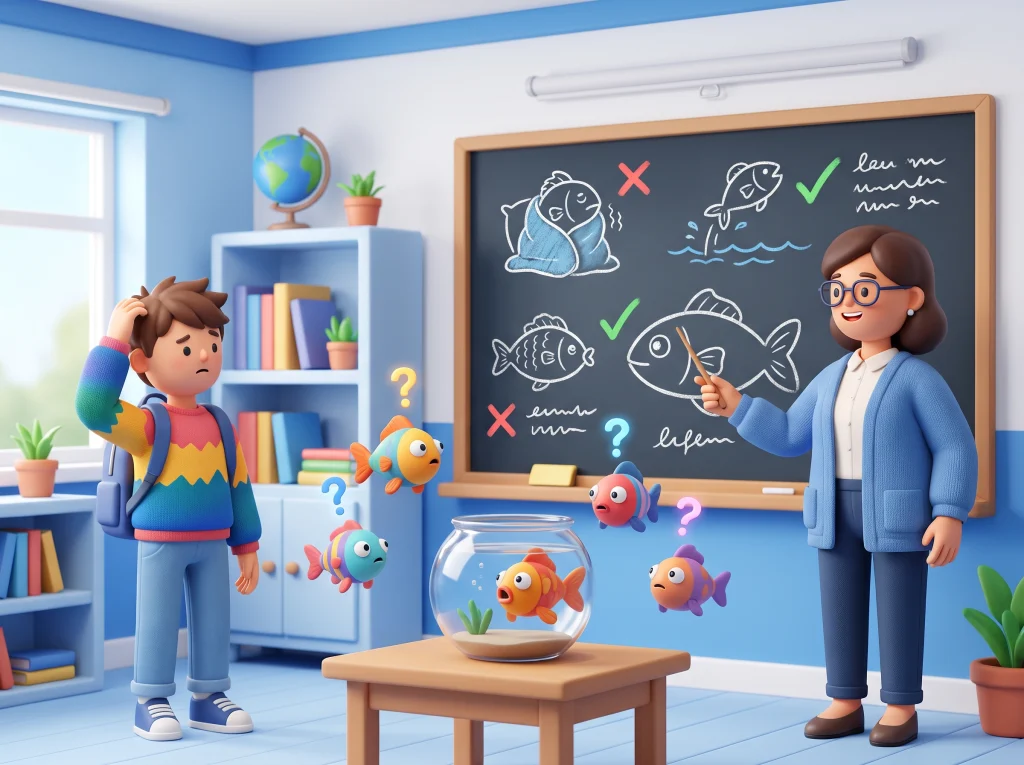
Another common mistake is using fish idioms in situations where their meanings do not fit. For example, a cold fish describes an emotionally distant person, not someone who is physically cold.
Learning the complete expression and practicing it in a natural sentence will help you avoid these errors.
Frequently Asked Questions:
Conclusion
Fish idioms add personality and variety to everyday English. Expressions such as a fish out of water, bigger fish to fry, fish for compliments, and plenty of fish in the sea help speakers communicate feelings, priorities, opportunities, and unusual situations.
Some expressions are common in modern American conversations, while others are older or more humorous. Learning their meanings and practicing them in context will make it easier to recognize and use them naturally.