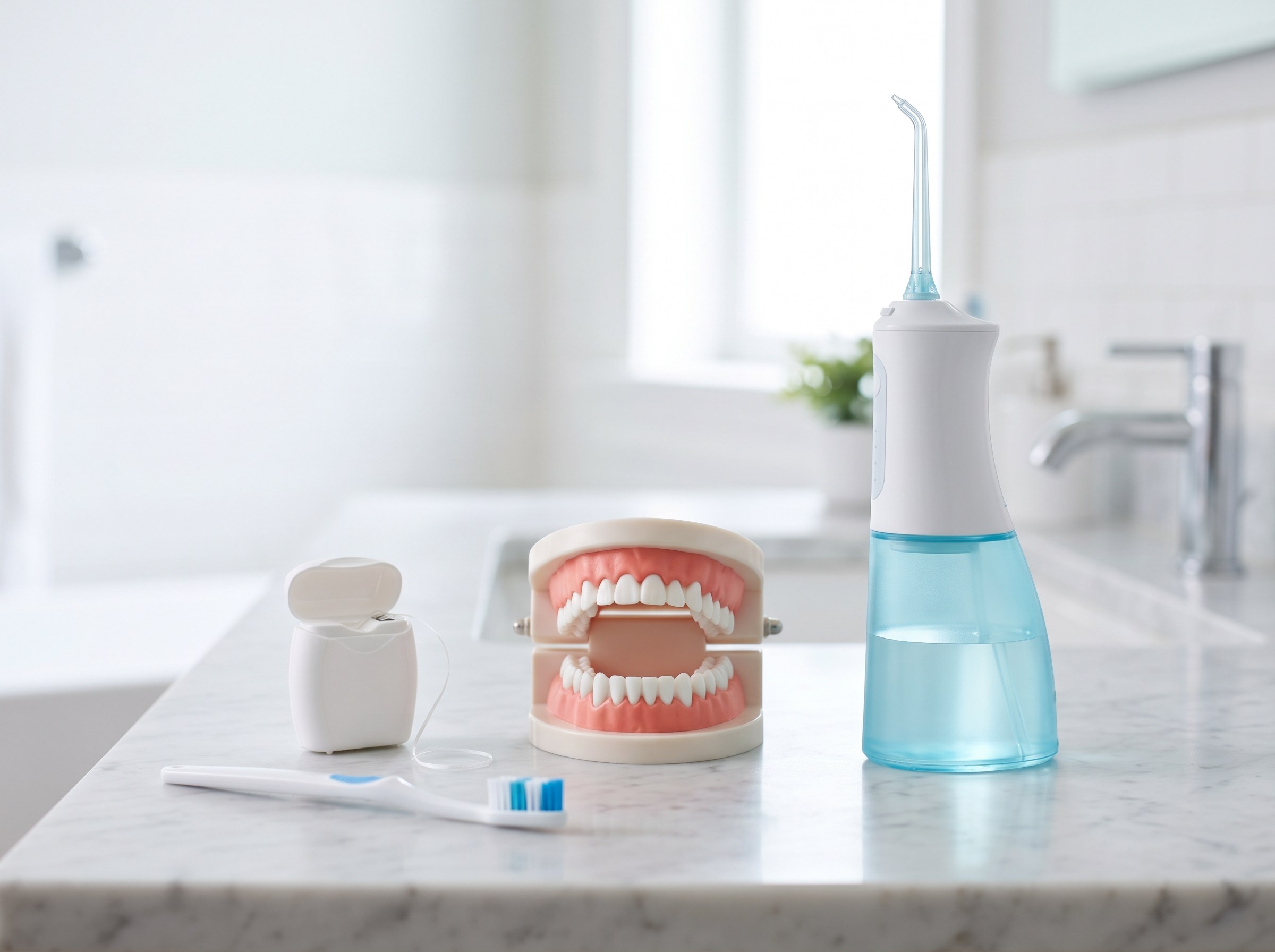
Floss or Waterpik? Key Differences, Benefits, and Which Is Better
Keeping your teeth and gums healthy requires more than brushing twice a day. Food particles and plaque can collect between teeth, where a regular toothbrush cannot clean effectively. Traditional dental floss and Waterpik water flossers are two popular ways to clean these areas, but they work differently.
Traditional dental floss is useful for physically cleaning tight spaces between teeth, while a Waterpik uses a stream of water to remove food debris and plaque around teeth and along the gumline. Both can support good oral hygiene when used correctly.
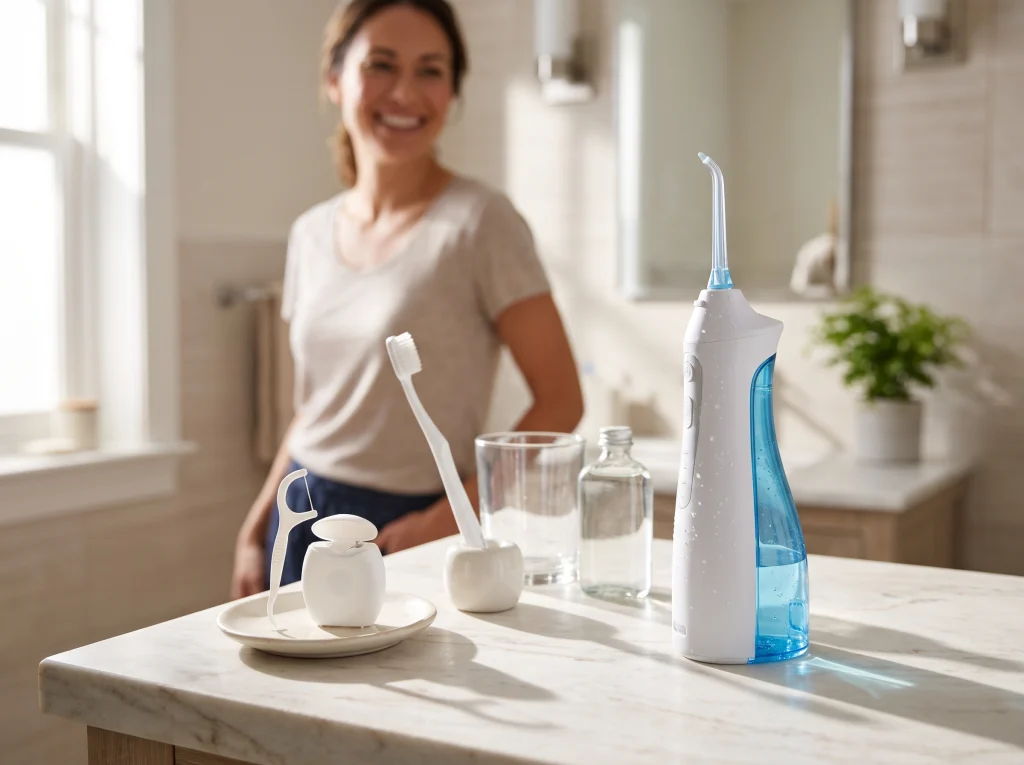
For people with braces, dental bridges, or difficulty handling regular floss, a Waterpik may be more convenient. However, traditional floss remains an effective and affordable option for people who can use it properly.
Understanding the differences can help you choose the right tool for your daily dental care routine.
What Is the Difference Between Floss and Waterpik?
The main difference between floss and Waterpik is how they clean between teeth. Traditional dental floss uses a thin strand to physically wipe plaque from tooth surfaces, while a Waterpik uses a pressurized stream of water to clean around teeth and along the gumline.
A Waterpik is a brand of water flosser made by Water Pik, Inc. The term is also commonly used informally when people talk about water flossers in general.
Here is a quick comparison:
| Feature | Traditional Floss | Waterpik |
|---|---|---|
| Cleaning method | Physical contact | Pulsating water stream |
| Removes food particles | Yes | Yes |
| Helps remove plaque | Yes | Yes |
| Requires hand coordination | Yes | Less manual dexterity |
| Suitable for braces | Possible, but more difficult | Often more convenient |
| Electricity or batteries | Not required | Depends on model |
| Initial cost | Usually low | Usually higher |
| Ongoing supplies | Replacement floss | Tips and occasional maintenance |
| Portability | Very easy | Depends on model |
| Daily use | Yes | Yes |
Both methods clean areas that toothbrush bristles may miss. The American Dental Association (ADA) recommends cleaning between teeth daily using an appropriate interdental cleaner. American Dental Association+1
What Is Traditional Dental Floss?
Floss: Have dentists been stringing us along? | University of California
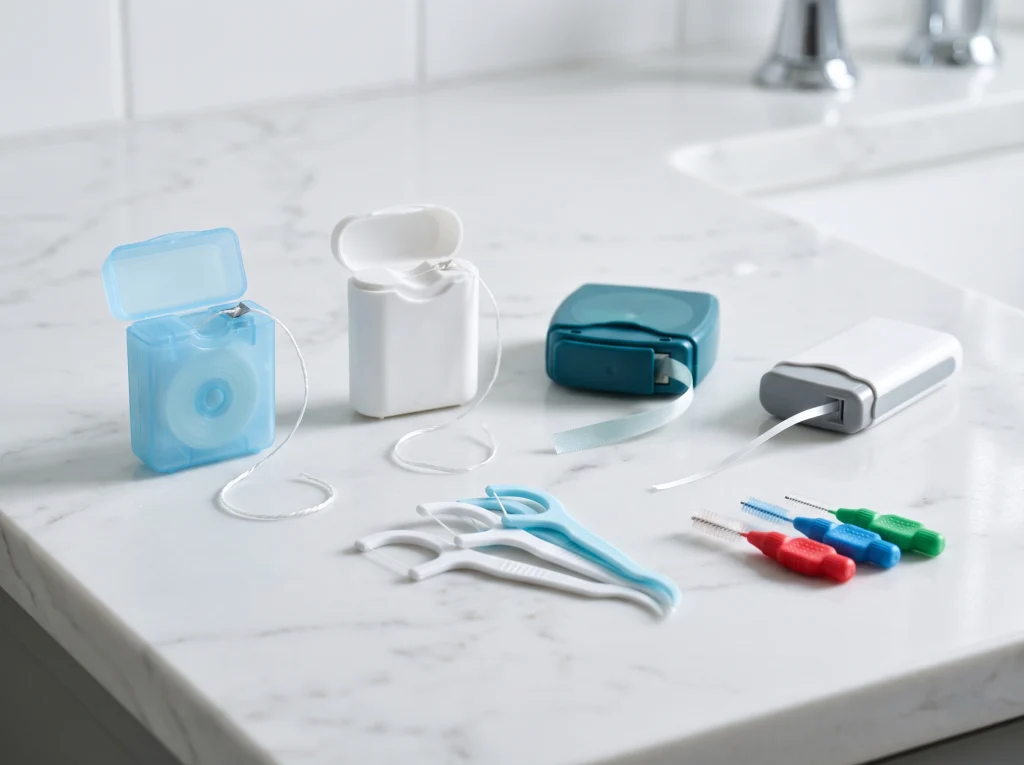
Traditional dental floss is a thin strand made from nylon filaments or plastic monofilaments. It slides between teeth to remove food particles and plaque from surfaces that toothbrushes cannot reach effectively.
Dental floss comes in several varieties, including waxed floss, unwaxed floss, dental tape, and floss picks.
Types of Dental Floss
Waxed floss: This type has a coating that helps it slide between tight teeth. It may be easier to handle for people whose teeth are close together.
Unwaxed floss: This type has no wax coating and is generally thinner. Some people prefer its feel when cleaning between teeth.
Dental tape: Tape is usually broader and flatter than traditional floss. It may feel more comfortable for people with larger spaces between their teeth.
Floss picks: These small plastic tools hold a short piece of floss between two arms. They are convenient for people who find traditional floss difficult to handle.
The ADA notes that waxed and unwaxed floss do not have a meaningful difference in cleaning effectiveness when used properly. Technique and consistency matter more than the specific type. American Dental Association
Benefits of Traditional Dental Floss
Traditional floss has several advantages:
- Affordable: A standard floss container is generally inexpensive.
- Portable: It fits easily in a purse, pocket, or travel bag.
- No electricity required: You can use it anywhere.
- Direct plaque removal: It physically wipes the sides of teeth.
- Good for tight spaces: It can reach narrow gaps between closely positioned teeth.
- Easy storage: It requires very little bathroom space.
Its main disadvantage is that proper technique requires some practice. People with braces, limited hand movement, or certain dental restorations may find it difficult to use.
What Is a Waterpik?
Official Waterpik™ Online Store | Oral Health
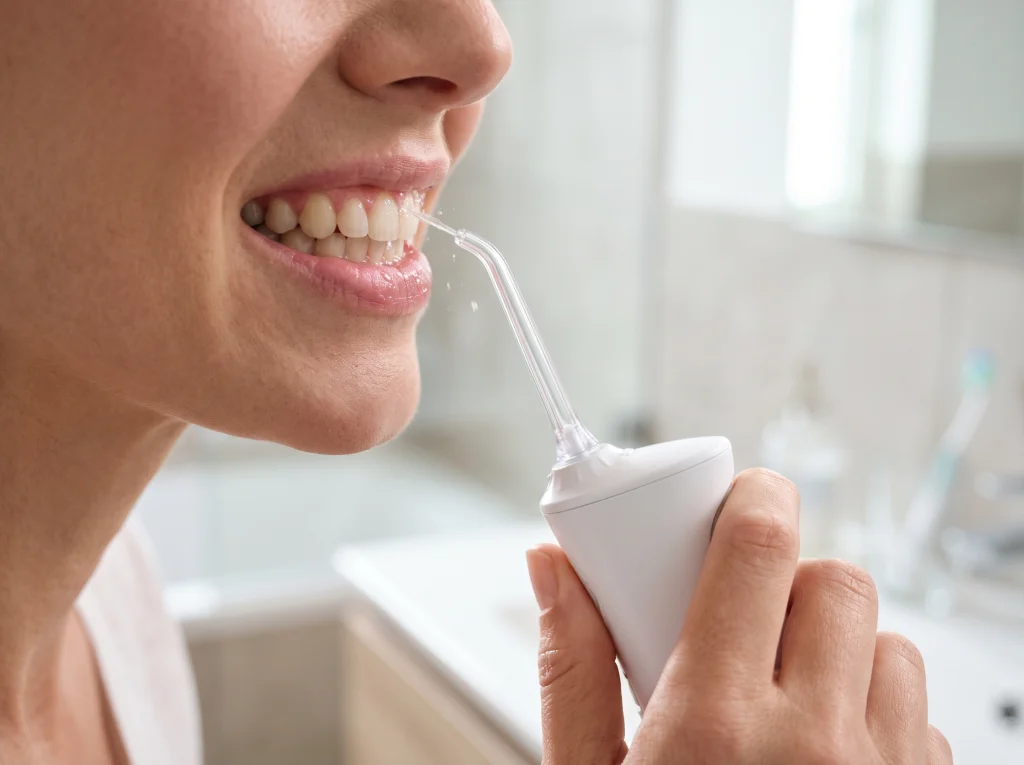
A Waterpik is an electronic water flosser that directs a pulsating stream of water between teeth and along the gumline. It helps remove trapped food and plaque without requiring a strand of floss to pass through each gap.
The device usually includes a water reservoir, a motor, a handle, and a specialized nozzle. Some models are countertop units, while others are cordless and designed for travel.
How Does a Waterpik Work?
A water flosser sends controlled pulses of water through a small nozzle. You guide the tip along the gumline and between teeth to clean areas where food debris and plaque can collect.
Most models offer adjustable pressure settings, allowing users to select a comfortable water pressure. Beginners may prefer starting with a lower setting and increasing it gradually if comfortable.
Waterpik is a brand name, so features and accessories can vary between models.
Benefits of Using a Waterpik
Water flossers offer several practical benefits:
- Easy operation: They can be easier to use than string floss for people with limited hand coordination.
- Helpful for braces: Water can reach around brackets and orthodontic wires.
- Convenient for dental work: They can help clean around bridges and other dental restorations.
- Removes trapped food: The water stream helps flush food particles from difficult areas.
- Adjustable pressure: Many models provide different pressure settings.
- Simple daily routine: Some users find water flossing easier to maintain consistently.
Water flossers with the ADA Seal of Acceptance have demonstrated safety and effectiveness for removing plaque and helping reduce gingivitis when used as directed. MouthHealthy+1
Floss vs. Waterpik: Which Is Better for Cleaning Teeth?
Neither method is automatically better for everyone. Traditional floss is particularly useful for physically cleaning tight spaces, while water flossers offer convenience and may be easier to use around orthodontic appliances and dental restorations.
A 2024 systematic review examined seven studies comparing water flossers with traditional dental floss. Most included studies favored water flossers for plaque reduction, although the evidence does not establish that every water flosser is superior for every person or every dental condition. PubMed
The best choice depends on your teeth, dental work, ability to use each device, and personal preferences.
Which Removes More Plaque?
Traditional floss physically wipes plaque from the sides of teeth when used with the correct technique. Water flossers use water pressure to help remove plaque between teeth and around the gumline.
The ADA recognizes appropriately evaluated products in both categories. The quality of the device and the way you use it are important.
If you already floss effectively and have healthy gums, Mayo Clinic says there may be no reason to switch to a water flosser. Mayo Clinic+1
Which Is Better for Bad Breath?
Both methods can help reduce food debris and plaque that contribute to unpleasant breath.
Food trapped between teeth can produce odors as bacteria break it down. Cleaning these spaces regularly can help reduce one source of bad breath.
However, persistent bad breath may have other causes, including gum disease, dry mouth, dental decay, or certain medical conditions. Neither floss nor a Waterpik should be considered a complete treatment for ongoing bad breath.
Which Is Better for Gum Health?
Both traditional floss and water flossers can support gum health by helping remove plaque from areas that brushing alone may miss.
Plaque that remains along the gumline can irritate the gums and contribute to gingivitis. Common signs include redness, swelling, and bleeding during brushing or interdental cleaning.
Traditional Floss for Healthy Gums
Traditional floss can help clean the sides of teeth close to the gumline. When used gently and correctly, it helps remove plaque without unnecessarily irritating the gum tissue.
Avoid snapping floss into the gums or using excessive force. If your gums repeatedly bleed, remain swollen, or feel painful, consult a dentist rather than assuming that the problem is simply caused by flossing.
Waterpik for Gum Health
Water flossers can clean along the gumline and between teeth using a controlled water stream. ADA-accepted models have demonstrated benefits for plaque removal and reducing gingivitis when used according to their instructions.
People who find string floss uncomfortable or difficult to handle may find a water flosser easier to use regularly.
Which should you choose? Either can be appropriate for daily interdental cleaning. Your dentist can help determine which method is most suitable for your gum condition and the spaces between your teeth.
Is Waterpik Better for Braces, Implants, and Bridges?
A Waterpik can be particularly useful for people with braces, dental implants, and fixed bridges because these dental appliances can make traditional flossing more challenging.
However, the best cleaning method depends on the type of dental work and your dentist’s instructions.
Waterpik vs. Floss for Braces
Do Dentists Recommend Water Flossers? | Ideal Dental
Traditional floss can clean around braces, but passing it beneath orthodontic wires takes extra time and effort. Floss threaders and orthodontic floss products can make the process easier.
A Waterpik can direct water around brackets and wires, helping remove food debris from difficult areas.
For people wearing braces, a water flosser can be a convenient addition to daily oral hygiene. It should not replace brushing or any additional cleaning method recommended by an orthodontist.
Waterpik vs. Floss for Dental Implants
Focus on implant home care | Registered Dental Hygienists
Dental implants need regular cleaning because plaque can accumulate around the implant and irritate the surrounding gum tissue.
A water flosser may help clean around implants, particularly when spaces are difficult to reach with traditional floss. However, the correct technique and nozzle are important.
Some patients may benefit from specially designed interdental brushes or implant-safe cleaning products. Ask your dentist which tools are appropriate for your particular restoration.
Waterpik vs. Floss for Dental Bridges
How do you clean a dental bridge? – Vitrin Clinic
Fixed dental bridges can create spaces beneath the replacement teeth where food particles collect. Traditional floss may require a threader or specially designed floss to clean beneath the bridge.
A water flosser can make cleaning these areas more convenient by directing water beneath and around the restoration.
For people with bridges, using a water flosser alongside other dentist-recommended cleaning tools may help maintain better oral hygiene.
How to Use Dental Floss and a Waterpik Correctly
Using either tool properly is important. Poor technique can leave plaque behind or irritate your gums.
How to Use Traditional Dental Floss
How to Floss Properly for a Healthy Smile
Follow these steps:
- Cut approximately 18 inches of dental floss.
- Wrap most of the floss around the middle fingers of both hands.
- Hold a short section tightly between your thumbs and index fingers.
- Gently guide the floss between two teeth without snapping it into the gums.
- Curve the floss into a C shape against one tooth.
- Move it gently up and down along the tooth surface and slightly beneath the gumline.
- Repeat against the neighboring tooth.
- Use a clean section of floss as you move from one space to another.
Clean between all your teeth, including the back teeth that are easy to miss.
How to Use a Waterpik
Brushing Alone Is Not Enough | Waterpik™ EDU
Most water flossers follow a similar process, although instructions vary by model.
- Fill the reservoir with lukewarm water.
- Attach the appropriate cleaning tip.
- Start with the lowest comfortable pressure setting.
- Lean over the sink and place the tip in your mouth.
- Close your lips slightly to reduce splashing while allowing water to drain.
- Aim the stream along the gumline and pause briefly between teeth.
- Move systematically around the upper and lower teeth.
- Turn off the device and empty the reservoir according to the manufacturer’s instructions.
Avoid directing an uncomfortable high-pressure stream into sensitive or injured gum tissue. Follow the manufacturer’s cleaning and maintenance instructions.
Should You Brush or Floss First?
The American Dental Association says either order is acceptable as long as you clean thoroughly.
Some people prefer cleaning between their teeth before brushing so loosened debris can be removed during brushing. Others prefer flossing afterward because it fits better into their routine.
The most important thing is to clean between your teeth once daily and brush twice daily for two minutes. American Dental Association+1
Can You Use Floss and Waterpik Together?
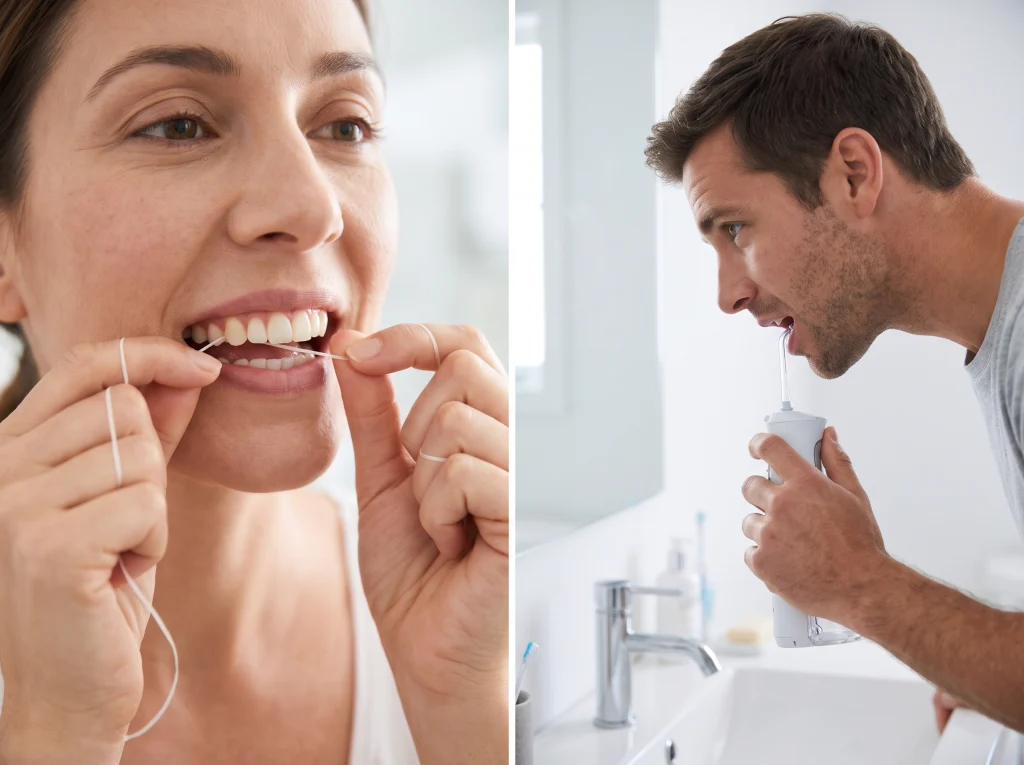
Yes. You can use traditional floss and a Waterpik in the same dental care routine.
Using both may be useful if you have areas that are difficult to clean with just one method. For example, traditional floss can physically wipe tight spaces, while a water flosser can help flush food debris around braces, bridges, and along the gumline.
However, using both is not necessary for everyone. A properly used interdental cleaning method that suits your needs is an important part of daily oral hygiene.
A simple routine could look like this:
| Step | Dental Care Activity |
|---|---|
| 1 | Use traditional floss to clean between tight teeth |
| 2 | Use a Waterpik if needed to clean around dental work and the gumline |
| 3 | Brush for two minutes with fluoride toothpaste |
| 4 | Clean and store your water flosser according to its instructions |
If your dentist recommends a different routine, follow that advice.
Cost and Maintenance Differences
Cost is another important factor when choosing between traditional floss and a Waterpik.
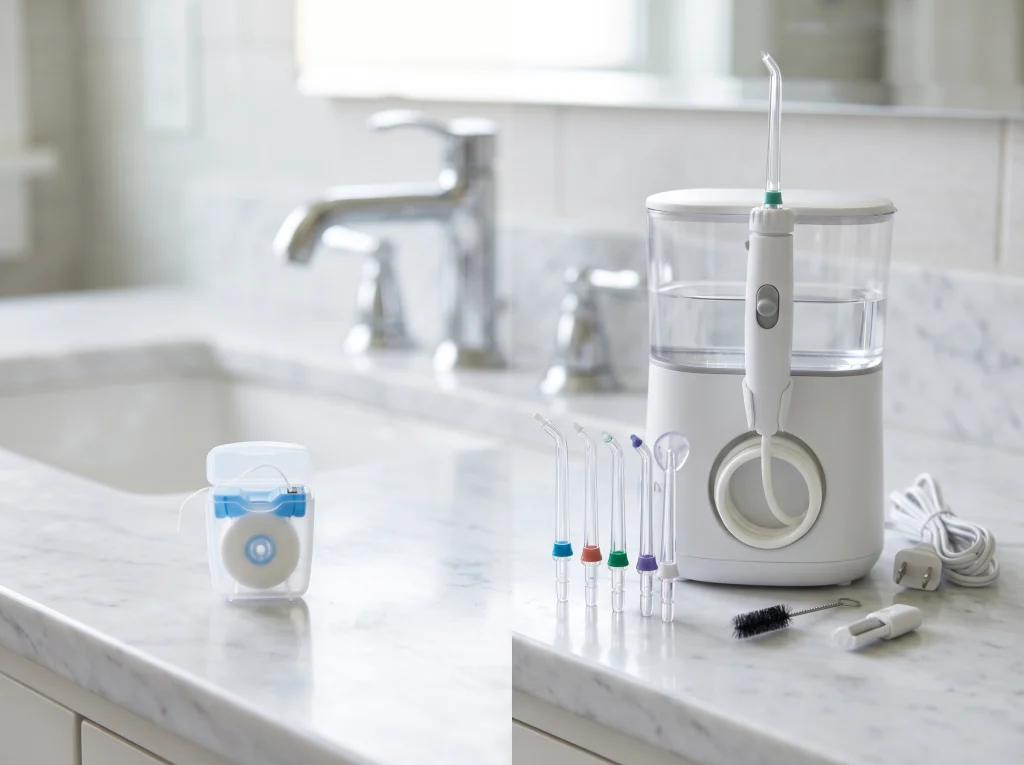
Traditional floss generally costs less upfront, while a water flosser requires purchasing an electronic device. The total cost of a Waterpik depends on its model, replacement tips, and maintenance needs.
Cost of Traditional Dental Floss
Dental floss is one of the more affordable oral hygiene products. Standard floss containers and floss picks are widely available at U.S. pharmacies, supermarkets, and online retailers.
Its ongoing cost is relatively low because you only need to replace the floss as you use it.
Cost of a Waterpik
A Waterpik usually costs more initially because it contains an electronic motor, water reservoir, and specialized components.
Additional expenses may include replacement tips and accessories. Cordless models, countertop models, and advanced versions can have different prices.
Maintenance Comparison
| Maintenance Factor | Traditional Floss | Waterpik |
|---|---|---|
| Cleaning after use | Discard used floss | Rinse and clean as instructed |
| Replacement | New floss for each use | Replace tips as recommended |
| Electricity | Not required | Required for rechargeable or powered models |
| Storage | Very easy | Requires more space |
| Maintenance effort | Minimal | Regular cleaning needed |
To maintain a water flosser, clean its reservoir and other removable parts according to the manufacturer’s instructions. Do not share personal tips or nozzles with other people.
Which Should You Choose?
The right choice depends on your dental health, budget, and ability to use each method consistently.
Here is a simple guide:
| Your Situation | Suitable Option |
|---|---|
| Tight spaces between teeth | Traditional floss |
| Braces or orthodontic wires | Waterpik can be helpful |
| Fixed dental bridges | Waterpik or floss threader |
| Difficulty using your hands | Waterpik |
| Limited budget | Traditional floss |
| Frequent food trapping | Waterpik may be convenient |
| Healthy gums and effective flossing routine | Continue traditional floss |
| Dental implants | Waterpik or dentist-recommended interdental cleaner |
Choose Traditional Floss If:
- You want an affordable cleaning option.
- Your teeth have tight spaces.
- You are comfortable using string floss.
- You want something portable for travel.
- You already have a consistent flossing routine.
Choose Waterpik If:
- You have braces or fixed dental bridges.
- You struggle to handle traditional floss.
- You want an easier way to clean around dental work.
- You prefer using a water-based cleaning device.
- You find it easier to maintain a daily routine with a water flosser.
Is Waterpik Worth the Money?
A Waterpik may be worth the investment if traditional flossing is difficult or you have dental work that makes cleaning between teeth more complicated.
However, if you can use traditional floss correctly and consistently, you may not need to purchase an electronic water flosser.
The goal is not to own the most expensive dental cleaning device. It is to remove plaque regularly and maintain healthy teeth and gums.
FAQs
Conclusion
Choosing between floss and Waterpik depends on your dental needs, personal preferences, and daily routine. Traditional dental floss is affordable, portable, and effective for physically cleaning tight spaces between teeth. A Waterpik offers a convenient water-based alternative that can be particularly helpful for people with braces, bridges, or difficulty handling regular floss.
Both methods can support good oral hygiene when used correctly. If traditional floss works well for you, there may be no reason to replace it. If you struggle with string floss, a Waterpik with the ADA Seal of Acceptance may be a useful alternative.