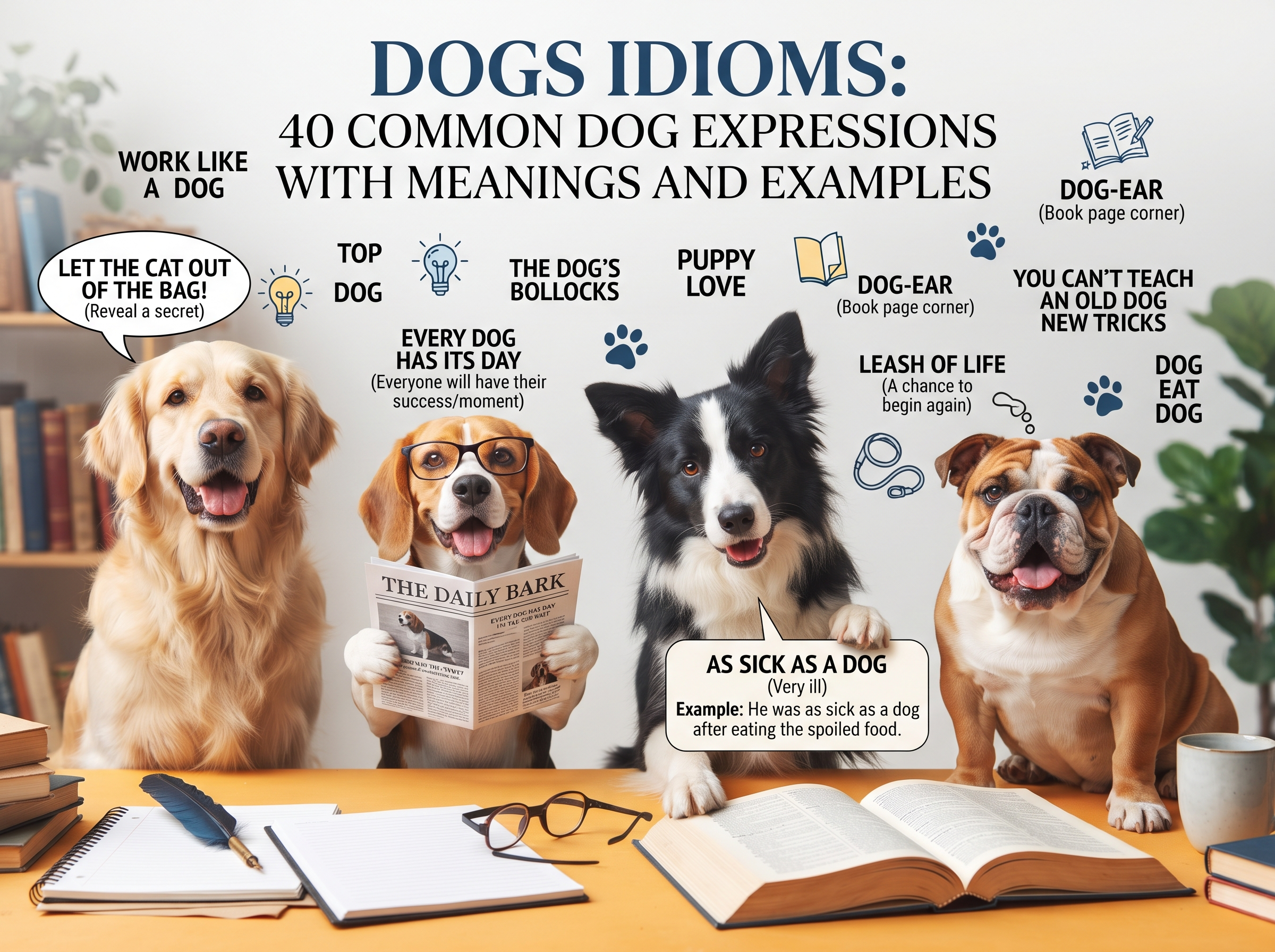
Dogs Idioms: 40 Common Dog Expressions With Meanings and Examples
Dogs appear in many English idioms and expressions. These phrases can describe competition, hard work, conflict, success, trouble, loyalty, stubbornness, and everyday situations. Their meanings are often figurative, so understanding the individual words may not be enough.
For example, if someone says, “You’re barking up the wrong tree,” they are not talking about a dog or a tree. They mean that someone is following the wrong idea or blaming the wrong person. Similarly, “let sleeping dogs lie” means to avoid bringing up an old problem that could create new trouble. Cambridge Dictionary identifies both as established English idioms.
Some dog expressions are especially common in American English, while others are more strongly associated with British English. “Dog and pony show,” for example, is specifically identified by Cambridge Dictionary as a U.S. expression for an impressive-looking event or presentation that lacks real substance.
What Are Dogs Idioms?
Dogs idioms are figurative English expressions that use the word dog, dog behavior, or dog related vocabulary to communicate an idea that is different from the literal meaning.
Many of these expressions are used in everyday American English. Some describe people, such as top dog and underdog, while others describe situations, such as dog eat dog and let sleeping dogs lie.

Dog expressions can have positive, negative, humorous, or neutral meanings. Learning them in context is important because some can sound natural in casual conversation but may not be suitable for formal writing.
40 Common Dogs Idioms With Meanings and Examples
1. Every Dog Has Its Day
Meaning: Everyone gets a chance to succeed or enjoy a period of happiness.
Example:
She has struggled for years, but every dog has its day.
Cambridge Dictionary defines this saying as emphasizing that everyone is successful or happy at some point in life.
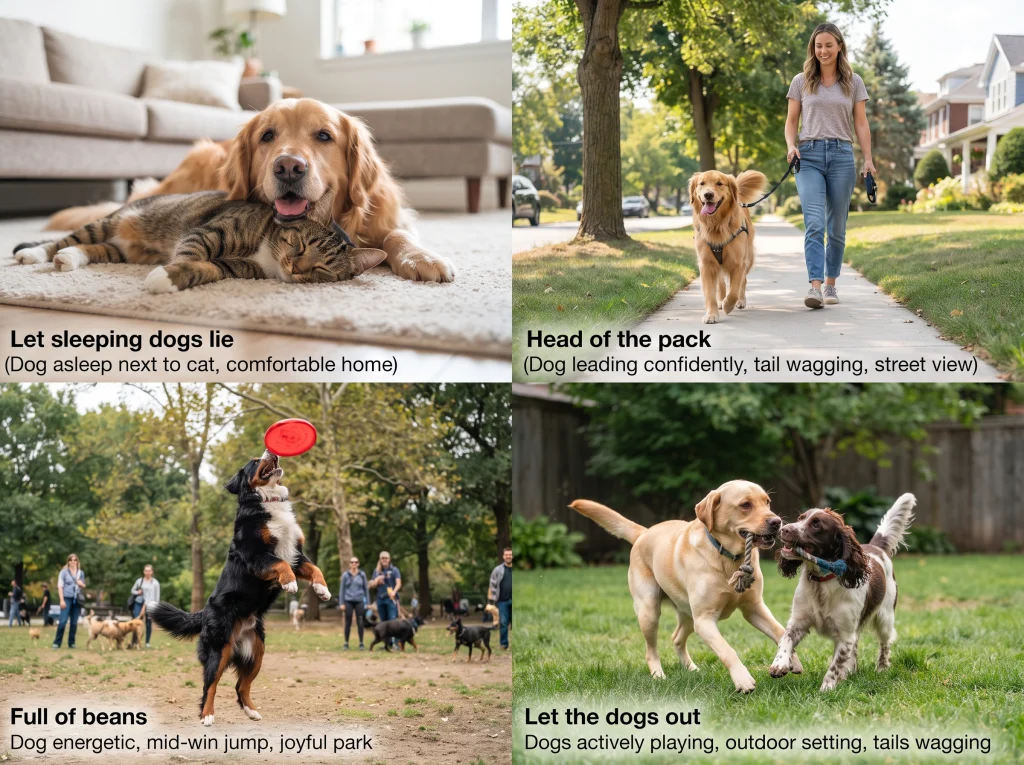
2. Let Sleeping Dogs Lie
Meaning: Avoid bringing up an old problem because doing so may cause trouble again.
Example:
We finally resolved the disagreement, so let’s let sleeping dogs lie.
3. Barking Up the Wrong Tree
Meaning: Following the wrong idea, blaming the wrong person, or taking the wrong approach.
Example:
If you think I deleted the files, you’re barking up the wrong tree.
4. Work Like a Dog
Meaning: To work extremely hard.
Example:
I’ve been working like a dog to finish this project before Friday.
5. Dog Eat Dog
Meaning: A situation in which people compete aggressively, sometimes harming others to succeed.
Example:
The industry can be dog eat dog when companies compete for the same customers.
6. In the Doghouse
Meaning: To be in trouble with someone because of something you did.
Example:
I’m in the doghouse because I forgot my wife’s birthday.
7. Go to the Dogs
Meaning: To become much worse or decline in quality.
Example:
Some residents think the neighborhood has gone to the dogs.
8. Dog Tired
Meaning: Extremely tired.
Example:
After working a double shift, I was dog tired.
9. Sick as a Dog
Meaning: Very sick or feeling extremely ill.
Example:
I was sick as a dog after eating something that didn’t agree with me.
10. A Dog’s Life
Meaning: A difficult or unpleasant life.
Example:
Working seven days a week with no time off can feel like a dog’s life.
Cambridge’s recent discussion of dog idioms uses this expression for a life filled with suffering or difficulty.
11. Top Dog
Meaning: The most important or powerful person in a group or organization.
Example:
After years of hard work, she became the top dog at the company.
12. Underdog
Meaning: A person or team expected to have less chance of succeeding.
Example:
The underdog surprised everyone by winning the championship.
13. Don’t Have a Dog in the Fight
Meaning: To have no personal interest or involvement in the outcome of a situation.
Example:
I don’t have a dog in the fight, so I’ll support whatever decision the team makes.
Cambridge Dictionary includes have a dog in the fight as an idiom for having a personal interest in a situation.
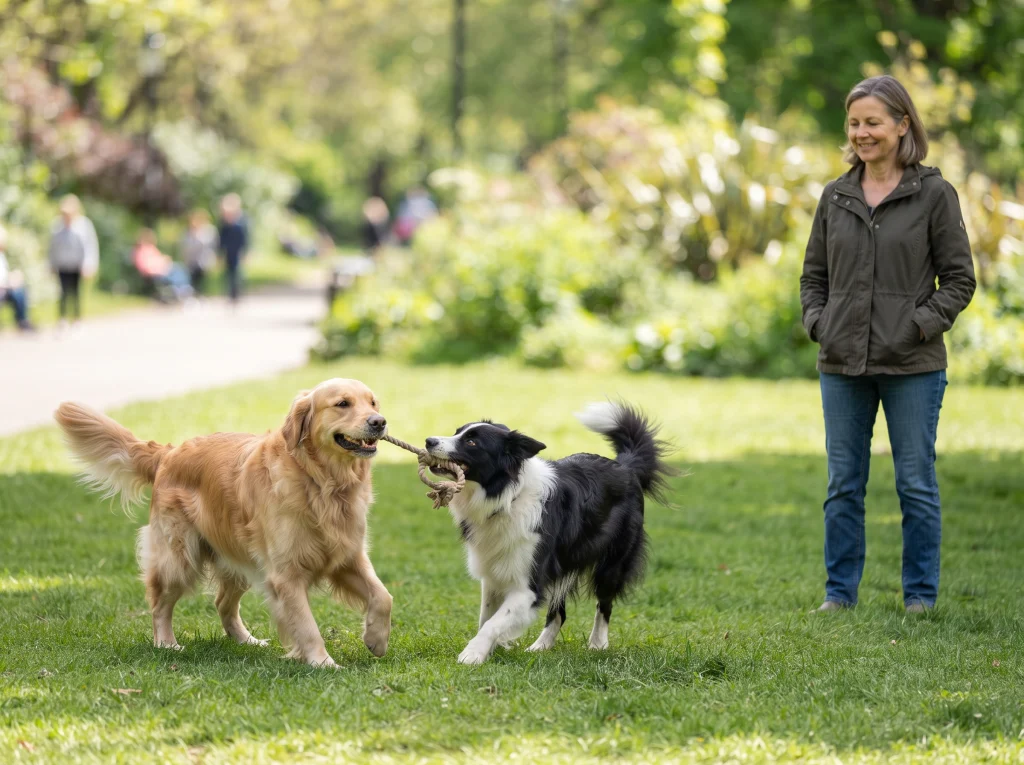
14. Like a Dog With a Bone
Meaning: Extremely determined and unwilling to give up.
Example:
Once Maria starts investigating a problem, she’s like a dog with a bone.
15. You Can’t Teach an Old Dog New Tricks
Meaning: It can be difficult for someone to change long established habits or ways of doing things.
Example:
My grandfather prefers his old phone because you can’t teach an old dog new tricks.
The expression is commonly used about established habits, although it should not be treated as a literal statement about someone’s ability to learn. Cambridge lists it as a saying about the difficulty of changing long standing behavior.
16. There’s Life in the Old Dog Yet
Meaning: Someone who is older can still be active, capable, or energetic.
Example:
He retired years ago, but there’s life in the old dog yet.
17. Bark Is Worse Than Their Bite
Meaning: Someone seems threatening or intimidating but is less harmful than they appear.
Example:
Don’t worry about the new coach. His bark is worse than his bite.
18. Call Off the Dogs
Meaning: Tell people to stop attacking, criticizing, pursuing, or pressuring someone.
Example:
The company needs to call off the dogs and give the employee a chance to explain.
19. Fight Like Cats and Dogs
Meaning: To argue or fight frequently.
Example:
My two brothers fought like cats and dogs when they were younger.
Cambridge notes that the U.S. form is fight like cats and dogs, while fight like cat and dog is used in UK English.
20. Raining Cats and Dogs
Meaning: Raining very heavily.
Example:
We canceled the picnic because it was raining cats and dogs.
This is a well established informal weather expression, although it is not normally used to describe light or ordinary rain.
21. Dog and Pony Show
Meaning: An impressive looking presentation or event designed mainly to persuade or impress people rather than provide substantial information.
Example:
The sales presentation was mostly a dog and pony show with very little useful information.
Cambridge specifically identifies this expression as U.S. English.
22. The Tail Is Wagging the Dog
Meaning: A relatively small or less important part of a situation is controlling or excessively influencing the whole situation.
Example:
The minor disagreement is now controlling the entire project. The tail is wagging the dog.
23. Give a Dog a Bad Name
Meaning: To give someone a negative reputation that may continue to affect how others see them.
Example:
One mistake can give a new employee a bad name if everyone hears about it.
24. A Dog in the Manger
Meaning: Someone who prevents another person from enjoying or using something that they do not want themselves.
Example:
He wouldn’t use the meeting room, but he refused to let anyone else use it either. He was acting like a dog in the manger.
25. A Dog’s Breakfast
Meaning: A complete mess or something done very badly.
Example:
The paperwork was a dog’s breakfast, with important information in the wrong places.
This expression is especially associated with British English rather than everyday American English. Cambridge identifies it as a UK informal expression.
26. Put on the Dog
Meaning: To dress or behave in an elaborate, stylish, or showy way.
Example:
They really put on the dog for the charity dinner.
27. Have a Dog’s Chance
Meaning: To have very little chance of succeeding.
Example:
Without additional funding, the small company doesn’t have a dog’s chance of finishing the project.
28. Dog-Eared
Meaning: Having pages or corners that are folded, bent, or worn from use.
Example:
My old dictionary is dog-eared because I’ve used it for years.
29. Puppy Love
Meaning: A young person’s early romantic feelings that are often considered temporary or inexperienced.
Example:
Her first crush was probably just puppy love.
30. Puppy Dog Eyes
Meaning: A facial expression that makes someone look innocent, pleading, or especially hard to refuse.
Example:
The kids gave their dad puppy dog eyes when they asked for another dessert.

31. Hair of the Dog
Meaning: An alcoholic drink taken in an attempt to relieve a hangover.
Example:
He jokingly suggested hair of the dog after the party.
This expression is informal and is usually used humorously. It should not be understood as a medically recommended treatment for a hangover.
32. Dog Days of Summer
Meaning: The hottest period of summer.
Example:
During the dog days of summer, we spend more time indoors with the air conditioner running.
The expression has historical associations with the period connected to the rising of Sirius, known as the Dog Star.
33. Dog-Eat-Dog World
Meaning: A highly competitive environment in which people may act aggressively to get ahead.
Example:
The entertainment business can feel like a dog-eat-dog world.
34. Run With the Big Dogs
Meaning: To compete or operate alongside the strongest, most experienced, or most successful people.
Example:
If you want to run with the big dogs, you’ll need to be prepared for serious competition.
35. The Big Dog
Meaning: An important or powerful person, organization, or competitor.
Example:
The small company is now competing with the big dogs in the industry.
36. Lucky Dog
Meaning: A person who is fortunate or has good luck.
Example:
You got the last ticket? You lucky dog!
This expression is usually friendly and informal.
37. Dirty Dog
Meaning: An insulting or playful expression for someone who has behaved badly, dishonestly, or mischievously.
Example:
You dirty dog! You knew about the surprise party and didn’t tell me.
The expression can be humorous among friends, but its meaning depends heavily on context.
38. Doggone
Meaning: A mild informal expression used to show annoyance, surprise, or emphasis.
Example:
Doggone it, I left my keys at home.
It is more common in informal American English and can sound old fashioned or humorous depending on the speaker.
39. Dog It
Meaning: To avoid doing something, perform poorly, or give less effort than expected.
Example:
He decided to dog it during practice instead of giving the team his best effort.
This expression is informal and less common than phrases such as work like a dog or dog tired.
40. Why Keep a Dog and Bark Yourself?
Meaning: If someone else can do a task for you, there is no reason for you to do it yourself.
Example:
The assistant offered to make the calls, so why keep a dog and bark yourself?
This expression appears in dictionary listings of dog related idioms, but it is not as common in everyday American conversation as phrases such as top dog or barking up the wrong tree.
Dog Idioms About Competition and Success
Several dog expressions are especially useful when talking about competition.
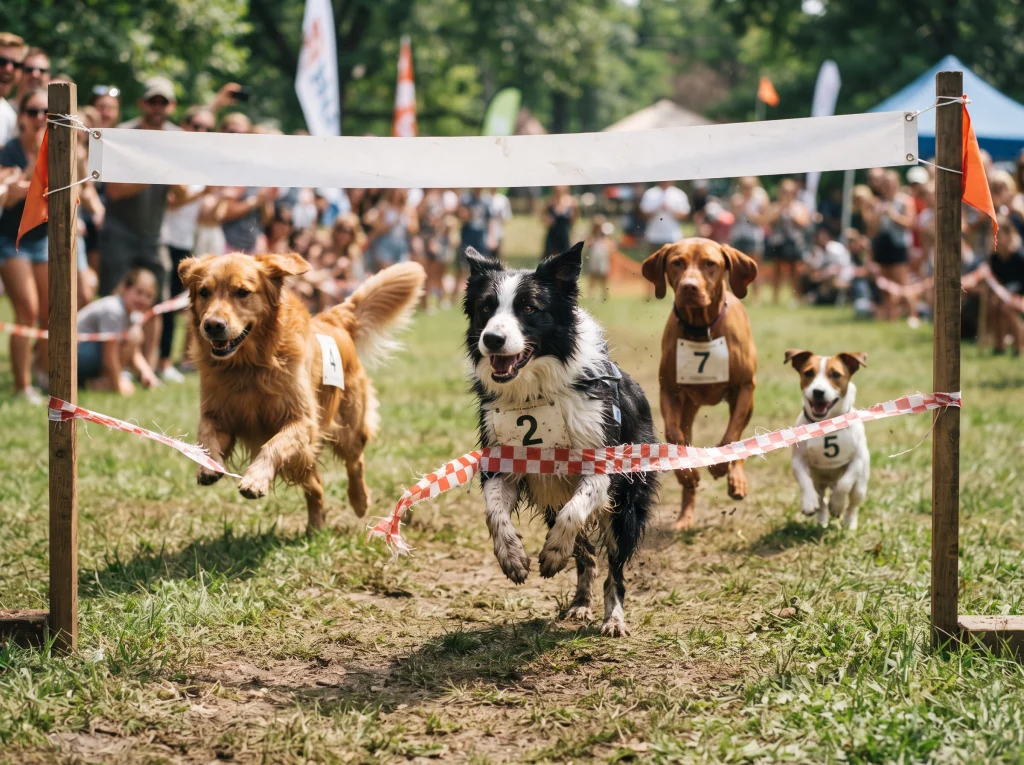
Dog eat dog describes harsh competition. Dog-eat-dog world expands the same idea to describe an entire environment. Top dog refers to the person at the highest position, while underdog refers to someone expected to have less of a chance.
For example, you might say:
The underdog made it to the final, but the competition was dog eat dog.
These expressions are useful in conversations about sports, business, careers, school, and other competitive situations.
Dog Idioms About Problems and Conflict
English also uses dogs to describe disagreements and difficult situations.
Let sleeping dogs lie is useful when someone wants to avoid reopening an old argument. Barking up the wrong tree applies when someone has misunderstood a situation or blamed the wrong person. In the doghouse describes being in trouble with someone, while call off the dogs means to stop an aggressive pursuit or attack.
These expressions are generally conversational and can make everyday speech more vivid.
Dog Idioms About Work and Difficulty
Some dog idioms describe effort, exhaustion, or hardship.
If someone works like a dog, they work extremely hard. If they are dog tired, they are exhausted. A dog’s life describes a difficult or unpleasant existence.
These expressions can be useful when talking about long workdays, demanding schedules, difficult projects, or stressful responsibilities.
Dog Idioms About Behavior and Personality
Dog expressions can also describe personality and behavior.
Someone who is like a dog with a bone refuses to give up. A person whose bark is worse than their bite may appear frightening but is less dangerous than expected. Puppy dog eyes describes an innocent or pleading expression, while dirty dog can refer to someone who has behaved badly.
The tone matters with these expressions. Some are playful, while others can be insulting.
Dog Related Expressions Common in American English
Not every phrase containing the word dog is equally common throughout the English speaking world.
American English commonly uses expressions such as dog and pony show, top dog, underdog, dog-eat-dog, barking up the wrong tree, and in the doghouse.
Some other expressions are more strongly associated with British English. For example, Cambridge identifies a dog’s breakfast as a UK informal expression.
This distinction matters for English learners because a phrase can be grammatically correct without being equally natural in every English speaking region.
How to Use Dog Idioms Naturally
The best way to learn dog idioms is to connect each expression with a specific situation rather than memorizing a long definition.
For example, imagine a coworker blaming you for a mistake you did not make. You could say:
You’re barking up the wrong tree.
If someone wants to reopen an argument that everyone has already moved past, you could say:
Let’s let sleeping dogs lie.
If someone has worked for ten hours and is exhausted, you could say:
I’m dog tired.
It is also helpful to pay attention to register. Most dog idioms are conversational or informal. They can work well in everyday speech, stories, texts, and casual writing, but a formal report may require more direct wording.
Common Mistakes With Dog Idioms
One common mistake is interpreting these expressions literally. Barking up the wrong tree has nothing to do with an actual dog barking at a tree. It means someone is using the wrong approach or blaming the wrong person.
Another mistake is using an idiom in the wrong situation. Every dog has its day is about eventual success or happiness, while let sleeping dogs lie is about avoiding an old problem. Their meanings are quite different.
It is also important to remember regional differences. An expression that is familiar in British English may sound unusual to many Americans. When speaking to a U.S. audience, common American expressions are generally the safest choice.
Finally, avoid forcing idioms into every sentence. Native speakers use idioms naturally when they fit the situation. Clear, ordinary language is often better when an idiom would sound unnatural.
FAQs:
Conclusion
Dogs idioms add color and personality to English. They can describe success, competition, conflict, hard work, exhaustion, stubbornness, and everyday behavior in a memorable way.
Expressions such as every dog has its day, let sleeping dogs lie, barking up the wrong tree, dog tired, top dog, and in the doghouse are especially useful for understanding conversational English.