30+ Change Idioms: Meanings, Examples, and Expressions About Change
Change is a natural part of life. People change their habits, opinions, jobs, relationships, and lifestyles as they grow and face new situations. In everyday American English, speakers often use idioms about change to describe these experiences in a more interesting and expressive way.
Change idioms can describe starting over, improving behavior, changing your mind, accepting new circumstances, or experiencing a major transformation. Expressions such as turn over a new leaf, change of heart, and a leopard can’t change its spots communicate ideas that would otherwise require longer explanations.
Whether you are learning English, improving your vocabulary, or looking for natural expressions for everyday conversations, these 30+ change idioms will help you understand how Americans talk about change. Each expression includes a simple meaning and an original example sentence.
What Are Change Idioms?
Change idioms are expressions that communicate ideas about becoming different, accepting new circumstances, changing behavior, or making a fresh start. Their meanings are often figurative rather than completely literal.
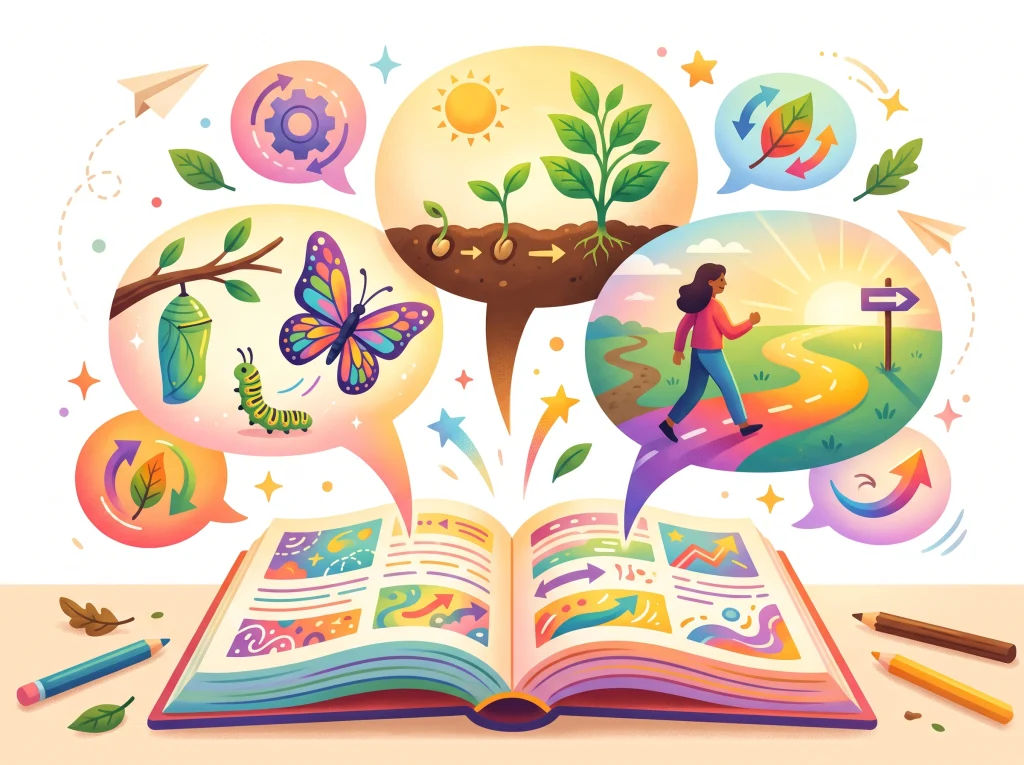
For example, turn over a new leaf does not mean physically turning a leaf. It means deciding to improve your behavior and begin again with a better attitude.
People use these expressions in conversations about personal development, education, relationships, business, work, and everyday experiences.
Common Change Idioms and Their Meanings
Here are some widely recognized English idioms and expressions that describe different types of change.
| Idiom | Meaning |
|---|---|
| Turn over a new leaf | Start behaving better |
| A change of heart | A change in feelings or attitude |
| Change your mind | Change your opinion or decision |
| Change your tune | Change your attitude or position |
| A leopard can’t change its spots | A person’s basic character is difficult to change |
| Change for the better | Improve |
| Change for the worse | Become worse |
| Turn the page | Move on from the past |
| A change of pace | A different routine or activity |
| A change of scenery | A different environment |
| The winds of change | Signs of important upcoming changes |
| Change hands | Pass to a new owner |
| Change horses in midstream | Switch plans or leaders during an ongoing process |
| A sea change | A major transformation |
| Start from scratch | Begin again from the beginning |
| Back to square one | Return to the starting point |
| Make a fresh start | Begin again with a new approach |
| Shake things up | Make changes to a situation |
| Roll with the punches | Adapt to difficulties |
| Go with the flow | Accept circumstances as they develop |
| Shift gears | Change your approach or activity |
| Change tack | Try a different approach |
| Make an about-face | Completely reverse an opinion or decision |
| Turn things around | Improve a difficult situation |
| Get a new lease on life | Gain renewed energy or purpose |
| Out with the old, in with the new | Replace old things with new ones |
| Make a clean break | Completely separate from the past |
| Come full circle | Return to an earlier situation |
| Nothing is set in stone | Things can still change |
| Times are changing | Society or circumstances are becoming different |
Let’s look at these expressions in more detail.
Idioms About Positive Change and New Beginnings
These idioms are useful when someone wants to improve their life, develop better habits, or leave an unpleasant experience behind.
1. Turn Over a New Leaf
Meaning: To change your behavior and start doing things in a better way.
Example: After failing two exams, Daniel turned over a new leaf and started studying every evening.
2. Make a Fresh Start
Meaning: To begin again with a new attitude, plan, or opportunity.
Example: After moving to Texas, Maria decided to make a fresh start and build a new career.
3. Change for the Better
Meaning: To improve compared with how something was before.
Example: His attitude toward work has changed for the better since he became a team leader.
4. Turn Things Around
Meaning: To improve a difficult or unsuccessful situation.
Example: The new manager worked hard to turn things around after the company experienced several difficult months.
5. Get a New Lease on Life
Meaning: To gain renewed energy, happiness, hope, or purpose.
Example: After retiring, my grandfather got a new lease on life by traveling and learning photography.
6. Turn the Page
Meaning: To move on from a past experience and focus on what comes next.
Example: After ending an unhealthy relationship, she was ready to turn the page and focus on herself.
7. Start From Scratch
Meaning: To begin something again from the very beginning without using previous progress.
Example: The business lost its original records, so the owners had to start from scratch.
8. Out With the Old, In With the New
Meaning: To replace old things, habits, or ways of doing something with new ones.
Example: We replaced our outdated office equipment and changed the entire workspace. Out with the old, in with the new!
9. Make a Clean Break
Meaning: To end a relationship, situation, or connection completely so you can move forward.
Example: After leaving his old job, Mark made a clean break and started working independently.
10. Change of Pace
Meaning: A different activity or routine that provides variety.
Example: Working from home every day became boring, so visiting the office twice a week was a welcome change of pace.
Idioms About Changing Opinions and Attitudes
People sometimes change their minds after receiving new information or experiencing something unexpected. These idioms describe changes in opinions, feelings, and personal attitudes.
11. A Change of Heart
Meaning: A change in someone’s feelings, attitude, or decision, often becoming more sympathetic or positive.
Example: My father initially refused to let me study abroad, but he had a change of heart after hearing my plans.
12. Change Your Mind
Meaning: To decide something different from what you previously thought or planned.
Example: I was planning to buy a new car, but I changed my mind and decided to save the money.
13. Change Your Tune
Meaning: To change your opinion, attitude, or behavior, especially after circumstances become different.
Example: He criticized the new company policy, but he changed his tune after receiving a promotion.
14. A Leopard Can’t Change Its Spots
Meaning: People usually cannot easily change their basic personality or deeply established behavior.
Example: I gave him another opportunity, but he broke his promise again. A leopard can’t change its spots.
15. Make an About-Face
Meaning: To completely reverse an opinion, decision, or position.
Example: The school board made an about-face and approved the proposal after reviewing the new evidence.
16. Change Your Ways
Meaning: To stop behaving in a negative way and develop better habits.
Example: If Jake wants to keep his job, he needs to change his ways and arrive on time.
17. Change Places
Meaning: To exchange positions or imagine being in another person’s situation.
Example: I wouldn’t change places with my brother because his new job involves too much stress.
18. Have a Change of Mind
Meaning: To reconsider a previous decision or opinion.
Example: Sarah had a change of mind about attending the party after her friends invited her.
Note: “Change your mind” and “have a change of mind” are closely related expressions. Both are common in everyday English.
Idioms About Adapting to Change
Life does not always go according to plan. Sometimes people must adjust their expectations, try new approaches, and respond to unexpected situations.
19. Roll With the Punches
Meaning: To adapt to difficult or unexpected situations without giving up.
Example: Running a small business is challenging, so successful owners must learn to roll with the punches.
20. Go With the Flow
Meaning: To accept situations as they happen instead of trying to control everything.
Example: We haven’t decided where to spend our vacation, so let’s go with the flow.
21. Shift Gears
Meaning: To change your activity, approach, or way of thinking to suit a new situation.
Example: When the original marketing campaign failed, the company shifted gears and focused on social media.
22. Change Tack
Meaning: To try a different approach when the current one is not working.
Example: After several unsuccessful interviews, James changed tack and started contacting employers directly.
23. Change Horses in Midstream
Meaning: To change a leader, plan, or approach while an activity or process is already underway.
Example: The project was almost complete, so replacing the project manager at that stage would mean changing horses in midstream.
24. Nothing Is Set in Stone
Meaning: A plan, decision, or arrangement is not final and can still be changed.
Example: Our vacation dates are not set in stone, so we can adjust them if necessary.
25. A Change Is as Good as a Rest
Meaning: Doing something different can make you feel refreshed, even if you are not actually resting.
Example: I usually work at my desk, but spending Friday at the library reminded me that a change is as good as a rest.
Idioms About Unexpected or Major Changes
Some changes happen suddenly, while others transform an entire situation over time. The following expressions help describe significant changes in life, business, and society.
26. A Sea Change
Meaning: A major and noticeable transformation in a situation, attitude, or way of doing something.
Example: The introduction of online banking brought a sea change to the financial industry.
27. The Winds of Change
Meaning: Signs that important changes are beginning or are likely to happen.
Example: The new leadership and updated policies suggest that the winds of change are blowing through the organization.
28. Change Hands
Meaning: To pass from one owner to another.
Example: The family restaurant changed hands after its original owners retired.
29. Back to Square One
Meaning: To return to the beginning after an unsuccessful attempt or unexpected problem.
Example: Our website crashed before launch, so the development team had to go back to square one.
30. Come Full Circle
Meaning: To return to an earlier situation, position, or experience after going through changes.
Example: Emily started her career as a teacher, became a school administrator, and eventually returned to teaching. Her career has come full circle.
31. A Change of Scenery
Meaning: A different place or environment that provides a refreshing experience.
Example: After working in the same office for five years, I needed a change of scenery.
32. Change for the Worse
Meaning: To become less pleasant, successful, or positive than before.
Example: The neighborhood has changed for the worse since several local businesses closed.
33. Times Are Changing
Meaning: Society, attitudes, technology, or everyday circumstances are becoming different.
Example: More employees are working remotely now. Times are changing, and businesses must adjust.
34. Shake Things Up
Meaning: To introduce changes that make a situation different, more interesting, or more effective.
Example: The restaurant decided to shake things up by introducing a new menu and changing its interior design.
35. A Change for the Better or Worse
Meaning: A transformation that produces either a positive or negative result.
Example: Moving to a smaller city turned out to be a change for the better because our family now has more time together.
How to Use Change Idioms in Everyday English
Learning an idiom’s meaning is only the first step. You should also understand when and how to use it naturally in conversations.
Here are five practical ways to use change idioms correctly.
1. Use Positive Idioms for Personal Growth
When someone improves their habits or makes a positive decision, expressions such as turn over a new leaf, make a fresh start, and change for the better are appropriate.
Example: I’ve decided to turn over a new leaf and exercise regularly.
2. Use Opinion-Related Idioms for Decisions
When someone changes their thoughts or feelings, use expressions such as change your mind, change your tune, or have a change of heart.
Example: I changed my mind about buying a house after comparing the costs.
3. Use Adaptation Idioms for Difficult Situations
Expressions such as roll with the punches, go with the flow, and shift gears work well when discussing unexpected challenges.
Example: The weather ruined our outdoor plans, but we rolled with the punches and watched a movie instead.
4. Use Major-Change Idioms for Significant Events
When describing important transformations, expressions such as a sea change, the winds of change, and turn things around can make your explanation more expressive.
Example: Remote work has brought a sea change to the way many American companies operate.
5. Pay Attention to Context and Tone
Some idioms are encouraging, while others can sound critical or negative.
For example, turn over a new leaf usually suggests positive personal improvement. In contrast, a leopard can’t change its spots can sound judgmental because it suggests that someone’s behavior is unlikely to improve.
Choose expressions that match your message and the relationship you have with the listener.
Frequently Asked Questions:
Conclusion
Change is part of everyday life, and English idioms provide interesting ways to describe it. Expressions such as turn over a new leaf, change of heart, roll with the punches, and a sea change help communicate different experiences, from personal improvement to major transformations.