Motrin or Advil? Key Differences, Uses, Dosage, and Side Effects
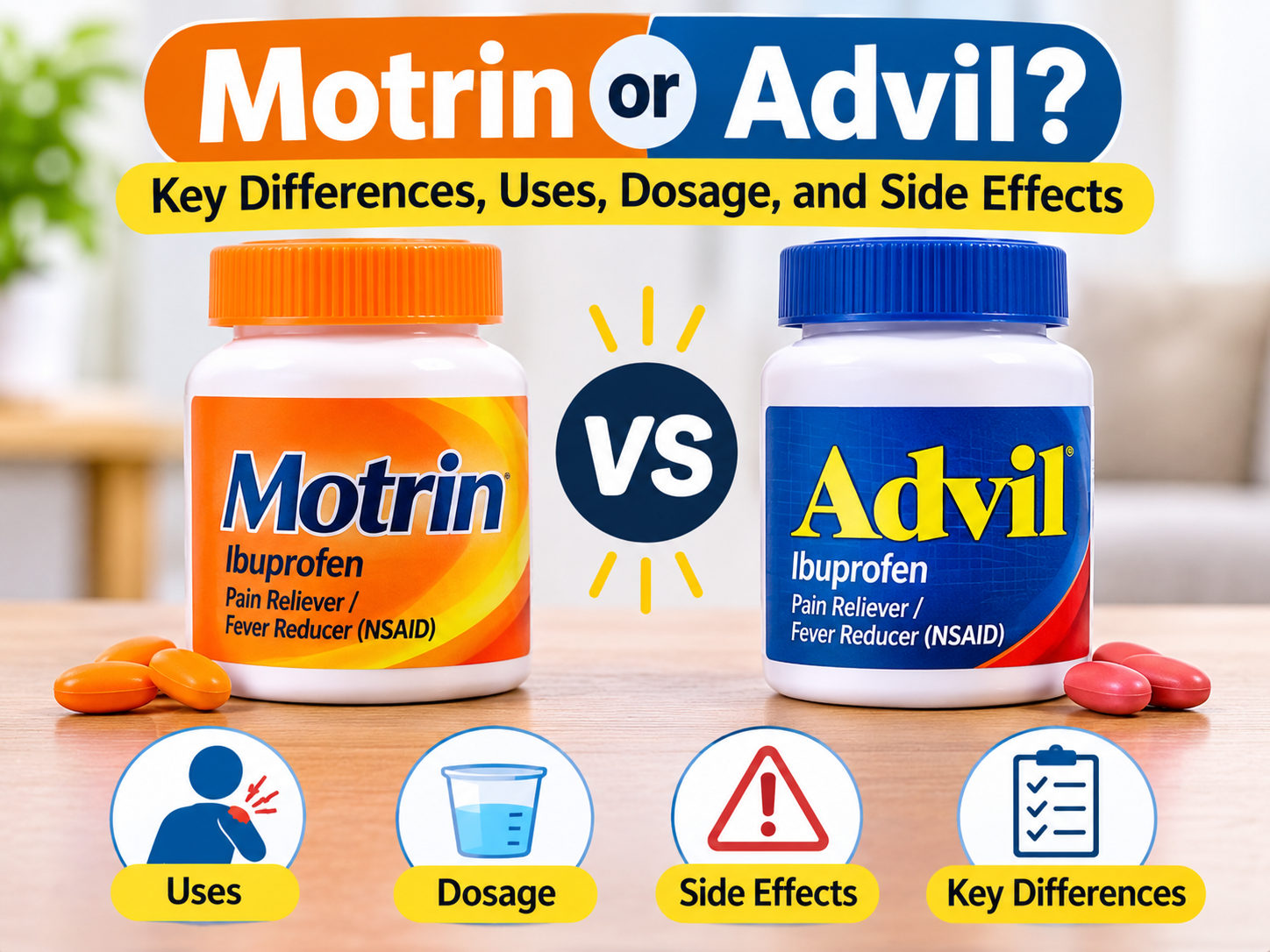
When choosing an over-the-counter pain reliever, many people wonder whether Motrin or Advil is better. Both are popular medications used to relieve headaches, muscle aches, menstrual cramps, toothaches, and fever. Although they have different brand names, they contain the same active ingredient: ibuprofen.
For most people, Motrin and Advil provide similar pain relief when taken at equivalent doses. The main differences involve product formulations, available strengths, inactive ingredients, packaging, and price. Understanding these similarities and differences can help you choose an appropriate option for your symptoms.
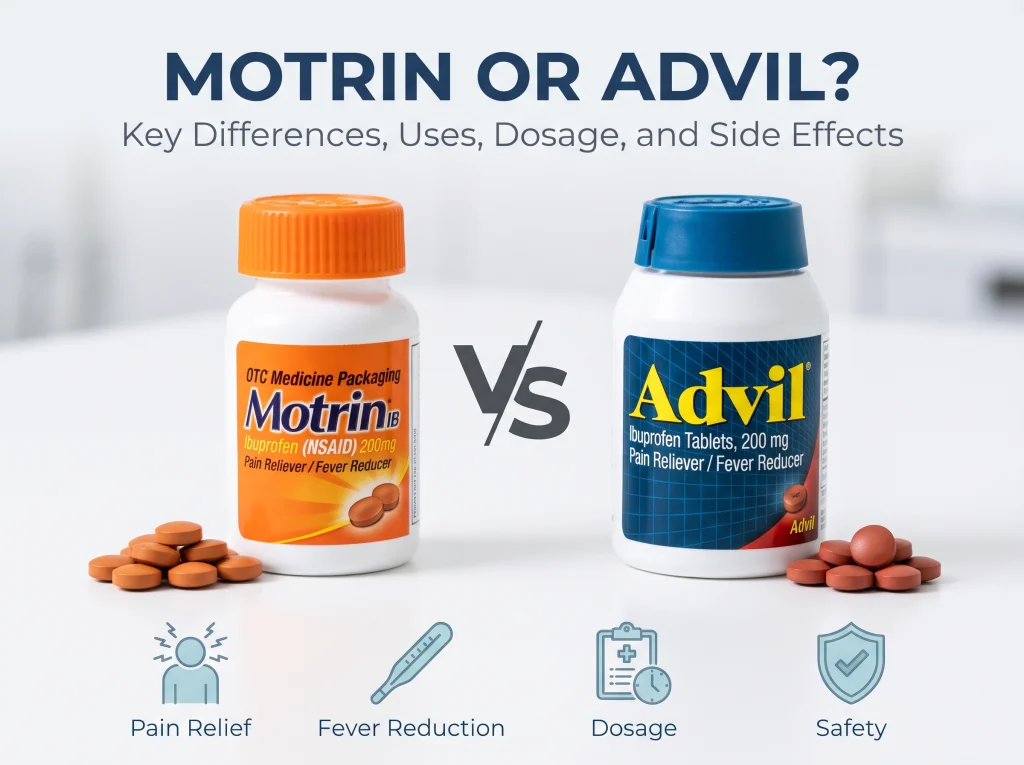
However, ibuprofen is not suitable for everyone. It can cause stomach irritation, increase the risk of gastrointestinal bleeding, and affect kidney function in certain people. Knowing the recommended dosage and safety precautions is just as important as choosing a brand.
What Are Motrin and Advil?
Motrin and Advil are brand-name medications that contain ibuprofen, a nonsteroidal anti-inflammatory drug (NSAID). This medication helps reduce pain, inflammation, and fever by blocking enzymes involved in producing prostaglandins, chemicals that contribute to pain and inflammation.
Motrin
Motrin is a brand of ibuprofen available in different formulations and strengths. Products may include tablets, caplets, and children’s liquid medicine.
Advil Ibuprofen Pain Reliever Tablet 200mg 24Ct
Advil
Advil is another well-known ibuprofen brand. It offers products such as tablets, coated caplets, liquid-filled capsules, and children’s formulations.
Both medications belong to the same drug class and work through the same basic mechanism. Their effectiveness depends more on the ibuprofen dose and formulation than on the brand name.
Motrin vs. Advil: Key Differences
The most important point in comparing Motrin and Advil is that both contain ibuprofen. Neither brand is automatically stronger or more effective when the same dose and formulation are compared.
| Feature | Motrin | Advil |
|---|---|---|
| Active ingredient | Ibuprofen | Ibuprofen |
| Medication class | NSAID | NSAID |
| Main purpose | Pain and fever relief | Pain and fever relief |
| Anti-inflammatory action | Yes | Yes |
| Available forms | Tablets, caplets, liquid | Tablets, caplets, liquid-filled capsules |
| Common OTC adult strength | 200 mg | 200 mg |
| Common uses | Headaches, cramps, muscle pain | Headaches, cramps, muscle pain |
Product availability and formulations can vary. Always check the Drug Facts label because different products under the same brand may contain different ingredients.
Which Brand Works Faster?
Neither brand has a universal speed advantage. When Motrin and Advil contain the same amount of ibuprofen in comparable formulations, their expected onset of action is generally similar.
Some liquid-filled capsules or other formulations may be absorbed differently from standard tablets. However, this does not mean every Advil product works faster than every Motrin product.
The time needed for pain relief also depends on factors such as the type of pain, individual metabolism, food intake, and the specific product.
Are Motrin and Advil the Same Medication?
Yes. Standard Motrin and Advil products containing ibuprofen are the same medication in terms of their active ingredient.
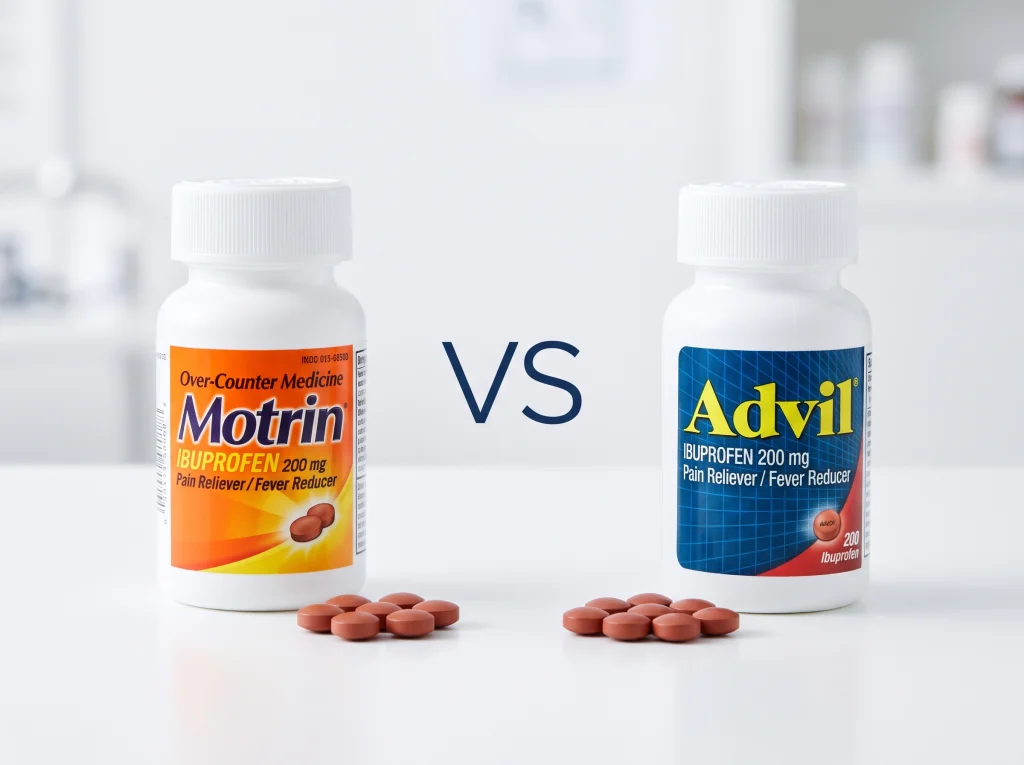
For example, a standard 200 mg Motrin tablet and a standard 200 mg Advil tablet both deliver 200 mg of ibuprofen. They work through the same mechanism and have similar potential benefits and risks.
However, they may differ in:
- Inactive ingredients used in the formulation.
- Tablet coatings and capsule designs.
- Available strengths and dosage forms.
- Packaging and product pricing.
- Additional ingredients in certain combination products.
Always read the label before taking a medication. Some branded products contain additional active ingredients or different formulations, so the brand name alone does not tell you everything about the medicine.
What Conditions Do Motrin and Advil Treat?
Both medications provide temporary relief from several types of mild to moderate pain. Because they contain ibuprofen, they have similar approved over-the-counter uses.
Common conditions include:
- Headaches: Relief from tension headaches and other minor headaches.
- Toothaches: Temporary relief from dental pain.
- Muscle aches: Help with soreness after exercise or physical activity.
- Backaches: Relief from minor back pain.
- Menstrual cramps: Reduction of pain associated with menstrual periods.
- Arthritis pain: Temporary relief from minor arthritis-related joint pain.
- Fever: Reduction of an elevated body temperature.
- Cold symptoms: Relief from minor aches and pains associated with the common cold.
Ibuprofen is particularly useful when pain involves inflammation. For example, it may help with swollen or sore joints, muscle discomfort, and menstrual cramps.
Neither brand treats the underlying cause of an infection or injury. They manage symptoms while the body recovers or the underlying condition receives appropriate treatment.
Dosage and How to Take Them Safely
The correct dosage depends on the person’s age, the product’s strength, and the formulation. Always follow the Drug Facts label rather than assuming every Motrin or Advil product has identical instructions.
Standard Adult Dosage
For standard 200 mg ibuprofen tablets, the usual OTC directions for adults and children 12 years and older are:
| Dosage instruction | Amount |
|---|---|
| Starting dose | 1 tablet (200 mg) |
| Dosing interval | Every 4 to 6 hours as needed |
| If one tablet is insufficient | 2 tablets (400 mg) may be used |
| Maximum OTC amount | 6 tablets (1,200 mg) in 24 hours |
Do not exceed the recommended amount unless a healthcare professional specifically directs you to do so. If pain or fever continues or gets worse, seek medical advice rather than increasing the dose yourself. Advil+1
Children’s Dosage
Children’s Motrin and Advil products are available in liquid and chewable forms. The correct amount depends on the child’s weight, age, and product concentration.
For children’s ibuprofen:
- Use the weight-based dosage chart on the package whenever possible.
- Measure liquid medicine with the supplied dosing device.
- Do not use an ordinary kitchen spoon.
- Follow the recommended interval and daily maximum.
- Ask a healthcare professional before giving ibuprofen to a child younger than 6 months.
Children younger than 12 should not automatically receive the adult tablet dosage. Different liquid concentrations can also require different amounts. Always check the specific product label. MOTRIN®+1
Tips for Taking Ibuprofen
Taking ibuprofen correctly can help reduce avoidable problems.
- Swallow tablets with a full glass of water.
- Take the medicine with food or milk if it causes stomach discomfort.
- Use the lowest effective dose for the shortest necessary time.
- Avoid taking more than one ibuprofen-containing product at once.
- Check cold, flu, and combination pain medicines for hidden NSAID ingredients.

Side Effects of Motrin and Advil
Since Motrin and Advil contain the same active ingredient, their potential side effects are generally similar. Most side effects are mild, but serious complications can occur, particularly with higher doses or prolonged use.
Common Side Effects
Some people may experience:
- Stomach discomfort or pain
- Heartburn
- Nausea
- Diarrhea or constipation
- Gas and bloating
- Dizziness
- Mild headaches
Taking ibuprofen with food may reduce stomach discomfort, although it does not eliminate the risk of ulcers or gastrointestinal bleeding.
Serious Side Effects
Seek immediate medical attention if you experience signs of a serious reaction, including:
- Black or bloody stools.
- Vomiting blood or material that looks like coffee grounds.
- Severe stomach pain.
- Chest pain or difficulty breathing.
- Sudden weakness, slurred speech, or vision changes.
- Swelling of the face, lips, tongue, or throat.
- Significantly reduced urination or unusual swelling.
Ibuprofen can increase the risk of heart attack, stroke, stomach ulcers, and gastrointestinal bleeding. These complications can sometimes occur without warning. MedlinePlus
Important Safety Warnings and Drug Interactions
Although both brands are available without a prescription, they are not appropriate for everyone. Certain medical conditions and medications can increase the risks associated with ibuprofen.
Who Should Be Careful?
Talk to a healthcare professional before using Motrin or Advil if you:
- Have a history of stomach ulcers or gastrointestinal bleeding.
- Have kidney disease or significant dehydration.
- Have heart disease, high blood pressure, or a history of stroke.
- Have asthma or previously experienced an allergic reaction to aspirin or other NSAIDs.
- Take blood-thinning medication.
- Are an older adult, particularly if you have other health conditions.
People who have recently experienced a heart attack or are scheduled for coronary artery bypass surgery should not use ibuprofen without specific medical guidance.
Drug Interactions
Ibuprofen may interact with several medications, including:
| Medication | Potential concern |
|---|---|
| Warfarin and other blood thinners | Increased bleeding risk |
| Aspirin | Possible increased side effects and interference with its protective heart effects |
| Naproxen | Increased NSAID-related risks |
| Prednisone and other corticosteroids | Higher risk of stomach ulcers and bleeding |
| Certain antidepressants, including SSRIs and SNRIs | Increased bleeding risk |
| Some blood pressure medicines and diuretics | Possible kidney and blood pressure complications |
Tell your pharmacist or healthcare professional about all prescription medicines, OTC products, and supplements you take before starting ibuprofen. MedlinePlus

Can You Take Motrin or Advil During Pregnancy?
Ibuprofen requires particular caution during pregnancy. The FDA recommends avoiding NSAIDs, including ibuprofen, at around 20 weeks of pregnancy or later unless specifically advised by a healthcare professional.
These medicines may affect fetal kidney function and reduce amniotic fluid. Around 30 weeks and later, they can also cause serious problems involving the developing baby’s heart.
Pregnant individuals should consult their healthcare professional about safer options for pain or fever relief. FDA+1
Can You Take Motrin and Advil Together?
No. You should not take Motrin and Advil together because both contain ibuprofen.
Taking both brands at the same time does not provide a meaningful additional benefit. Instead, it can increase your total ibuprofen intake and raise the risk of stomach bleeding, kidney problems, and other NSAID-related complications.
For example, taking one 200 mg Motrin tablet and one 200 mg Advil tablet together gives you 400 mg of ibuprofen. You should count that as a single 400 mg dose, not as two different medications.
If you have already taken both, check the total amount of ibuprofen consumed and contact a pharmacist or healthcare professional if you are unsure whether you exceeded the recommended dose.
Motrin or Advil: Which One Should You Choose?
For most adults, either brand can provide similar relief when the products contain the same amount of ibuprofen and have comparable formulations.
Your choice may depend on availability, price, product form, and personal preference.
| Your preference | Possible choice |
|---|---|
| Standard ibuprofen tablets | Either Motrin or Advil |
| Liquid-filled capsules | Choose a suitable available formulation |
| Children’s liquid medicine | Compare the concentration and dosing instructions |
| Lower-priced option | Compare store-brand ibuprofen as well |
| Different tablet coatings | Choose the formulation you find easier to take |
When to Choose Motrin
Motrin may be a suitable option if you prefer its available tablet, caplet, or liquid formulations. It contains ibuprofen and can help with common aches, menstrual cramps, and fever.
When to Choose Advil
Advil may be a suitable option if you prefer its available tablets, caplets, or liquid-filled capsules. It provides the same active ingredient as standard Motrin products containing ibuprofen.
Is Generic Ibuprofen a Good Alternative?
Yes. Generic ibuprofen is another option for people who want the same active ingredient without paying extra for a brand name.
When choosing a generic product, compare its active ingredient, strength, dosage form, and Drug Facts label. An FDA-approved generic medication must meet applicable standards for quality and performance.
For most people, the important decision is selecting the appropriate ibuprofen product and taking it safely, not choosing between the Motrin and Advil brand names.
Frequently Asked Questions:
Conclusion
When comparing Motrin or Advil, the biggest takeaway is that both standard products contain the same active ingredient, ibuprofen. They provide similar relief from headaches, muscle aches, menstrual cramps, toothaches, and fever when taken at equivalent doses.
Neither brand is universally better or stronger. Compare the dosage, formulation, price, and product ingredients before making a choice. Most importantly, follow the package directions and consider your medical history, existing medications, and potential side effects. If you have a health condition or need pain relief for more than a short period, consult a healthcare professional.