
Singular or Plural? Meaning, Differences, Rules, and Examples
Singular and plural are two basic grammatical forms in English that tell us whether we are talking about one person, animal, place, thing, or more than one. Understanding the difference helps you choose the correct nouns, pronouns, and verbs when speaking or writing.
For example, “The student is reading a book” uses singular nouns because it refers to one student and one book. In contrast, “The students are reading books” uses plural nouns because it refers to more than one student and more than one book.

Most English nouns become plural by adding -s or -es, but some follow special spelling rules. Words such as “child,” “person,” and “mouse” have irregular plural forms, while words such as “sheep” and “deer” remain the same in both forms.
In this guide, you will learn what singular and plural mean, how to change nouns from singular to plural, important spelling rules, common exceptions, and how to use singular and plural words correctly in American English.
What Does Singular Mean?
Singular refers to one person, animal, place, object, or idea. A singular noun identifies a single item rather than multiple items.
For example:
- A student
- One apple
- A teacher
- My friend
- One city
- A beautiful flower
- A computer
- An interesting idea
Singular nouns often use words such as “a,” “an,” “one,” “this,” and “that.”
Examples in sentences:
- My brother owns a bicycle.
- The teacher explains the lesson.
- A bird is sitting in the tree.
- This book belongs to Sarah.
- The dog is sleeping on the sofa.
Each sentence refers to one main person or thing.
In American English, singular countable nouns generally need a determiner such as “a,” “an,” “the,” “this,” or a possessive word when used in ordinary sentences.
For example, “I bought a laptop” is correct, while “I bought laptop” is generally incorrect.
What Does Plural Mean?
Plural refers to more than one person, animal, place, object, or idea. Plural nouns identify two or more items.
For example:
- Students
- Apples
- Teachers
- Friends
- Cities
- Flowers
- Computers
- Ideas
Plural nouns often appear with words such as “many,” “several,” “these,” “those,” and numbers greater than one.
Examples in sentences:
- My brothers own bicycles.
- The teachers explain the lessons.
- Birds are sitting in the trees.
- These books belong to Sarah.
- The dogs are sleeping on the sofas.
Most regular plural nouns end in -s or -es, but irregular nouns follow different patterns.
Singular or Plural: Key Differences
The main difference between singular and plural is the number of people or things a noun represents. Singular means one, while plural means more than one.
The following table explains their differences.
| Feature | Singular | Plural |
|---|---|---|
| Meaning | One person or thing | More than one |
| Noun form | Usually the basic form | Often ends in -s or -es |
| Articles | A or an can be used | A or an cannot be used |
| Demonstratives | This, that | These, those |
| Quantity | One, each, every | Many, several, both |
| Example | Book | Books |
| Example | Child | Children |
| Example | Woman | Women |

Singular and Plural Examples Compared
| Singular | Plural |
|---|---|
| Car | Cars |
| House | Houses |
| Student | Students |
| Box | Boxes |
| Baby | Babies |
| City | Cities |
| Man | Men |
| Woman | Women |
| Child | Children |
| Tooth | Teeth |
| Foot | Feet |
| Mouse | Mice |
These examples show that some nouns follow regular spelling patterns, while others change completely.
Rules for Changing Singular Nouns Into Plural Nouns
English has several spelling rules for forming plural nouns. Learning these patterns makes it easier to recognize and write the correct plural forms.
1. Add -S to Most Singular Nouns
The most common rule is to add -s to the end of a singular noun.
Examples:
| Singular | Plural |
|---|---|
| Book | Books |
| Car | Cars |
| Apple | Apples |
| Chair | Chairs |
| Friend | Friends |
| Table | Tables |
| Computer | Computers |
| Student | Students |
| Flower | Flowers |
| Phone | Phones |
Example sentences:
- I have one book.
- She has three books.
- The student is studying.
- The students are studying.
2. Add -ES to Certain Ending Words
Nouns ending in -s, -ss, -sh, -ch, -x, and usually -z generally form their plurals by adding -es.
Examples:
| Singular | Plural |
|---|---|
| Bus | Buses |
| Class | Classes |
| Dish | Dishes |
| Watch | Watches |
| Box | Boxes |
| Buzz | Buzzes |
| Brush | Brushes |
| Church | Churches |
| Fox | Foxes |
| Glass | Glasses |
For example, one person may own a watch, while a family may own several watches.
3. Change Consonant + Y to -IES
When a noun ends in a consonant followed by -y, remove the “y” and add -ies.
Examples:
| Singular | Plural |
|---|---|
| Baby | Babies |
| City | Cities |
| Lady | Ladies |
| Story | Stories |
| Country | Countries |
| Party | Parties |
| Family | Families |
| Dictionary | Dictionaries |
For example:
- One baby is sleeping.
- Two babies are sleeping.
However, this rule does not apply when a vowel comes before the final “y.”
4. Add -S to Vowel + Y Nouns
When a noun ends in a vowel followed by “y,” simply add -s.
Examples:
| Singular | Plural |
|---|---|
| Boy | Boys |
| Toy | Toys |
| Key | Keys |
| Day | Days |
| Monkey | Monkeys |
| Journey | Journeys |
| Donkey | Donkeys |
| Valley | Valleys |
For example, “boy” becomes “boys,” not “boies.”
5. Change Some F or FE Endings to -VES
Some nouns ending in -f or -fe change their endings to -ves in the plural form.
Examples:
| Singular | Plural |
|---|---|
| Leaf | Leaves |
| Knife | Knives |
| Wife | Wives |
| Life | Lives |
| Wolf | Wolves |
| Shelf | Shelves |
| Half | Halves |
| Thief | Thieves |
However, not all nouns ending in “f” or “fe” follow this rule.
Examples of exceptions include:
| Singular | Plural |
|---|---|
| Roof | Roofs |
| Chief | Chiefs |
| Belief | Beliefs |
| Chef | Chefs |
| Cliff | Cliffs |
Always check an unfamiliar noun in a reliable dictionary.
6. Add -S or -ES to Some Nouns Ending in O
Nouns ending in “o” can form their plurals with either -s or -es, depending on the word.
Examples:
| Singular | Plural |
|---|---|
| Potato | Potatoes |
| Tomato | Tomatoes |
| Hero | Heroes |
| Photo | Photos |
| Piano | Pianos |
| Radio | Radios |
| Video | Videos |
| Zoo | Zoos |
There is no single rule that covers every noun ending in “o.” Learning common forms and checking a dictionary can help prevent mistakes.
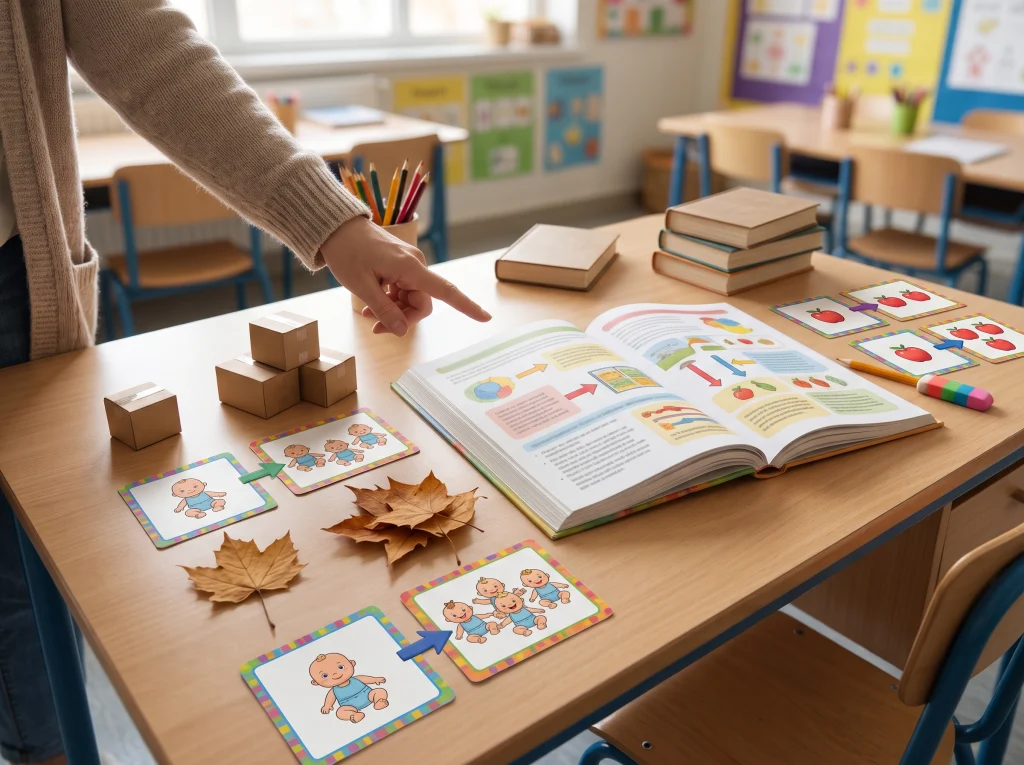
Regular and Irregular Plural Nouns
Plural nouns are generally divided into two main groups: regular and irregular.
Regular Plural Nouns
Regular plural nouns follow standard spelling patterns, usually by adding -s or -es.
Examples:
| Singular | Plural |
|---|---|
| Cat | Cats |
| Dog | Dogs |
| Pen | Pens |
| Bus | Buses |
| Box | Boxes |
| Church | Churches |
| Baby | Babies |
| City | Cities |
These forms are relatively easy to learn because they follow predictable spelling rules.
Irregular Plural Nouns
Irregular plural nouns do not follow the usual rules for adding “-s” or “-es.” Their spelling may change completely, or they may use an unusual ending.
Common examples include:
| Singular | Plural |
|---|---|
| Man | Men |
| Woman | Women |
| Child | Children |
| Person | People |
| Foot | Feet |
| Tooth | Teeth |
| Mouse | Mice |
| Goose | Geese |
| Ox | Oxen |
| Louse | Lice |
Example sentences:
- One man is standing outside.
- Three men are standing outside.
- The child is playing.
- The children are playing.
- A mouse entered the kitchen.
- Two mice entered the kitchen.
Irregular forms are important in everyday English, so it is useful to practice them regularly.
Singular and Plural Nouns That Stay the Same
Some English nouns have identical singular and plural forms. Their spelling does not change when referring to more than one item.
Common examples include:
| Singular | Plural |
|---|---|
| Sheep | Sheep |
| Deer | Deer |
| Fish | Fish |
| Species | Species |
| Aircraft | Aircraft |
| Series | Series |
Example sentences:
- One sheep is standing near the fence.
- Five sheep are standing near the fence.
- I saw a deer in the forest.
- We saw several deer in the forest.
- The aircraft is ready.
- The aircraft are ready.
Notice that the verb changes even though the noun remains the same.
Singular or Plural Subject-Verb Agreement
Subject-verb agreement means that the verb in a sentence must match its subject in number and person.
In the simple present tense, most third-person singular subjects use verbs ending in -s or -es, while plural subjects use the base form of the verb.
| Singular Subject | Plural Subject |
|---|---|
| The boy runs. | The boys run. |
| The girl plays. | The girls play. |
| The dog barks. | The dogs bark. |
| The teacher teaches. | The teachers teach. |
| The child has a toy. | The children have toys. |
| The student is ready. | The students are ready. |

Important Singular and Plural Verb Forms
Some common verbs have special singular and plural forms.
| Singular | Plural |
|---|---|
| Is | Are |
| Was | Were |
| Has | Have |
| Does | Do |
For example:
- She is my friend.
- They are my friends.
- He has a new phone.
- They have new phones.
- The student does the work.
- The students do the work.
Remember that “you” takes plural verb forms in standard English, whether it refers to one person or several people.
For example:
- You are my friend.
- You are my friends.
Singular and Plural Collective Nouns
A collective noun refers to a group of people, animals, or things as one unit. Common examples include family, team, class, committee, and audience.
In American English, collective nouns generally take singular verbs when the group is considered as one unit.
Examples:
- My family is visiting Florida.
- The team is practicing for the game.
- The class is taking an exam.
- The committee has made a decision.
When referring to more than one group, use a plural noun and a plural verb.
For example:
“The two teams are preparing for the championship.”
Nouns That Can Be Singular or Plural
Not every English noun follows the same counting pattern. Some nouns are countable, while others are uncountable or have special grammatical forms.
Countable Nouns
Countable nouns refer to things that can be counted individually. They have singular and plural forms.
Examples:
- One apple, three apples
- One chair, four chairs
- One student, ten students
- One bottle, six bottles
- One idea, several ideas
You can use numbers with countable nouns.
Uncountable Nouns
Uncountable nouns refer to substances, materials, concepts, or quantities that are not normally counted as individual units.
Common examples include:
- Water
- Rice
- Information
- Advice
- Furniture
- Equipment
- Money
- Knowledge
These nouns generally use singular verb forms when referring to the quantity as a whole.
Examples:
- The water is cold.
- The information is useful.
- My furniture is new.
- The advice was helpful.
To express a quantity, use suitable measurement or counting expressions:
- A glass of water
- Two bags of rice
- Three pieces of advice
- Several items of furniture
Nouns That End in S but Are Usually Singular
Some nouns end in “-s” but are generally treated as singular in American English.
Examples include:
| Noun | Example |
|---|---|
| News | The news is interesting. |
| Mathematics | Mathematics is challenging. |
| Physics | Physics is my favorite subject. |
| Economics | Economics is an important field. |
| Measles | Measles is a contagious disease. |
The final “s” does not automatically make these nouns plural.
Nouns That Are Usually Plural
Some nouns normally appear in plural form and refer to items made of two connected parts or groups of things.
Examples include:
- Scissors
- Pants
- Jeans
- Shorts
- Glasses
- Sunglasses
- Trousers
- Binoculars
Examples in sentences:
- My scissors are on the desk.
- These jeans are comfortable.
- Her sunglasses are expensive.
When referring to one item, you can use “a pair of.”
For example:
“I bought a pair of jeans.”
Common Singular and Plural Mistakes
English learners and even experienced writers sometimes make mistakes when choosing singular and plural forms.
Here are some common errors and their corrections.
| Incorrect | Correct |
|---|---|
| Two childs | Two children |
| Three mans | Three men |
| Five womans | Five women |
| Many informations | Much information |
| Two furnitures | Two pieces of furniture |
| These book | These books |
| This apples | These apples |
| The boys plays football. | The boys play football. |
| She have two cats. | She has two cats. |
| The news are good. | The news is good. |
Avoid Using Apostrophes to Form Plurals
One common spelling mistake is adding an apostrophe before “s” when making ordinary nouns plural.
For example:
- Incorrect: Apple’s are delicious.
- Correct: Apples are delicious.
- Incorrect: The student’s are studying.
- Correct: The students are studying.
An apostrophe usually indicates possession or a contraction, not an ordinary plural.

How to Identify Singular and Plural Nouns
You can identify whether a noun is singular or plural by following a few simple steps.
Step 1: Check the number.
Ask whether the noun refers to one person or thing or more than one.
- One dog: Singular
- Three dogs: Plural
Step 2: Look at the noun ending.
Most regular plural nouns end in “-s” or “-es.” However, remember that irregular nouns and unchanged plural forms do not always follow this pattern.
Step 3: Check the words around the noun.
Determiners can help identify number.
- This book: Singular
- These books: Plural
- That house: Singular
- Those houses: Plural
Step 4: Check the verb.
The verb can provide another clue about the subject’s number.
- The student is working.
- The students are working.
Step 5: Check for exceptions.
Some nouns have irregular forms, remain unchanged in the plural, or are uncountable. Do not assume that every word ending in “-s” is plural.
Frequently Asked Questions:
Conclusion
Understanding singular and plural forms is essential for using English grammar correctly. Singular nouns refer to one person or thing, while plural nouns refer to more than one.
Most nouns form their plurals by adding “-s” or “-es,” but some require spelling changes or have completely irregular forms. Other nouns remain unchanged, and uncountable nouns follow different counting rules.