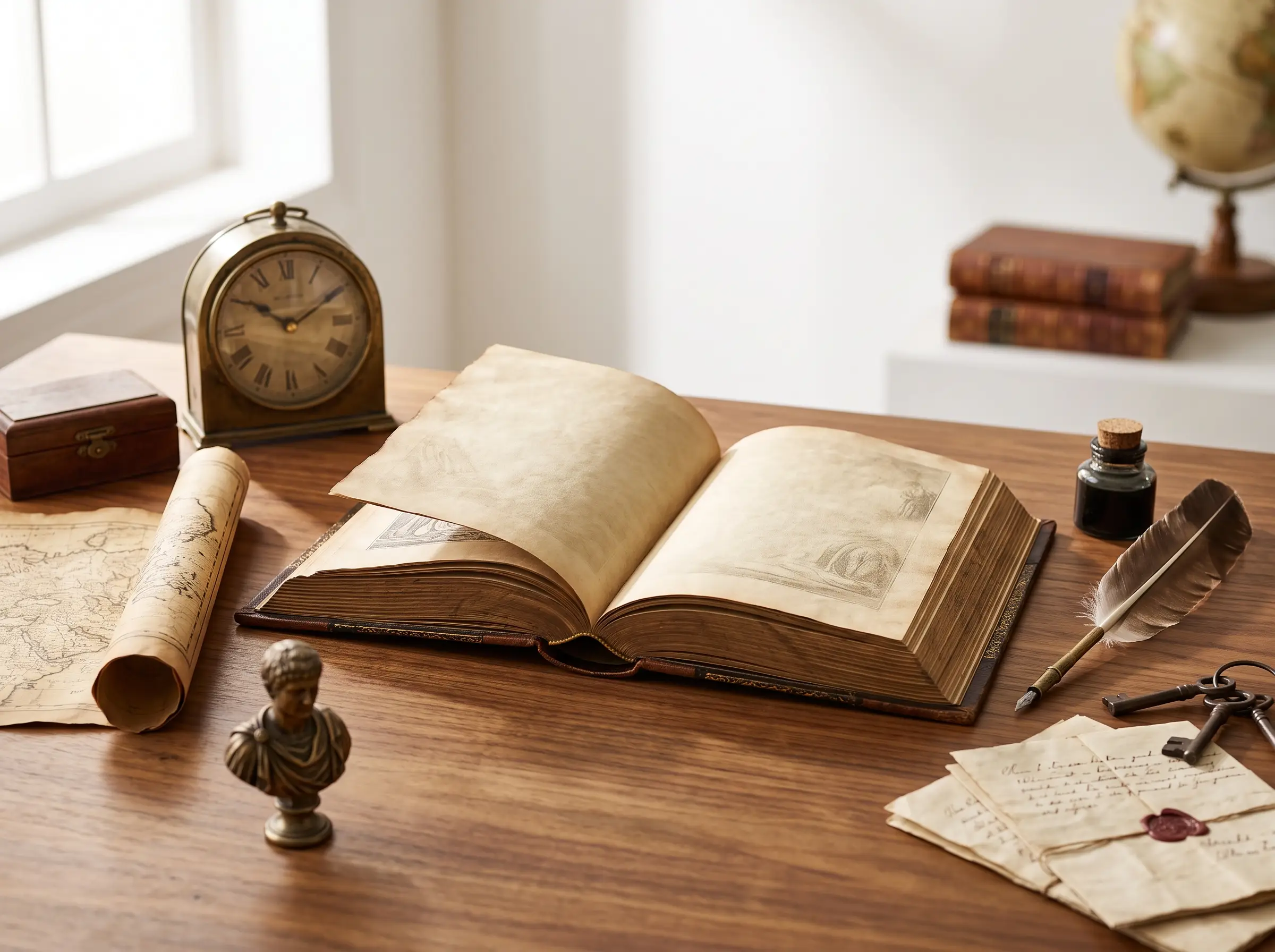
50 Idioms About History: Meanings, Examples, and Everyday Usage
Idioms about history are expressions that use ideas about the past, important events, memories, records, and time to communicate something beyond their literal meaning. They appear often in everyday American English, storytelling, journalism, education, sports, and casual conversations.

For example, when someone says, “That’s ancient history,” they usually do not mean an event from thousands of years ago. They mean that something happened a long time ago and is no longer important. Similarly, “make history” means to do something significant enough to be remembered.
Learning these expressions can make your English sound more natural and help you understand conversations, books, movies, podcasts, and news more easily.
Rabbit idioms: https://learnidioms.com/rabbit-idioms/
50 Common Idioms About History
| Idiom | Meaning | Example |
|---|---|---|
| 1. Make history | Do something important that will be remembered | The team made history with its record breaking season. |
| 2. Go down in history | Be remembered as an important event or person | Her achievement will go down in history. |
| 3. The rest is history | The remaining story is already known or obvious | They met in college, started a business, and the rest is history. |
| 4. History repeats itself | Similar events or mistakes happen again | We should learn from the past because history repeats itself. |
| 5. Be history | Be finished, gone, or no longer relevant | Once the contract ends, that old arrangement will be history. |
| 6. Ancient history | Something from the distant past or something no longer important | That disagreement is ancient history now. |
| 7. A blast from the past | Something that reminds you of an earlier time | Finding my old school notebook was a blast from the past. |
| 8. Back in the day | At an earlier time | Back in the day, people often wrote letters instead of sending texts. |
| 9. Down memory lane | Thinking or talking about past experiences | Looking through those photographs took us down memory lane. |
| 10. A trip down memory lane | An enjoyable look at memories from the past | The reunion was a wonderful trip down memory lane. |
| 11. Water under the bridge | A past problem that is no longer worth worrying about | We had an argument, but it is water under the bridge now. |
| 12. History in the making | Something important that is happening now and may be remembered later | The scientists knew they were watching history in the making. |
| 13. Make your mark on history | Do something memorable or significant | The inventor hoped to make her mark on history. |
| 14. A page in history | An event or period considered part of the historical record | The event became an important page in local history. |
| 15. The history books | The recorded history of important achievements or events | The championship victory put the team in the history books. |
| 16. Rewrite history | Present the past in a substantially different way | The documentary challenged the idea that one person alone changed history. |
| 17. History will judge | Future generations may evaluate the importance of an event or decision | History will judge the decision differently as new evidence appears. |
| 18. A turning point | An event that causes an important change | The invention became a turning point in transportation. |
| 19. A watershed moment | A major event that changes what happens afterward | The discovery was a watershed moment for modern medicine. |
| 20. At a crossroads | At a point where an important decision or change must be made | The organization was at a crossroads after the leadership change. |
| 21. A thing of the past | Something that no longer exists or happens | Paper directories are becoming a thing of the past. |
| 22. Old news | Something already known or no longer interesting | That announcement is old news around here. |
| 23. Yesterday’s news | Something that was important before but is no longer important | Last month’s controversy is yesterday’s news now. |
| 24. Put the past behind you | Stop focusing on something that happened before | She decided to put the past behind her and start over. |
| 25. Leave the past behind | Move forward instead of remaining focused on earlier events | Sometimes you have to leave the past behind. |
| 26. Learn from the past | Use previous experiences to make better decisions | We can learn from the past without repeating its mistakes. |
| 27. A relic of the past | Something that remains from an earlier period | The old building is a relic of the past. |
| 28. A throwback | Something that reminds people of an earlier period | The diner has a classic throwback atmosphere. |
| 29. Old school | Traditional or associated with an earlier style | My grandfather is old school and prefers handwritten notes. |
| 30. In days gone by | In the past | In days gone by, families often stayed in the same town for generations. |
| 31. Once upon a time | At some point in the past, often used in storytelling | Once upon a time, this neighborhood looked very different. |
| 32. Since time immemorial | For an extremely long time | People have gathered around the fire since time immemorial. |
| 33. From time to time | Occasionally | We still visit the historical site from time to time. |
| 34. Time and again | Repeatedly | Time and again, historical records show the importance of preparation. |
| 35. In the old days | During an earlier period | In the old days, traveling across the country could take weeks. |
| 36. Long gone | No longer present or existing | Those small neighborhood stores are long gone. |
| 37. A bygone era | A period that has ended | The mansion reminds visitors of a bygone era. |
| 38. A chapter in history | A period or event viewed as part of a larger historical story | The invention opened a new chapter in history. |
| 39. A chapter of the past | A period or experience that has ended | That difficult period is now a closed chapter of the past. |
| 40. A historic moment | An important moment likely to be remembered | The announcement was a historic moment for the organization. |
| 41. Historic milestone | An important achievement marking progress | The company celebrated a historic milestone. |
| 42. Stand the test of time | Continue to be valuable or successful for a long period | The novel has stood the test of time. |
| 43. An enduring legacy | An influence or achievement that continues | Her work left an enduring legacy. |
| 44. Leave a legacy | Create something that will be remembered after you are gone | He wanted to leave a legacy for future generations. |
| 45. Carry the torch | Continue an important tradition, effort, or responsibility | The younger generation carried the torch for the community project. |
| 46. Follow in someone’s footsteps | Continue a similar path or career | She followed in her mother’s footsteps and became a teacher. |
| 47. The sands of time | The passing of time | The old monument has survived the sands of time. |
| 48. Turn back the clock | Return to an earlier situation or time | Technology cannot turn back the clock. |
| 49. A blast from another era | Something strongly associated with an earlier period | The old theater feels like a blast from another era. |
| 50. A lesson from history | Something learned from a past event | The crisis provided an important lesson from history. |
Several expressions containing history have established dictionary definitions, including make history, go down in history, the rest is history, history repeats itself, be history, and the history books.

The Idioms About the Past and Memories
Many history idioms are really about personal memories rather than major historical events. Expressions such as back in the day, a blast from the past, down memory lane, and in the old days help speakers talk about earlier experiences.
For example, an American might say, “That song is a blast from the past” after hearing music from their childhood. Someone looking through old family photographs might say, “These pictures really take me down memory lane.”
These expressions are especially useful in informal conversations because they make descriptions of the past more expressive without requiring a long explanation.
A Idioms About Historical Importance
Some history expressions focus on achievements that deserve to be remembered.
Make history and go down in history are two of the clearest examples. They are commonly used when discussing major achievements in science, sports, exploration, technology, culture, or other areas. Dictionary sources define these expressions in terms of something important enough to be recorded or remembered in history.
For example:
The astronauts made history with their mission.
Her achievement will go down in history.
History in the making has a slightly different emphasis. It describes an important event while it is happening rather than looking back at it after the event is complete.
Idioms About Repeating the Past
The expression history repeats itself is used when people notice similarities between events at different times. It can refer to personal experiences, organizations, social patterns, or larger historical events.
For example:
We should study previous mistakes so history does not repeat itself.
The expression is often used as a general observation rather than as a precise historical rule. Similar events can have different causes and consequences, so the phrase works best as a reminder to pay attention to patterns rather than as a literal statement that history always repeats in exactly the same way.
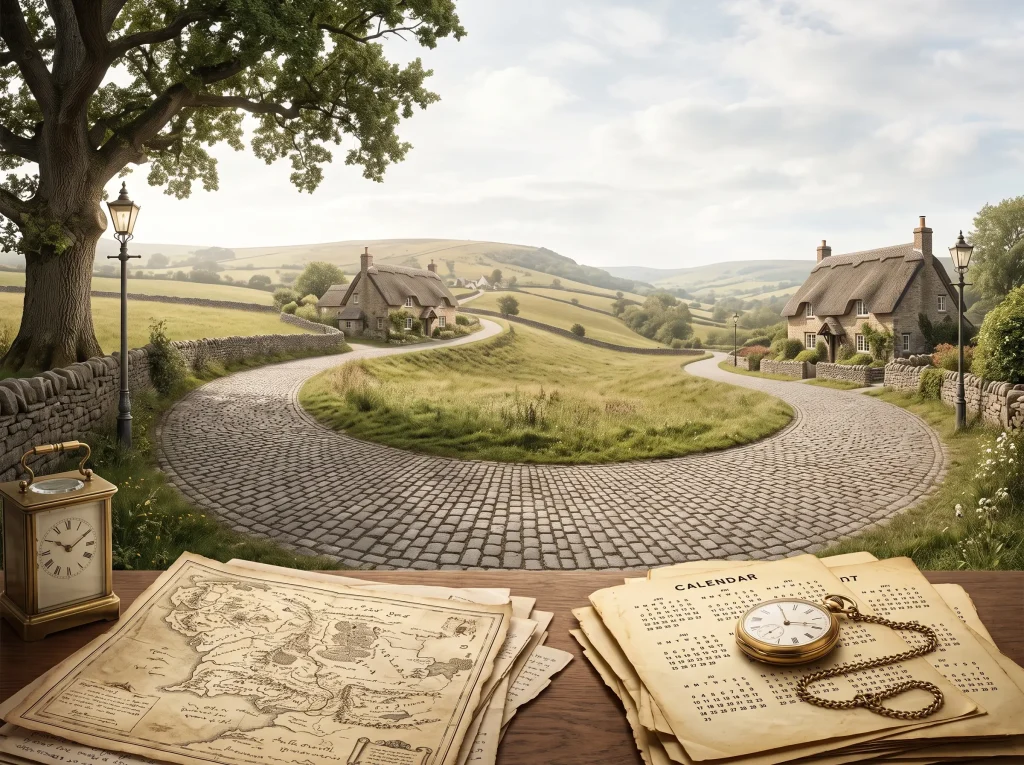
Idioms About Moving Beyond the Past
English also has many expressions for putting old experiences behind you.
Water under the bridge is used when a past disagreement or mistake is no longer considered important. Ancient history can describe something that happened long ago and is now considered irrelevant. A thing of the past describes something that no longer exists or happens.
Compare these examples:
We had a disagreement last year, but it is water under the bridge.
That old argument is ancient history.
Fax machines are becoming a thing of the past.
The expressions have similar connections to the past, but they are not interchangeable in every situation.
How to Use History Idioms Naturally
The easiest way to learn idioms about history is to connect each expression with the situation where Americans commonly use it.
Use make history when someone accomplishes something important.
Use go down in history when emphasizing that an event or achievement will be remembered.
Use the rest is history when telling a story and the ending is already familiar or easy to understand. Oxford describes it as a storytelling expression used when the rest of the story does not need to be explained because it is already known.
Use a blast from the past for nostalgic reminders such as old songs, photographs, toys, clothing, television shows, or familiar places.
Use water under the bridge when talking about a past disagreement or problem that has been resolved.
Use back in the day for casual conversations about how things were in an earlier period.

Common Mistakes With History Idioms
One common mistake is using an idiom simply because it contains the word history. The expression still needs to match the meaning and context.
For example, make history is about doing something memorable. It should not normally be used simply to say that someone studied history.
Another mistake is confusing historic and historical. In general American English, historic commonly describes something important or significant in history, while historical can describe something related to history more generally.
It is also important to remember that idioms can have different levels of formality. Back in the day is conversational, while expressions such as since time immemorial can sound much more formal or literary.
The best way to learn these expressions is to study complete sentences and notice how native speakers use them in context.
Why Learn Idioms About History?
History idioms are useful because English speakers often talk about the past indirectly. Instead of simply saying that something happened long ago, a speaker may call it ancient history, a relic of the past, or a thing of the past.
These expressions also help learners understand cultural references. Newspapers, documentaries, movies, speeches, books, and everyday conversations frequently use figurative language connected with history and time.
Learning a group of related idioms can therefore improve both vocabulary and listening comprehension. It also makes it easier to recognize the difference between literal historical language and figurative expressions.

FAQS
Conclusion
Idioms about history give English speakers simple and memorable ways to talk about the past, important achievements, memories, change, and lessons learned over time. Expressions such as make history, go down in history, the rest is history, a blast from the past, and water under the bridge are useful in many everyday situations.
The key is to learn each idiom with its meaning and a natural example rather than memorizing the words separately. With regular practice, these expressions can become a natural part of your American English vocabulary.



One Comment