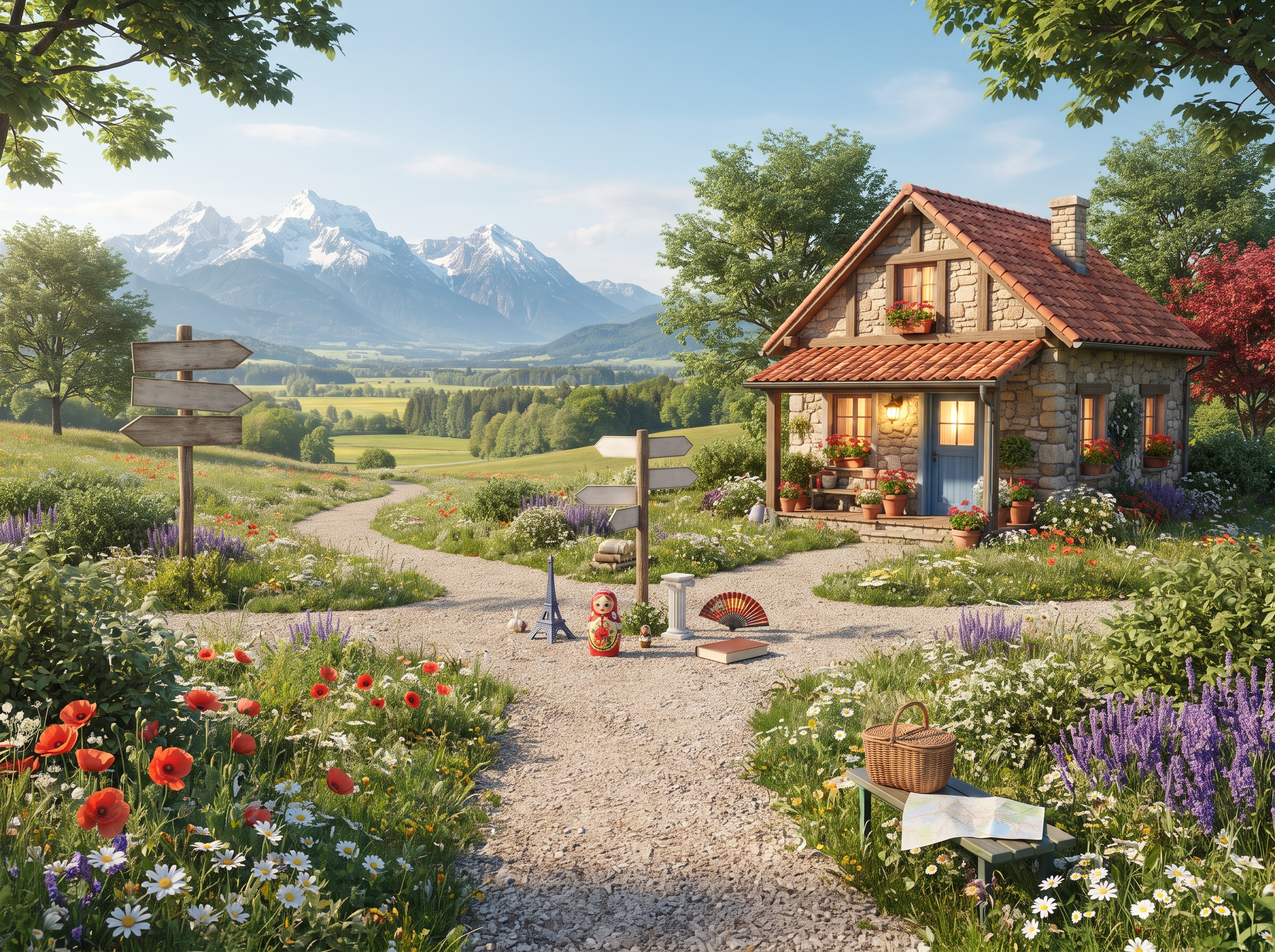
Place Idioms: 40 Common Expressions With Meanings and Examples
English speakers use place idioms to describe locations, relationships, emotions, challenges, and everyday situations. Some expressions refer to actual places, such as a home, a crossroads, or the middle of nowhere. Others use the idea of a place to explain something less literal, such as feeling uncomfortable in a new environment or reaching an important decision.
Learning place idioms can make conversations, books, movies, and everyday American English easier to understand. These expressions also help English learners communicate ideas naturally without relying on long explanations. For example, saying someone feels out of place is a simple way to explain that they do not feel comfortable or included in a particular setting.
This guide covers 40 useful place idioms, with straightforward meanings and original example sentences. The expressions are organized by theme so you can understand when to use them, how they work in context, and which situations they describe.
Go Together Like Idioms: https://learnidioms.com/go-together-like-idioms/
What Are Place Idioms?
Place idioms are fixed expressions that refer to locations, positions, movement, or the idea of belonging somewhere. Their meanings are often figurative rather than literal.
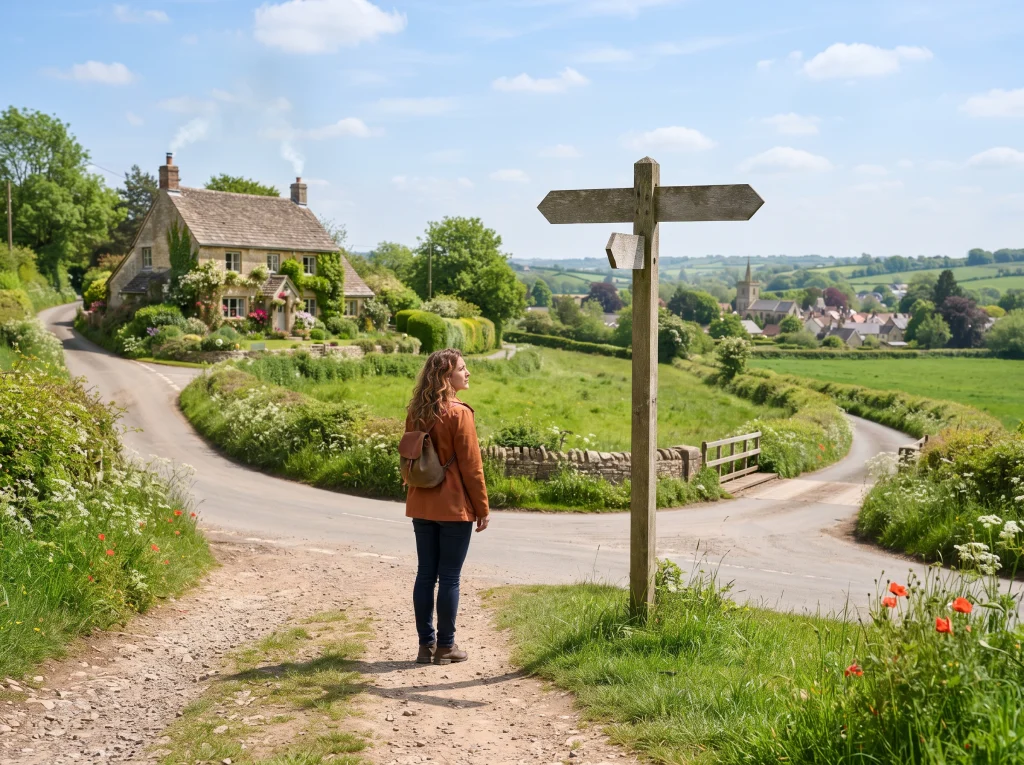
For example, the expression at a crossroads does not necessarily mean standing where two roads meet. It commonly describes a situation in which someone must make an important decision.
Place idioms can describe:
- Physical locations, including remote areas and familiar surroundings.
- Feelings of belonging, comfort, or exclusion.
- Difficult situations and limited choices.
- Progress, opportunities, and changes in life.
- Relationships, shared experiences, and social situations.
The meaning of each expression depends on how it is used in a sentence. Understanding the context is therefore just as important as memorizing the words.
40 Common Place Idioms With Meanings and Examples
The following expressions include idioms about physical locations as well as figurative expressions involving position, direction, and belonging.
1. In the Middle of Nowhere
Meaning: In a remote or isolated location, far from towns, cities, or busy areas.
Example: Our cabin was in the middle of nowhere, surrounded by trees and quiet country roads.
This expression is often used informally when a place feels far away from everyday conveniences.
Cambridge English Dictionary
+1
2. Out of Place
Meaning: Feeling uncomfortable or appearing unsuitable in a particular situation or environment.
Example: I felt out of place at the formal dinner because everyone else was wearing evening clothes.
3. On the Map
Meaning: To become known, recognized, or important.
Example: The small town was put on the map after its local festival attracted national attention.
4. Off the Map
Meaning: In a remote, little-known, or overlooked location.
Example: We found a quiet campground that seemed to be completely off the map.
5. A Stone’s Throw Away
Meaning: A very short distance from a particular place.
Example: The grocery store is just a stone’s throw away from our apartment.
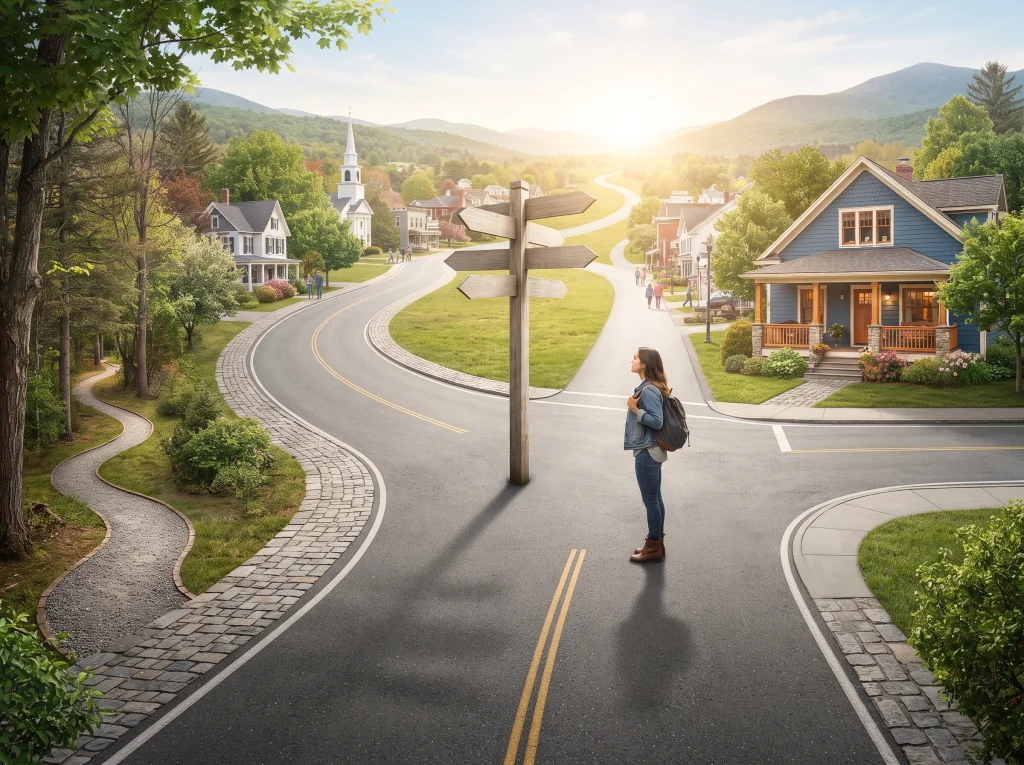
6. At a Crossroads
Meaning: At a point where an important decision or change must be made.
Example: After graduating from college, Maya felt she was at a crossroads in her career.
7. Back to Square One
Meaning: Having to start again from the beginning after a plan fails or a problem returns.
Example: The contractor found a serious problem with the design, so the team had to go back to square one.
8. Put Down Roots
Meaning: To settle in a place and establish a stable life there.
Example: After moving several times, they decided to put down roots in Colorado.
9. A Place in the Sun
Meaning: A desirable position, opportunity, or chance to achieve success and happiness.
Example: After years of hard work, she finally found her place in the sun as a successful artist.
10. Between a Rock and a Hard Place
Meaning: Facing two difficult choices, with neither option being appealing.
Example: He was between a rock and a hard place because accepting the transfer meant leaving his family, while refusing it could cost him the promotion.
11. In the Same Boat
Meaning: In the same situation, especially when facing a shared difficulty.
Example: We are all in the same boat because the entire department is adjusting to the new schedule.
12. Make Yourself at Home
Meaning: To feel comfortable and relaxed in someone else’s home or space.
Example: Come in, make yourself at home, and help yourself to some coffee.
13. Home Away From Home
Meaning: A place other than one’s own home that feels comfortable and familiar.
Example: The little bookstore became a home away from home for students who studied there every afternoon.
14. Feel at Home
Meaning: To feel comfortable, welcome, and relaxed in a place or situation.
Example: The friendly neighbors helped us feel at home in our new community.
15. A Hive of Activity
Meaning: A place full of energy, movement, and busy activity.
Example: The airport was a hive of activity during the Thanksgiving travel rush.
16. A Hole in the Wall
Meaning: A small, often modest or little-known establishment, such as a restaurant or shop.
Example: We found a hole-in-the-wall diner that served delicious homemade pancakes.
17. The Ends of the Earth
Meaning: A very distant or remote place; also used to emphasize going to great lengths for someone or something.
Example: My grandparents traveled to the ends of the earth to visit the places they had read about as children.
18. In the Middle of Things
Meaning: Fully involved in an activity or situation that is already underway.
Example: I arrived in the middle of things, just as the team began discussing the final proposal.
19. Around the Corner
Meaning: Very nearby, or likely to happen soon.
Example: Summer vacation is just around the corner, and the kids are already making plans.
20. At the End of the Road
Meaning: At the point where a process, effort, or situation has reached its conclusion or limit.
Example: After several unsuccessful attempts to repair the old computer, we were at the end of the road.
21. Go Places
Meaning: To show signs of future success or progress.
Example: Her teachers believe she will go places because she works hard and takes initiative.
22. Nowhere to Be Found
Meaning: Completely missing or absent from the place where someone expects to find a person or thing.
Example: I searched every room, but my car keys were nowhere to be found.
23. Out of the Woods
Meaning: Free from a difficult, dangerous, or uncertain situation.
Example: The business has reduced its expenses, but it is not out of the woods yet.
24. In Deep Water
Meaning: In serious trouble or facing a difficult situation.
Example: He was in deep water after missing several important deadlines.
25. Go Back to the Drawing Board
Meaning: To return to the planning stage after an idea or attempt does not work.
Example: The first design failed the safety test, so the engineers had to go back to the drawing board.
26. Come to a Dead End
Meaning: To reach a point where no further progress or development is possible.
Example: Our investigation came to a dead end when the last witness could not be located.
27. Find Your Feet
Meaning: To become comfortable and confident in a new situation.
Example: It took Jordan a few weeks to find his feet at the new job.
28. Get Your Foot in the Door
Meaning: To gain an initial opportunity that may lead to greater success.
Example: The internship helped her get her foot in the door at a major publishing company.
29. Keep Someone at Arm’s Length
Meaning: To avoid becoming too close to someone emotionally or socially.
Example: He tends to keep new coworkers at arm’s length until he gets to know them better.
30. Go Off the Beaten Path
Meaning: To visit or choose places that are less popular, less familiar, or not commonly used.
Example: During our road trip, we went off the beaten path to explore small mountain towns.
31. Have Your Back to the Wall
Meaning: To be in a difficult position with few options available.
Example: With the deadline approaching and the budget nearly gone, the project manager had her back to the wall.
32. The Grass Is Always Greener on the Other Side
Meaning: Other people’s situations often seem better than your own, even when they may not be.
Example: He thought working for another company would be easier, but the grass is always greener on the other side.
33. Take the High Road
Meaning: To behave honorably or calmly instead of responding with hostility or revenge.
Example: Even after the argument, she decided to take the high road and respond politely.
34. A Level Playing Field
Meaning: A situation in which everyone has a fair and equal opportunity.
Example: The new application process gives every candidate a level playing field.
35. Middle Ground
Meaning: A position or solution between two opposing views or choices.
Example: Neither side wanted to compromise at first, but eventually they found some middle ground.
36. In the Right Place at the Right Time
Meaning: In a favorable situation when an opportunity becomes available.
Example: He was in the right place at the right time when the company needed someone with his exact skills.
37. A Long Way From
Meaning: Not close to reaching a particular goal, standard, or condition.
Example: The first draft is a long way from finished, but the main ideas are already in place.
38. All Over the Place
Meaning: Scattered, disorganized, inconsistent, or spread across many locations.
Example: My notes were all over the place, so I organized them before the meeting.
39. Put Someone in Their Place
Meaning: To make someone recognize the limits of their authority or behavior, often by responding firmly.
Example: The supervisor put the rude customer in his place by calmly explaining the store’s policy.
40. Fall Into Place
Meaning: To begin to make sense or develop successfully as separate parts come together.
Example: Once we understood the schedule, the rest of the event planning started to fall into place.
Go Together Like Idioms:
Idioms About Home, Familiar Places, and Belonging
Home-related place idioms are useful when discussing comfort, relationships, and the feeling of being accepted. They can describe a physical environment, but they can also express an emotional connection.
| Idiom | Meaning | Example |
|---|---|---|
| Make yourself at home | Feel comfortable in another person’s space | Make yourself at home while I finish dinner. |
| Home away from home | A place that feels like your own home | The hotel became our home away from home. |
| Feel at home | Feel relaxed and welcome | She felt at home in her new neighborhood. |
| Put down roots | Settle permanently or establish a stable life | They put down roots in a small town. |
| Out of place | Feel unsuitable or uncomfortable | He felt out of place at the party. |
| Keep someone at arm’s length | Maintain emotional or social distance | She kept the stranger at arm’s length. |
These expressions are particularly useful when talking about moving, starting a new job, meeting people, or adjusting to an unfamiliar environment.

Idioms About Distance, Direction, and Location
Some place idioms describe how near or far something is. Others use roads, paths, and directions to communicate ideas about progress, decisions, and obstacles.
| Idiom | Meaning | Example |
|---|---|---|
| A stone’s throw away | Very close | The library is a stone’s throw away. |
| Around the corner | Nearby or happening soon | The holidays are around the corner. |
| In the middle of nowhere | In a remote location | Their cabin is in the middle of nowhere. |
| Go off the beaten path | Choose a less familiar route or destination | We went off the beaten path on vacation. |
| At the end of the road | At the conclusion or limit of something | We were at the end of the road with that plan. |
| Come to a dead end | Reach a point where progress stops | The search came to a dead end. |
| On the map | Become recognized or well-known | The award put the town on the map. |
| Off the map | Remote or little-known | The village seemed to be off the map. |
Remember that expressions such as around the corner can refer to either physical distance or time. Context tells the listener which meaning is intended.
Idioms About Opportunities, Situations, and Progress
Place idioms often help speakers describe turning points, challenges, and achievements without explaining every detail.
| Idiom | Meaning | Example |
|---|---|---|
| At a crossroads | Facing an important decision | She was at a crossroads in her career. |
| Go places | Show potential for success | That young musician is going places. |
| Get your foot in the door | Gain an initial opportunity | The internship helped him get his foot in the door. |
| In the right place at the right time | Be favorably positioned when an opportunity appears | She was in the right place at the right time. |
| Fall into place | Develop successfully or become clear | The details began to fall into place. |
| A place in the sun | A desirable opportunity or position | He finally earned a place in the sun. |
| Back to square one | Start over | The failed experiment sent us back to square one. |
| Go back to the drawing board | Return to planning after a failed attempt | We went back to the drawing board. |
These expressions are useful in conversations about education, careers, personal goals, business plans, and major life decisions.
Idioms About Being Stuck, Lost, or Under Pressure
When someone faces an obstacle, feels uncertain, or struggles to make progress, place idioms can express the situation in a concise and memorable way.
| Idiom | Meaning | Example |
|---|---|---|
| Between a rock and a hard place | Stuck between two difficult choices | She was between a rock and a hard place. |
| In deep water | In serious trouble | He was in deep water after the mistake. |
| Have your back to the wall | Face a difficult situation with few options | The team had its back to the wall. |
| Out of the woods | No longer in a difficult situation | We are improving, but we are not out of the woods. |
| Nowhere to be found | Missing or absent | My wallet was nowhere to be found. |
| All over the place | Disorganized or inconsistent | His explanation was all over the place. |
| The grass is always greener on the other side | Other situations seem better than your own | She wanted a new job, but the grass is always greener on the other side. |
| Take the high road | Respond honorably instead of retaliating | He took the high road during the disagreement. |
A useful way to learn these expressions is to connect each one to a realistic situation. For example, imagine having two job offers with serious drawbacks to remember between a rock and a hard place.

How to Use Place Idioms Naturally in Everyday English
Knowing an idiom’s definition is only the first step. To use it naturally, pay attention to its grammar, tone, and the situation in which speakers typically use it.
1. Learn the Entire Expression
Memorize the full phrase rather than individual words. For example, learn in the middle of nowhere as a complete expression. Changing its wording unnecessarily can make it sound unnatural.
2. Notice the Context
Some idioms are informal and conversational, while others work in professional or written English.
For example:
- Casual: “That little diner is a hole in the wall, but the food is fantastic.”
- Professional: “The project has reached a crossroads, and we need to decide how to proceed.”
- Personal: “It took me a month to find my feet at the new school.”
3. Practice With Your Own Sentences
Choose an idiom and connect it to a situation you understand. If you recently started a new job, you might say, “I’m still finding my feet, but I’m getting more confident every day.”
Creating personal examples makes expressions easier to recall during conversation.

4. Pay Attention to Grammar
Idioms often have fixed grammatical patterns.
For example:
- Correct: “She is at a crossroads.”
- Correct: “They put down roots in Texas.”
- Correct: “The plan fell into place.”
- Correct: “He got his foot in the door.”
Learn whether an expression normally needs a preposition, an article, or a particular verb tense.
5. Avoid Using Too Many Idioms at Once
Idioms can make speech more expressive, but using several in every sentence may sound forced. Choose an expression when it communicates your meaning clearly, and use straightforward language for the rest.
Common Mistakes to Avoid
English learners sometimes misunderstand place idioms because the literal words suggest a different meaning from the complete expression.
| Common mistake | Better understanding |
|---|---|
| Assuming “in the same boat” refers only to people on a boat | It usually means people share a situation or difficulty. |
| Using “out of place” only for physical objects | It can describe a person’s feelings or behavior in a setting. |
| Assuming “around the corner” always describes a street | It can also mean an event is approaching soon. |
| Using “back to square one” to describe ordinary progress | It usually means returning to the beginning after a setback. |
| Assuming “a stone’s throw away” gives an exact distance | It is an informal way to describe a short distance. |
| Treating “the grass is always greener on the other side” as a literal statement about lawns | It expresses the idea that other people’s situations may seem more appealing. |
The most reliable way to understand an idiom is to consider the whole sentence and the situation in which it appears.
Frequently Asked Questions About Place Idioms
Conclusion
Place idioms add meaning and personality to everyday English. They can describe a remote location, a difficult decision, a new opportunity, or the comfort of feeling at home. Once you understand how these expressions work, you can recognize them more easily in conversations and use them appropriately in your own speech and writing.
Start by practicing a few expressions that match situations you encounter regularly. Try using find your feet when adjusting to something new, at a crossroads when discussing a major decision, or fall into place when a confusing situation finally becomes clear. With regular practice, these idioms can become a natural part of your English vocabulary.




One Comment