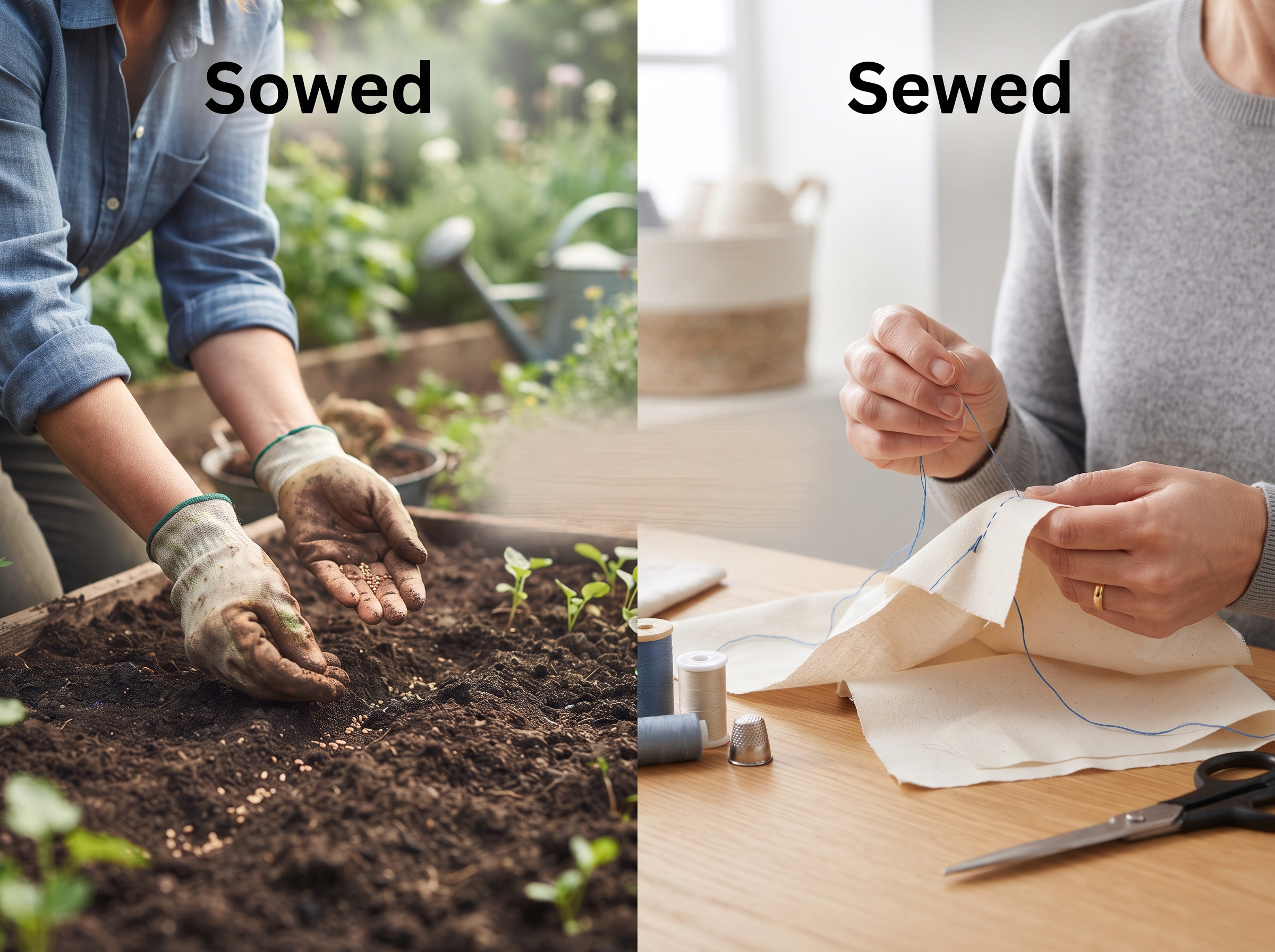
Sowed or Sewed? Meaning, Difference, and Correct Usage in American English
Sowed and sewed are different words with different meanings, even though they sound very similar in American English. Sowed is the past tense of sow, a verb associated with planting seeds. Sewed is the past tense of sew, which means to join fabric or other material with a needle and thread.
For example, you might say, “She sowed tomato seeds in the garden.” If someone repaired a torn shirt with a needle and thread, you could say, “She sewed the shirt.”

The confusion becomes greater because sow and sew can have different pronunciations depending on the word. In the meanings discussed here, however, sowed and sewed are pronounced alike in standard American English. Their meanings are determined by spelling and context.
Understanding the difference is important because these words describe completely different actions. One is connected with planting, while the other is connected with stitching.
Sowed or Sewed: Quick Answer
Sowed is the past tense of sow, meaning to plant seeds.
The farmer sowed wheat in the field.
Sewed is the past tense of sew, meaning to join or repair material with a needle and thread.
She sewed a button onto her coat.
The easiest way to remember the difference is:
Sowed = planted seeds
Sewed = stitched fabric
Although both words are pronounced the same in these common meanings, their spelling and meaning are different.
What Does Sowed Mean?
Sowed is the simple past tense of sow when sow means to plant seeds.
To sow means to place seeds in soil so they can grow. It is commonly used when talking about farming, gardening, crops, and plants.
Examples:
The farmer sowed corn in the spring.
We sowed grass seed across the yard.
She sowed flower seeds in the garden.
They sowed wheat before the rainy season.
He sowed several varieties of vegetables.
The word sowed can also be used figuratively. The expression sow the seeds of something means to cause or begin something that may develop later.
His actions sowed the seeds of distrust.
The decision sowed doubt among the employees.
This figurative use comes from the literal idea of planting seeds that later grow.
What Does Sewed Mean?
Sewed is the simple past tense of sew.
To sew means to join pieces of fabric or repair clothing and other materials using a needle and thread. It can also refer to using a sewing machine.
Examples:
She sewed a new dress.
I sewed the tear in my jacket.
My grandmother sewed curtains for the living room.
He sewed a button back onto his shirt.
She sewed the pieces of fabric together.
The verb sew is common when talking about clothing, quilting, crafts, tailoring, costumes, and household repairs.
Sowed vs. Sewed Comparison
The following table makes the difference easier to see.
| Word | Base Verb | Meaning | Example |
|---|---|---|---|
| sowed | sow | Planted seeds | She sowed tomato seeds. |
| sewed | sew | Joined or repaired material with thread | She sewed the torn shirt. |
The words may sound alike, but their meanings are completely different.
Sowed
Think about soil, seeds, and plants.
The gardener sowed flower seeds.
Sewed
Think about fabric, needles, and thread.
The tailor sewed the fabric together.
A useful memory connection is:
Sowed → sow → seeds
Sewed → sew → stitching

Sowed and Sewed in Common American English Sentences
Seeing the words in natural sentences can make the difference easier to remember.
Examples With Sowed
The farmer sowed the seeds before the rain arrived.
We sowed grass seed in the bare areas of the lawn.
She sowed lettuce seeds in a small garden bed.
They sowed the fields in early April.
The gardener sowed wildflower seeds along the path.
His careless comments sowed confusion among the team members.
Examples With Sewed
I sewed a patch onto my jeans.
She sewed the loose button back onto her jacket.
My aunt sewed a beautiful quilt by hand.
He sewed the torn pocket closed.
The costume designer sewed the final pieces together.
She sewed the curtains using a sewing machine.
The context usually makes the meaning obvious. A sentence involving seeds, crops, soil, or gardening calls for sowed. A sentence involving fabric, clothing, needles, thread, or stitching calls for sewed.
Sowed vs. Sown: Understanding the Verb Sow
One point that often causes additional confusion is the difference between sowed and sown.
Sowed is the simple past form of sow.
The farmer sowed the seeds yesterday.
Sown is commonly used as the past participle.
The seeds have been sown.
The word sown is especially common in perfect and passive constructions.
Compare:
She sowed the seeds in March.
She has sown the seeds already.
The seeds were sown in early spring.
The distinction is similar to other irregular verb patterns in English. When you are describing a completed action in the simple past, sowed is often the form you need. When using a construction such as has/have/had or a passive construction, sown is commonly used.
Sewed vs. Sewn: Understanding the Verb Sew
The verb sew also has another form that can cause confusion: sewn.
Sewed is the simple past form.
She sewed the dress herself.
Sewn is a past participle commonly used with auxiliary verbs.
She has sewn three dresses this year.
The pieces were sewn together.
In some contexts, sewed can also function as a past participle, particularly when used with an auxiliary verb.
She has sewed many costumes.
However, sewn is a very common past participle, especially in American English when describing something that has been stitched or joined.
A useful pattern is:
Sow → sowed → sown
Sew → sewed → sewn
Why Sowed and Sewed Sound the Same
The pronunciation of these words can make them especially difficult for English learners.
In their common meanings, sowed and sewed have the same pronunciation in American English. The spelling is different because the words come from different verbs.
Sowed comes from sow, meaning to plant seeds.
Sewed comes from sew, meaning to stitch material.
This is a good example of homophones, which are words that sound alike but have different meanings and spellings.
Because the pronunciation does not help you distinguish the words, you need to use the context and remember what each spelling means.

Common Mistakes With Sowed and Sewed
Mistake 1: Using “sewed” for planting
Incorrect:
The farmer sewed the seeds.
Correct:
The farmer sowed the seeds.
Planting seeds is sowing, so the past tense is sowed.
Mistake 2: Using “sowed” for stitching
Incorrect:
She sowed the torn shirt.
Correct:
She sewed the torn shirt.
Stitching fabric is sewing, so the past tense is sewed.
Mistake 3: Confusing sowed with sown
Incorrect in a standard present perfect construction:
They have sowed the seeds.
A more typical form is:
They have sown the seeds.
But sowed is correct for the simple past:
They sowed the seeds yesterday.
Mistake 4: Confusing sewed with sewn
For the simple past, use sewed:
She sewed the dress last weekend.
For a common past-participle construction, sewn is used:
She has sewn several dresses.
Mistake 5: Choosing the spelling based only on pronunciation
Because sowed and sewed sound alike, listening alone may not tell you which spelling is correct.
Instead, ask yourself what the sentence is about.
If it involves seeds or planting, choose sowed.
If it involves fabric or stitching, choose sewed.

How to Remember Sowed vs. Sewed
The easiest memory trick is to connect each word with the thing it describes.
Sowed = Seeds
Think:
Sowed → sow → seeds
The gardener sowed seeds.
Sewed = Sewing
Think:
Sewed → sew → sewing
She sewed the fabric.
You can also remember the two actions with a simple sentence:
The farmer sowed the seeds, and the tailor sewed the clothes.
The farmer works with soil and seeds. The tailor works with fabric and thread.
Another useful clue is the letter e in sewed. Connect it with needle, which begins with the same letter:
Sewed → E → needle
This is only a memory aid, but it can help you recall the correct spelling when writing.
Sowed and Sewed in Figurative English
Sow is frequently used figuratively in English, particularly in phrases involving ideas, emotions, conflict, or consequences.
For example:
The rumor sowed fear among the residents.
His comments sowed doubt.
The argument sowed distrust between the two groups.
The related expression reap what you sow means that people eventually experience the results of their actions.
If you treat people badly, you may eventually reap what you sow.
This figurative meaning is based on farming. A person plants seeds and later harvests what grows from them.
Sew is less commonly used figuratively in everyday American English, although related expressions exist, such as sew up a deal, meaning to secure or finalize something.
The company sewed up the deal before the competition could respond.
In this expression, sew up does not literally mean stitching fabric. It is an idiomatic use of the verb.
FAQs:
Conclusion
Sowed and sewed sound the same in their common American English meanings, but they have completely different meanings and spellings.
Use sowed when you mean planted seeds:
The gardener sowed the seeds.
Use sewed when you mean stitched or joined material:
She sewed the torn fabric.