40 Relax Idioms: Common Expressions for Rest, Calm, and Stress Relief
After a long workday, a stressful week, or a busy schedule, Americans often use more than the simple word “relax” to describe slowing down and feeling comfortable. Expressions such as “take it easy,” “chill out,” “kick back,” and “put your feet up” make everyday conversations sound more natural and expressive.
Relax idioms can describe taking a break, calming down, enjoying free time, getting away from stress, or simply having fun. Some are casual enough for conversations with friends, while others work well in general everyday English. Learning the difference between them can help you understand native speakers and choose the right expression for each situation.
What Are Relax Idioms?
Relax idioms are common expressions used to talk about resting, becoming calm, reducing stress, or enjoying free time. Some are traditional idioms, while others are informal fixed expressions or phrasal verbs commonly used in everyday American English.
For example, take it easy means to relax, avoid too much effort, or remain calm. Cambridge Dictionary also notes that it can be used when telling someone not to become angry.
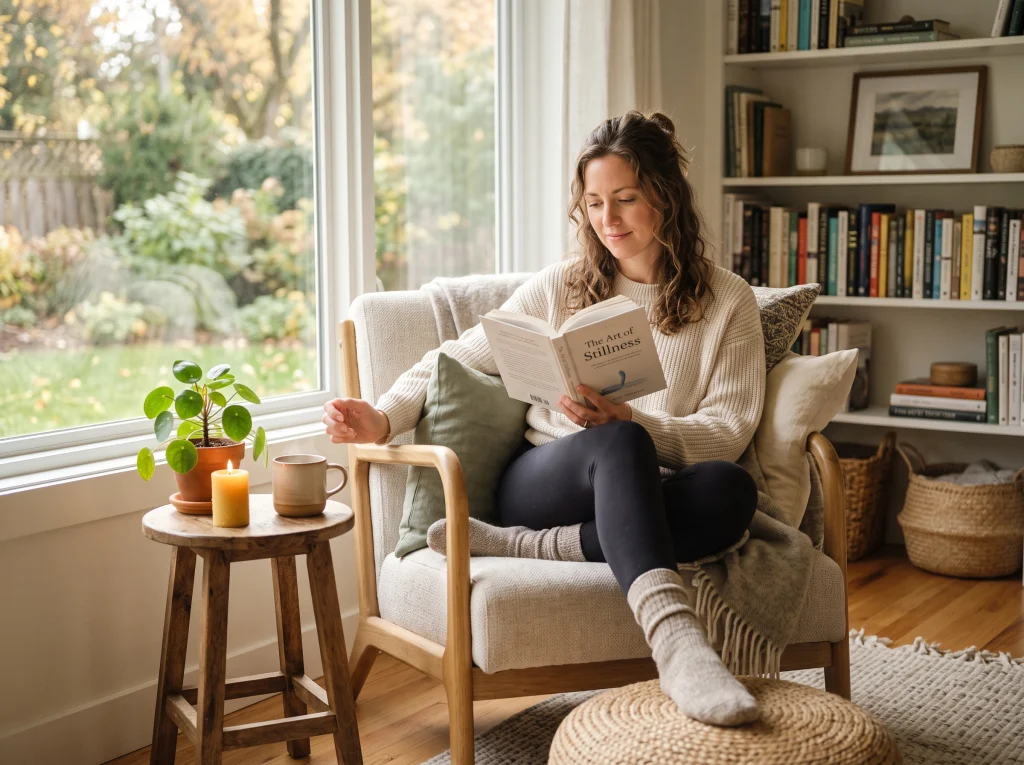
Other expressions focus on a particular type of relaxation. Put your feet up suggests sitting comfortably and resting, while let your hair down means behaving more freely and enjoying yourself without the usual restraint.
40 Common Relax Idioms and Expressions
Here are 40 useful expressions you may hear in American English when people talk about relaxing, resting, or staying calm.
| # | Idiom or Expression | Meaning | Example |
|---|---|---|---|
| 1 | Take it easy | Relax or avoid too much effort | You worked hard all week, so take it easy this weekend. |
| 2 | Chill out | Relax and become calmer | Just chill out and enjoy the evening. |
| 3 | Kick back | Relax in a comfortable way | We kicked back and watched a movie. |
| 4 | Unwind | Relax after stress or activity | I like to unwind with music after work. |
| 5 | Wind down | Gradually become more relaxed | I usually wind down before going to bed. |
| 6 | Put your feet up | Sit down and relax | Come inside and put your feet up. |
| 7 | Let your hair down | Relax and enjoy yourself freely | We went out to dinner and let our hair down. |
| 8 | Take a load off | Sit down and relax | Come in and take a load off. |
| 9 | Take a breather | Take a short break | Let’s take a breather before we continue. |
| 10 | Take a break | Stop working for a while | You have been studying for hours. Take a break. |
| 11 | Slow down | Reduce your pace or activity | You need to slow down and give yourself some time to rest. |
| 12 | Switch off | Stop thinking about work or problems | I need the weekend to switch off. |
| 13 | Recharge your batteries | Rest and regain energy | I’m taking a few days off to recharge my batteries. |
| 14 | Take your mind off something | Stop thinking about something stressful | A walk helps me take my mind off work. |
| 15 | Clear your head | Relax mentally and think more clearly | I went for a walk to clear my head. |
| 16 | Get some R&R | Get rest and relaxation | After the trip, I need some R&R. |
| 17 | Put your feet up and relax | Rest comfortably | Finish your chores and put your feet up. |
| 18 | Make yourself at home | Feel comfortable and relaxed in someone’s home | Come in and make yourself at home. |
| 19 | Hang loose | Stay relaxed and do not worry | Hang loose. We still have plenty of time. |
| 20 | Mellow out | Become calmer and more relaxed | I like to mellow out with a good book. |
| 21 | Decompress | Relax after pressure or intense activity | I need an hour to decompress after work. |
| 22 | Take some time off | Stop working or doing usual activities temporarily | I’m taking some time off next week. |
| 23 | Take it slow | Avoid rushing or doing too much | Take it slow while you’re getting back into your routine. |
| 24 | Go easy | Avoid being too demanding or intense | Go easy today and give yourself time to recover. |
| 25 | Rest up | Get enough rest to regain strength | Rest up before your big presentation. |
| 26 | Catch your breath | Rest briefly after effort or stress | Sit down and catch your breath. |
| 27 | Breathe easy | Feel less worried or stressed | We can finally breathe easy now that the problem is solved. |
| 28 | Cool your jets | Calm down and stop being impatient or excited | Cool your jets. We have plenty of time. |
| 29 | Keep your cool | Remain calm in a difficult situation | She kept her cool during the argument. |
| 30 | Stay calm | Remain relaxed instead of becoming upset | Stay calm and deal with one problem at a time. |
| 31 | Cool as a cucumber | Very calm, even under pressure | He was as cool as a cucumber before the interview. |
| 32 | At ease | Comfortable, calm, and without worry | I feel completely at ease when I’m with my family. |
| 33 | At peace | Calm and free from worry | After talking to her, I finally felt at peace. |
| 34 | Easygoing | Relaxed and not easily bothered | My boss is friendly and easygoing. |
| 35 | Laid-back | Calm and relaxed in personality or lifestyle | They have a laid-back approach to weekends. |
| 36 | Have a breather | Take a short period of rest | Let’s have a breather before starting the next task. |
| 37 | Lounge around | Spend time relaxing without doing much | We lounged around the house all Sunday. |
| 38 | Kick your feet up | Sit down and relax | After dinner, I just want to kick my feet up. |
| 39 | Have some downtime | Have free time to rest | I need some downtime after this busy week. |
| 40 | Blow off some steam | Release stress or frustration | I went for a run to blow off some steam. |
Relax Idioms for Taking a Break
Some relax idioms specifically describe stopping work or activity for a short period. Take a break is the most neutral choice and works in many situations. For example, you might tell a coworker, “Let’s take a break and get some coffee.”
Take a breather usually suggests a short pause, especially when something has become tiring, difficult, or stressful. Take a load off is more casual and often means sitting down and getting comfortable.
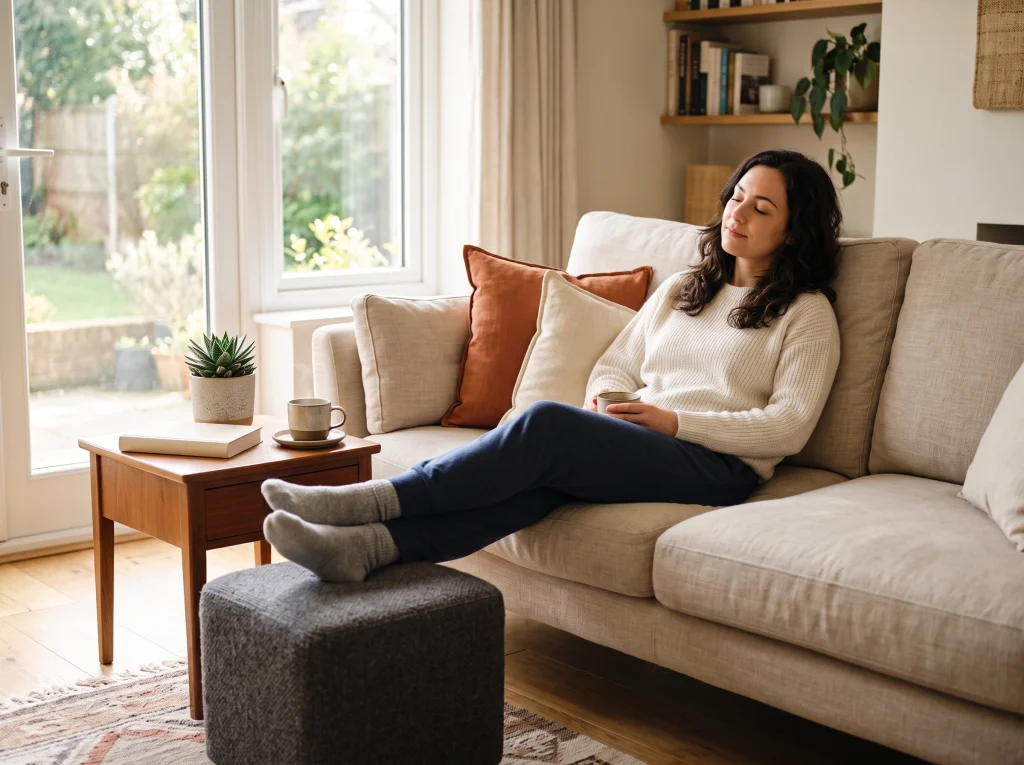
Put your feet up creates a stronger picture of physical relaxation. Cambridge Dictionary defines it as relaxing, especially by sitting with your feet supported above the ground.
You could say:
I’ve been cleaning the house all morning. I’m going to put my feet up for a while.
Relax Idioms for Staying Calm
Not every relax idiom means going to bed or taking time away from work. Some describe emotional calmness.
Keep your cool means remaining calm when something frustrating or difficult happens. Cool as a cucumber describes a person who stays remarkably calm under pressure.
Cool your jets is more informal. It is usually said to someone who is becoming too impatient, excited, or angry.
For example:
Cool your jets. We can solve this problem without arguing.
Similarly, take it easy can tell someone to calm down. Cambridge Dictionary gives both “rest, relax, or be calm” and an informal use meaning not to become angry.
Relax Idioms for Enjoying Free Time
Relaxation is not always about sitting quietly. Sometimes it means having fun and behaving more freely.
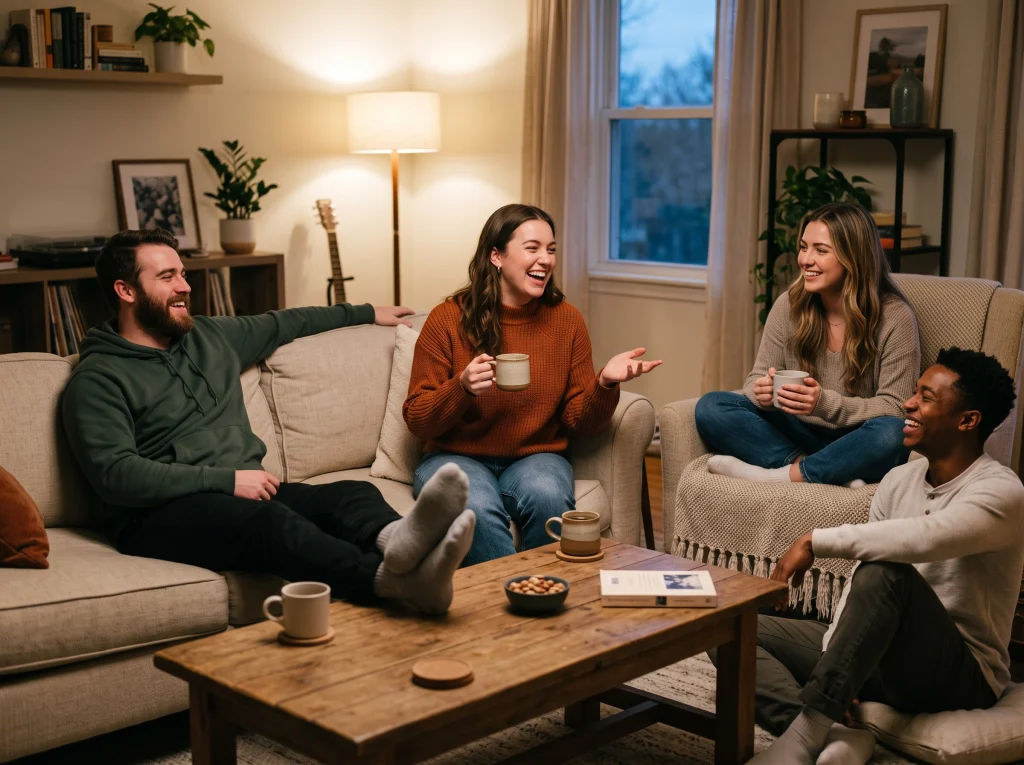
Let your hair down is a good example. It means allowing yourself to behave more freely than usual and enjoy yourself.
For example:
We finished the project on Friday, so everyone went out to dinner and let their hair down.
Kick back, lounge around, and hang loose are also associated with casual, carefree time.
You might say:
I’m staying home Saturday. I just want to kick back and watch football.
Or:
We spent the afternoon lounging around the house.

How to Use Relax Idioms Naturally in American English
The best relax idiom depends on what kind of relaxation you mean.
Use take it easy when you want someone to relax, avoid too much effort, or calm down. It is one of the most versatile choices.
Use chill out when speaking casually, especially with friends or family. It can mean relaxing physically or becoming less upset.
Use unwind when you want to describe gradually becoming relaxed after a busy or stressful period. For example, “I like to unwind by reading before bed.”
Use kick back for casual relaxation, often when you are sitting comfortably and enjoying your free time.
Use let your hair down when the idea is having fun and temporarily forgetting about formality or responsibility.
Use recharge your batteries when rest is helping you regain energy. The expression is especially useful after a demanding period.
Use take your mind off something when you want to stop focusing on a problem, worry, or stressful situation.
These distinctions matter because several expressions may translate roughly to “relax,” but they do not always fit the same situation. For example, take a break focuses on stopping an activity, while switch off emphasizes mentally stopping thoughts about work or responsibilities. Unwind suggests gradually becoming more relaxed after stress.

Common Mistakes With Relax Idioms
One common mistake is treating every relaxation expression as interchangeable. Although chill out, take it easy, unwind, and kick back have related meanings, they can carry different tones.
Another mistake is using informal expressions in situations where a more neutral phrase would be better. Chill out, cool your jets, and hang loose are casual. They are generally better suited to informal conversations than formal business writing.
It is also important to understand that some expressions describe relaxation while others describe calmness. Put your feet up means resting, whereas keep your cool means remaining calm under pressure.
Finally, remember that idioms should fit the situation naturally. Saying “I need to recharge my batteries” after a five-minute pause may sound exaggerated. The expression works better when someone needs meaningful rest after sustained effort or stress.
Relax Idioms in Everyday American English
Here are a few natural examples showing how these expressions can appear in conversation:
After work:
I’m exhausted. I’m going to kick back and watch a movie tonight.
During a stressful project:
We’ve been working for three hours. Let’s take a breather.
Before bed:
I usually read for a while to wind down.
After a busy week:
I need the weekend to recharge my batteries.
When someone is angry:
Take it easy. Let’s talk about it calmly.
During a vacation:
We’re not making any plans today. We’re just going to lounge around.
After solving a problem:
Now that everything is finished, we can finally breathe easy.
Learning these expressions gives you more ways to talk about rest, stress, free time, and emotional balance without repeating the word “relax.”
FAQs:
Conclusion
Relax idioms make everyday American English more natural because they help describe different kinds of rest and calmness. Take it easy, chill out, kick back, unwind, and put your feet up are useful for talking about physical or mental relaxation, while expressions such as keep your cool and cool as a cucumber focus more on staying calm.
The key is to learn the small differences between these expressions and use them according to the situation.