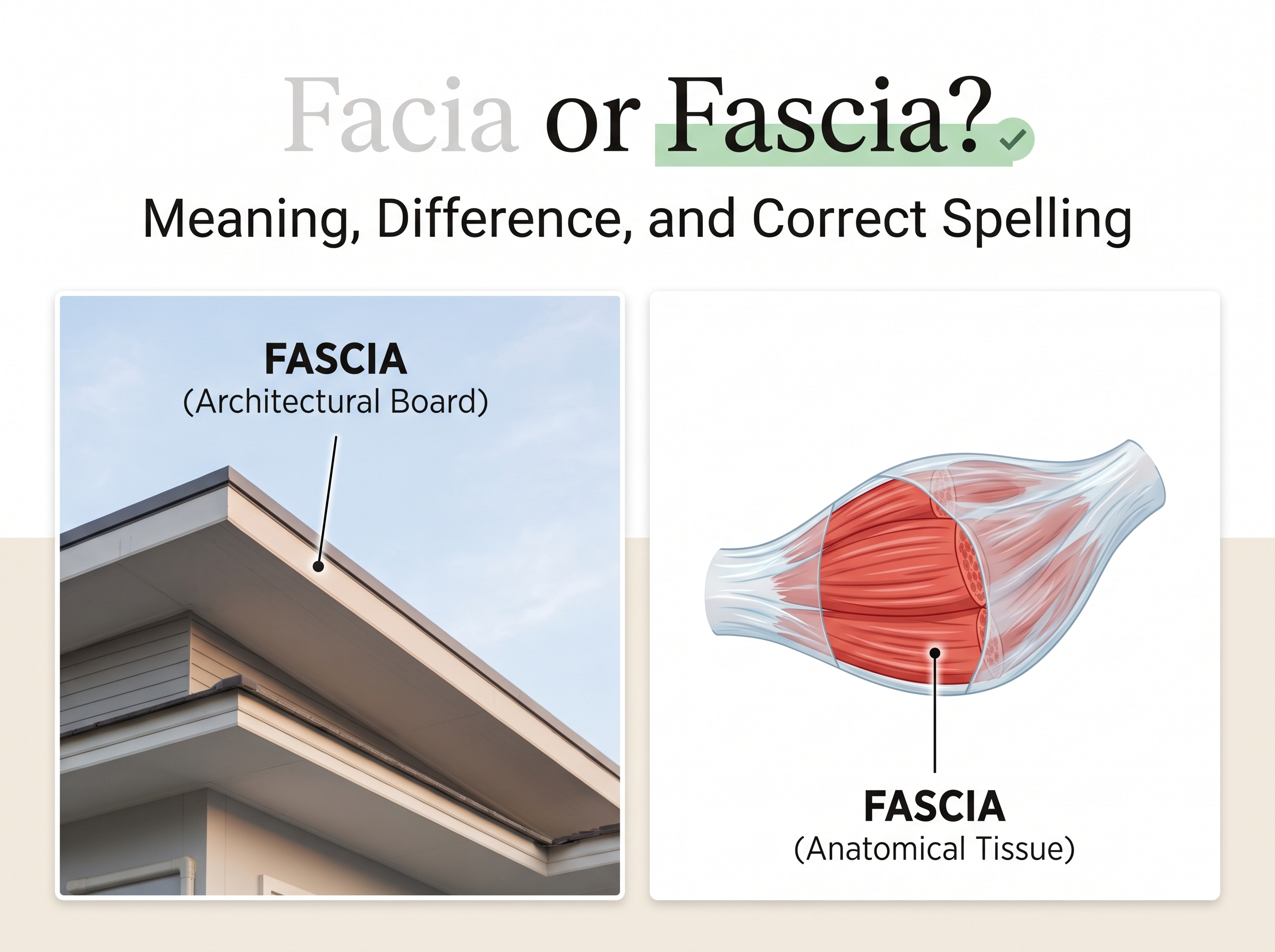
Facia or Fascia? Meaning, Difference, and Correct Spelling
When choosing between facia or fascia, the correct spelling for most American English writing is fascia. The word refers to different things depending on the context, including connective tissue in the body, a board along a roof’s edge, or a flat architectural surface. Facia is also a recognized variant spelling, particularly in British English, but fascia is the preferred choice for standard American English writing.
Collins English Dictionary
+2
Although the two spellings are closely related, the best choice depends on the meaning and audience. If you are writing a medical report, describing a roofing project, or discussing a building’s exterior, using fascia will generally be the clearest option for U.S. readers.
What Does Fascia Mean?
Fascia is a noun with several meanings in anatomy, construction, architecture, and other fields. Its exact meaning depends on how it is used in a sentence.
The word comes from Latin, where it referred to a band or sash. Its modern meanings continue to reflect the idea of a covering, strip, or band.
Collins English Dictionary
+1
Here are the most common uses of fascia in American English.
1. Fascia in Anatomy
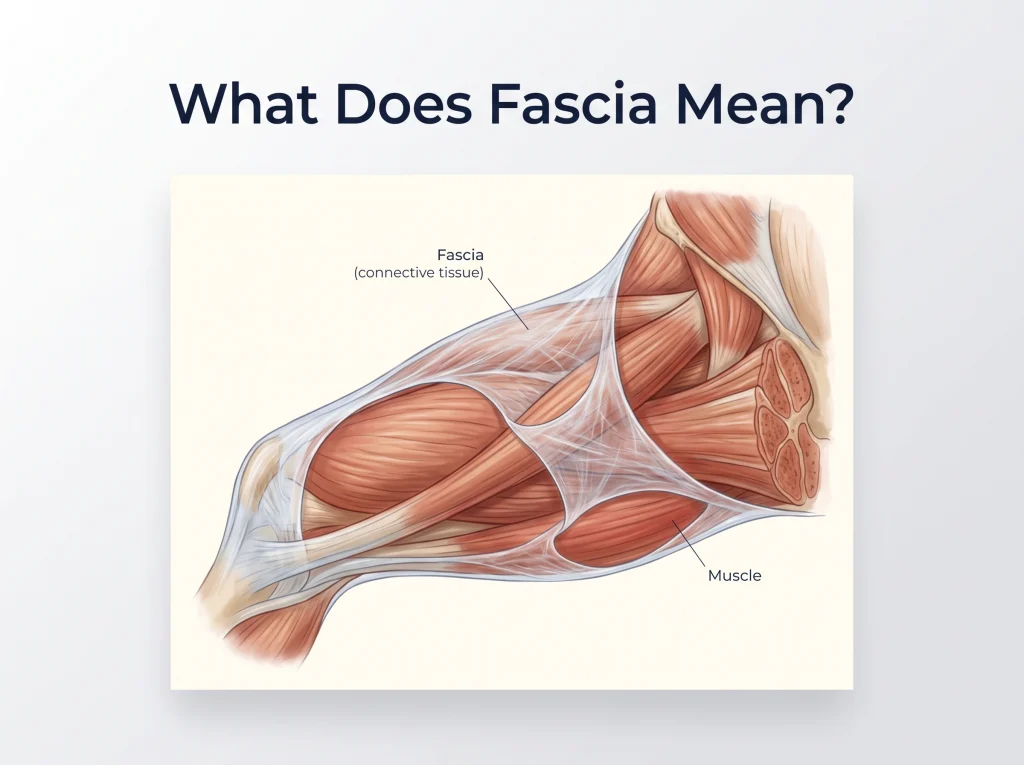
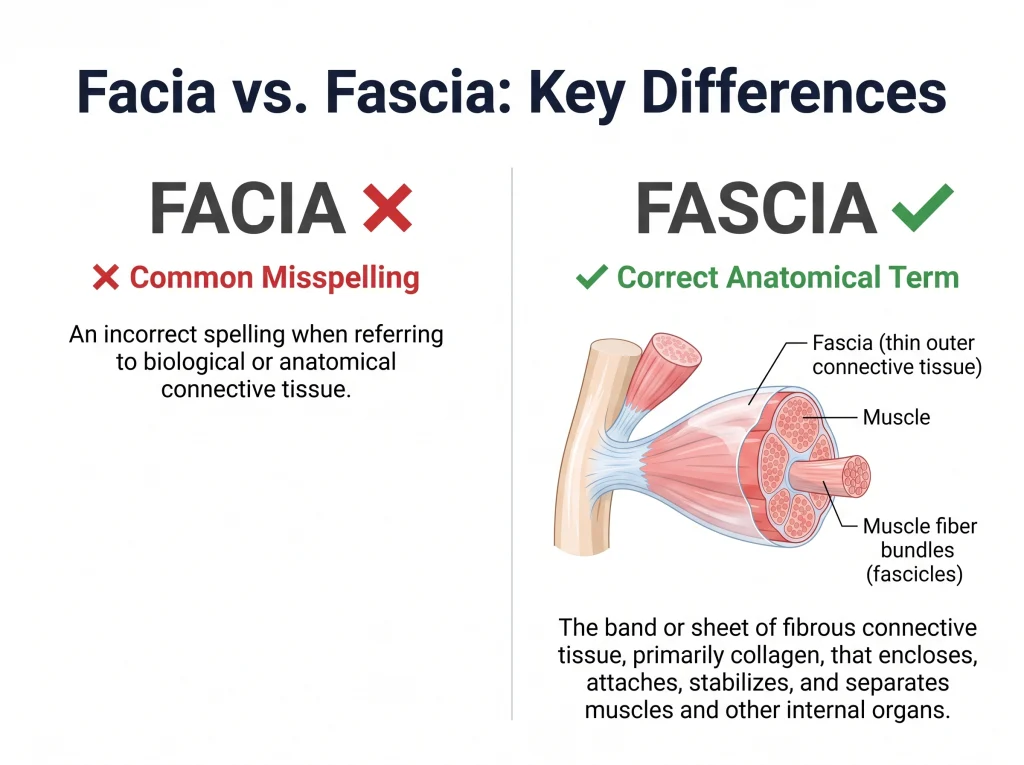
In anatomy, fascia is a layer or sheet of connective tissue that surrounds, separates, supports, or connects muscles and other structures in the body.
For example:
- The physical therapist explained how fascia surrounds the muscles.
- The doctor examined the connective tissue near the injured area.
- Stretching can help improve mobility, although the appropriate treatment depends on the condition.
In medical and anatomical writing, fascia is the standard spelling. The plural form can be fasciae or fascias, depending on the context and style.
2. Fascia in Roofing and Construction
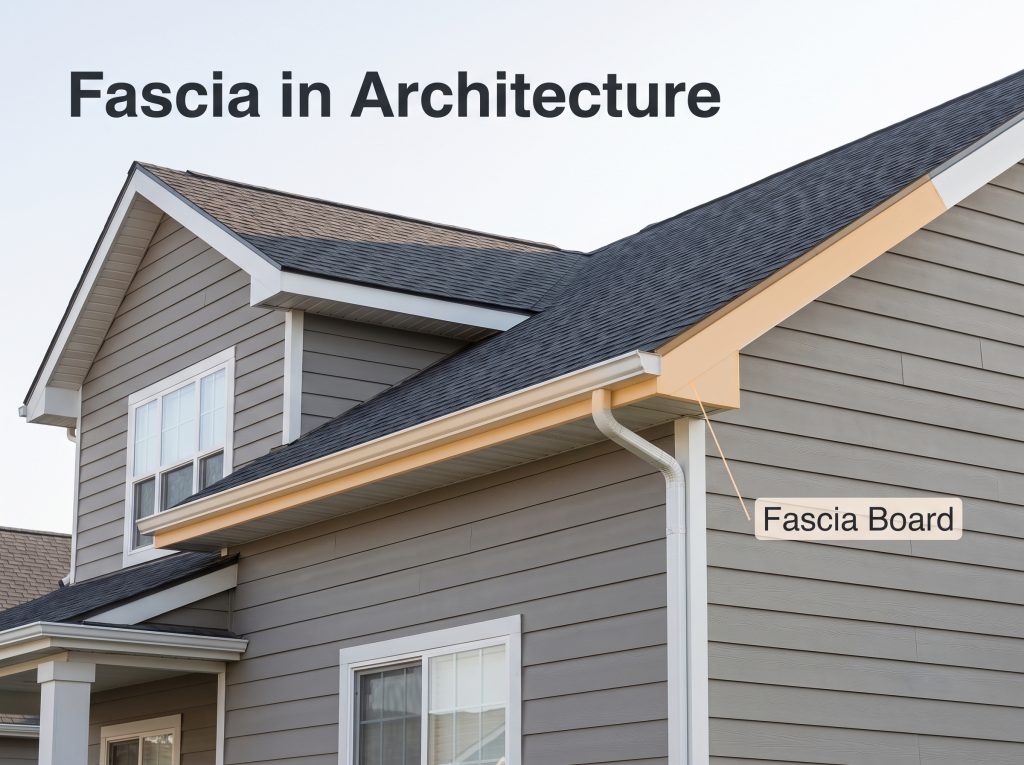
In construction, fascia refers to the board that covers the ends of roof rafters along the edge of a roof. It can provide a finished appearance and support components of the roof’s edge, including certain gutter installations.
For example:
- The contractor replaced the damaged fascia board.
- The homeowner noticed peeling paint on the wooden fascia.
- New fascia boards were installed along the roofline.
In American home improvement, fascia board is a common term. It is especially useful when describing roofing materials, repairs, estimates, and building components.
3. Fascia in Architecture
In architecture, fascia can refer to a flat, horizontal band or surface that forms part of a building’s exterior or decorative design.
For example:
- The architect included a simple fascia beneath the roofline.
- The building’s fascia matched the color of its exterior trim.
- Workers repaired the decorative fascia above the entrance.
The term may also describe specific flat bands within classical architectural features. The intended meaning depends on the structure being discussed.
4. Fascia in Automotive Design
In automotive terminology, fascia can refer to the styled front or rear section of a vehicle. It may include exterior panels and design elements surrounding lights or other components.
For example:
- The redesigned front fascia gave the vehicle a more modern appearance.
- The repair shop replaced the damaged front fascia.
- The rear fascia was scratched during the parking incident.
When referring to the instrument panel inside a car, fascia is also used in some varieties of English. However, dashboard is generally the more familiar term for American readers.
What Does Facia Mean?
Facia is a recognized alternative spelling of fascia, but it is less common in standard American English. Dictionaries identify it particularly with British usage, including references to a vehicle’s dashboard or a building feature.
Collins English Dictionary
+2
For example:
- British English may use facia when referring to a vehicle’s instrument panel.
- A British building description may use facia for a board or surface along a roof or shopfront.
- An American construction document would generally be clearer using fascia board.
The important distinction is that facia is not simply an invented word. It has legitimate dictionary recognition, but that does not make it equally suitable in every context.
If you are writing for a U.S. audience, choose fascia unless you are reproducing a source that uses facia or following a specific organization’s established terminology.
Facia vs. Fascia: Key Differences
The main difference between facia and fascia is spelling preference and regional usage rather than a completely different meaning.
| Feature | Fascia | Facia |
|---|---|---|
| Standard American English | Preferred spelling | Less common variant |
| Medical terminology | Standard | Generally avoid |
| Roofing and construction | Common and preferred | Less common |
| British English | Correct | Recognized alternative |
| Vehicle terminology | Used in some contexts | Recognized British variant |
| Formal U.S. writing | Recommended | Usually avoid |
Both spellings can refer to related concepts, but fascia is the safer choice for American readers. In technical writing, consistency and the terminology used by the relevant profession are especially important.
How to Use Fascia in American English
Using fascia correctly becomes easier when you identify the subject of your sentence. In American English, the word commonly appears in medical, architectural, construction, and automotive writing.
In Medical and Health Writing
Use fascia when discussing connective tissue in the body.
- The surgeon examined the fascia surrounding the muscle.
- The medical textbook explains the structure of deep fascia.
- The injury affected the connective tissue around the affected area.
In Roofing and Home Improvement
Use fascia board when referring to the board along the edge of a roof.
- We hired a contractor to replace the damaged fascia board.
- The new gutters were attached along the fascia.
- The homeowner painted the fascia to match the exterior trim.
In Automotive Writing
Use fascia when describing a vehicle’s front or rear styling.
- The manufacturer redesigned the front fascia for the new model.
- A minor collision damaged the rear fascia.
- The replacement fascia matched the vehicle’s original color.
If you mean the controls and instruments in front of the driver, dashboard or instrument panel will usually sound more natural to an American audience.
Collins English Dictionary
+1
Common Mistakes With Facia and Fascia
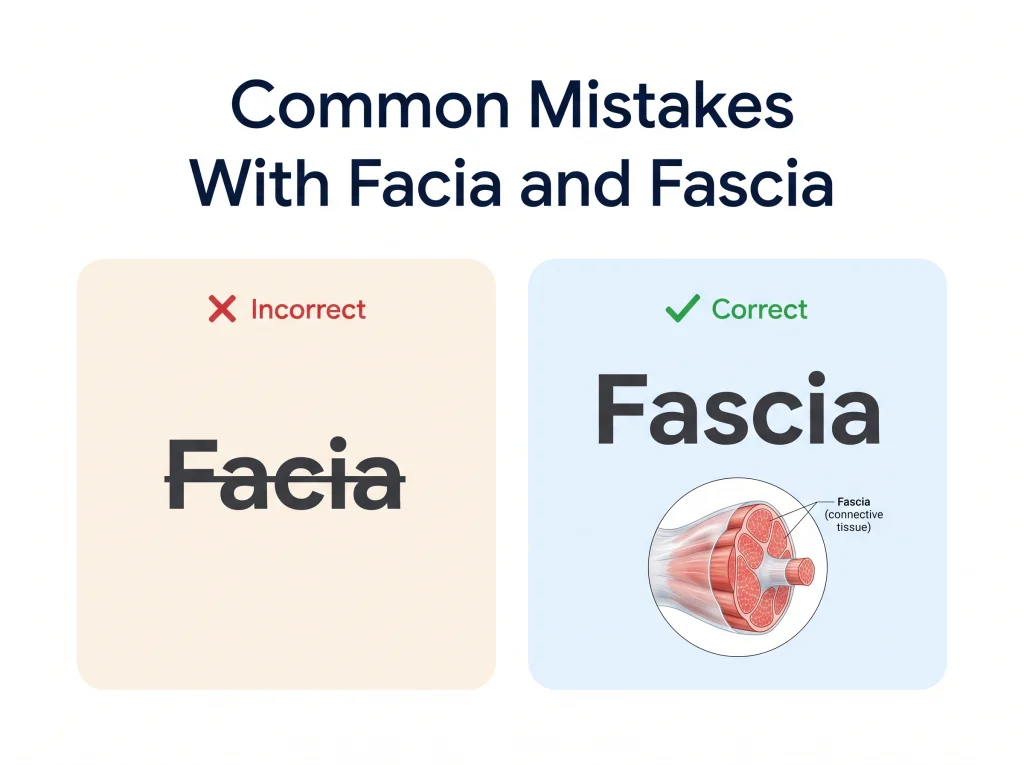
Writers sometimes assume that facia and fascia are interchangeable in every situation. Although dictionaries recognize facia as a variant, using it without considering the audience can make technical writing less consistent.
Here are some common mistakes and their corrections.
| Incorrect or less suitable usage | Preferred American English |
|---|---|
| The doctor examined the facia around the muscle. | The doctor examined the fascia around the muscle. |
| The contractor replaced the roof facia board. | The contractor replaced the roof fascia board. |
| The car’s front facia was damaged. | The car’s front fascia was damaged. |
| The medical report describes the facia tissue. | The medical report describes the fascia tissue. |
The first and fourth examples are especially important in medical writing, where precise terminology matters. In construction and automotive writing, using fascia also helps maintain consistency with common American terminology.
One related mistake is confusing fascia with soffit. A fascia board faces outward along the roof edge, while a soffit generally covers the underside of the roof overhang. They are different parts of a building, even though they are often discussed together.
How to Remember the Correct Spelling
A simple way to remember the preferred American spelling is to associate fascia with its three main letters after the initial fa: s-c-i.
Keep these tips in mind:
- Medical context: Remember fascia when discussing connective tissue.
- Roofing context: Remember fascia board for the board at the roof’s edge.
- Automotive context: Remember front fascia or rear fascia for vehicle styling.
- Formal American writing: Choose fascia unless a specific source or established usage requires facia.
You can also remember the phrase: “The fascia finishes the roofline.” Connecting the spelling to a familiar construction term can help you recall it when writing.
Frequently Asked Questions:
Conclusion
When deciding between facia or fascia, fascia is the preferred spelling for standard American English. It is used in anatomy, roofing, architecture, and automotive terminology. Although facia is a recognized variant, it is more closely associated with British usage and is less common in American writing.