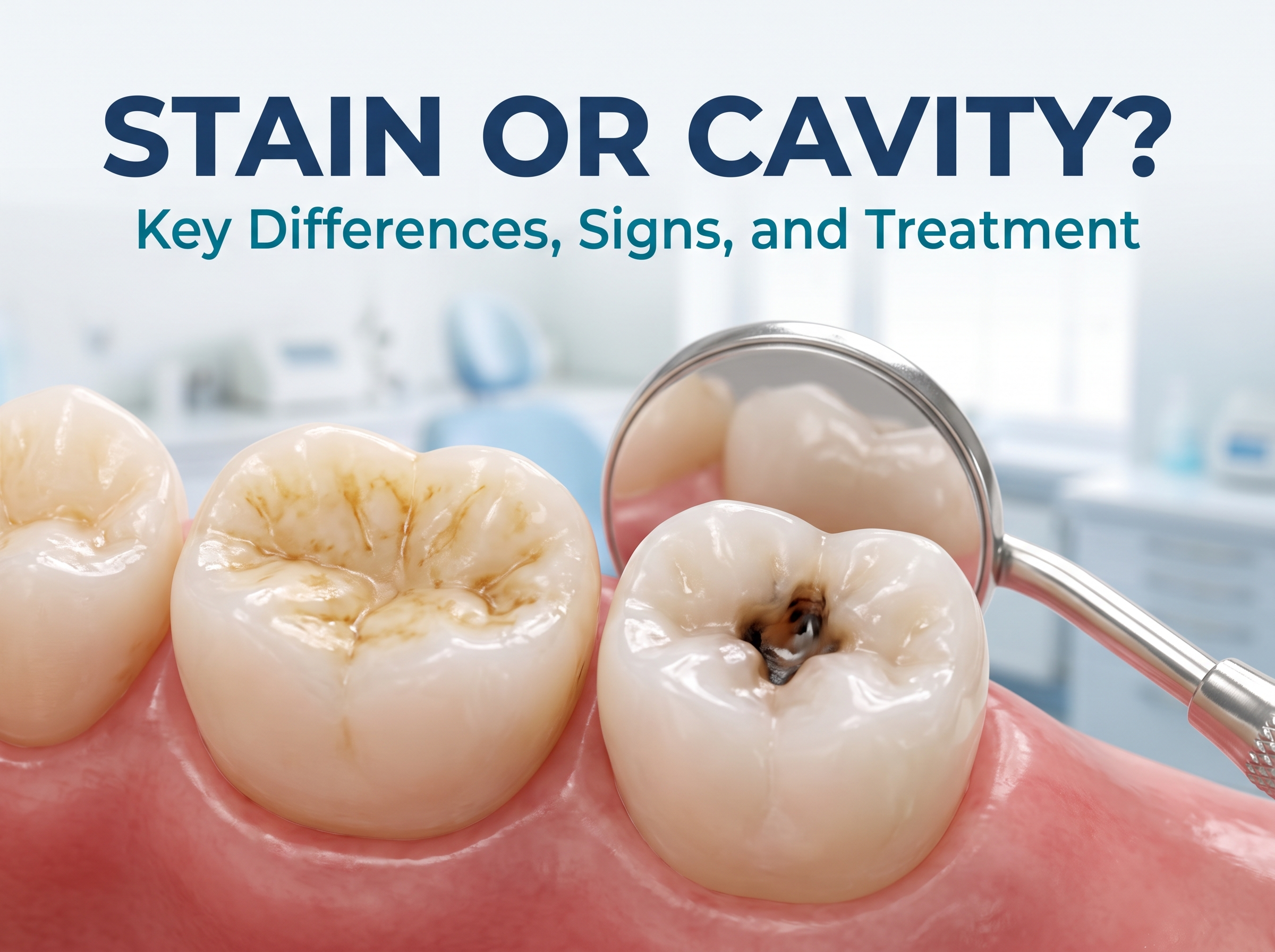
Stain or Cavity? Key Differences, Signs, and Treatment
Noticing a brown, black, yellow, or white spot on a tooth can make you wonder whether you have a simple tooth stain or a cavity. Although both can change the appearance of your teeth, they have different causes and require different types of care. A stain usually affects the color of a tooth, while a cavity develops when tooth decay damages its structure.
The tricky part is that early cavities do not always look like obvious holes. They may appear as small white, brown, or dark spots, and they can develop without causing pain. A stain can also appear in the grooves of a molar, making it difficult to judge what is happening by looking in the mirror.
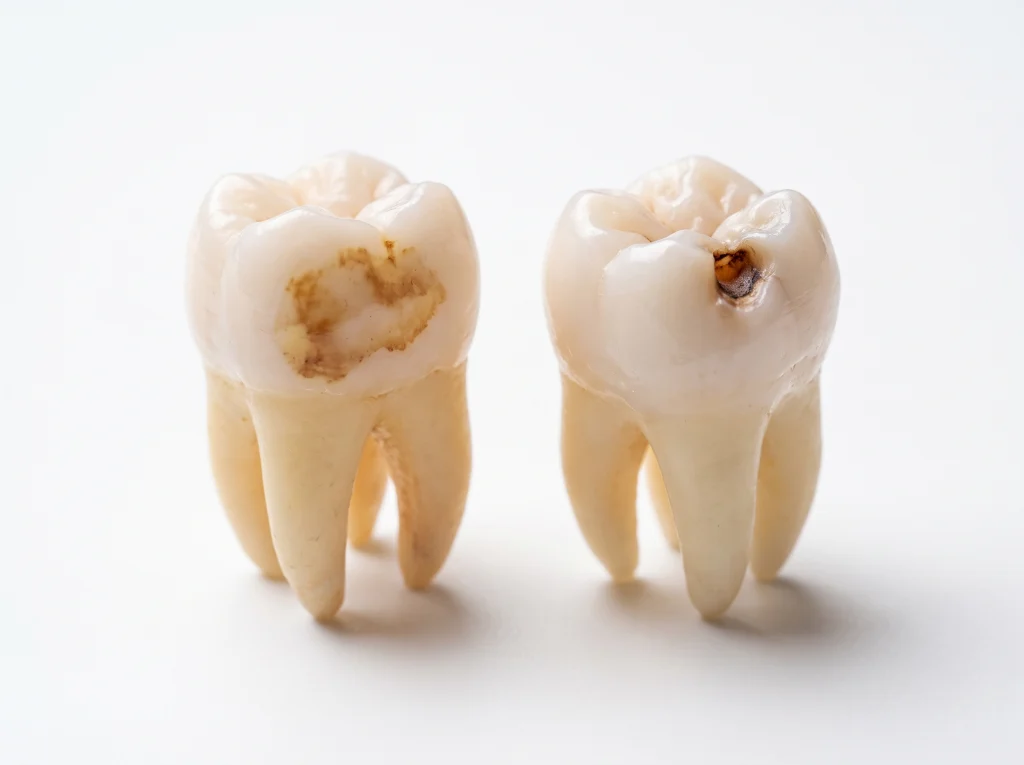
Understanding the difference between a stain and a cavity can help you decide what to do next. However, color alone cannot confirm whether a tooth is decayed. If you notice a new or persistent spot, a change in the tooth’s surface, or unusual sensitivity, a dental examination is the most reliable way to identify the cause.
Stain or Cavity: What Is the Difference?
A tooth stain is a change in tooth color caused by pigments on the surface or changes within the tooth. Common causes include coffee, tea, tobacco, certain medications, aging, and other factors that affect tooth color. A cavity, also called dental caries or tooth decay, develops when acids produced by bacteria in dental plaque remove minerals from the tooth and gradually damage its structure.
American Dental Association
+1
The main difference is that a stain changes the appearance of a tooth, while a cavity involves tooth decay. Surface stains may improve with brushing or professional dental cleaning. A cavity requires an assessment to determine whether preventive treatment, a filling, or another procedure is needed.
| Feature | Tooth stain | Cavity |
|---|---|---|
| Main problem | Tooth discoloration | Tooth decay and structural damage |
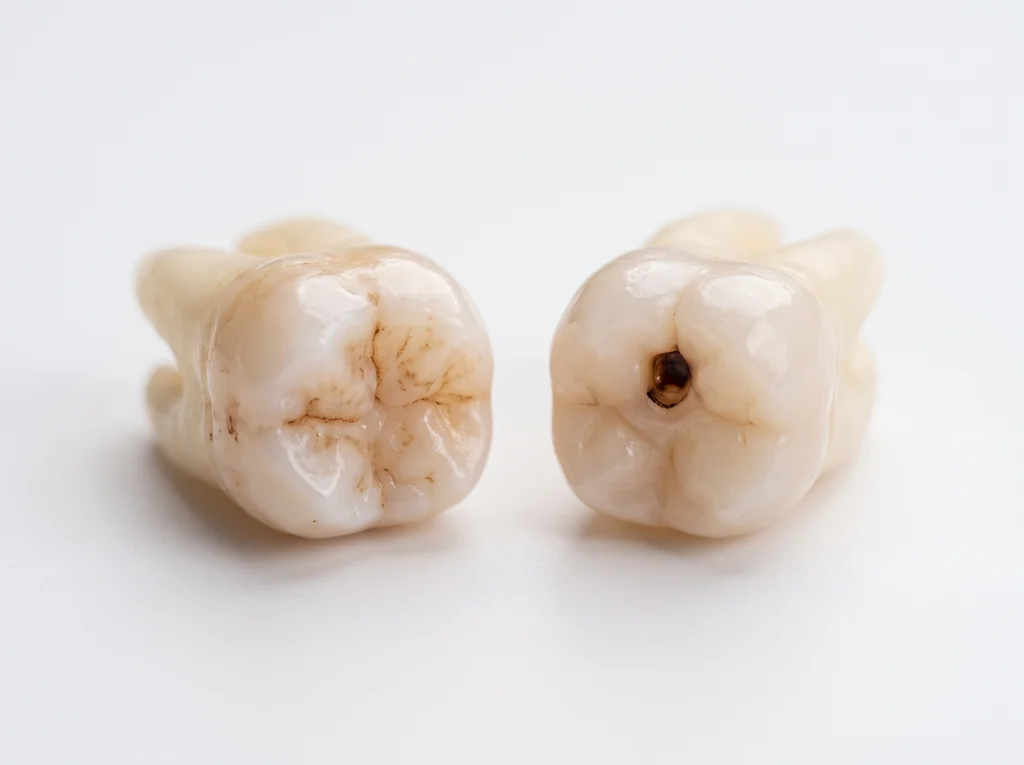
| Common appearance | Yellow, brown, gray, or dark marks | White, brown, gray, or black spots; sometimes a pit or hole |
| Surface texture | Often smooth and intact | May be rough, weakened, or visibly broken down |
| Pain | Usually painless | May cause sensitivity or pain, but early decay can be painless |
| Effect of brushing | Some surface stains may improve | Brushing does not repair an established hole |
| Typical treatment | Cleaning or cosmetic treatment when needed | Preventive care or restorative dental treatment, depending on severity |
These differences are useful clues, not a reliable home diagnosis. Some cavities resemble harmless stains, and some stains are located in places where cavities commonly develop.
Cleveland Clinic
+1
What Does a Tooth Stain Look Like?
Tooth stains can appear as yellow, brown, gray, or dark discoloration. They may affect one tooth, several teeth, or most of the visible tooth surfaces. Many stains leave the tooth’s shape and surface intact.
Dentists generally classify tooth discoloration into two main categories.
Extrinsic Stains
Extrinsic stains develop on the outside surface of the tooth, particularly the enamel. They commonly result from repeated exposure to pigmented foods and beverages or tobacco products.
Common causes include:
- Coffee and tea
- Red wine and dark-colored beverages
- Dark berries and strongly pigmented foods
- Smoking or chewing tobacco
- Plaque and other deposits that collect on teeth
Surface stains may respond to regular brushing with fluoride toothpaste or professional dental cleaning. Whitening products can help with certain types of discoloration, but they do not remove every kind of stain.
Intrinsic Stains
Intrinsic stains develop within the tooth rather than only on its outer surface. They may result from aging, certain medications taken during tooth development, excessive fluoride exposure during tooth development, trauma, or other changes affecting the tooth.
These stains may not respond well to ordinary brushing because the discoloration is not simply sitting on the enamel. A dentist can help determine whether whitening, bonding, veneers, or another approach is appropriate for the cause of the discoloration.
American Dental Association
A smooth, discolored tooth without other symptoms may be stained, but that appearance does not rule out early decay. Pay attention to new changes and arrange a dental examination if you are unsure.
What Does a Cavity Look Like?
A cavity may appear as a white, chalky spot, a brown mark, a black spot, or a visible opening in the tooth. Its appearance depends on how far tooth decay has progressed and where it is located.
Early decay can be difficult to recognize because the enamel may still look intact. As the damage progresses, the tooth may develop a more noticeable pit or hole. Cavities can also form between teeth or beneath the surface, where they are difficult to see without a dental examination and sometimes dental X-rays.
Cleveland Clinic
+1
Early Signs of Tooth Decay
Early tooth decay may produce a white or chalky area where the enamel has lost minerals. At this stage, a dentist may be able to manage the affected area with fluoride and other preventive measures, depending on the lesion’s condition and the patient’s risk factors.
Early decay does not always cause pain, so waiting for a toothache is not a reliable way to identify a problem.
Signs of a More Advanced Cavity
As decay progresses, you may notice:
- A brown or black spot that does not disappear with normal brushing
- A small pit, hole, or change in the tooth’s shape
- Sensitivity to cold drinks, hot foods, or sweet foods
- Pain when biting or chewing
- Food repeatedly becoming trapped in the same area
- A persistent toothache or unpleasant taste
Not every cavity causes these symptoms, and several other dental problems can cause similar discomfort. A dentist needs to evaluate the tooth to determine whether decay is present and how extensive it is.
Cleveland Clinic
+1
Stain vs. Cavity: Common Signs That Help You Tell Them Apart
If you notice a dark spot on your tooth, consider its appearance, location, texture, and any symptoms. These clues can help you decide whether to seek dental care, but none can confirm the diagnosis on its own.
1. Look at the Location
Stains often affect the surfaces exposed to food, drinks, or tobacco. You may notice discoloration on several teeth or along the edges of the gumline.
Cavities frequently develop in the grooves of back teeth, between teeth, or near the gumline. However, both stains and cavities can appear in these locations, so the spot’s position is not enough to identify the problem.
2. Notice Any Change in Texture
A stain may leave the tooth surface smooth and intact. A cavity can cause a rough area, a weakened surface, or a visible hole as the tooth structure breaks down.
Avoid scraping the spot with a fingernail, pin, or sharp object to test it. You could damage the tooth or irritate your gums without learning whether the mark is a cavity.
3. Pay Attention to Sensitivity
A stain generally does not cause pain or sensitivity by itself. Tooth decay, however, may cause discomfort when you eat something sweet or consume hot or cold foods and beverages.
Sensitivity does not automatically mean you have a cavity. Gum recession, worn enamel, cracked teeth, and other dental problems can produce similar symptoms. Early cavities may also remain painless.
4. Consider Whether the Spot Changes
Surface stains may become more noticeable after frequent coffee or tea consumption, tobacco use, or inconsistent oral hygiene. Some may improve with brushing or professional cleaning.
A cavity can progress if the decay is not controlled. However, its color may remain unchanged for a period, and some early lesions can be managed without drilling. Do not rely on changes in color alone to decide whether treatment is necessary.
Can a Tooth Stain Turn Into a Cavity?
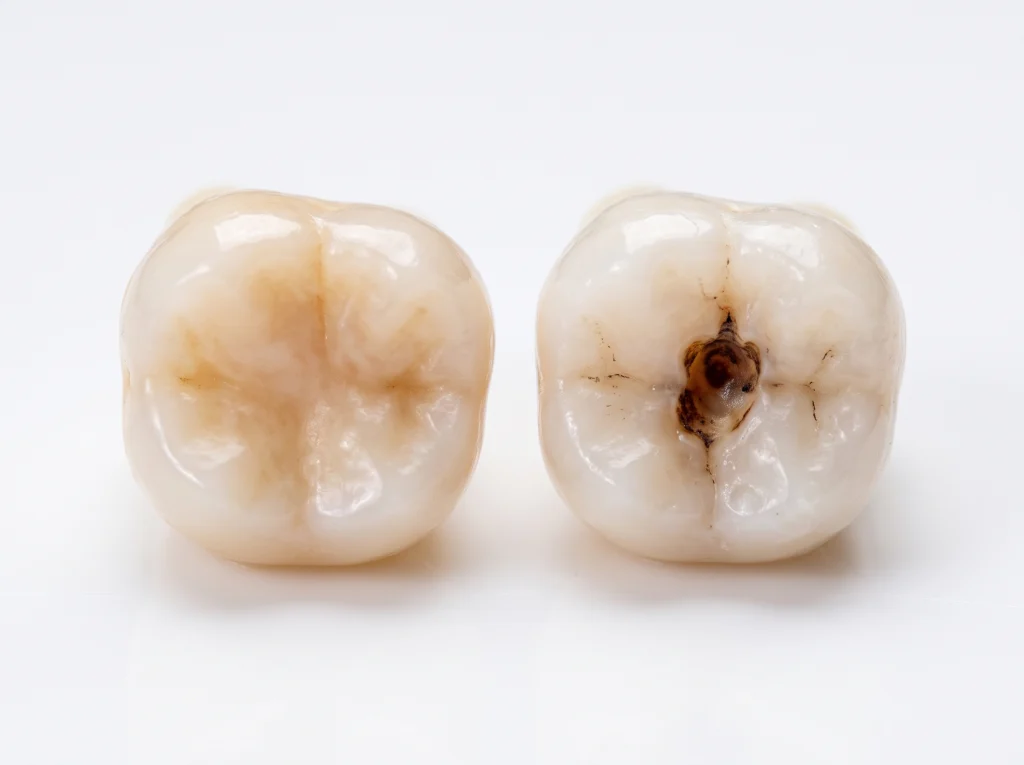
A stain does not automatically turn into a cavity. Discoloration and tooth decay are different problems, although they can occur together.
For example, drinking coffee may contribute to surface staining, while frequent exposure to sugars can help plaque bacteria produce acids that remove minerals from enamel. If this process continues, tooth decay can develop. A dark spot caused by decay may also become stained, making the two conditions difficult to distinguish by appearance alone.
American Dental Association
+1
To reduce your risk of cavities and limit new surface stains:
- Brush twice daily with fluoride toothpaste.
- Clean between your teeth every day using floss or another suitable interdental cleaner.
- Limit frequent sugary snacks and drinks.
- Drink water regularly, particularly instead of sugary beverages.
- Avoid tobacco products.
- Keep up with dental examinations and professional cleanings at intervals recommended for your oral health.
These habits support oral health, but they cannot guarantee that you will never develop a cavity. Your risk also depends on factors such as saliva production, previous tooth decay, medication use, and the condition of your teeth.
How Do Dentists Diagnose Stains and Cavities?
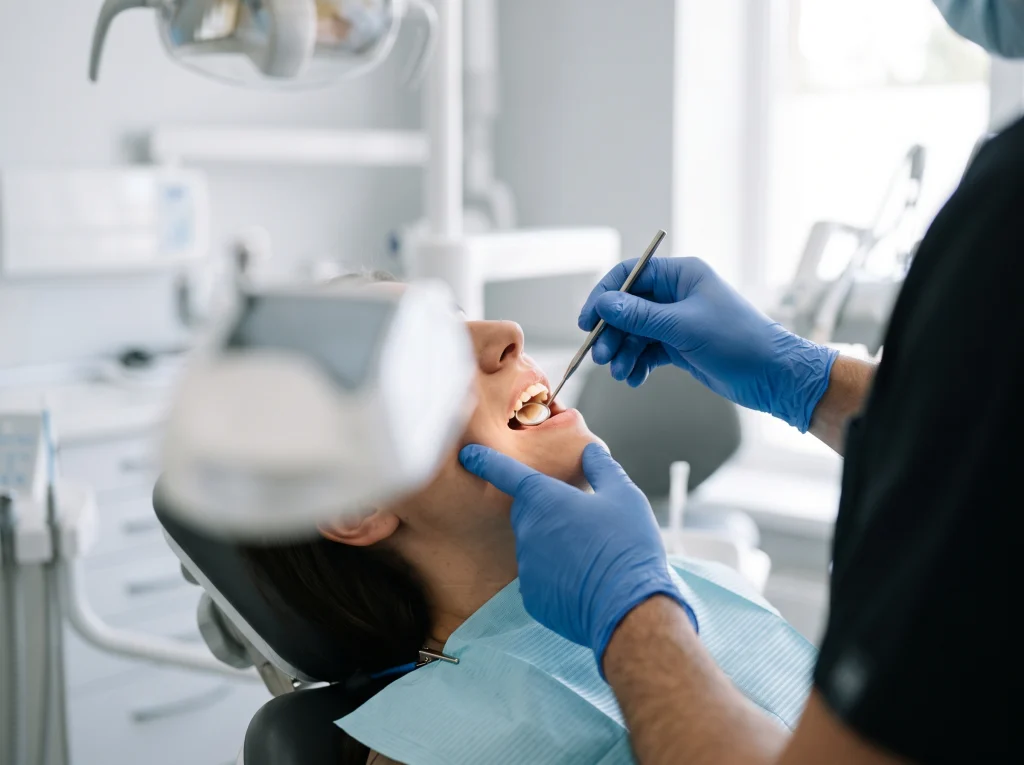
A dentist evaluates more than the color of a spot. The examination may include checking the tooth’s surface, reviewing your dental history, asking about symptoms, and taking dental X-rays when appropriate.
Here is what you can generally expect.
Visual examination: The dentist examines the tooth under good lighting and may dry the surface to make early changes easier to see.
Assessment of the tooth surface: The dentist evaluates the appearance and condition of the enamel. Appropriate dental instruments may be used gently when needed.
Dental X-rays: X-rays can help identify decay between teeth or in areas that cannot be assessed fully during a visual examination. They are not necessary for every discoloration and are selected according to clinical need.
Review of risk factors: Your dentist may ask about previous cavities, oral hygiene, diet, dry mouth, medications, and other factors that affect your risk of decay.
The findings help determine whether the spot is likely to be staining, early mineral loss, or an established cavity. Dentists may also recommend monitoring certain early lesions instead of immediately placing a filling.
American Dental Association
+1
Treatment Options for Tooth Stains and Cavities
The appropriate treatment depends on what is causing the discoloration and whether the tooth structure has been damaged.
How Tooth Stains Are Treated
For surface stains, a dentist or dental hygienist may recommend professional cleaning. Brushing with fluoride toothpaste can help maintain clean teeth, and some whitening toothpastes can reduce certain external stains.
For deeper discoloration, a dentist may discuss professional whitening or cosmetic treatments such as bonding or veneers. The right option depends on the type of stain, the condition of your teeth, and your cosmetic goals.
Avoid using household bleach, acidic substances, or abrasive powders on your teeth. These can harm your oral tissues or damage enamel. Whitening products should be used according to their instructions, and a dentist should assess unexplained discoloration before you attempt to whiten it.
How Cavities Are Treated
Cavity treatment depends on the stage of decay.
| Stage or condition | Possible approach |
|---|---|
| Early mineral loss without a hole | Fluoride treatment, improved oral hygiene, dietary changes, and monitoring |
| A cavity that has damaged the tooth structure | A filling or another suitable restoration |
| Extensive decay affecting the inner tooth | Root canal treatment and restoration when the tooth can be saved |
| A tooth that cannot be restored predictably | Extraction may be necessary |
Not every early cavity needs a filling immediately. Some noncavitated lesions can be managed with preventive treatment, while an established hole generally requires restorative care. The dentist determines the appropriate approach based on the location, depth, activity, and condition of the tooth.
American Dental Association
+1
If you have a suspected cavity, do not try to remove the dark spot yourself or assume that whitening toothpaste will repair it. Toothpaste can support prevention, but it cannot rebuild a tooth after a cavity has formed.
When Should You See a Dentist?
Arrange a dental appointment if you notice a new or persistent dark spot, a visible hole, sensitivity that continues, or discomfort when chewing. Even if the tooth does not hurt, a dental examination can identify decay before it progresses.
Seek prompt dental care for a severe or worsening toothache, broken tooth, or significant swelling. Facial or neck swelling accompanied by difficulty breathing or swallowing requires emergency medical care. Fever, pus, or swelling around a tooth can indicate an infection that needs urgent assessment.

Do not wait for a stain-like spot to become painful before having it checked. Early evaluation can help clarify the cause and may prevent a small dental problem from becoming more complicated.
Frequently Asked Questions:
Conclusion
Knowing the difference between a stain and a cavity can help you make better decisions about your dental health. Stains primarily affect tooth color, while cavities involve damage caused by tooth decay. Although a smooth yellow or brown mark may be harmless discoloration, a dark spot can also indicate early decay.
Pay attention to changes in your teeth, maintain good oral hygiene, and schedule a dental examination if you notice a persistent spot or unusual sensitivity. A professional assessment is the safest way to determine whether you need a cleaning, preventive treatment, or a filling.