Easy Idioms Drawing: 30 Simple Idioms to Draw With Meanings and Examples
Idioms are a fun part of learning English because their meanings are often different from the literal meanings of their words. Drawing idioms makes these expressions easier to understand, remember, and use in everyday conversations. Whether you are a student, an English learner, a teacher, or someone who enjoys creative activities, simple idiom drawings can turn language learning into an enjoyable art project.
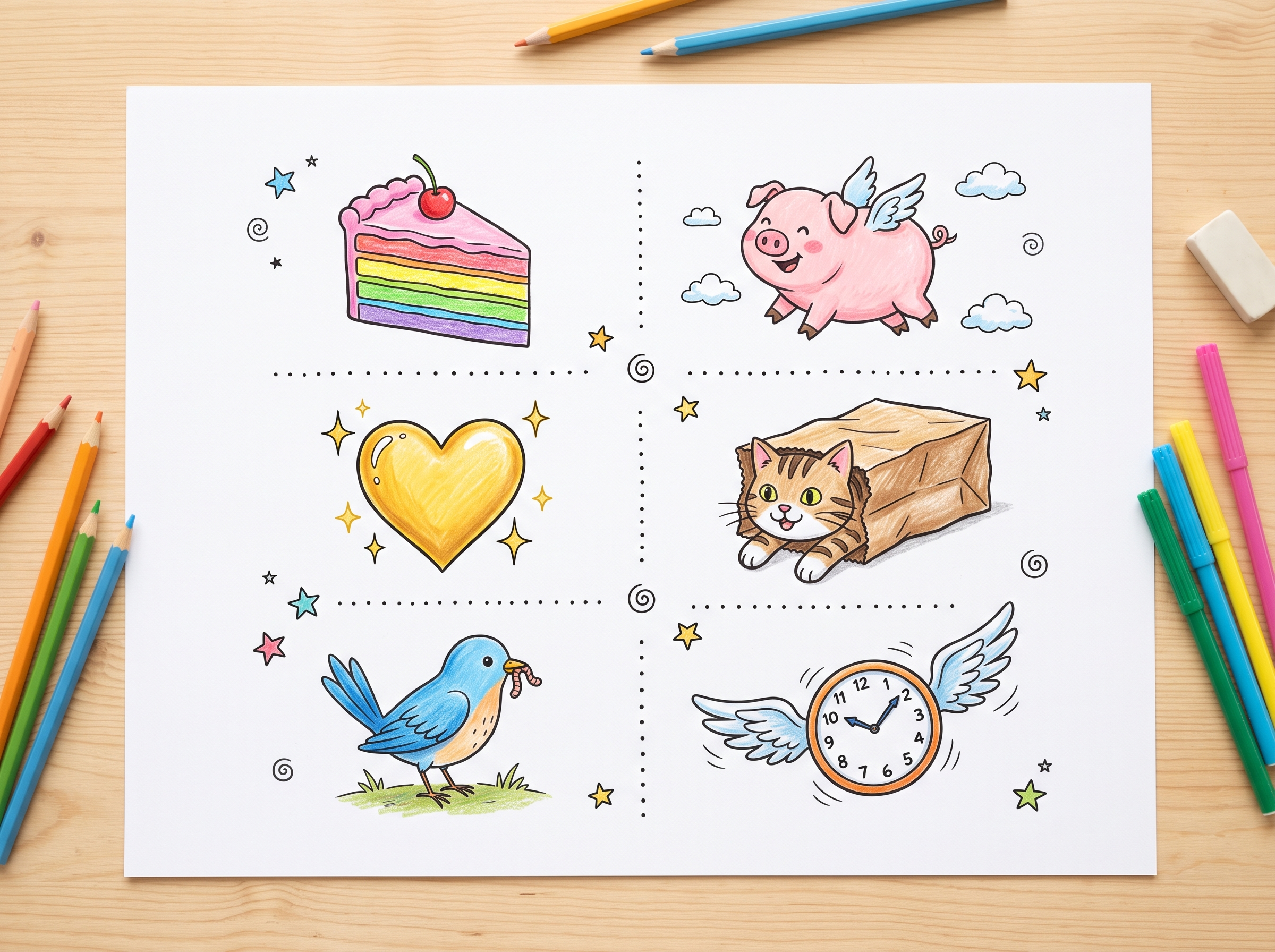
An idiom drawing usually shows the literal meaning of an expression instead of its actual meaning. For example, you can draw a person holding a real piece of cake to represent “a piece of cake,” which means something is very easy. Similarly, drawing a cat with its tongue out can help illustrate “cat got your tongue?” These visual ideas make abstract expressions more concrete and memorable.
In this guide, you will find 30 easy idioms to draw, along with their meanings, example sentences, and simple illustration ideas. You can use them for school assignments, classroom posters, English worksheets, sketchbooks, or creative language-learning activities.
What Are Idioms?
Idioms are common expressions whose meanings cannot always be understood by interpreting each word literally. They are widely used in everyday American English, informal conversations, stories, books, and other forms of communication.
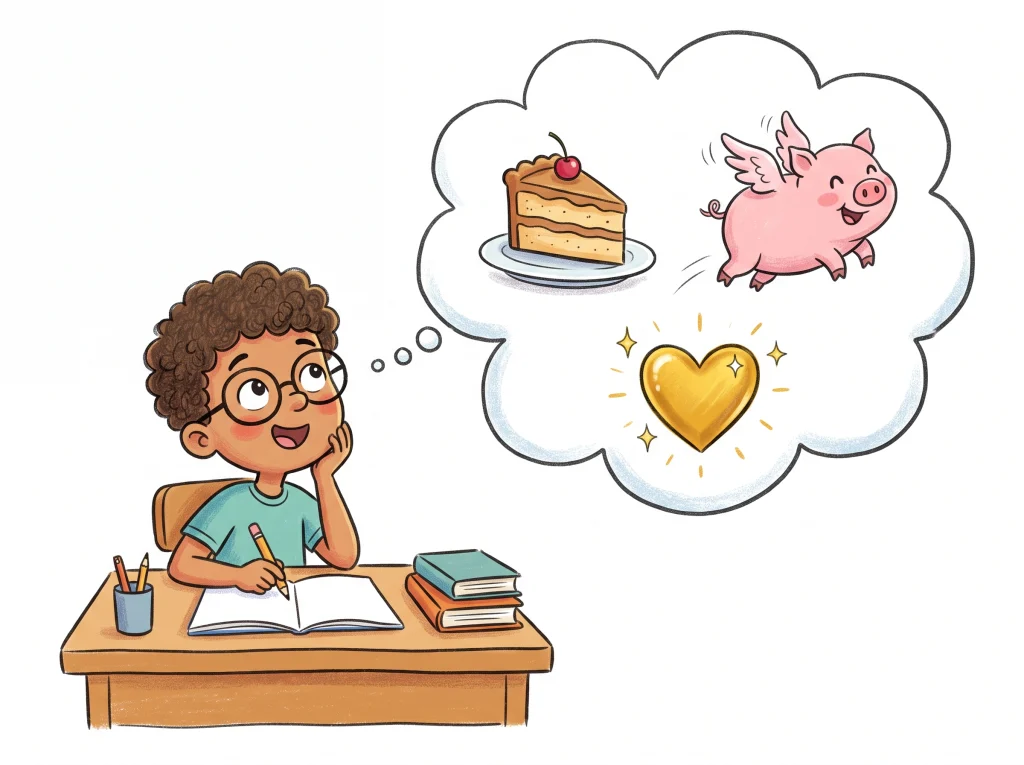
For example, “break the ice” does not mean physically breaking frozen water. It means helping people feel comfortable when they first meet or when a conversation feels awkward.
Drawing idioms allows learners to connect the words in an expression with a visual representation of its meaning. A drawing can show the literal interpretation, the figurative meaning, or both side by side.
30 Easy Idioms to Draw With Meanings and Examples
The following idioms are suitable for beginners because their words suggest simple objects, animals, actions, or situations that are easy to illustrate. Each entry includes a meaning, a drawing idea, and an example sentence.
Idioms About Animals
Animal idioms are especially useful for drawing because they often involve familiar creatures and recognizable actions.
1. Let the Cat Out of the Bag
Meaning: To reveal a secret, often accidentally.
Drawing idea: Draw a cat jumping out of a shopping bag while a surprised person looks on. Add a small envelope or a gift nearby to suggest that a secret has been revealed.
Example: Jake let the cat out of the bag about his sister’s surprise birthday party.
2. Hold Your Horses
Meaning: To wait patiently or slow down instead of acting too quickly.
Drawing idea: Draw a person gently holding the reins of two horses. Keep the horses simple, with basic shapes for their bodies, heads, and legs.
Example: Hold your horses! We need to read the instructions before starting the project.
3. The Elephant in the Room
Meaning: An obvious or important problem that people avoid discussing.
Drawing idea: Draw a large elephant sitting in the middle of a room while two people talk around it without looking at it.
Example: Nobody wanted to discuss the elephant in the room, which was the team’s poor performance.
4. A Fish Out of Water
Meaning: A person who feels uncomfortable or out of place in a particular situation.
Drawing idea: Draw a small fish on the ground beside a bowl or pond, looking confused. Use a few water bubbles to make the illustration recognizable.
Example: I felt like a fish out of water at my first formal business meeting.
5. The Early Bird Catches the Worm
Meaning: People who act early often have an advantage.
Drawing idea: Draw a little bird holding a worm in its beak while the sun rises behind it.
Example: Maya arrived at the store before opening time because she believes the early bird catches the worm.
6. Let Sleeping Dogs Lie
Meaning: Avoid bringing up an old problem that could cause trouble again.
Drawing idea: Draw a sleeping dog curled up on a mat while a person quietly walks past it.
Example: We decided to let sleeping dogs lie instead of restarting an argument about last year.
7. Kill Two Birds With One Stone
Meaning: To accomplish two goals with one action.
Drawing idea: Draw a person completing two tasks at once, such as walking a dog while delivering a package. This illustrates the meaning without showing harm to animals.
Example: I killed two birds with one stone by picking up groceries while walking home from work.
Idioms About Feelings and Emotions
These idioms are ideal for expressive drawings because facial expressions, hearts, and simple symbols can communicate their meanings clearly.

8. Butterflies in Your Stomach
Meaning: To feel nervous or excited about something.
Drawing idea: Draw a person with a nervous smile and several small butterflies around their stomach.
Example: I had butterflies in my stomach before giving my first speech.
9. Head Over Heels
Meaning: To be deeply in love with someone.
Drawing idea: Draw two smiling people surrounded by hearts, with one person playfully standing upside down.
Example: Daniel is head over heels for his new girlfriend.
10. Cry Over Spilled Milk
Meaning: To be upset about something that has already happened and cannot be changed.
Drawing idea: Draw a tipped-over glass of milk and a person looking disappointed beside the spill.
Example: We made a mistake, but there is no point crying over spilled milk.
11. Have a Heart of Gold
Meaning: To be very kind, generous, and caring.
Drawing idea: Draw a large golden heart with a smiling face. Add two small hands offering a gift or helping another person.
Example: Our neighbor has a heart of gold because she always helps families in need.
12. Wear Your Heart on Your Sleeve
Meaning: To show your feelings openly.
Drawing idea: Draw a person wearing a shirt with a large heart on the sleeve. Give the person a happy, sad, or excited expression.
Example: Emma wears her heart on her sleeve, so everyone knows when she is happy or upset.
13. Green With Envy
Meaning: To feel jealous of another person’s success or possessions.
Drawing idea: Draw a person with a green face looking at someone holding a trophy or a new bicycle.
Example: My brother was green with envy when I received a new laptop.
Idioms About Actions and Everyday Life
These expressions are useful for school assignments because their meanings can be represented with ordinary objects and simple activities.
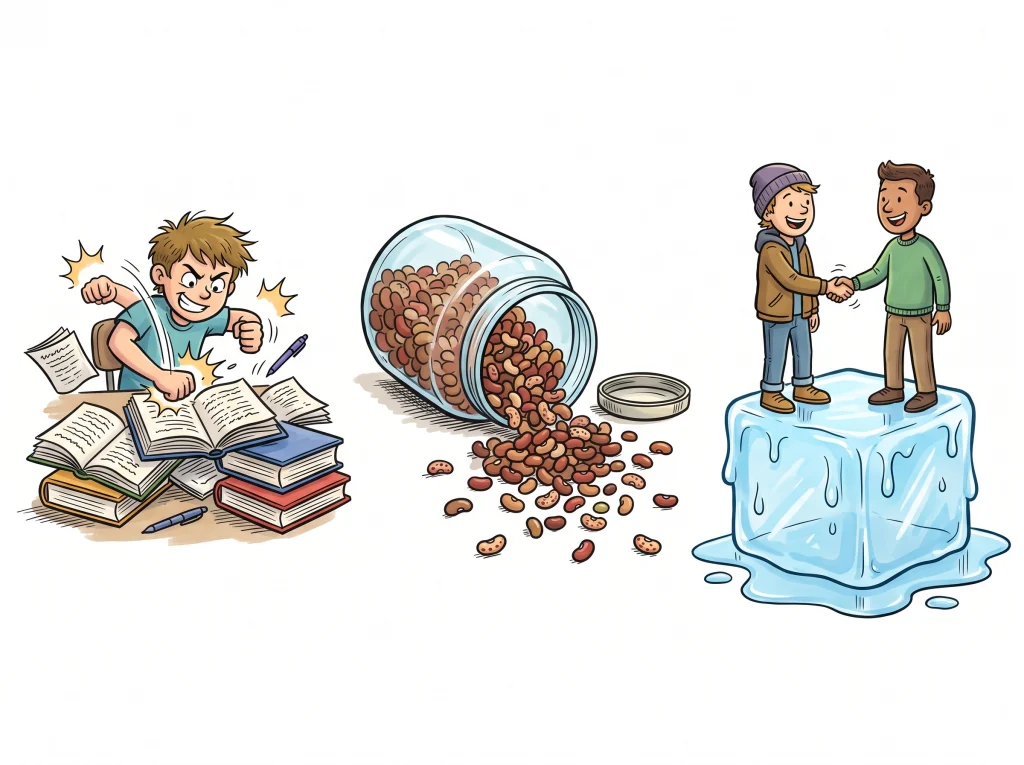
14. Break the Ice
Meaning: To make people feel more comfortable in an unfamiliar or awkward social situation.
Drawing idea: Draw two people meeting for the first time, standing on a block of ice that is beginning to crack. Include friendly smiles or speech bubbles.
Example: Our teacher played a quick game to break the ice on the first day of class.
15. A Piece of Cake
Meaning: Something that is very easy to do.
Drawing idea: Draw a smiling person holding a slice of cake beside a completed homework sheet.
Example: The math quiz was a piece of cake because I had studied all week.
16. Spill the Beans
Meaning: To reveal information or a secret.
Drawing idea: Draw an open jar with beans spilling onto a table while a person looks surprised.
Example: Please do not spill the beans about our plans for Saturday.
17. Hit the Books
Meaning: To study seriously.
Drawing idea: Draw a student sitting at a desk with an open book, a pencil, and a stack of textbooks.
Example: I need to hit the books tonight because my final exam is tomorrow.
18. Keep an Eye on Something
Meaning: To watch or monitor something carefully.
Drawing idea: Draw a large eye looking toward a small plant, a pet, or a backpack.
Example: Can you keep an eye on my bag while I buy a drink?
19. Put All Your Eggs in One Basket
Meaning: To risk everything on one plan, choice, or opportunity.
Drawing idea: Draw a basket containing several eggs beside another empty basket. Show a person carefully dividing the eggs between two baskets.
Example: She applied to several colleges instead of putting all her eggs in one basket.
20. On the Same Page
Meaning: To have the same understanding or agree about something.
Drawing idea: Draw two people looking at the same open book, with matching check marks above their heads.
Example: Before starting the group project, we made sure everyone was on the same page.
Idioms About Success and Challenges
These idioms help students illustrate ideas such as effort, progress, achievement, and overcoming difficulties.
21. When Pigs Fly
Meaning: Something that is extremely unlikely or probably will never happen.
Drawing idea: Draw a cheerful pink pig with small wings flying through the clouds.
Example: My brother says he will clean his room without being asked when pigs fly.
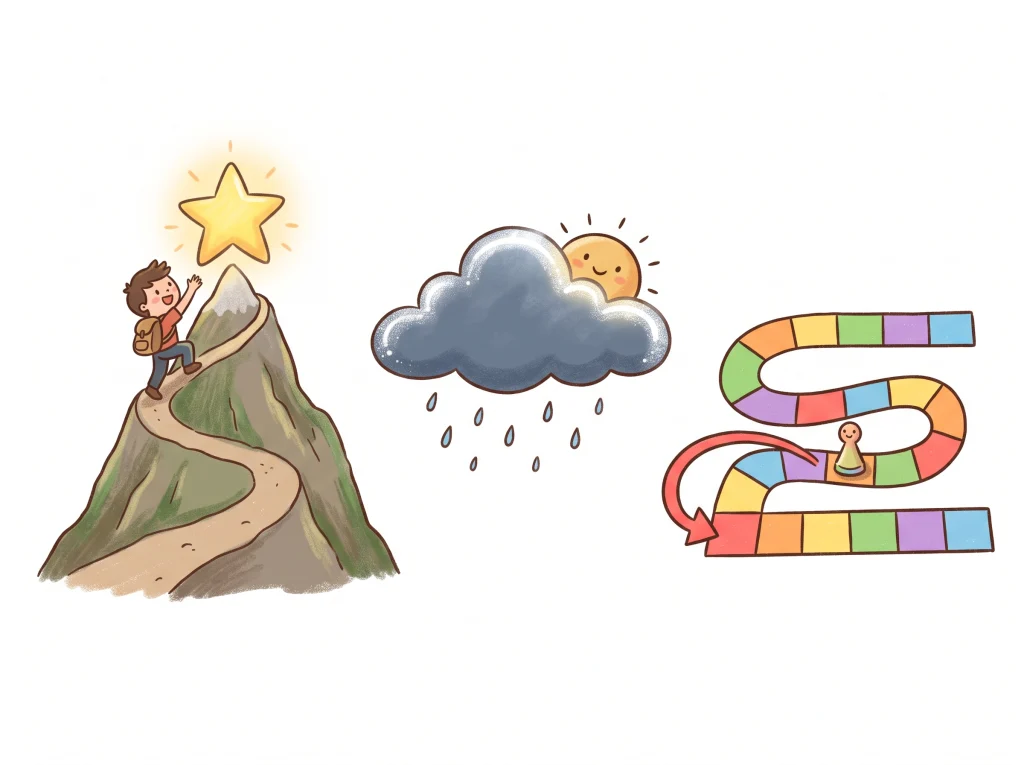
22. Reach for the Stars
Meaning: To aim high and try to achieve ambitious goals.
Drawing idea: Draw a person reaching toward bright stars in the night sky, with a ladder or a mountain underneath.
Example: My parents always encourage me to reach for the stars and work toward my dreams.
23. Go the Extra Mile
Meaning: To make more effort than is expected or required.
Drawing idea: Draw a person walking along a road with a sign that says “Extra Mile.” Add a finish line in the distance.
Example: Our teacher went the extra mile to help us prepare for the competition.
24. Back to Square One
Meaning: To return to the beginning after a plan fails or a problem remains unsolved.
Drawing idea: Draw a board game with a character returning to the first square after moving several spaces forward.
Example: When our original design failed, we had to go back to square one.
25. A Blessing in Disguise
Meaning: Something that seems bad at first but eventually leads to a positive result.
Drawing idea: Draw a rain cloud with a smiling sun and a rainbow appearing behind it.
Example: Missing the bus was a blessing in disguise because I met an old friend while waiting for the next one.
26. Bite the Bullet
Meaning: To face a difficult or unpleasant situation with courage.
Drawing idea: Draw a brave person taking a deep breath before entering a dentist’s office or beginning a challenging task.
Example: I finally bit the bullet and made the phone call I had been avoiding.
27. Every Cloud Has a Silver Lining
Meaning: Even difficult situations can have a positive side.
Drawing idea: Draw a dark cloud with a bright silver edge and sunlight shining behind it.
Example: Although our picnic was canceled, every cloud has a silver lining because we spent the afternoon playing games indoors.
Idioms About Time, Communication, and Common Situations
These final expressions are easy to illustrate and frequently useful in everyday English.

28. Time Flies
Meaning: Time seems to pass very quickly.
Drawing idea: Draw a clock with wings flying across the sky, leaving small motion lines behind it.
Example: Time flies when I am playing video games with my friends.
29. Call It a Day
Meaning: To stop working on something for the day.
Drawing idea: Draw a tired person closing a laptop beside a clock showing the end of the workday.
Example: We have finished most of the assignment, so let’s call it a day.
30. Actions Speak Louder Than Words
Meaning: What people do is more important than what they say.
Drawing idea: Draw one person making promises in a speech bubble while another person helps a neighbor carry groceries.
Example: He never talks much about being generous, but his actions speak louder than words.
How to Choose an Idiom for Drawing
Choosing an idiom becomes easier when you look for expressions with clear objects, actions, or characters. Start with familiar words such as cat, cake, heart, book, bird, or cloud. These objects are simple to draw and make it easier for other people to recognize the expression.
Think about the idiom’s literal meaning before deciding how to illustrate it. For example, “spill the beans” suggests beans falling out of a container, while “time flies” suggests a clock moving through the air. You can use these literal images to help viewers identify the expression.
If your assignment requires showing the actual meaning rather than the literal words, focus on the situation behind the idiom. For “hit the books,” draw a student studying at a desk. For “break the ice,” draw two people becoming comfortable with each other. You can also divide the page into two panels, showing the literal meaning on one side and the figurative meaning on the other.
Tips for Making Idiom Drawings Easy and Creative
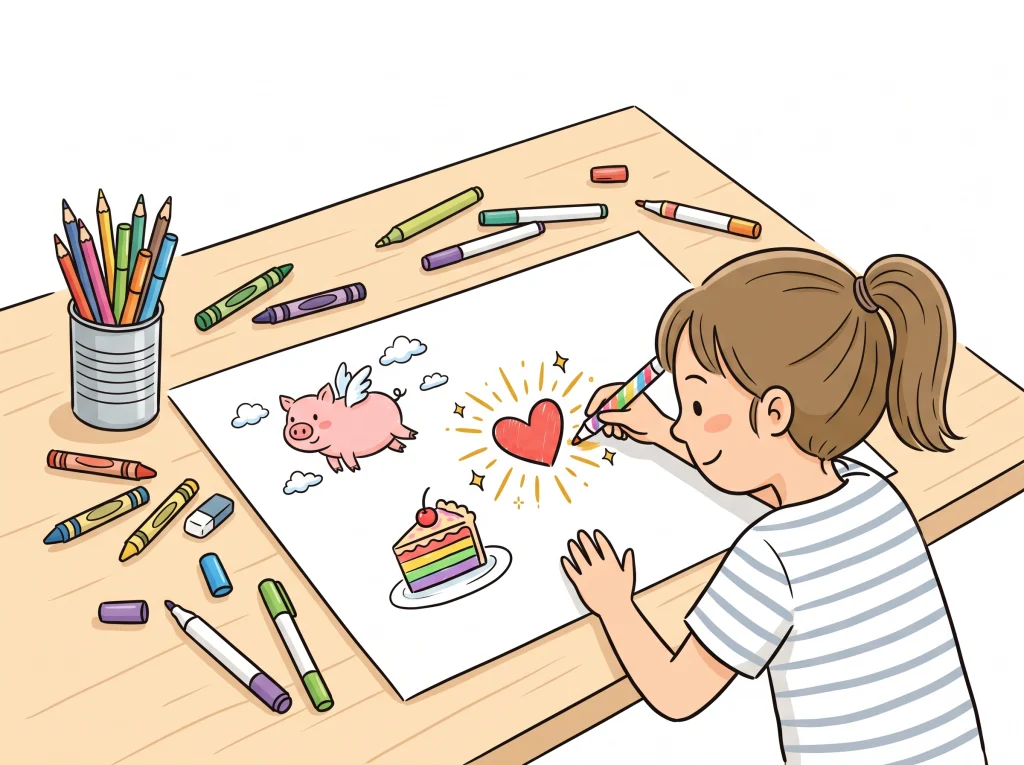
You do not need advanced drawing skills to create effective idiom illustrations. Simple shapes, recognizable objects, and clear facial expressions are usually enough to communicate an idea.
- Start with pencil sketches: Draw basic shapes before adding details or color.
- Keep the illustration simple: Focus on the main object or action instead of adding too many background details.
- Use facial expressions: Smiles, raised eyebrows, and worried faces can help communicate emotions.
- Add color thoughtfully: Use green for “green with envy,” gold for “a heart of gold,” and bright colors for positive expressions.
- Include the idiom’s name: Write the expression clearly beneath the drawing if your assignment allows text.
- Show literal and figurative meanings: Use two small illustrations when an idiom’s intended meaning is difficult to communicate through one image.
- Practice with familiar expressions: Begin with “a piece of cake,” “hit the books,” or “time flies” before moving to more abstract idioms.
For a school poster, arrange four to six idiom drawings on a single page. Give each drawing a short title and, if space permits, a brief meaning. This layout makes the work easy to read and helps viewers learn several expressions at once.
Why Drawing Idioms Helps You Learn English
Drawing idioms can support vocabulary development by connecting unfamiliar expressions with visual information. Instead of memorizing a phrase alone, learners can associate it with an image, a meaning, and a real-life example.
This activity can also encourage creative thinking. When students decide how to represent “a blessing in disguise” or “back to square one,” they must think about the difference between literal words and figurative meanings. That process can help them understand how idioms work in context.
Drawing is also useful for classroom collaboration. Students can work in pairs, guess each other’s idioms, explain their meanings, and write sentences using the expressions. Teachers can turn the activity into a matching game, a vocabulary quiz, or a classroom display.
However, an illustration by itself does not guarantee that a learner will use an idiom correctly. Reading example sentences and practicing the expressions in conversations are important parts of learning them.
Frequently Asked Questions:
Conclusion
Easy idioms drawing is a practical way to combine art, vocabulary, and English learning. From “a piece of cake” to “actions speak louder than words,” these 30 expressions offer plenty of ideas for school projects, classroom activities, and personal sketchbooks.
Choose an idiom that interests you, create a simple illustration, and write its meaning with an example sentence. With regular practice, you can become more familiar with common idioms and understand how Americans use them in everyday conversations.