Hopped or Hoped? Meaning, Difference, and Correct Usage in American English
Hopped and hoped are both correct English words, but they come from two different verbs and have completely different meanings. The only difference in spelling is one letter, yet choosing the wrong word can change the meaning of an entire sentence.
Use hopped when you mean the past tense or past participle of hop, usually referring to jumping, moving with small jumps, or getting into or out of something quickly. Use hoped when you mean the past tense or past participle of hope, referring to wanting, expecting, or wishing that something would happen.

For example, “The rabbit hopped across the yard” means the rabbit moved by jumping. “She hoped the weather would improve” means she wanted or expected the weather to get better.
Hopped or Hoped: The Quick Answer
The easiest way to choose between hopped and hoped is to look at the base verb.
| Word | Base Verb | Meaning | Example |
|---|---|---|---|
| hopped | hop | jumped or moved with small jumps | The rabbit hopped away. |
| hoped | hope | wished or expected something | I hoped for good news. |
Hopped has a short vowel sound and comes from hop.
Hoped has the long vowel sound associated with hope and comes from hope.
So, if your sentence is about jumping or quick movement, use hopped. If it is about wishing or expecting something, use hoped.
What Does Hopped Mean?
Hopped is the past tense and past participle of the verb hop. To hop generally means to jump on one foot or move by making small jumps. It can describe people, animals, birds, or other types of movement.
For example:
- The child hopped across the room.
- The rabbit hopped through the grass.
- She hopped over the puddle.
- He hopped onto the bus.
- The bird hopped along the fence.
In American English, hop can also be used informally to describe getting into a vehicle or moving somewhere quickly.
For example:
We hopped in the car and drove home.
Here, hopped does not necessarily mean that the people literally jumped. It means they got into the car quickly or casually.
The word can also appear in expressions such as hopped on a plane, hopped into the car, or hopped over to the store.
What Does Hoped Mean?
Hoped is the past tense and past participle of the verb hope. It means that someone wanted something to happen or believed that something desirable might happen.
For example:
- I hoped you would call.
- She hoped for better news.
- They hoped to win the game.
- We hoped the rain would stop.
- He hoped that his application would be accepted.
Unlike hopped, the word hoped is connected with expectations, wishes, or positive possibilities.
The verb hope is commonly followed by to + verb, a noun phrase with for, or a clause beginning with that.
Examples include:
- I hoped to see you there.
- She hoped for a promotion.
- They hoped that everything would work out.
Hopped vs. Hoped: Key Differences
The main difference is meaning.
Hopped comes from hop, which describes a type of movement.
Hoped comes from hope, which describes a feeling or expectation about something that may happen.
Compare these sentences:
The dog hopped over the small obstacle.
The dog physically jumped over it.
The dog owner hoped the dog would recover quickly.
The owner wanted or expected the dog to recover.
The words may look almost identical, but they cannot normally be substituted for each other.
| Feature | Hopped | Hoped |
|---|---|---|
| Base word | hop | hope |
| Part of speech | Verb form | Verb form |
| Basic meaning | Jumped or moved with small jumps | Wished or expected |
| Present form | hop | hope |
| Past form | hopped | hoped |
| Common context | Physical movement | Wishes and expectations |
| Example | He hopped over the fence. | He hoped for good news. |

Why Is Hopped Spelled With Two P’s?
The spelling hopped comes from the base verb hop.
When -ed is added to a one-syllable verb such as hop, the final consonant is doubled because the word has a short vowel sound followed by a single final consonant.
That gives us:
hop + ed = hopped
The same spelling pattern appears in other words:
- stop → stopped
- plan → planned
- drop → dropped
- grab → grabbed
The double p in hopped helps preserve the short vowel sound in hop.
The same pattern appears in the -ing form:
hop + ing = hopping
So, if you mean jumping or moving with small jumps, remember the forms hop, hopped, and hopping.
Why Is Hoped Spelled With One P?
Hoped comes from the base verb hope.
The word hope ends with a silent e. When -ed is added, the spelling becomes:
hope + d = hoped
The final e remains before the d.
This creates the familiar forms:
- hope
- hoped
- hoping
Notice what happens with hoping. The silent e is removed before -ing is added:
hope → hoping
That is different from:
hop → hopping
This spelling difference is useful because hopped/hoping and hoped/hopping belong to two different base verbs.
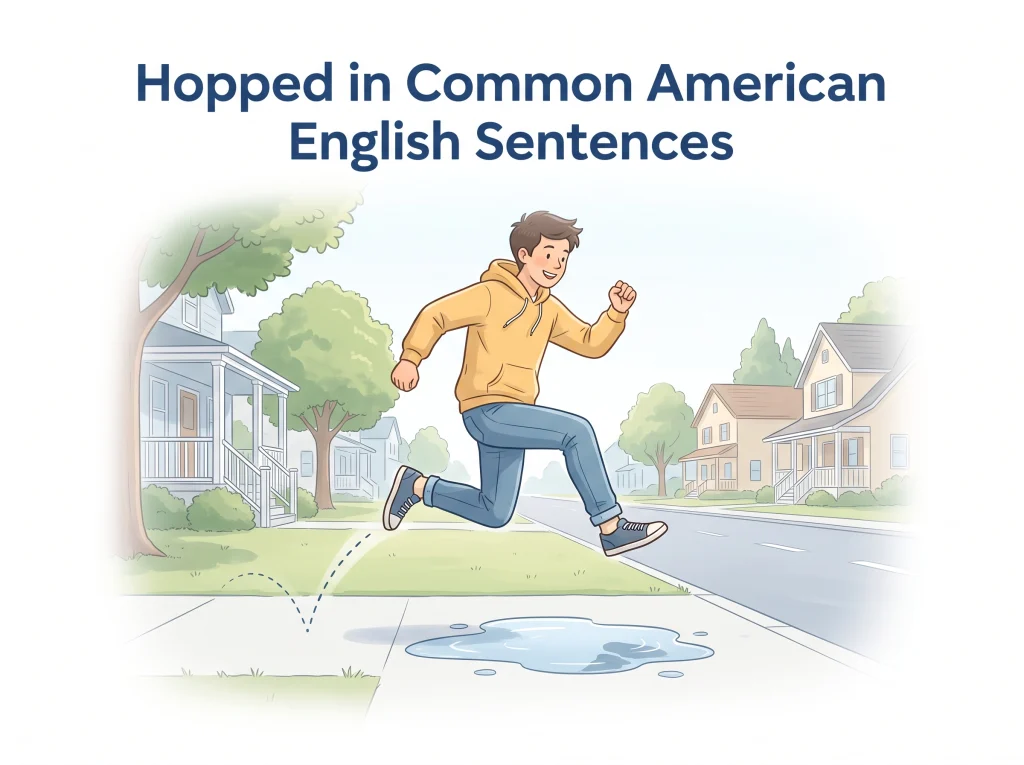
Hopped in Common American English Sentences
Here are some natural examples of hopped in American English.
Physical movement
The rabbit hopped across the lawn.
She hopped on one foot after stepping on a sharp rock.
The bird hopped from branch to branch.
Jumping over something
He hopped over the puddle.
The little boy hopped across the sidewalk.
Getting into a vehicle
We hopped in the car and headed home.
She hopped on the bus just before the doors closed.
Moving somewhere quickly
I hopped over to the grocery store after work.
They hopped on a plane for a short weekend trip.
In each example, hopped comes from hop and refers to movement rather than a wish or expectation.
Hoped in Common American English Sentences
Now consider examples using hoped.
Wanting something to happen
I hoped you would come to the party.
She hoped the meeting would go well.
We hoped the weather would improve.
Expecting a positive result
He hoped to get the job.
They hoped to finish the project by Friday.
I hoped for a better score on the test.
Talking about a past expectation
She hoped that her package would arrive on time.
We hoped the restaurant would still be open.
He hoped his friends would remember his birthday.
In these sentences, hoped expresses a desire, expectation, or positive possibility.
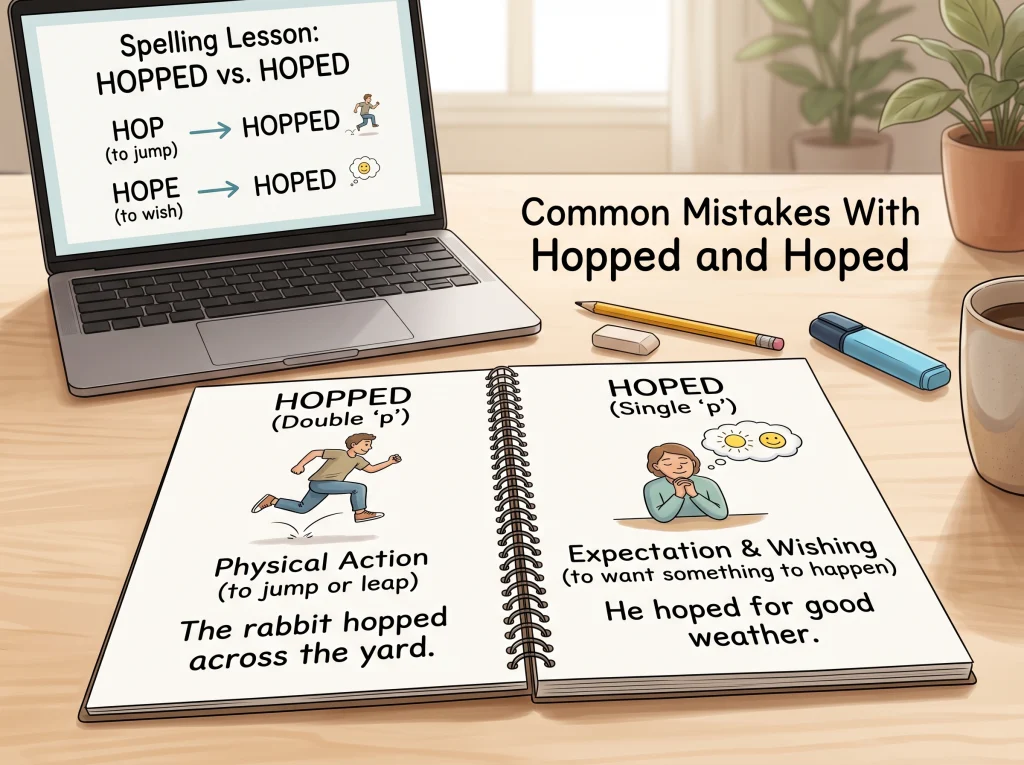
Common Mistakes With Hopped and Hoped
One common mistake is choosing the word based only on how it looks instead of considering its meaning.
For example:
❌ The rabbit hoped across the yard.
If you mean that the rabbit moved by jumping, the correct sentence is:
✅ The rabbit hopped across the yard.
Another common mistake happens when someone writes:
❌ I hopped everything would be okay.
The correct word is:
✅ I hoped everything would be okay.
Here, the sentence expresses a wish or expectation, so hoped is required.
Do not confuse hop with hope
A simple way to avoid mistakes is to identify the base verb first.
If the base verb is hop, use hopped in the past tense.
If the base verb is hope, use hoped in the past tense.
hop → hopped
hope → hoped
This simple check works in most situations.
How to Remember Hopped vs. Hoped
Think about the meaning before thinking about the spelling.
If someone hopped, imagine a person or animal physically jumping.
Hop = movement
If someone hoped, imagine a person wanting something good to happen.
Hope = expectation or desire
You can also remember these two word families:
Hop: hop → hopped → hopping
Hope: hope → hoped → hoping
The extra p belongs to hop because it keeps the short vowel pattern in words such as hopped and hopping.
Hopped or Hoped in Professional and Formal Writing
Both hopped and hoped are standard words and can be used in professional writing when their meanings fit the sentence.
However, hopped can sometimes sound informal when it means moving quickly or getting into a vehicle. For example, “I hopped on a flight” is natural in everyday American English, but a formal business document might instead say “I traveled by air” or “I took a flight.”
Hoped is common in both casual and formal writing.
For example:
We hoped to receive a response by Friday.
The researchers hoped the results would support their findings.
The company hoped to expand its operations next year.
The important point is not formality but meaning. Use hopped for the past form of hop and hoped for the past form of hope.
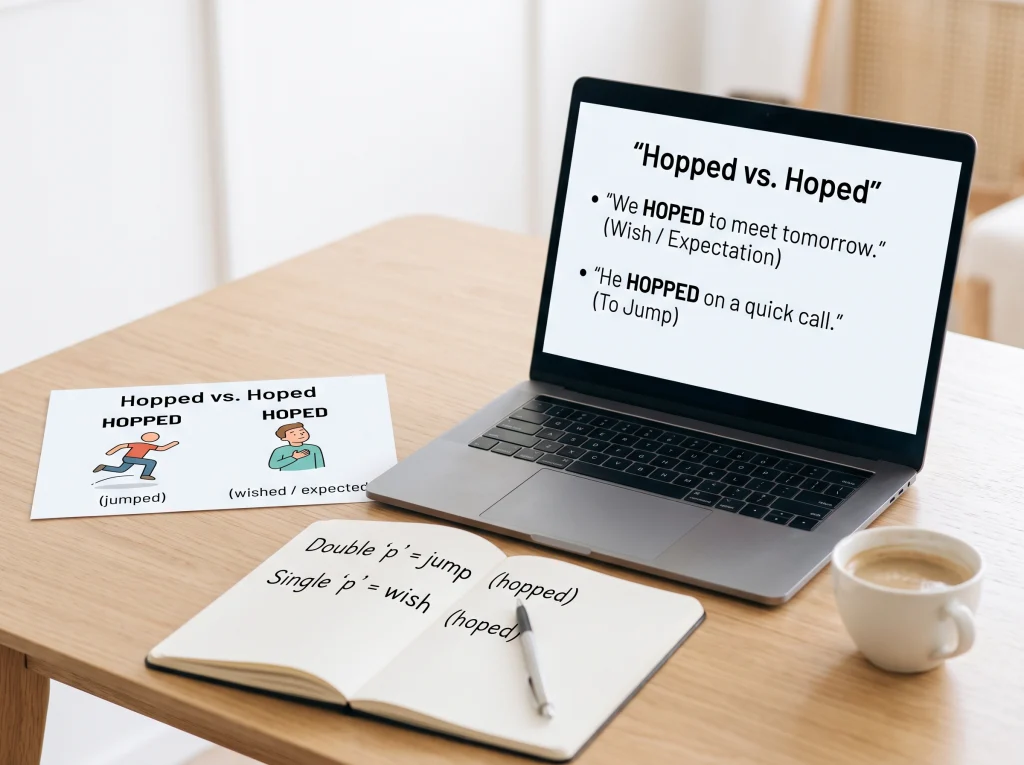
Hopped or Hoped: A Simple Memory Trick
When you are unsure, ask yourself one question:
Was someone jumping, or were they wishing?
If they were jumping, use hopped.
The rabbit hopped away.
If they were wishing or expecting, use hoped.
She hoped for good news.
The one-letter difference becomes much easier to remember when you connect each spelling with its meaning.
Frequently Asked Questions:
Conclusion
Hopped and hoped are both correct words, but they have different meanings and come from different verbs. Hopped is the past tense of hop and refers to jumping, small movements, or, in informal American English, getting somewhere or into a vehicle quickly. Hoped is the past tense of hope and refers to wanting, wishing, or expecting something to happen.
Remember the two basic patterns:
hop → hopped
hope → hoped
If your sentence describes movement, hopped is usually the word you need. If your sentence describes a wish or expectation, choose hoped.