Chonies or Chones? Meaning, Differences, Correct Spelling, and Usage
If you have heard someone say chonies or chones when talking about underwear, you might wonder which spelling is correct. Both expressions are used in casual conversations, particularly in Mexican Spanish and Mexican-American communities in the United States.
The main difference is regional and linguistic. Chones is the more established Mexican Spanish slang term for underwear, while chonies is an alternative spelling commonly associated with informal American English and Spanish-influenced speech.Neither word belongs to formal English. Understanding their meanings, pronunciation, and cultural context can help you recognize them and use them appropriately.
What Does Chones Mean?
Chones is an informal Mexican Spanish word meaning underwear, underpants, or panties. It is commonly used in everyday conversations among friends and family.
The word generally refers to undergarments worn by men or women. Its exact meaning depends on the conversation, but it does not describe one specific underwear style.
For example:
- Necesito lavar mis chones. (I need to wash my underwear.)
- ¿Dónde están mis chones limpios? (Where is my clean underwear?)
- Compré unos chones nuevos. (I bought some new underwear.)
In Mexican Spanish, chones is a plural-form expression. Even when referring to one garment, speakers commonly use the plural form.
The word is casual rather than professional. You might hear it at home, among friends, or in humorous conversations.
What Does Chonies Mean?
Chonies is an informal spelling variation of chones that appears in some Mexican-American communities and Spanish-influenced American English conversations.
It has essentially the same meaning: underwear, underpants, or undies. The spelling with an additional i is often associated with playful, conversational usage.
For example:
- I need to pack my chonies before the trip.
- Don’t forget your clean chonies.
- My little brother left his chonies on the bathroom floor.
- She bought a new pair of chonies.
In the United States, people familiar with Mexican-American slang may recognize this expression. However, it is not universally understood by English speakers.
Like chones, chonies is very informal. It is more suitable for relaxed conversations than business communication, academic writing, or professional documents.
Chonies vs. Chones: Key Differences
Although the two spellings look different, they generally communicate the same idea. The distinction is mainly related to spelling, language background, and regional preference.
| Feature | Chones | Chonies |
|---|---|---|
| Meaning | Underwear | Underwear |
| Language | Mexican Spanish slang | Spanish-influenced informal English |
| Usage | Common in Mexican Spanish | Used in some Mexican-American communities |
| Spelling | Chones | Chonies |
| Formality | Very informal | Very informal |
| Pronunciation | CHOH-nehs | CHOH-neez or CHOH-nehs, depending on speaker |
The established Mexican Spanish form is chones. The spelling chonies is also documented in American slang references, including Grant Barrett’s The Official Dictionary of Unofficial English. The reference lists both spellings as terms for underwear. duikt.edu.ua+1
Here is the simplest way to understand the difference:
- Use chones when referring to the established Mexican Spanish expression.
- Use chonies when reflecting the spelling used by a particular English-speaking or Mexican-American speaker.
- Use underwear when communicating with a general American audience.
Which Spelling Is Correct?
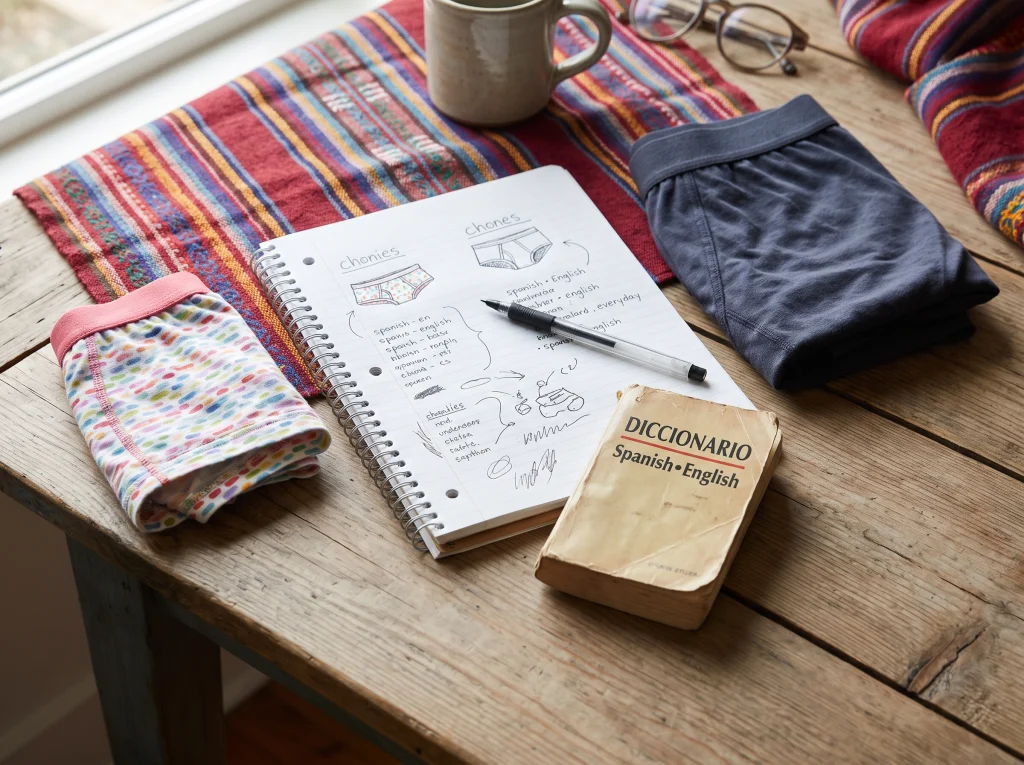
Both spellings are recognizable, but chones is the better-established spelling in Mexican Spanish.
Mexican Spanish dictionaries and bilingual references identify chones as an informal word for underwear. For example, Tureng labels it as a Mexican Spanish expression, while LEO’s English-Spanish dictionary translates it as underpants, briefs, and panties. Español Inglés Diccionario+1
The spelling chonies is also legitimate as a documented slang variant. It appears in American English-language examples, including published newspaper and literary references.
Therefore, neither spelling needs to be treated as a completely unrelated word. The best choice depends on the language and community you are representing.
For standard American English writing, however, neither spelling should replace the ordinary word underwear.
Origin and Cultural Background
The word chones comes from Mexican Spanish slang. Its precise historical development is not completely settled, but one suggested explanation connects it with calzones, the Spanish word for underpants or underwear.
Grant Barrett’s slang dictionary discusses this possible connection while also mentioning an alternative proposed origin. It documents the term in Mexican Spanish and American English usage. duikt.edu.ua
The expression has also become familiar in some Mexican-American communities, where Spanish and English influence everyday vocabulary. This type of language mixing is often associated with informal bilingual speech and Spanglish.
In the United States, you may hear words such as chones and chonies in households, among friends, or in conversations influenced by Mexican culture.
However, regional familiarity varies. Not every Spanish speaker or American English speaker will recognize these expressions.

How to Use Chonies and Chones in Sentences
Both words can appear in casual conversations about getting dressed, doing laundry, packing clothes, or shopping for underwear.
Here are some examples with their meanings.
1. Talking about laundry
- My chones are still in the washing machine.
- I need to wash my chonies tonight.
Both sentences refer to underwear that needs washing.
2. Packing for a trip
- Don’t forget to pack your chones.
- I packed three pairs of clean chonies.
These examples show how the words can be used when discussing clothing and travel.
3. Talking about shopping
- She bought some new chones at the store.
- I need to get a few more pairs of chonies.
Both sentences refer to purchasing underwear.
4. Talking about getting dressed
- He changed his chones before going out.
- I forgot to bring clean chonies.
These are informal expressions that might be heard in relaxed conversations.
Spanish Examples With English Translations
| Spanish sentence | English meaning |
|---|---|
| Mis chones están limpios. | My underwear is clean. |
| Necesito comprar chones. | I need to buy underwear. |
| ¿Dónde están mis chones? | Where is my underwear? |
| Lava tus chones, por favor. | Wash your underwear, please. |
| Se me olvidaron los chones. | I forgot my underwear. |
These examples use the Mexican Spanish form chones. The English translations use natural, standard vocabulary.
Formal and Informal Alternatives
Since chones and chonies are slang expressions, they are not suitable for every situation. American English has several alternatives that communicate the same basic meaning more clearly.
| Word or expression | Meaning | Best context |
|---|---|---|
| Underwear | General term for undergarments | Everyday and professional English |
| Undergarments | Clothing worn underneath outer clothing | Formal writing |
| Underpants | Clothing worn around the lower body | General English |
| Panties | Women’s underwear | Everyday English |
| Briefs | A close-fitting underwear style | Clothing and shopping |
| Boxers | A loose-fitting style of men’s underwear | Everyday English |
| Ropa interior | Spanish for underwear | General Spanish |
| Calzones | Spanish term for underpants | Spanish conversations |
For example, if you are shopping in an American clothing store, asking for underwear or a specific style such as briefs or boxers will be clearer than using chones.
In Spanish, ropa interior is a useful neutral alternative when speaking with people who may not understand regional slang.
Common Mistakes to Avoid
People learning Mexican Spanish or American slang sometimes misunderstand these expressions. A few simple distinctions can prevent confusion.
1. Assuming chonies is a completely different word
Both forms generally refer to underwear. The additional letters do not create a completely different meaning.
2. Treating chones as formal Spanish
Chones is informal Mexican Spanish slang. Use ropa interior when a neutral or more formal expression is appropriate.
3. Assuming everyone in the United States understands the words
These expressions are not standard American English vocabulary. Some people recognize them through Spanish or Mexican-American cultural exposure, while others may not.
4. Using the expressions in professional communication
In emails, reports, product descriptions, and formal documents, choose standard terms such as underwear or undergarments.
5. Confusing panties with all types of underwear

Panties specifically refers to women’s underwear in American English. Underwear is broader and can describe undergarments worn by people of any gender.
Frequently Asked Questions:
Conclusion
Chonies and chones generally mean the same thing: underwear. Chones is the established informal Mexican Spanish spelling, while chonies is a documented alternative found in Spanish-influenced American slang.
Both expressions are appropriate in casual conversations when the audience understands their meaning. However, if you are writing for a general American audience, underwear is the clearest and most widely understood choice.