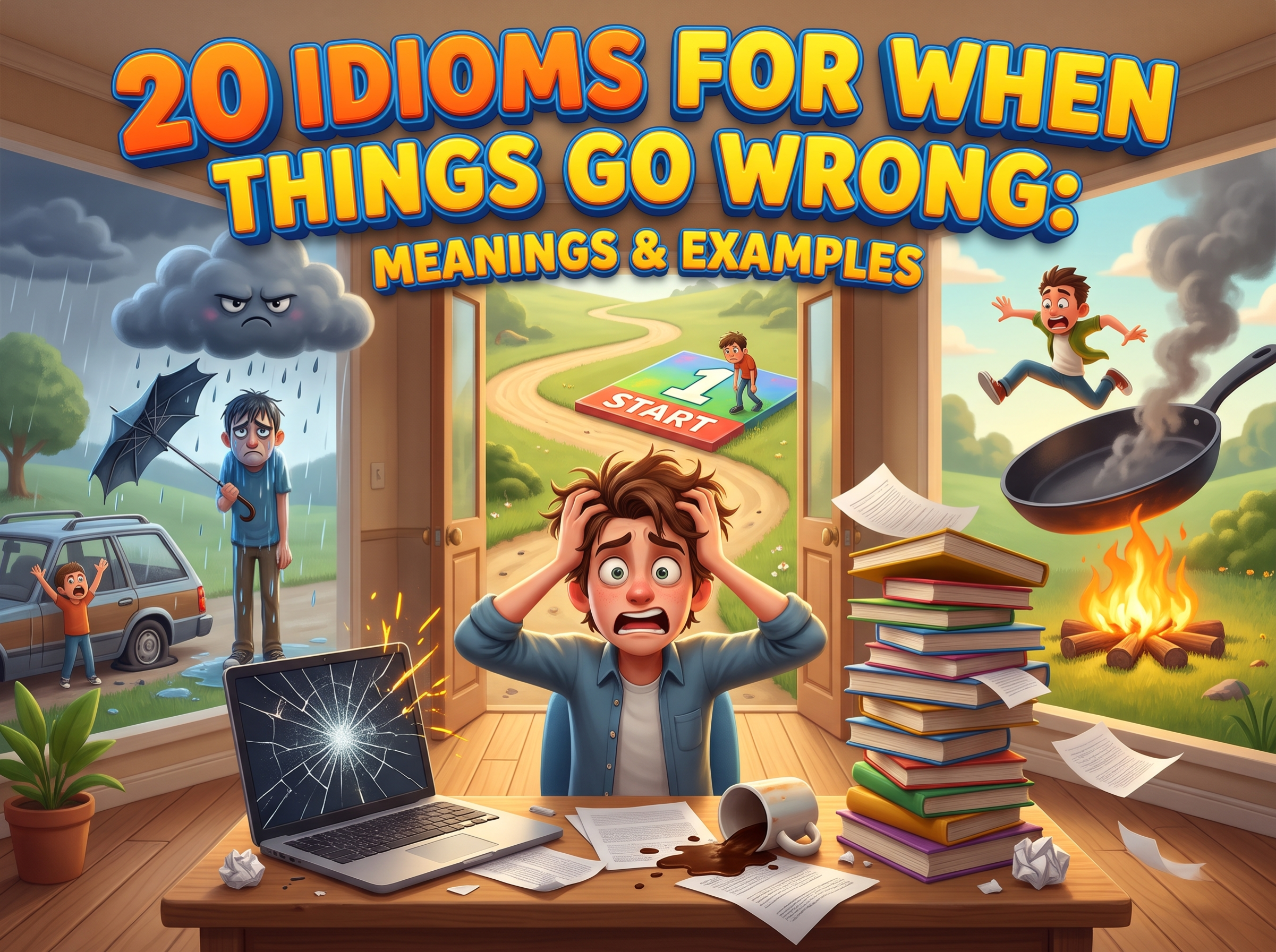
20 Idioms for When Things Go Wrong: Meanings and Examples
Life does not always go according to plan. Sometimes a small mistake creates a bigger problem, an important opportunity disappears, or several unfortunate events happen at the same time. English speakers use idioms to describe these frustrating situations in a natural and expressive way.
Idioms for when things go wrong help explain failures, unexpected problems, bad luck, and difficult experiences. Expressions such as “when it rains, it pours,” “back to square one,” and “add insult to injury” make everyday conversations more interesting and meaningful.
Whether you are learning English, improving your vocabulary, or looking for natural expressions to use at work and with friends, these 20 idioms will help you describe situations when nothing seems to go right.
What Are Idioms for When Things Go Wrong?
Idioms for when things go wrong are figurative expressions that describe problems, mistakes, failures, unexpected difficulties, and unfortunate circumstances. Their meanings are different from the literal meanings of their individual words.
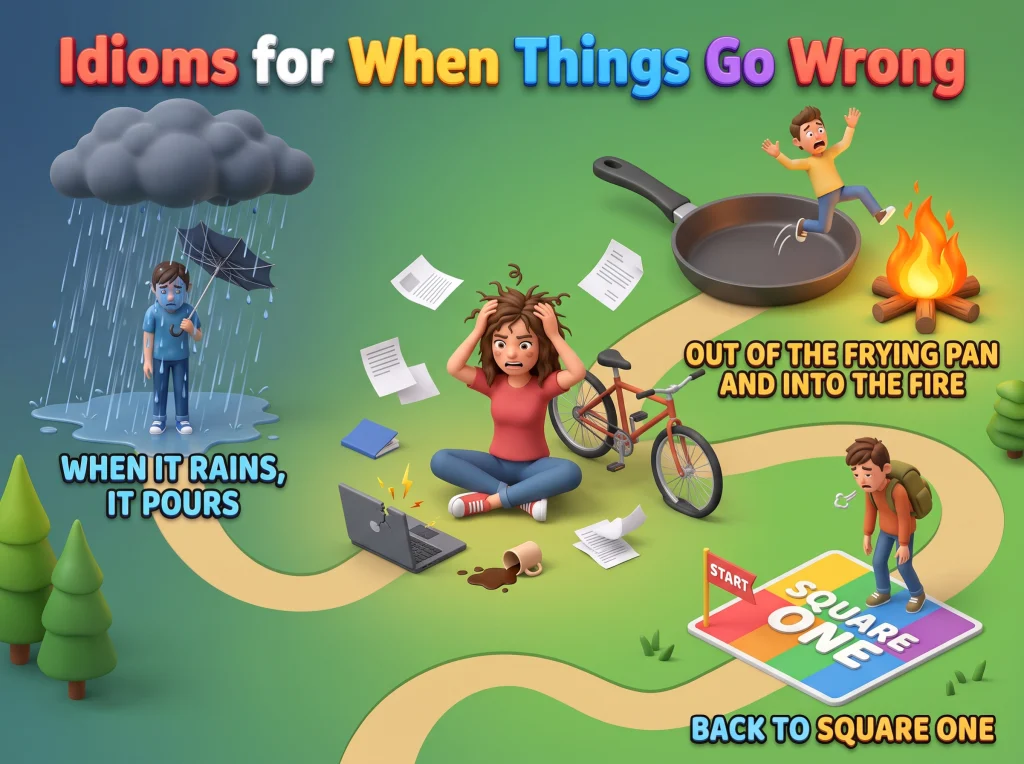
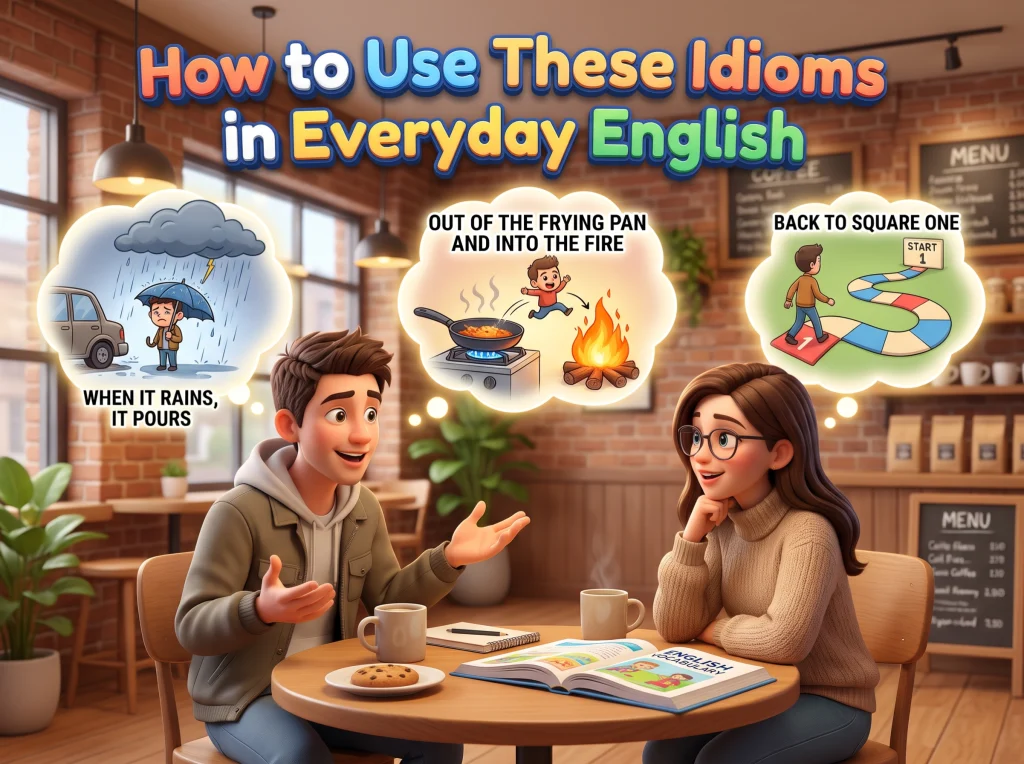
For example, “when it rains, it pours” does not describe actual rainfall. It means that several problems or unpleasant events often happen close together.
Similarly, “back to square one” means returning to the beginning after an unsuccessful attempt.
These expressions are especially useful in everyday conversations, workplace discussions, storytelling, and informal communication. They allow speakers to explain frustrating experiences without giving long descriptions.
20 Common Idioms for When Things Go Wrong
Here are 20 useful English idioms that describe different kinds of problems, setbacks, and unfortunate situations.
1. When It Rains, It Pours
Meaning: Several unpleasant things happen at the same time, making an already difficult situation worse.
Example: First, my car broke down, then I lost my wallet, and finally my flight was canceled. When it rains, it pours!
Everyday Use: Use this expression when multiple problems occur within a short period.
2. Back to Square One
Meaning: To return to the beginning because an earlier plan or attempt failed.
Example: Our website development project lost all its progress after the system crashed, so we are back to square one.
Everyday Use: This idiom is common in business, education, planning, and problem-solving situations.
3. Add Insult to Injury
Meaning: To make an already unpleasant situation even worse.
Example: I missed my flight, and to add insult to injury, the airline charged me for changing my ticket.
Everyday Use: Use it when something disappointing is followed by another frustrating event.
4. Out of the Frying Pan and Into the Fire
Meaning: To escape one difficult situation only to enter an even worse one.
Example: Jake left his stressful job for a new position with longer hours and a difficult manager. He jumped out of the frying pan and into the fire.
Everyday Use: This expression describes situations where an attempted solution creates a bigger problem.
5. Go Down in Flames
Meaning: To fail completely or very dramatically.
Example: Their business expansion plan went down in flames after investors withdrew their support.
Everyday Use: This idiom is useful when describing unsuccessful projects, businesses, performances, or plans.
6. Throw a Wrench in the Works
Meaning: To create an unexpected problem that interrupts a plan or process.
Example: The sudden power outage threw a wrench in the works during our online presentation.
Everyday Use: This expression is particularly common in American English. It works well in workplace conversations and discussions about unexpected setbacks.
7. Go Haywire
Meaning: To stop working properly or become completely disorganized.
Example: My computer went haywire just before I submitted my final assignment.
Everyday Use: People often use this expression when technology, machines, systems, or plans stop functioning as expected.
8. The Wheels Come Off
Meaning: A situation begins to fail or lose control, especially after initially going well.
Example: The event started smoothly, but the wheels came off when the sound system stopped working and the guests arrived late.
Everyday Use: Use this idiom when a project, plan, or organized activity begins falling apart.
9. Make Matters Worse
Meaning: To do something that increases the seriousness or difficulty of an existing problem.
Example: I forgot to bring my presentation notes, and trying to explain everything without preparation made matters worse.
Everyday Use: This expression fits both formal and informal conversations.
10. The Last Straw
Meaning: The final unpleasant event that makes someone lose patience or decide that they cannot tolerate a situation anymore.
Example: My coworker repeatedly arrived late, but missing an important meeting was the last straw for our manager.
Everyday Use: Use this expression when someone has tolerated several problems before reaching their limit.
11. In Hot Water
Meaning: To be in trouble because of something you have done.
Example: Daniel got in hot water with his supervisor after missing three important deadlines.
Everyday Use: This is a common informal expression for describing trouble at work, school, or home.
12. On Thin Ice
Meaning: To be in a risky situation where another mistake could create serious consequences.
Example: You are already on thin ice with your teacher after submitting two assignments late.
Everyday Use: Use this idiom when someone has little room for further mistakes.
13. Up the Creek Without a Paddle
Meaning: To be in a difficult situation without an easy way to solve the problem.
Example: We forgot our camping equipment, and with a storm approaching, we were up the creek without a paddle.
Everyday Use: This informal American expression is often used humorously when someone has very few options.
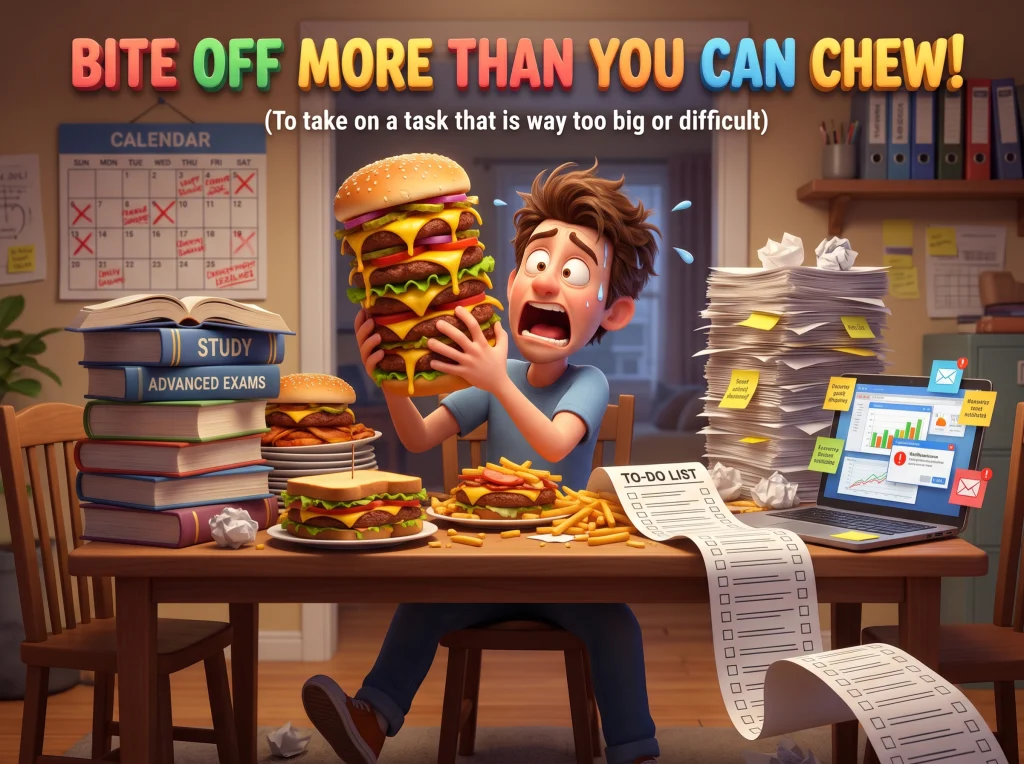
14. Bite Off More Than You Can Chew
Meaning: To take on more work or responsibility than you can reasonably manage.
Example: I agreed to organize three events while studying for my exams, and now I realize I bit off more than I could chew.
Everyday Use: Use this idiom when someone accepts too many responsibilities or attempts something beyond their available time and resources.
15. Go South
Meaning: To become worse, unsuccessful, or less favorable.
Example: Everything was going well until the main investor withdrew, and then the entire business deal went south.
Everyday Use: This informal expression is common in American English when discussing projects, relationships, plans, or financial situations.
16. Back to the Drawing Board
Meaning: To start planning again because the original idea or approach did not work.
Example: Our first advertising campaign attracted very few customers, so we went back to the drawing board.
Everyday Use: This expression is particularly useful in business, creative work, education, and problem-solving discussions.
17. Weather the Storm
Meaning: To survive a difficult period without giving up.
Example: The small company managed to weather the storm during a difficult economic year.
Everyday Use: Unlike many other expressions on this list, this idiom emphasizes endurance and resilience rather than failure.
18. At Your Wit’s End
Meaning: To feel extremely frustrated because you cannot find a solution to a problem.
Example: I was at my wit’s end after trying to fix the broken printer for two hours.
Everyday Use: Use this expression when a problem becomes so frustrating that you do not know what else to do.
19. Murphy’s Law
Meaning: A humorous expression suggesting that if something can go wrong, it probably will.
Example: My phone battery died, the internet stopped working, and I missed my appointment. That’s Murphy’s Law!
Everyday Use: People often use this expression jokingly when several unfortunate things happen or when expecting something to go wrong.
20. Don’t Cry Over Spilled Milk
Meaning: Do not waste time worrying about something that has already happened and cannot be changed.
Example: I know you made a mistake on the application, but don’t cry over spilled milk. Let’s focus on fixing the next one.
Everyday Use: This expression encourages people to accept past mistakes and concentrate on what they can do next.
How to Use These Idioms in Everyday English
Knowing the meaning of an idiom is only the first step. You also need to understand when and how to use it naturally.
Here are some practical ways to include these expressions in everyday conversations.
Use Idioms According to the Situation
Different idioms describe different kinds of problems. Choose an expression that matches what actually happened.
For example:
- When several problems happen together: “When it rains, it pours.”
- When a plan fails: “We’re back to square one.”
- When someone makes a mistake: “He’s in hot water.”
- When a problem becomes worse: “That made matters worse.”
- When someone feels frustrated: “I’m at my wit’s end.”
Choosing the correct expression makes your message clearer.
Practice Through Real-Life Conversations
Try using these idioms when discussing familiar situations with friends, classmates, or coworkers.
For example:
Friend A: Why are you so stressed today?
Friend B: My laptop stopped working, and I missed an important deadline. When it rains, it pours!
This short conversation demonstrates how an idiom can communicate frustration naturally.
Learn Idioms in Context
Avoid memorizing expressions without understanding their situations. Read short stories, watch English-language movies, and listen to everyday conversations to see how people use these expressions.
You can also write your own sentences about school, work, travel, and family situations. Practicing with familiar experiences makes new vocabulary easier to remember.
Common Mistakes When Using Problem-Related Idioms
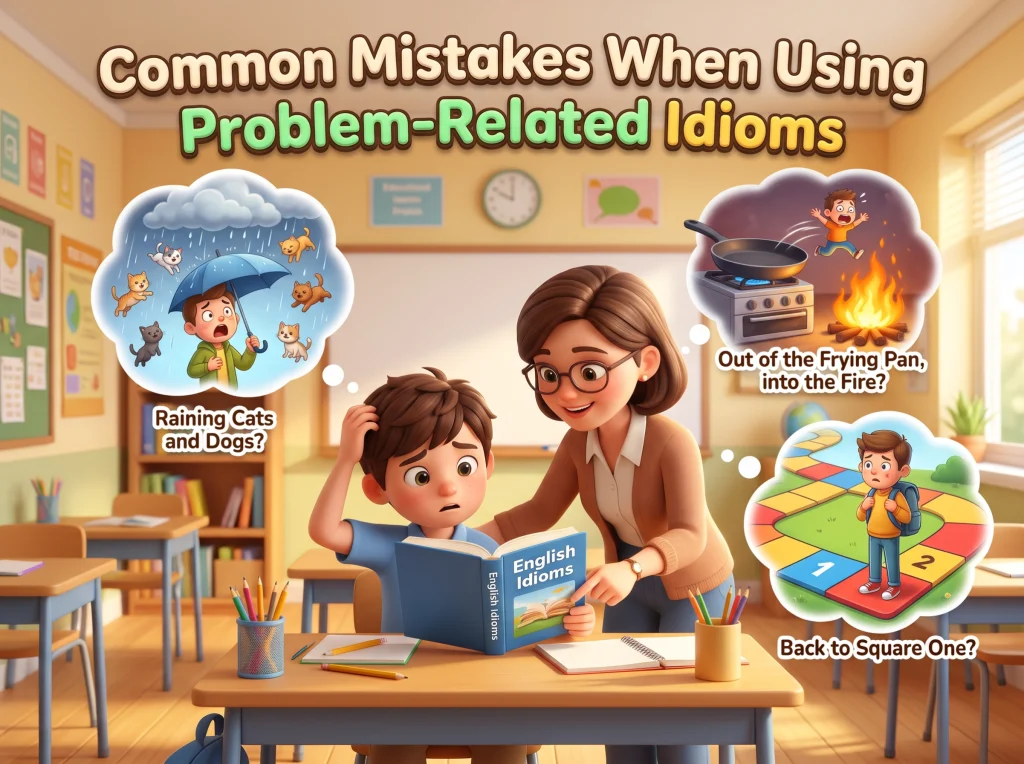
English learners sometimes use idioms incorrectly because they focus on individual words instead of the complete figurative meaning.
Here are some mistakes to avoid.
1. Taking Idioms Literally
“Out of the frying pan and into the fire” describes moving from one bad situation to a worse one. It is not about cooking.
2. Confusing Similar Expressions
“Back to square one” and “back to the drawing board” are related, but they are not identical. The first emphasizes returning to the beginning after failure, while the second emphasizes developing a new plan or approach.
3. Using Informal Expressions in Every Situation
Expressions such as “up the creek without a paddle” and “go haywire” are generally informal. Choose more neutral language in formal reports and professional documents.
4. Forgetting the Correct Sentence Structure
Some idioms require particular grammatical patterns.
For example:
- Correct: “The project went south.”
- Correct: “She got in hot water.”
- Correct: “We are back to square one.”
- Incorrect: “We are in back square one.”
Pay attention to how complete expressions appear in real sentences.
FAQs:
Conclusion
Problems, mistakes, and unexpected setbacks are part of everyday life. Learning idioms for when things go wrong gives you more natural ways to describe these experiences in English.
Expressions such as “when it rains, it pours,” “add insult to injury,” “back to square one,” and “the last straw” help communicate frustration, disappointment, and failure more effectively.
Start by learning a few expressions at a time and practicing them in your own sentences. With regular use, these idioms will become a natural part of your everyday English vocabulary.