50 Fun Idioms in English: Meanings and Examples
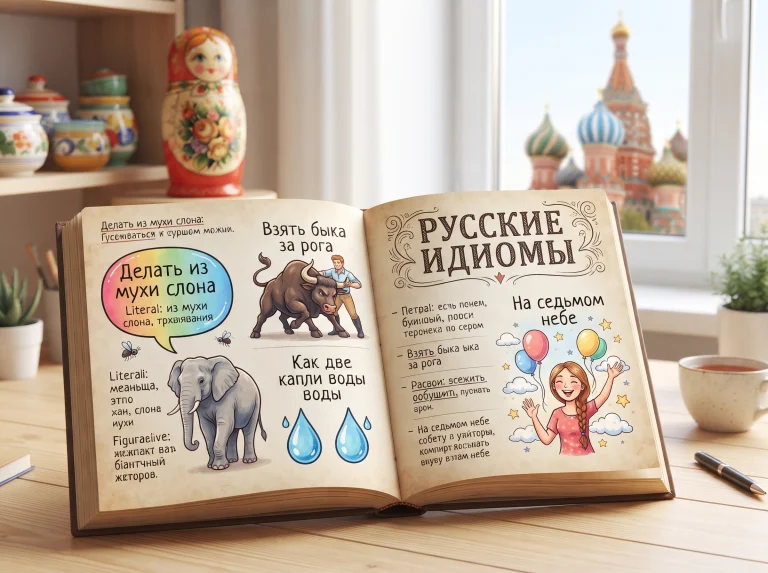
English can be playful, colorful, and sometimes surprisingly strange. Many everyday expressions do not mean exactly what their individual words suggest. These expressions are called idioms, and they can make conversations sound more natural, expressive, and interesting.
Fun idioms in English are especially useful when you want to describe a funny situation, celebrate something, talk about emotions, encourage a friend, or simply make a conversation more lively. For English learners, learning these expressions can also make movies, TV shows, books, songs, and everyday conversations easier to understand.
Below are 50 fun English idioms with simple meanings and examples that fit common American English usage.
What Are Fun Idioms in English?
Fun idioms in English are familiar expressions that have a figurative meaning rather than a literal one. They often make language more colorful, humorous, or expressive.
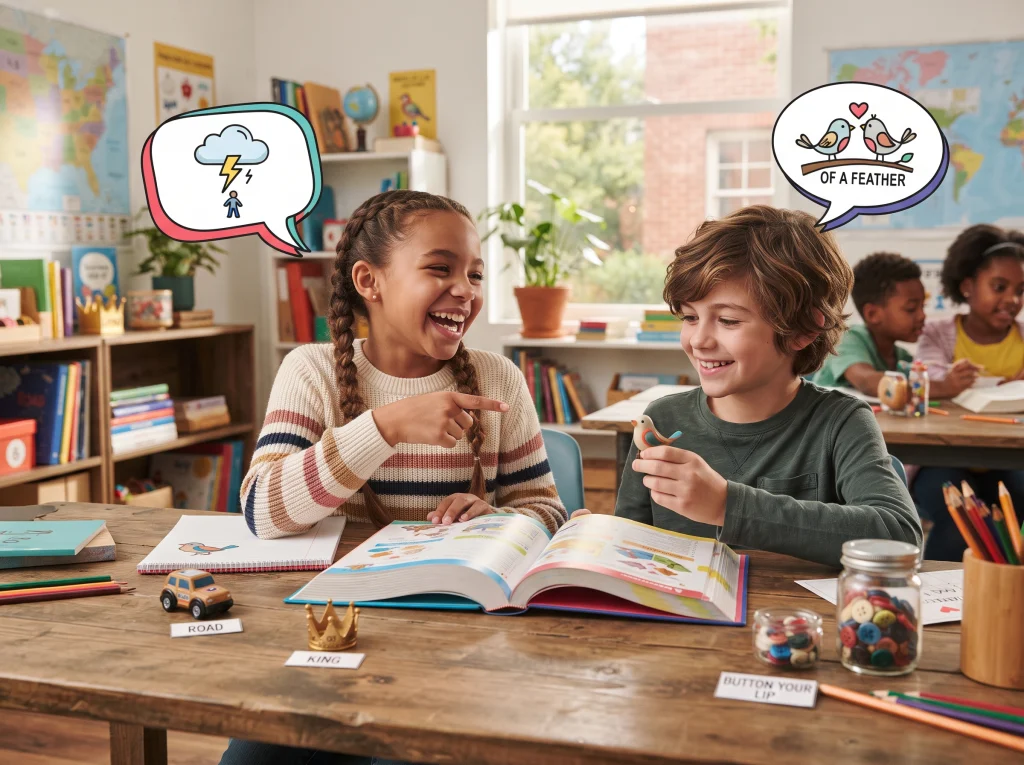
For example, “spill the beans” does not mean dropping beans on the floor. It means to reveal a secret.
“Come on, spill the beans. What happened at the party?”
Some fun idioms are humorous because their literal images sound unusual. Others are simply lively ways to express common ideas.
50 Fun Idioms in English With Meanings and Examples
1. Spill the Beans
Meaning: To reveal a secret or confidential information.
Example: “Who spilled the beans about the surprise party?”
2. Break a Leg
Meaning: A way of wishing someone good luck, especially before a performance.
Example: “You have your first play tonight. Break a leg!”
3. Piece of Cake
Meaning: Something that is very easy.
Example: “The test was a piece of cake.”
4. Let the Cat Out of the Bag
Meaning: To accidentally reveal a secret.
Example: “Sarah let the cat out of the bag about the wedding.”
5. Hit the Nail on the Head
Meaning: To describe something exactly or identify the main point.
Example: “You hit the nail on the head when you said we need better communication.”
6. When Pigs Fly
Meaning: Something that will probably never happen.
Example: “He says he’ll clean his room when pigs fly.”
7. Cool as a Cucumber
Meaning: Very calm, especially in a stressful situation.
Example: “Everyone was nervous, but Jake was as cool as a cucumber.”
8. Go Bananas
Meaning: To become very excited, angry, or emotionally overwhelmed.
Example: “The crowd went bananas when the singer came on stage.”
9. Couch Potato
Meaning: A person who spends a lot of time sitting and watching television or relaxing.
Example: “I was a couch potato all weekend and watched three movies.”
10. Full of Beans
Meaning: Very energetic and enthusiastic.
Example: “The kids were full of beans after breakfast.”
11. The Best of Both Worlds
Meaning: A situation that provides the advantages of two different options.
Example: “Working from home gives me the best of both worlds because I save time and stay productive.”
12. Have a Blast
Meaning: To have a very good or exciting time.
Example: “We had a blast at the concert.”
13. Get the Ball Rolling
Meaning: To start something.
Example: “Let’s get the ball rolling on our new project.”
14. On Cloud Nine
Meaning: Extremely happy.
Example: “She was on cloud nine after receiving the award.”
15. Once in a Blue Moon
Meaning: Something that happens very rarely.
Example: “I eat fast food once in a blue moon.”
16. Bite the Bullet
Meaning: To face something difficult or unpleasant with courage.
Example: “I don’t want to make the phone call, but I’ll bite the bullet and do it.”
17. Cost an Arm and a Leg
Meaning: To be very expensive.
Example: “That new car costs an arm and a leg.”

18. Under the Weather
Meaning: Feeling sick or unwell.
Example: “I’m feeling a little under the weather today.”
19. Pull Someone’s Leg
Meaning: To joke with someone by making them believe something that is not true.
Example: “Relax, I’m just pulling your leg.”
20. A Piece of the Pie
Meaning: A share of something valuable, especially money, success, or profits.
Example: “Everyone on the team wants a piece of the pie.”
21. Barking Up the Wrong Tree
Meaning: Looking in the wrong place or blaming the wrong person.
Example: “If you think I broke the printer, you’re barking up the wrong tree.”
22. Easy as Pie
Meaning: Very easy.
Example: “Once you learn the steps, making this recipe is easy as pie.”
23. Go the Extra Mile
Meaning: To make an additional effort.
Example: “Our teacher always goes the extra mile to help students.”
24. Keep Your Fingers Crossed
Meaning: To hope that something goes well.
Example: “Keep your fingers crossed that I get the job.”
25. Knock It Out of the Park
Meaning: To do something extremely well.
Example: “You knocked it out of the park with that presentation.”
26. Hit the Hay
Meaning: To go to bed or go to sleep.
Example: “I’m exhausted. I’m going to hit the hay.”
27. Sleep Like a Log
Meaning: To sleep very deeply.
Example: “I slept like a log after the long hike.”
28. Have Butterflies in Your Stomach
Meaning: To feel nervous or excited.
Example: “I had butterflies in my stomach before my first speech.”

29. A Wild Goose Chase
Meaning: A pointless or difficult search that is unlikely to succeed.
Example: “Looking for that old document turned into a wild goose chase.”
30. Throw in the Towel
Meaning: To give up.
Example: “Don’t throw in the towel just because the first attempt failed.”
31. Take It Easy
Meaning: To relax or avoid working too hard.
Example: “You’ve been working all day. Take it easy tonight.”
32. Hang in There
Meaning: To remain patient and keep going during a difficult situation.
Example: “Hang in there. Things will get better.”
33. In Hot Water
Meaning: To be in trouble.
Example: “He’s in hot water after missing an important meeting.”
34. Add Fuel to the Fire
Meaning: To make an already difficult situation worse.
Example: “Arguing with him now will only add fuel to the fire.”
35. Jump on the Bandwagon
Meaning: To join a popular activity, trend, or movement.
Example: “Everyone is playing that game, so I finally jumped on the bandwagon.”
36. Get Your Act Together
Meaning: To become organized or start behaving responsibly.
Example: “You need to get your act together before the deadline.”
37. Make a Mountain Out of a Molehill
Meaning: To make a small problem seem much more serious than it really is.
Example: “It’s only a minor mistake. Don’t make a mountain out of a molehill.”
38. The Last Straw
Meaning: The final problem that makes someone lose patience.
Example: “When he forgot my birthday again, that was the last straw.”
39. Not My Cup of Tea
Meaning: Something that you do not particularly like or enjoy.
Example: “Horror movies aren’t really my cup of tea.”
40. Out of the Blue
Meaning: Suddenly and unexpectedly.
Example: “My old friend called me out of the blue.”
41. A Storm in a Teacup
Meaning: A small disagreement or problem that has received too much attention.
Example: “Their argument was just a storm in a teacup.”
42. Put a Sock in It
Meaning: A humorous way to tell someone to be quiet.
Example: “You two have been talking all morning. Put a sock in it!”
This expression can sound playful, but it may also sound rude depending on the situation.
43. Keep Your Shirt On
Meaning: To remain patient and calm.
Example: “Keep your shirt on. I’ll be ready in five minutes.”
44. Shake a Leg
Meaning: To hurry up.
Example: “Shake a leg or we’ll miss the bus!”
45. Goof Around
Meaning: To behave playfully instead of doing something seriously.
Example: “The kids spent the afternoon goofing around in the backyard.”
46. Monkey Around
Meaning: To behave playfully or waste time instead of focusing on a task.
Example: “Stop monkeying around and finish your homework.”
47. Pull Out All the Stops
Meaning: To use every available effort or resource to achieve something.
Example: “They pulled out all the stops for the graduation party.”
48. Put a Spin on Something
Meaning: To present something in a particular way, often to make it seem more positive or interesting.
Example: “The company tried to put a positive spin on the disappointing results.”

49. Have a Ball
Meaning: To have a great time.
Example: “We had a ball at the family reunion.”
50. The Whole Nine Yards
Meaning: Everything possible or the complete amount.
Example: “For the wedding, they went the whole nine yards with decorations, music, and food.”
Why Are Fun Idioms Useful in English?
Fun idioms can make everyday English sound more natural and expressive. Native speakers use idiomatic expressions in conversations, entertainment, workplaces, classrooms, and informal writing.
They are also useful because one short expression can communicate an idea that might otherwise require a longer explanation. Saying “I had a blast” quickly tells someone that you had a very enjoyable time.
However, context matters. Some idioms are casual, some are humorous, and others can sound old-fashioned or informal. Learning not only the meaning but also the appropriate situation helps you use them naturally.
How to Use Fun Idioms Naturally in American English
The easiest way to learn fun idioms is to connect each expression with a real situation.
For example, if a friend tells you that an exam was extremely easy, you could say:
“So it was a piece of cake?”
If someone is nervous before an important performance, you might say:
“Good luck. Break a leg!”
For a friend who is taking too long to get ready, you could jokingly say:
“Come on, shake a leg!”
Using idioms in short conversations like these makes them easier to remember than memorizing definitions alone.
It is also important not to use too many idioms at once. A sentence filled with several expressions can sound unnatural or confusing. Choose an idiom that fits the situation and the relationship you have with the person.

Common Mistakes With Fun English Idioms
One common mistake is taking an idiom literally. For example, “break a leg” normally means good luck in the context of a performance, not an actual wish for someone to injure themselves.
Another mistake is using an idiom in the wrong situation. “Put a sock in it” is informal and can sound rude, so it is not appropriate for every conversation.
English learners should also pay attention to the exact wording. Changing a word can make an expression sound incorrect. For example, the standard expression is “spill the beans,” not “spill the peas.”
Finally, remember that idioms can vary by region and generation. An expression that sounds common in one English-speaking community may sound less familiar in another.

Fun Idioms vs. Literal Expressions
Idioms are different from literal expressions because their overall meaning cannot always be understood by combining the meanings of each individual word.
| Idiom | Literal Image | Actual Meaning |
|---|---|---|
| Piece of cake | A piece of dessert | Something easy |
| Spill the beans | Dropping beans | Reveal a secret |
| Go bananas | Acting like bananas | Become very excited or emotional |
| Hit the hay | Hitting hay | Go to bed |
| Pull someone’s leg | Pulling a person’s leg | Joke with someone |
| On cloud nine | Sitting on a cloud | Extremely happy |
| Have a blast | Having an explosion | Have a great time |
Learning this difference is important for understanding natural American English.
How to Remember Fun Idioms
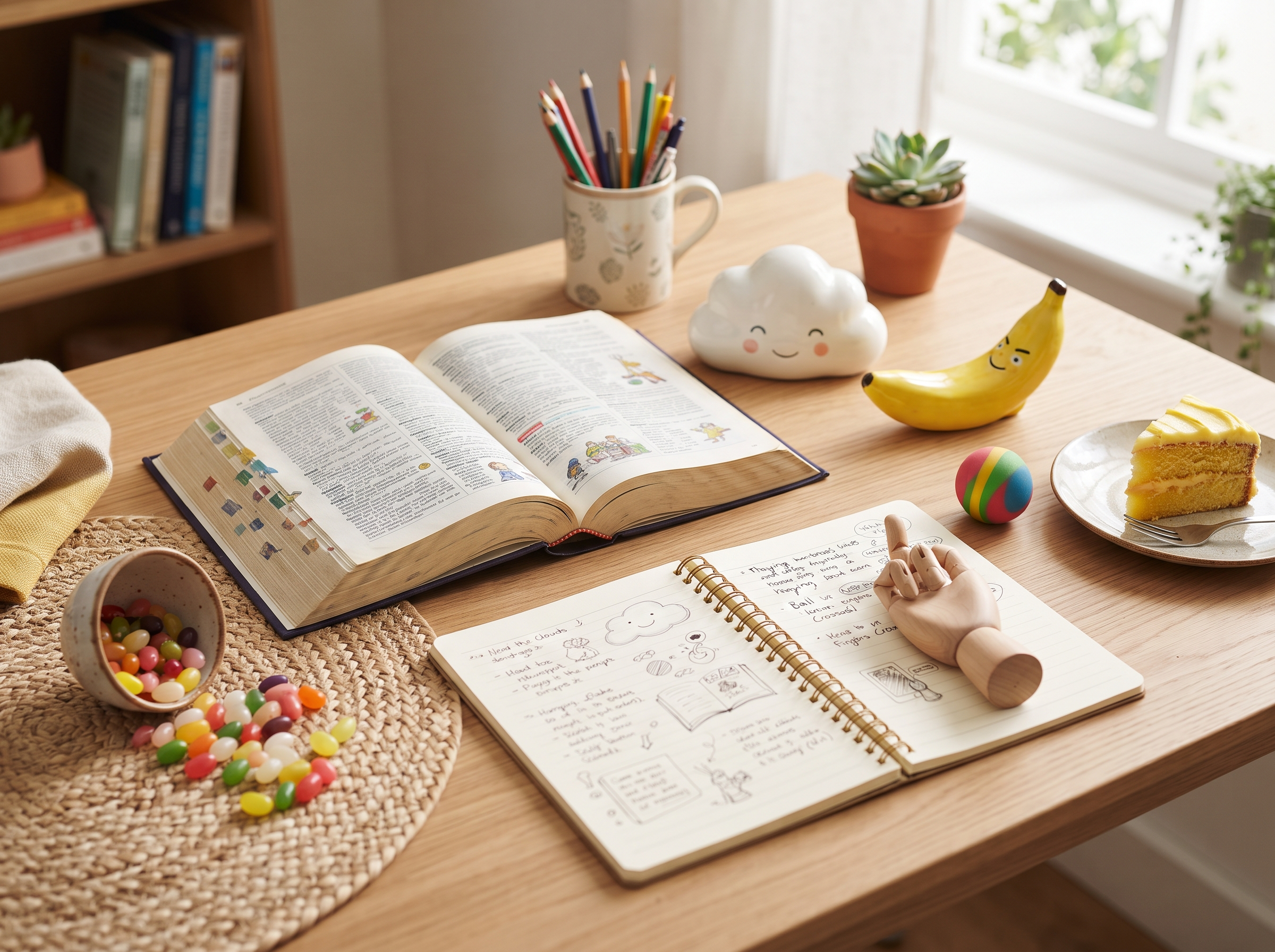
A useful way to remember idioms is to create a mental picture of their literal meaning and connect it with their figurative meaning.
For “go bananas,” imagine someone becoming so excited that they start acting wildly around a pile of bananas.
For “spill the beans,” picture a container of beans falling onto the floor while someone accidentally reveals a secret.
You can also write your own sentences using each expression. Personal examples are often easier to remember than dictionary definitions.
FAQs:
Conclusion
Fun idioms in English add personality and color to everyday communication. Expressions such as “have a blast,” “go bananas,” “piece of cake,” “spill the beans,” and “on cloud nine” can help you understand and participate in natural American English conversations.
The best way to learn them is to focus on meaning, context, tone, and real examples. Start with a few expressions that match situations you regularly encounter, then gradually add more to your vocabulary.