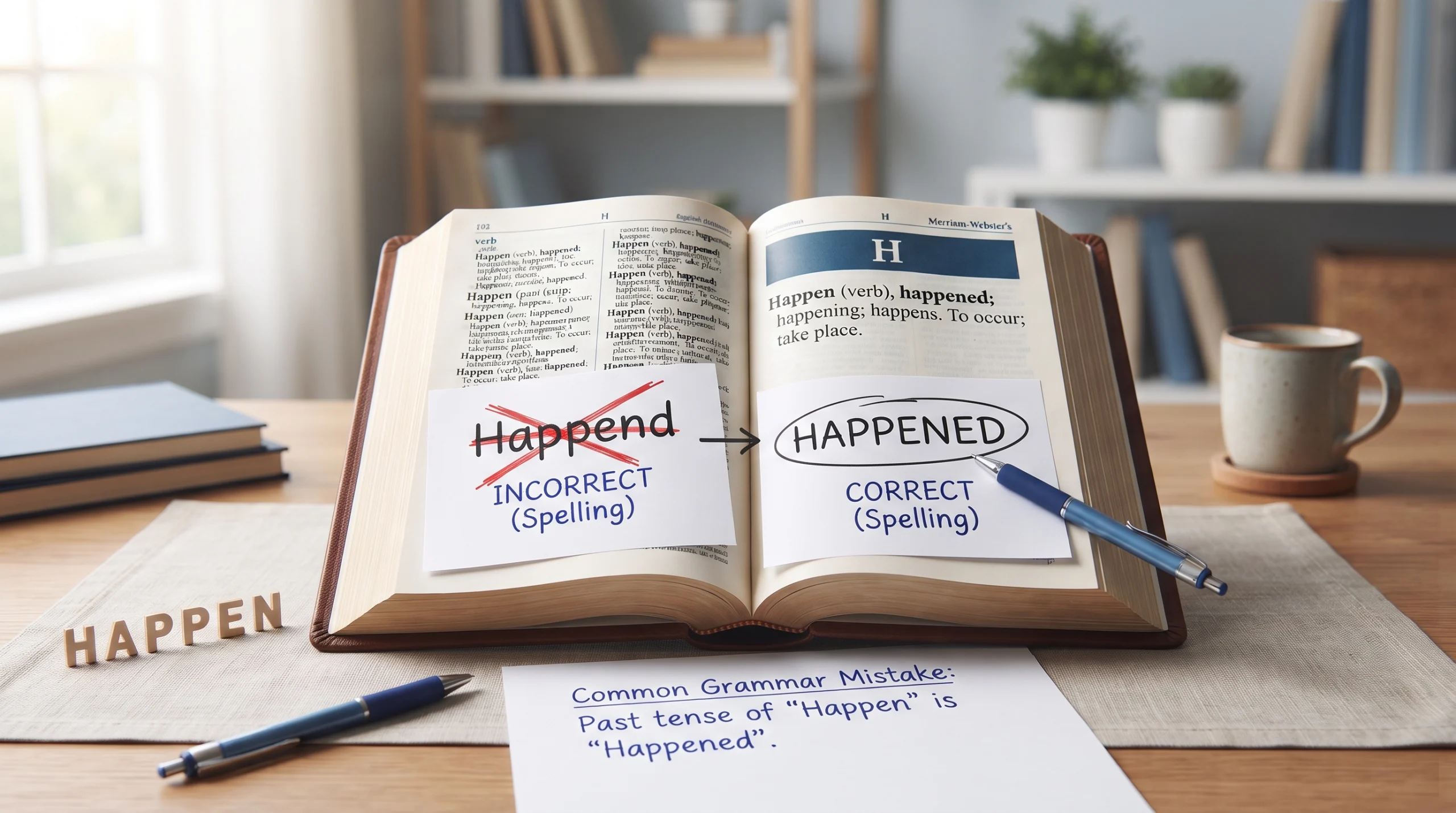
Happend or Happened? Correct Spelling, Meaning, and Grammar
If you are unsure whether to write happend or happened, the correct spelling is happened. The word happend is a misspelling and should not be used in standard American English.
The confusion usually comes from pronunciation. When people say “happened” quickly, the vowel sound in the ending can be less noticeable, making happend seem like a possible spelling. However, the correct written form keeps the complete -ed ending.
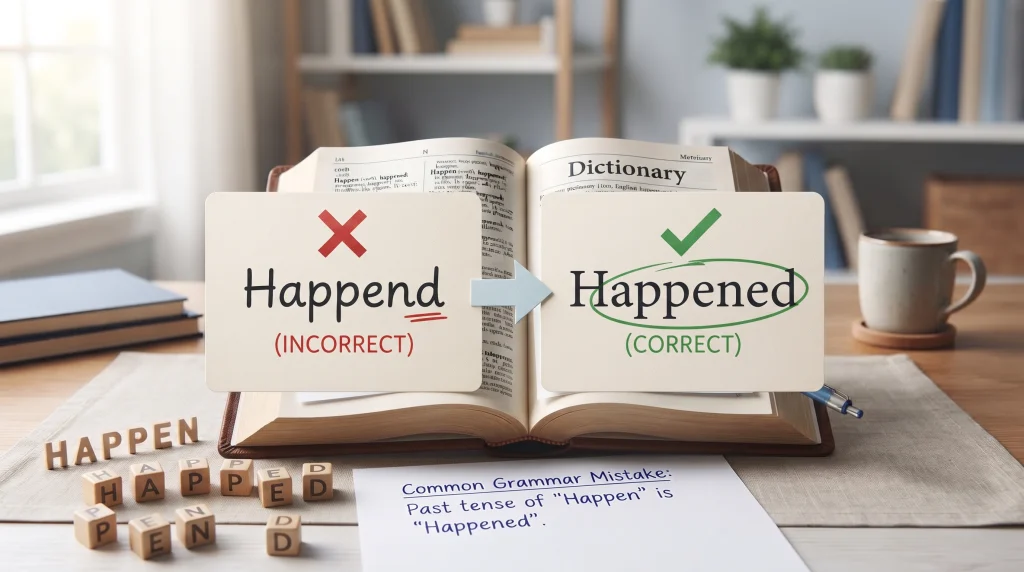
The easiest way to remember it is:
happen + ed = happened
Cambridge Dictionary identifies happened as both the past simple and past participle of happen.
Happend or Happened: Which Is Correct?
Happened is the correct spelling.
| Spelling | Correct? | Explanation |
|---|---|---|
| happened | Yes | Past tense and past participle of happen |
| happend | No | Common spelling mistake |
For example:
- What happened yesterday?
- Something strange happened at work.
- The accident happened around noon.
- Nobody knows what happened.
- She told me what happened after the meeting.
Do not write:
- What happend yesterday?
- Something strange happend at work.
- Nobody knows what happend.
The correct form always contains the e before the final d.
Idioms With Illustrations: https://learnidioms.com/idioms-with-illustrations-and-meanings/
Why Is “Happened” Correct?
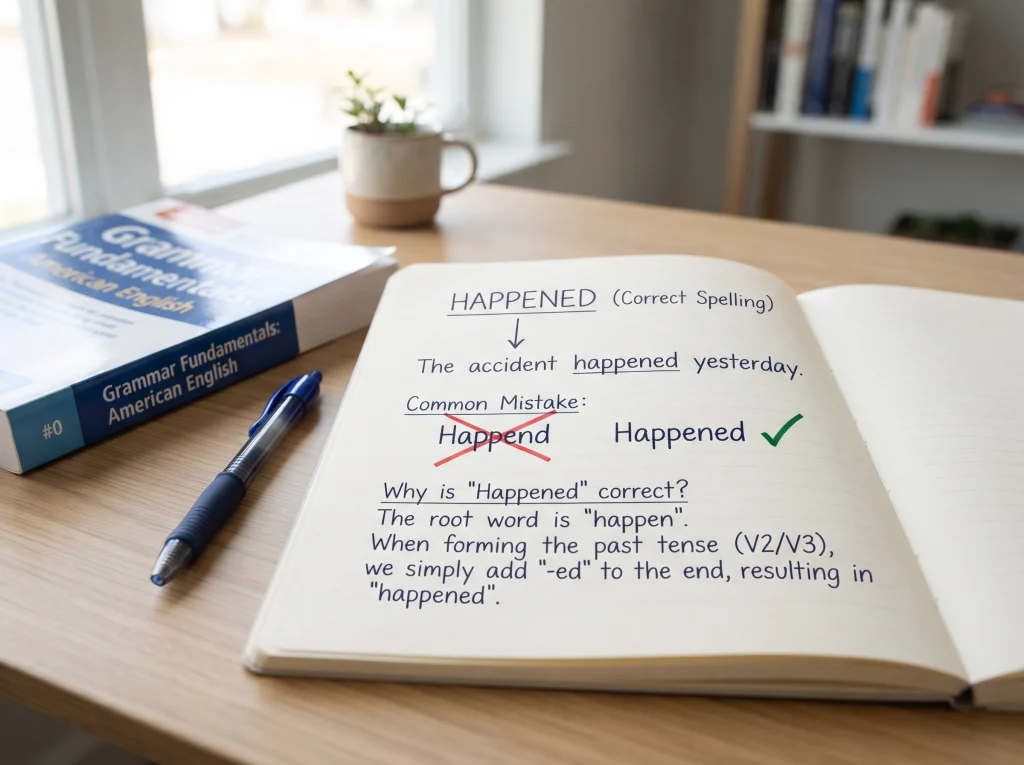
The word happened comes from the regular verb happen. Regular English verbs normally form the simple past by adding -ed to the base form. Cambridge’s grammar guidance specifically notes that regular verbs use -ed in the past form and that the e must be retained in the ending.
The formation is simple:
happen + ed = happened
The base verb is:
happen
Add the regular past ending:
-ed
The result is:
happened
The incorrect spelling removes the e:
happen + d = happend ❌
That is not the standard past tense form.
Why Does “Happend” Look Correct?
The main reason is pronunciation. The -ed ending in English does not always sound like a separate “ed” syllable. Cambridge explains that regular -ed endings have different pronunciations depending on the final sound of the base verb.
As a result, someone may hear the word quickly and mentally spell it as happend. This is a spelling issue, not a different form of the verb.
When you are unsure, remember the complete base word:
HAPPEN + ED
What Does “Happened” Mean?
Happened means that something occurred, took place, or came about in the past. Cambridge Dictionary defines happened as the past form of happen and uses it to describe events or situations that occurred.
For example:
The meeting happened yesterday.
This means the meeting took place yesterday.
Other examples include:
What happened at school today?
The power outage happened during the storm.
A funny thing happened on my way home.
Nobody knew what had happened.
The word can describe planned, unplanned, ordinary, or unusual events. It does not necessarily mean that an event was accidental.
Happen vs. Happened
Happen and happened are forms of the same verb, but they are used differently.
Happen is the base form. It can be used for general statements, after modal verbs, and in certain questions and constructions.
Happened is the past form and refers to something that already occurred.
| Word | Use | Example |
|---|---|---|
| happen | Base form | Things happen for many reasons. |
| happens | Present tense with he, she, it, or a singular subject | It happens every day. |
| happened | Past tense | It happened yesterday. |
| happening | -ing form | It is happening now. |
Compare these sentences:
Present:
Things happen unexpectedly.
Past:
Something happened unexpectedly.
Present continuous:
Something is happening right now.
The time of the action determines which form you need.
Happened vs. Happend Examples
The following examples show the difference clearly.
Correct
What happened after the game?
The meeting happened on Monday.
I don’t know what happened to my phone.
Something unexpected happened this morning.
She explained what happened at the restaurant.
Incorrect
What happend after the game? ❌
The meeting happend on Monday. ❌
I don’t know what happend to my phone. ❌
Something unexpected happend this morning. ❌
She explained what happend at the restaurant. ❌
In every example, replace happend with happened.
Common Grammar Mistakes With “Happened”
Knowing the spelling is important, but happened can also cause grammar mistakes.

“Did It Happen?” Not “Did It Happened?”
After did, use the base form happen, not the past form happened. Cambridge grammar guidance shows that questions with did use the base form of the verb.
Correct:
Why did it happen?
Incorrect:
Why did it happened?
Correct:
What did happen after that?
Incorrect:
What did happened after that?
The reason is that did already carries the past tense. The main verb stays in its base form.
“It Happened” Is Correct
When there is no did, use the past form happened when describing a completed past event.
The accident happened yesterday.
The problem happened during the meeting.
Something unusual happened last night.
“Has Happened” Is Also Correct
Happened can also function as the past participle after has, have, or had.
It has happened before.
These problems have happened before.
She had happened to see him at the store.
Cambridge identifies happened as both the past simple and past participle form of happen.
Happen, Happens, Happened, and Happening
Understanding all four forms can make the spelling easier to remember.
Happen
Use happen as the base form.
Things happen.
What will happen next?
Mistakes can happen.
Why did that happen?
Notice that will, can, and did are followed by happen, not happened.
Happens
Use happens with a third person singular subject in the present tense.
It happens every day.
This happens when the temperature drops.
She knows what happens next.
Happened
Use happened for something that occurred in the past.
It happened yesterday.
The event happened last weekend.
We talked about what happened.
Happening
Use happening when an event is in progress or occurring around a particular time.
What is happening?
Something unusual is happening outside.
The event is happening right now.
This gives you a useful pattern:
happen → happens → happened → happening
Songs With Idioms: https://learnidioms.com/song-with-idioms/
How to Remember the Correct Spelling
The simplest memory trick is to divide the word into two parts:
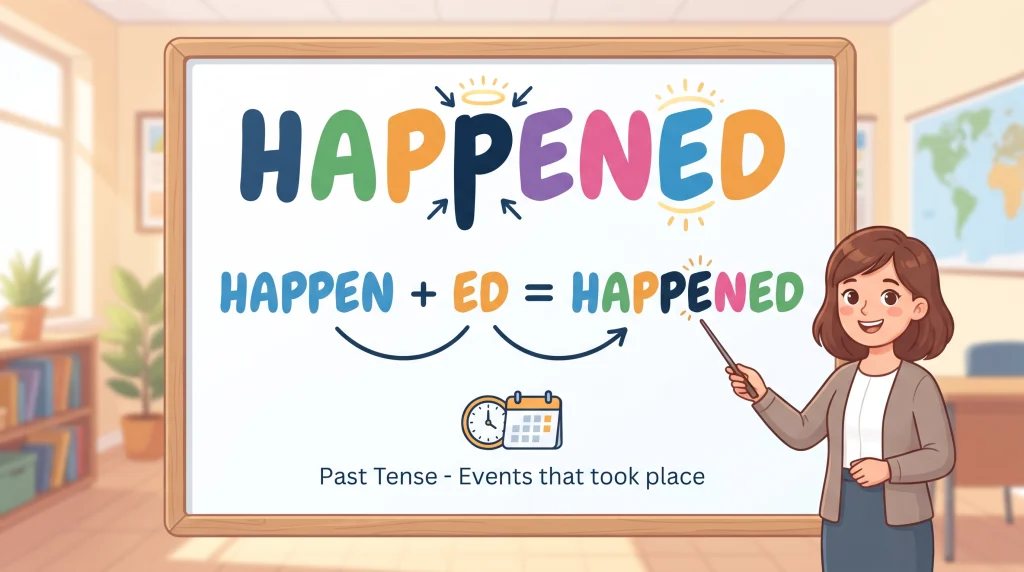
HAPPEN + ED
Write the base word first:
HAPPEN
Then add:
ED
Together:
HAPPENED
Do not remove the e from the -ed ending.
Another useful trick is to remember the sentence:
It happened yesterday.
If you can remember this sentence, you can remember the spelling.
You can also compare happened with other regular past-tense forms:
| Base verb | Past form |
|---|---|
| open | opened |
| listen | listened |
| visit | visited |
| happen | happened |
| call | called |
| start | started |
Regular verbs commonly form their past tense with -ed, although English also has many irregular verbs that follow different patterns.
When to Use “Happened” in a Sentence
Use happened when you are talking about an event, action, situation, or occurrence that took place in the past.
Talking About a Past Event
The concert happened last Saturday.
Asking About a Past Situation
What happened at the office?
Explaining Something That Occurred
A problem happened during the installation.
Talking About a Past Experience
Something interesting happened during my trip.
Describing an Earlier Event
Nobody understood what had happened.
The exact meaning depends on the context, but the spelling remains the same.
Is “Happend” Ever Correct?
In standard modern English, happend is not the correct spelling of the past form of happen. Standard English uses happened. Cambridge’s grammar guidance specifically gives happened, not happend, as the correct form.
Therefore, in school assignments, professional emails, articles, messages, reports, and other standard English writing, use happened.
Happened in American English
The spelling happened is used in American English. It is also the standard spelling in British English, so there is no American versus British spelling difference between happened and happend.
For U.S. readers, sentences such as these are standard:
What happened?
What happened to your car?
I don’t know what happened.
It happened last night.
The spelling does not change based on whether the writer is using American or British English.
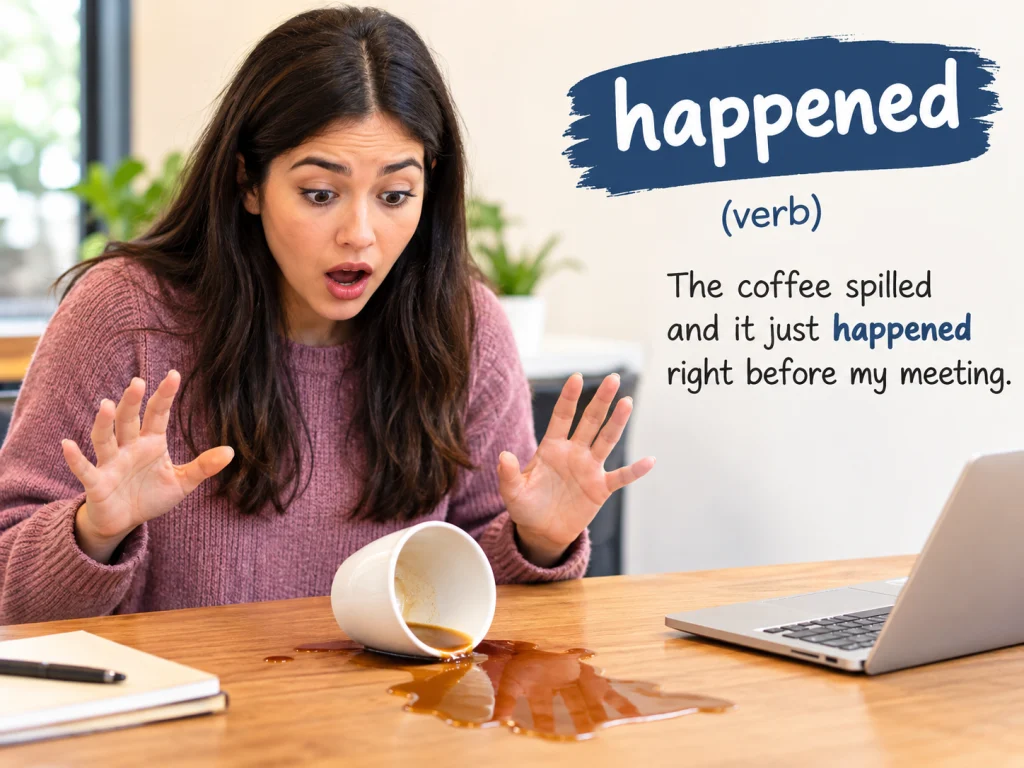
Quick Comparison: Happen or Happened?
Here is a simple way to choose the correct form:
| Sentence | Correct form | Why |
|---|---|---|
| What will ___ next? | happen | Follows will |
| What did ___? | happen | Follows did |
| What ___ yesterday? | happened | Past event |
| It ___ every day. | happens | Present tense |
| What is ___ now? | happening | Action in progress |
| It has ___ before. | happened | Past participle |
The most important rule is easy:
Use happened when describing something that occurred in the past.
Use happen after did or a modal such as will, can, or may.
Conclusion
The answer to happend or happened is simple: happened is the correct spelling, while happend is a misspelling.
The correct form comes from the base verb happen plus the regular past ending -ed:
happen + ed = happened
Remember that happen, happens, happened, and happening have different grammatical uses. Also remember the important rule that after did, you should use happen, not happened.
When you are unsure about the spelling, think of the phrase “It happened.” Keeping the complete -ed ending will help you avoid one of the most common spelling mistakes with this verb.




2 Comments