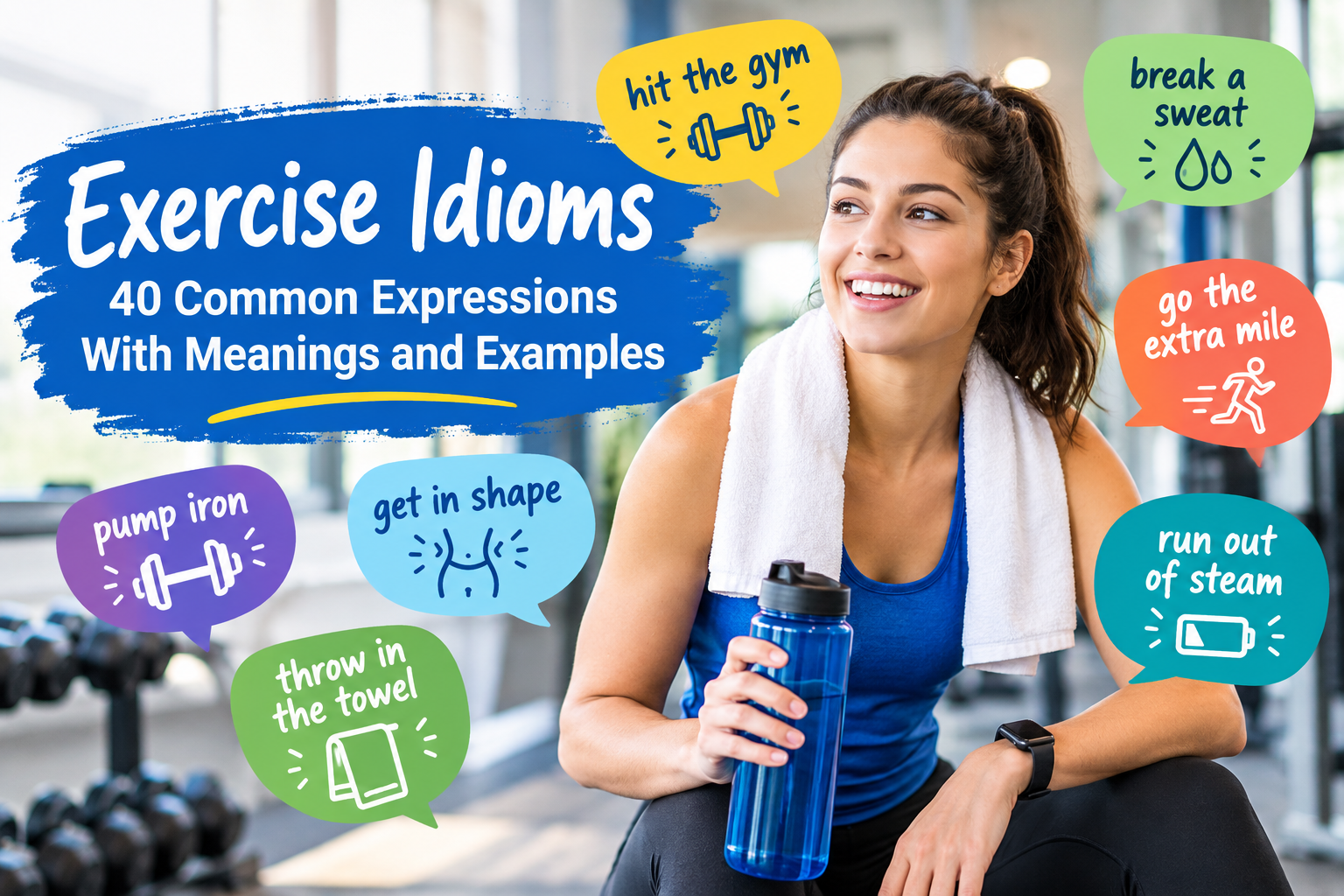
Exercise Idioms: 40 Common Expressions With Meanings and Examples
Exercise and fitness have given English many colorful expressions. Some are used when people talk directly about workouts, while others describe work, relationships, goals, competition, and everyday problems.
For example, hit the gym literally means to go to a gym to exercise. Break a sweat can describe physical activity, but it can also mean making a serious effort. Other expressions, such as run out of steam, go the extra mile, and throw in the towel, are commonly used in situations that have nothing to do with exercise.
These expressions are especially useful for English learners because American English frequently uses sports and physical activity as metaphors for effort, progress, competition, and endurance.
What Are Exercise Idioms?
Exercise idioms are expressions connected with physical activity, fitness, sports, training, strength, movement, or physical effort. Some have a literal fitness meaning, while others have developed figurative meanings that are common in everyday English.

For example:
I hit the gym after work.
Here, hit the gym simply means going to the gym.
But:
We need to hit the ground running on Monday.
Here, hit the ground running means starting a task quickly and energetically.
Understanding the difference between literal and figurative meanings helps you recognize these expressions in conversations, movies, workplace discussions, and social situations.
40 Exercise Idioms and Expressions
1. Hit the Gym
Meaning: To go to the gym to exercise.
Example:
I usually hit the gym before work.
This is a casual expression that is common in American English.
2. Work Out
Meaning: To exercise or train physically.
Example:
She works out three times a week.
Work out can also mean that a situation develops successfully.
Example:
I hope everything works out for you.
3. Get in Shape
Meaning: To become more physically fit.
Example:
He started running to get in shape.
4. Stay in Shape
Meaning: To maintain a good level of physical fitness.
Example:
Walking every morning helps me stay in shape.
5. Break a Sweat
Meaning: To sweat because of physical effort or to make a noticeable effort.
Example:
I broke a sweat during my morning workout.
The expression can also be used figuratively.
Example:
She finished the task without breaking a sweat.
6. Pump Iron
Meaning: To lift weights, especially as part of strength training.
Example:
My brother likes to pump iron after work.
7. Feel the Burn
Meaning: To feel the intense effort of exercise, especially in the muscles.
Example:
I could really feel the burn during those squats.
The expression is also sometimes used humorously for something demanding.
8. No Pain, No Gain
Meaning: Hard work and effort are often associated with achieving a desired result.
Example:
He kept repeating, “No pain, no gain,” while training.
Although this phrase is common in fitness culture, it should not be understood as saying that physical pain is required for successful exercise.
9. Get a Second Wind
Meaning: To suddenly regain energy after feeling tired.
Example:
I was exhausted halfway through the hike, but I got a second wind and finished it.
10. Run Out of Steam
Meaning: To lose energy, motivation, or strength.
Example:
I started the project with enthusiasm but ran out of steam after several hours.
11. Go the Extra Mile
Meaning: To make more effort than is normally expected.
Example:
Our coach always goes the extra mile to help the team.
This expression is widely used outside fitness and sports.
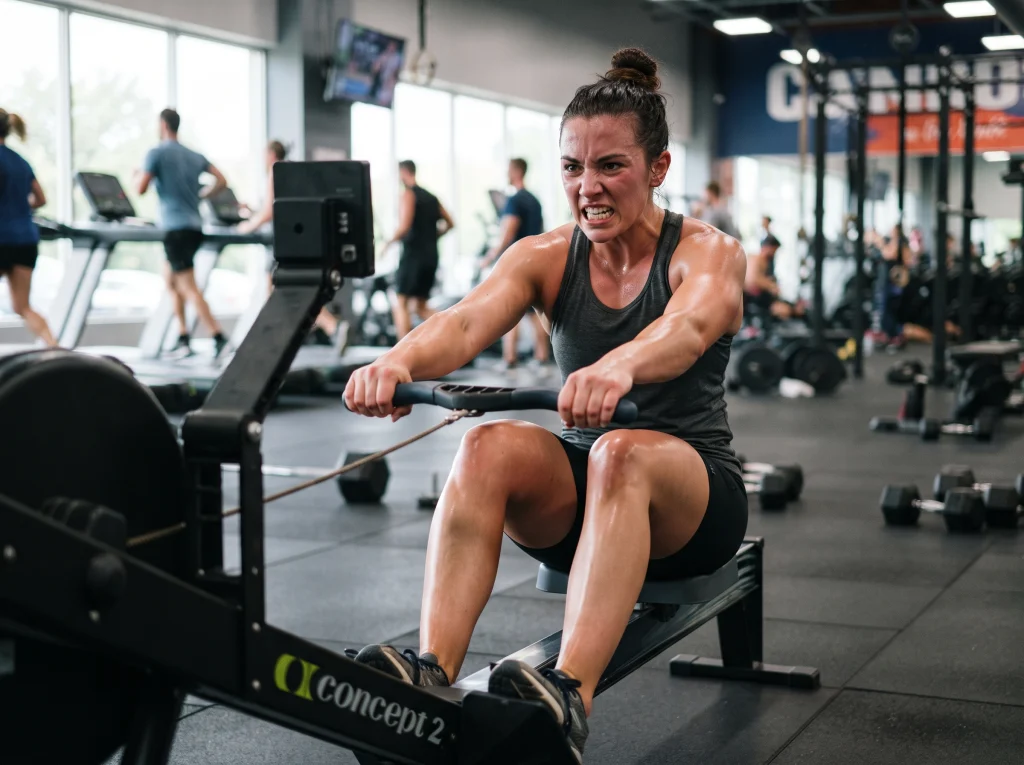
12. Push Yourself
Meaning: To make yourself work harder or attempt something challenging.
Example:
If you want to improve, you have to push yourself.
13. Pace Yourself
Meaning: To control your effort so you do not become exhausted too quickly.
Example:
The race is long, so pace yourself.
It can also be used for work and other long activities.
Example:
We have a busy week ahead, so pace yourself.
14. Keep Up
Meaning: To maintain the same speed, level, or progress as someone or something else.
Example:
I had trouble keeping up with the experienced runners.
15. Keep Up With
Meaning: To continue at the same level or speed as another person or activity.
Example:
She works hard to keep up with her training schedule.
16. Get Moving
Meaning: To start moving or begin doing something.
Example:
Come on, get moving or we’ll be late for the class.
It can also be used figuratively when someone needs to take action.
17. Hit the Ground Running
Meaning: To begin something quickly and energetically.
Example:
The new employee hit the ground running on her first day.
This expression comes from physical movement but is now widely used in work and other contexts.
18. Step Up Your Game
Meaning: To improve your performance or make a greater effort.
Example:
If we want to win the tournament, everyone needs to step up their game.
19. Get Back on Track
Meaning: To return to the correct path, plan, or level of progress.
Example:
After missing several workouts, I am trying to get back on track.
20. On Track
Meaning: Making expected progress toward a goal.
Example:
She is on track to complete her training program.
Exercise Idioms About Effort and Hard Work
Physical training often provides metaphors for determination and effort. Expressions such as push yourself, go the extra mile, and step up your game can describe situations far beyond the gym.
21. Put Your Back Into It
Meaning: To use a lot of physical effort.
Example:
Put your back into it and help me move this table.
It can also suggest putting serious effort into a task.
22. Give It Your All
Meaning: To use all your effort or energy.
Example:
She gave it her all during the final race.
23. Give Something a Good Workout
Meaning: To make something work hard or put it through demanding use.
Example:
That steep trail gave my legs a good workout.
The phrase can also be used figuratively.
Example:
That difficult problem gave my brain a good workout.

24. Flex Your Muscles
Meaning: To show strength, ability, power, or influence.
Example:
The company is flexing its muscles in the technology market.
The literal meaning involves showing or tightening muscles, while the figurative meaning concerns demonstrating power.
25. Stretch Yourself
Meaning: To challenge yourself beyond what is comfortable or familiar.
Example:
Taking the advanced class will help you stretch yourself.
26. Go Full Speed Ahead
Meaning: To move forward with maximum effort or energy.
Example:
Once the team approved the plan, we went full speed ahead.
Exercise Idioms About Energy and Stamina
Exercise naturally gives English speakers ways to describe energy, exhaustion, and recovery.
27. Be Full of Energy
Meaning: To have a lot of energy and enthusiasm.
Example:
The kids were full of energy after breakfast.
28. Run on Empty
Meaning: To continue functioning with very little energy left.
Example:
I’ve been working all day, and now I’m running on empty.
29. Catch Your Breath
Meaning: To rest briefly after physical exertion or regain composure after an intense experience.
Example:
Give me a minute to catch my breath after that run.
Figuratively, it can describe taking a short break after a stressful event.
30. Take It Easy
Meaning: To relax or avoid too much effort.
Example:
You’ve been training hard all week, so take it easy today.
31. Blow Off Steam
Meaning: To release stress, anger, or frustration through activity or conversation.
Example:
I went for a run to blow off steam after a stressful day.
This expression is not limited to exercise.
32. Burn Out
Meaning: To become extremely tired or exhausted because of prolonged effort or stress.
Example:
He took a rest day because he did not want to burn out.
The phrase is also widely used for work and school.
Exercise Idioms About Success and Progress
Fitness expressions often describe improvement, achievement, and moving toward a goal.
33. Get the Ball Rolling
Meaning: To start an activity or process.
Example:
Let’s get the ball rolling on our new fitness program.
34. Make Strides
Meaning: To make noticeable progress.
Example:
She has made great strides in her running ability.
35. Go the Distance
Meaning: To continue until something is finished or successfully completed.
Example:
He trained for months because he wanted to go the distance.
It can also describe staying committed to a difficult project or relationship.
36. Rise to the Challenge
Meaning: To respond successfully when faced with a difficult task.
Example:
The team rose to the challenge during the final game.
37. Bounce Back
Meaning: To recover after a setback or difficult experience.
Example:
She missed several weeks of training but bounced back quickly.
38. Be on Top of Your Game
Meaning: To perform at your highest or best level.
Example:
The runner was on top of her game during the competition.
The phrase is also common in business and everyday conversation.
Exercise Idioms About Giving Up and Setbacks
Sports and exercise have also contributed expressions for quitting, failing, and recovering.
39. Throw in the Towel
Meaning: To give up or quit.
Example:
The team was behind, but they refused to throw in the towel.
The expression comes from boxing, where throwing a towel into the ring traditionally signals that a fighter should stop.
40. Back to Square One
Meaning: To return to the beginning after a plan or attempt fails.
Example:
Our first training plan did not work, so we’re back to square one.
This expression is useful when talking about projects, plans, and other setbacks.
How to Use Exercise Idioms Naturally in American English
The easiest way to use exercise idioms naturally is to pay attention to context. Some expressions are casual and work well in conversations with friends, while others are common in professional or more general situations.
For example, hit the gym sounds casual:
I’m going to hit the gym after dinner.
Work out is also very common:
I usually work out in the morning.
For figurative situations, go the extra mile, step up your game, and get back on track can work in many settings.
We need to step up our game if we want to finish on time.
I’m trying to get back on track with my study schedule.
Remember that some expressions are strongly connected to sports or physical effort. Throw in the towel, for example, is often used when someone gives up after a difficult attempt. Pump iron is much more specifically connected with weightlifting.
Context also determines whether an expression is literal or figurative. Run out of steam can describe a runner who becomes tired, but it can just as naturally describe a person who loses motivation to finish a project.

Common Mistakes With Exercise Idioms
One common mistake is taking an idiom literally. If someone says, “We need to get back on track,” they may be talking about a project rather than an actual track.
Another mistake is changing the wording of a fixed expression. For example, the standard expression is throw in the towel, not “throw in the cloth.”
English learners should also pay attention to verb tense and sentence structure.
Correct:
I hit the gym yesterday.
She works out every morning.
He ran out of steam.
We need to get back on track.
Learning the entire expression as a unit makes these phrases easier to remember and use correctly.
Why Exercise Idioms Matter in American English
Exercise and sports provide a familiar source of metaphors for effort, competition, progress, endurance, and setbacks. These expressions can therefore appear in conversations that have nothing to do with physical fitness.
For example, a manager might tell an employee to step up their game, a friend might say they are running on empty, and someone working on a difficult project might say they need to pace themselves.
Learning these expressions improves both vocabulary and listening comprehension because their meanings are often different from the literal meanings of their individual words.

FAQs:
Conclusion
Exercise idioms add energy and personality to American English. Expressions such as hit the gym, break a sweat, pump iron, go the extra mile, run out of steam, and throw in the towel can describe physical activity as well as everyday situations.
The key is to learn each expression in context. Once you understand whether an idiom is being used literally or figuratively, it becomes much easier to recognize and use naturally in conversation.