
Idioms Flocabulary: Learn Common English Expressions With Meanings and Examples
Learning English involves more than memorizing vocabulary and grammar rules. Everyday conversations, books, movies, and classroom discussions often contain expressions that mean something different from the individual words they use. These expressions are called idioms, and understanding them can make English easier to read, listen to, and speak naturally.
Flocabulary offers an idioms lesson that introduces students to figurative language through an educational song and supporting learning activities. Its lesson is especially relevant for students who need help understanding American English expressions and their meanings in context.
Educational Hip-Hop
+1
Whether you are an English learner, a student working on a language arts assignment, or a teacher looking for classroom practice, learning idioms can help you understand what people really mean when they use colorful, nonliteral expressions.
What Are Idioms in Flocabulary?
An idiom is a word or group of words whose established meaning cannot always be understood by interpreting each word literally. For example, when someone says, “It’s raining cats and dogs,” they mean that it is raining very heavily, not that animals are falling from the sky.
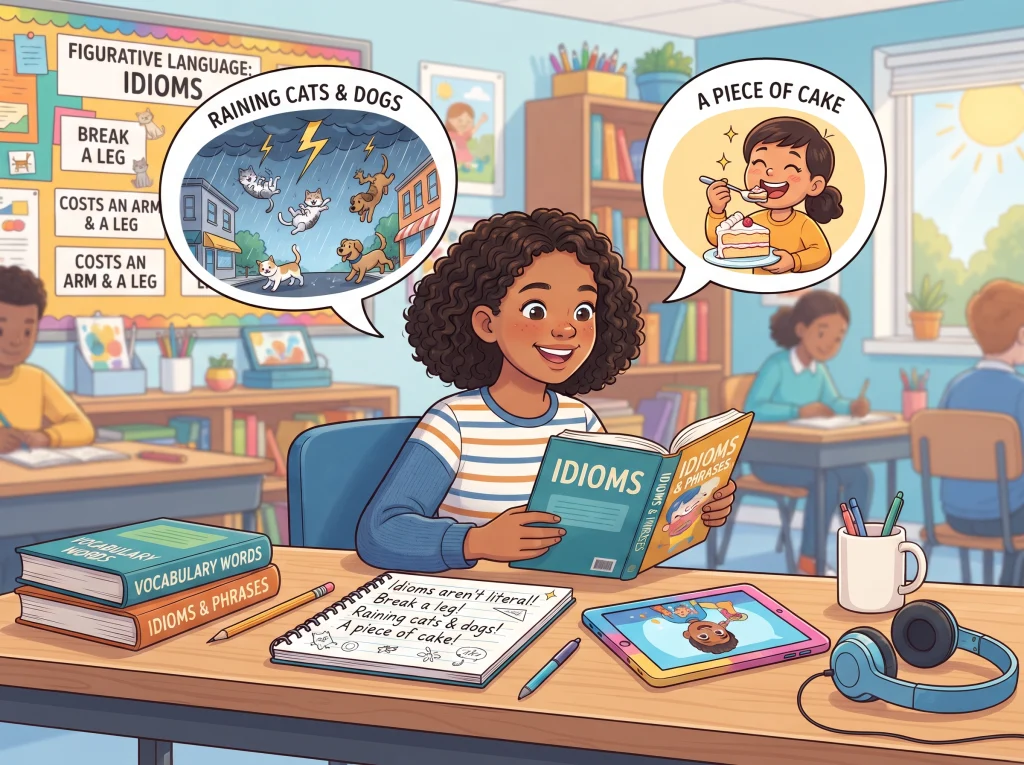
Flocabulary’s idioms lesson teaches students to recognize this difference between literal and figurative meanings. Its educational approach uses a song and lesson materials to help learners understand how idioms work in everyday American English.
Educational Hip-Hop
+1
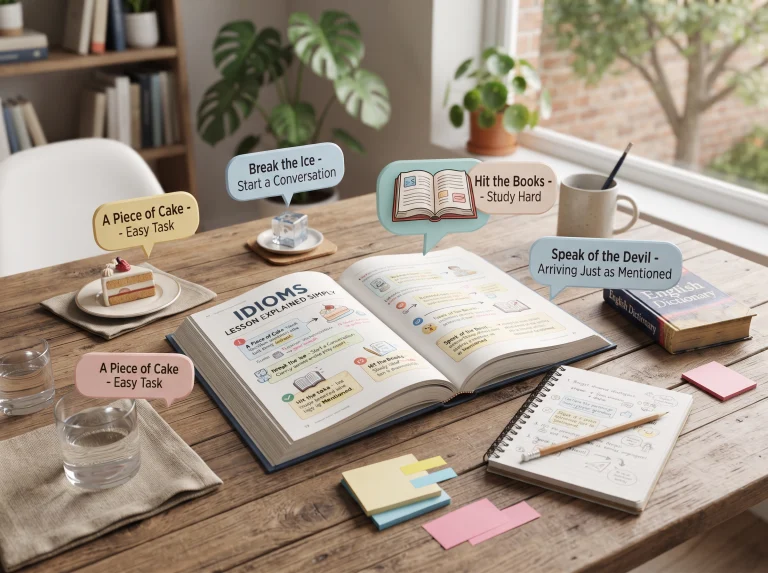
Here are three familiar examples:
| Idiom | Meaning | Example |
|---|---|---|
| Break the ice | Make people feel more comfortable in a social situation | “The teacher told a funny story to break the ice.” |
| Hit the books | Study seriously | “I need to hit the books before my history test.” |
| Under the weather | Feel sick or unwell | “I’m feeling under the weather today.” |
The important point is that an idiom has a meaning understood by speakers beyond its literal wording. Recognizing the expression helps you understand the speaker’s message without interpreting every word separately.
Idioms About Dancing: https://learnidioms.com/idioms-about-dancing/
What Is Flocabulary’s Idioms Lesson?
Official learning resource

Flocabulary
Flocabulary is an educational platform that uses hip-hop videos, vocabulary activities, and other learning resources to support instruction. Its idioms lesson focuses on understanding expressions whose meanings differ from their literal words.
The Flocabulary Blog
+1
Visit Flocabulary’s Teach Idioms lesson
The lesson is designed to help learners recognize idiomatic language rather than simply memorize unfamiliar phrases. Flocabulary’s teaching materials also identify idioms as an area that can be challenging for English language learners because cultural references and nonliteral meanings may not be obvious.
The Flocabulary Blog
+1
What Can Students Learn From the Lesson?
Students can work on several useful language skills:
- Recognizing when a phrase has a figurative rather than literal meaning.
- Using surrounding words and sentences to understand an unfamiliar expression.
- Connecting an idiom with its intended meaning.
- Recognizing idioms in conversations, reading passages, and other everyday situations.
- Applying idiomatic expressions when speaking and writing.
Flocabulary also describes a broader lesson sequence that can include videos, vocabulary cards, games, reading activities, quizzes, and creative writing through Lyric Lab. The precise activities available depend on the lesson and access provided to the learner.
The Flocabulary Blog
+1
Ran or Run: https://learnidioms.com/ran-or-run/
Common English Idioms With Meanings and Examples
The following expressions provide additional practice for learners studying idioms. They are common English examples for building vocabulary and understanding figurative language, rather than a verified transcript of Flocabulary’s song.
Idioms About Everyday Situations
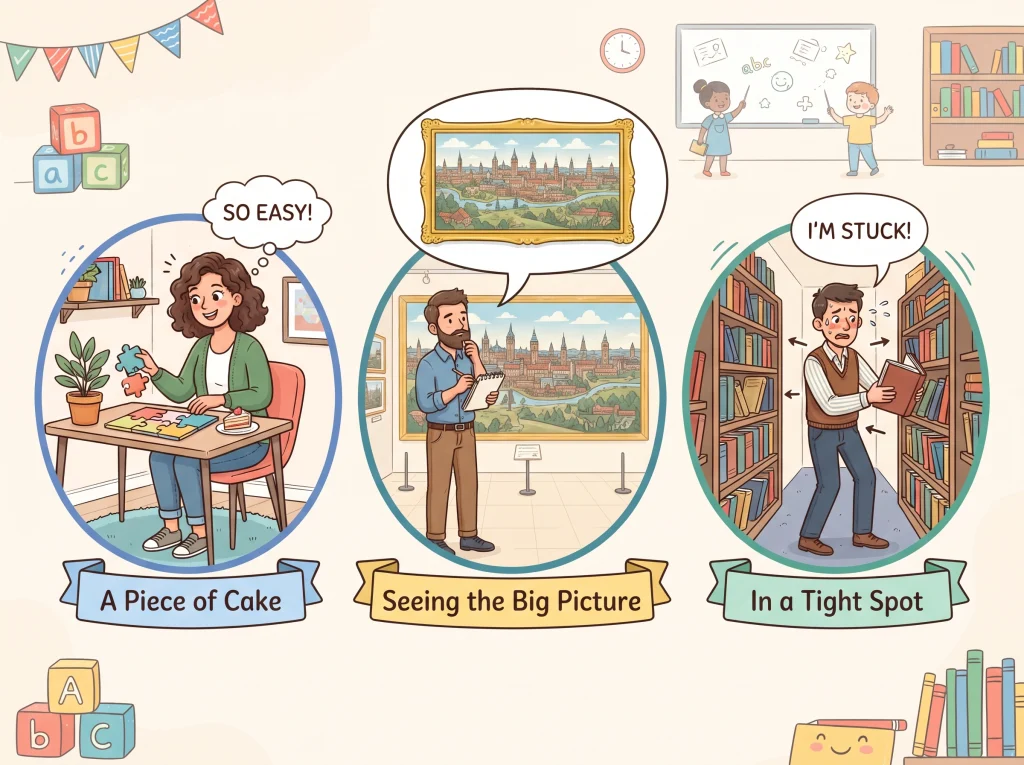
1. A piece of cake
Meaning: Something that is very easy to do.
Example: “The math homework was a piece of cake because I had practiced the problems.”
2. Once in a blue moon
Meaning: Very rarely.
Example: “We eat at that restaurant once in a blue moon.”
3. Better late than never
Meaning: Doing something late is better than not doing it at all.
Example: “You finally submitted your application. Better late than never.”
4. In hot water
Meaning: In trouble.
Example: “He was in hot water after forgetting to complete his assignment.”
5. Call it a day
Meaning: Stop working on something for the time being.
Example: “We’ve finished most of the project, so let’s call it a day.”
These idioms can appear in casual conversations, school settings, and workplace discussions. Learning them alongside complete sentences makes it easier to understand when they sound natural.
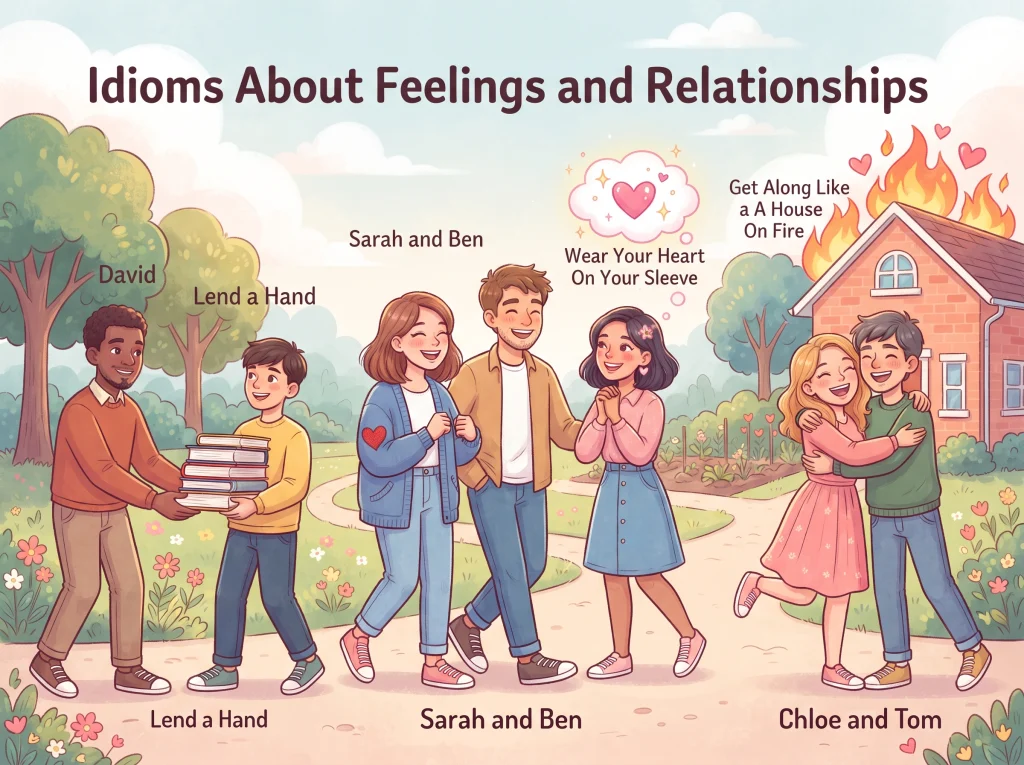
Idioms About Feelings and Relationships
6. On cloud nine
Meaning: Extremely happy.
Example: “She was on cloud nine after finding out she had earned a scholarship.”
7. Get on someone’s nerves
Meaning: Annoy someone.
Example: “The constant tapping was getting on my nerves.”
8. Give someone the cold shoulder
Meaning: Deliberately ignore someone or treat them in an unfriendly way.
Example: “He gave me the cold shoulder after our disagreement.”
9. See eye to eye
Meaning: Agree with someone.
Example: “My sister and I don’t always see eye to eye about movies.”
10. A shoulder to cry on
Meaning: Someone who offers comfort and emotional support.
Example: “When she had a difficult week, her best friend was a shoulder to cry on.”
Idioms About Success, Challenges, and Decisions
11. Break a leg
Meaning: A way to wish someone good luck, especially before a performance.
Example: “Break a leg at your school play tonight!”
12. Bite the bullet
Meaning: Face a difficult or unpleasant situation with courage.
Example: “I decided to bite the bullet and tell my coach about the mistake.”
13. Go the extra mile
Meaning: Make more effort than is expected or required.
Example: “Our teacher went the extra mile to help us prepare for the exam.”
14. Back to the drawing board
Meaning: Start planning again after an idea or attempt fails.
Example: “The first design didn’t work, so we went back to the drawing board.”
15. Get the ball rolling
Meaning: Begin an activity or process.
Example: “Let’s get the ball rolling by choosing a topic for our presentation.”

Idioms About Communication and Understanding
16. Spill the beans
Meaning: Reveal secret information.
Example: “Don’t spill the beans about the surprise party.”
17. Beat around the bush
Meaning: Avoid talking directly about the main subject.
Example: “Stop beating around the bush and tell me what happened.”
18. Read between the lines
Meaning: Understand an implied message that is not stated directly.
Example: “When she said she was busy all week, I read between the lines and realized she wanted some time alone.”
19. Get something off your chest
Meaning: Talk about something that has been worrying or upsetting you.
Example: “I needed to get something off my chest, so I spoke honestly with my friend.”
20. The tip of the iceberg
Meaning: A small visible part of a much larger problem or situation.
Example: “The missed deadlines were just the tip of the iceberg.”

How to Learn Idioms With Flocabulary
A song-based lesson can provide an engaging introduction to idioms. To get more from the material, combine listening with reading, discussion, and independent practice.
1. Start with the lesson video
Watch the idioms lesson and pay attention to expressions that sound unusual when interpreted literally. Notice how the surrounding words help communicate the intended meaning.
2. Connect each expression to its meaning
Write down an idiom and explain it in plain English. For example, record that “hit the books” means to study seriously, not to strike a collection of books.
3. Read examples and discuss the context
Use complete sentences to identify who is speaking, what is happening, and why the idiom makes sense in that situation.
4. Write your own sentences
Choose a few expressions and use each in a sentence about school, family, hobbies, or work. Make sure the figurative meaning fits the situation.
5. Review and check your understanding
If the lesson provides review questions, vocabulary games, or quizzes, use them to check your understanding. Revisit expressions that you find difficult.
Flocabulary’s broader instructional materials describe activities that support vocabulary review, comprehension, and application. Teachers can also adapt practice to their students’ needs.
Flocabulary
+1
How to Practice Idioms Outside the Classroom
You do not need to depend on a single lesson to improve your understanding of idiomatic English. Regular exposure to expressions in meaningful situations can help you recognize and remember them.
Try these practical methods:
- Keep an idiom notebook: Record each expression, its meaning, and a sentence that demonstrates its use.
- Read in context: Pay attention to idioms in stories, articles, and age-appropriate reading materials. Use the surrounding sentences to make an educated guess about the meaning.
- Listen to natural conversations: Notice how speakers use expressions to describe feelings, problems, decisions, and relationships.
- Practice with a partner: Take turns explaining idioms and creating sentences that use them correctly.
- Learn expressions in small groups: Study a few related idioms at a time, such as expressions about emotions or school.
- Review regularly: Return to previously learned expressions and try using them in new situations.
Reading Rockets notes that introducing idioms by topic can help students remember them, while contextual practice supports their understanding of figurative meaning.
Reading Rockets
+1
Common Mistakes When Learning Idioms
Idioms can be confusing because their meanings are not always obvious. Avoiding a few common mistakes can make learning them easier.
1. Taking Every Word Literally
A learner might interpret “break the ice” as physically breaking frozen water. In ordinary conversation, however, it often means helping people feel comfortable when they first meet.
How to improve: Learn the established figurative meaning alongside the literal wording.
2. Using an Idiom in the Wrong Situation
An expression that works in a casual conversation may sound out of place in a formal report. For example, “hit the books” is informal and is generally more suitable for everyday speech than academic writing.
How to improve: Notice the tone, audience, and setting in which an expression is used.
3. Changing the Words Unnecessarily
Many idioms have conventional wording. Changing a key word may make the expression confusing or unfamiliar to other speakers.
How to improve: Learn the idiom as a complete phrase and check its usual grammatical patterns.
4. Memorizing Definitions Without Examples
Knowing a short definition does not always mean you understand how an idiom works in conversation.
How to improve: Study complete sentences, identify the situation, and create your own examples.
5. Assuming Every Expression Is Used Everywhere
English expressions can vary by region, community, age group, and level of formality. A phrase familiar to one speaker may be less familiar to another.
How to improve: Pay attention to how people use expressions in the particular variety of English you are learning.
These learning strategies align with common guidance for teaching idioms through context, explicit meanings, and repeated practice.
InstructorWeb
+1
Idioms Green: https://learnidioms.com/idioms-green/
Why Idioms Matter for English Learners
Idioms are an important part of understanding everyday English because people frequently communicate ideas through familiar expressions rather than literal descriptions.
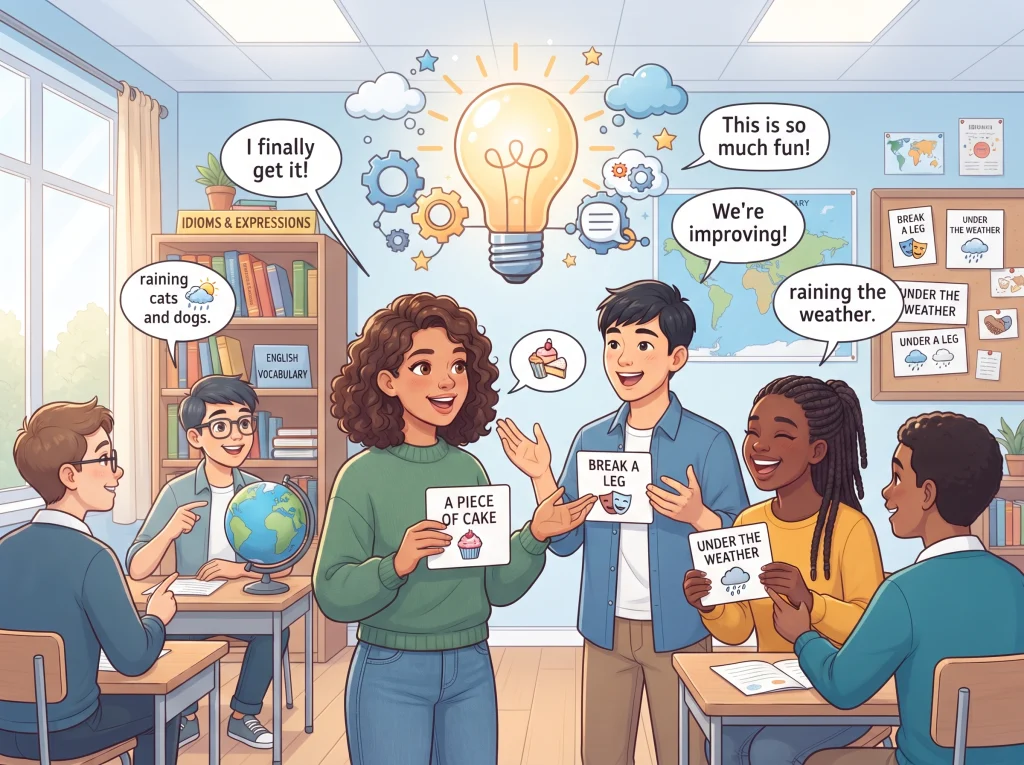
Learning idioms can help students:
- Improve reading comprehension: Recognizing figurative expressions makes stories, conversations, and other texts easier to understand.
- Understand spoken English: Familiarity with common expressions helps learners follow informal conversations and cultural references.
- Communicate more naturally: Using appropriate idioms can make everyday speech sound more familiar and expressive.
- Build vocabulary: Idioms introduce learners to phrases, meanings, and patterns that may not be obvious from individual words.
- Recognize figurative language: Understanding idioms provides a foundation for interpreting other forms of nonliteral expression.
Flocabulary specifically identifies idioms as a potential challenge for English language learners, while its teaching resources encourage the use of context, illustrations, gestures, and opportunities for interaction to support understanding.
Flocabulary
+1
Idioms About Cake: https://learnidioms.com/idioms-about-cake/
FAQS
Conclusion
Idioms add color and meaning to everyday English, but their figurative meanings can be difficult to understand when you are learning the language. Flocabulary’s idioms lesson provides an educational way to approach these expressions through a song and supporting learning materials.
For the best results, combine the lesson with regular reading, listening, sentence writing, and conversation practice. Learn each idiom with its meaning and context instead of memorizing words in isolation. With consistent practice, you can become more comfortable recognizing idiomatic expressions and understanding how people use them in American English.




One Comment