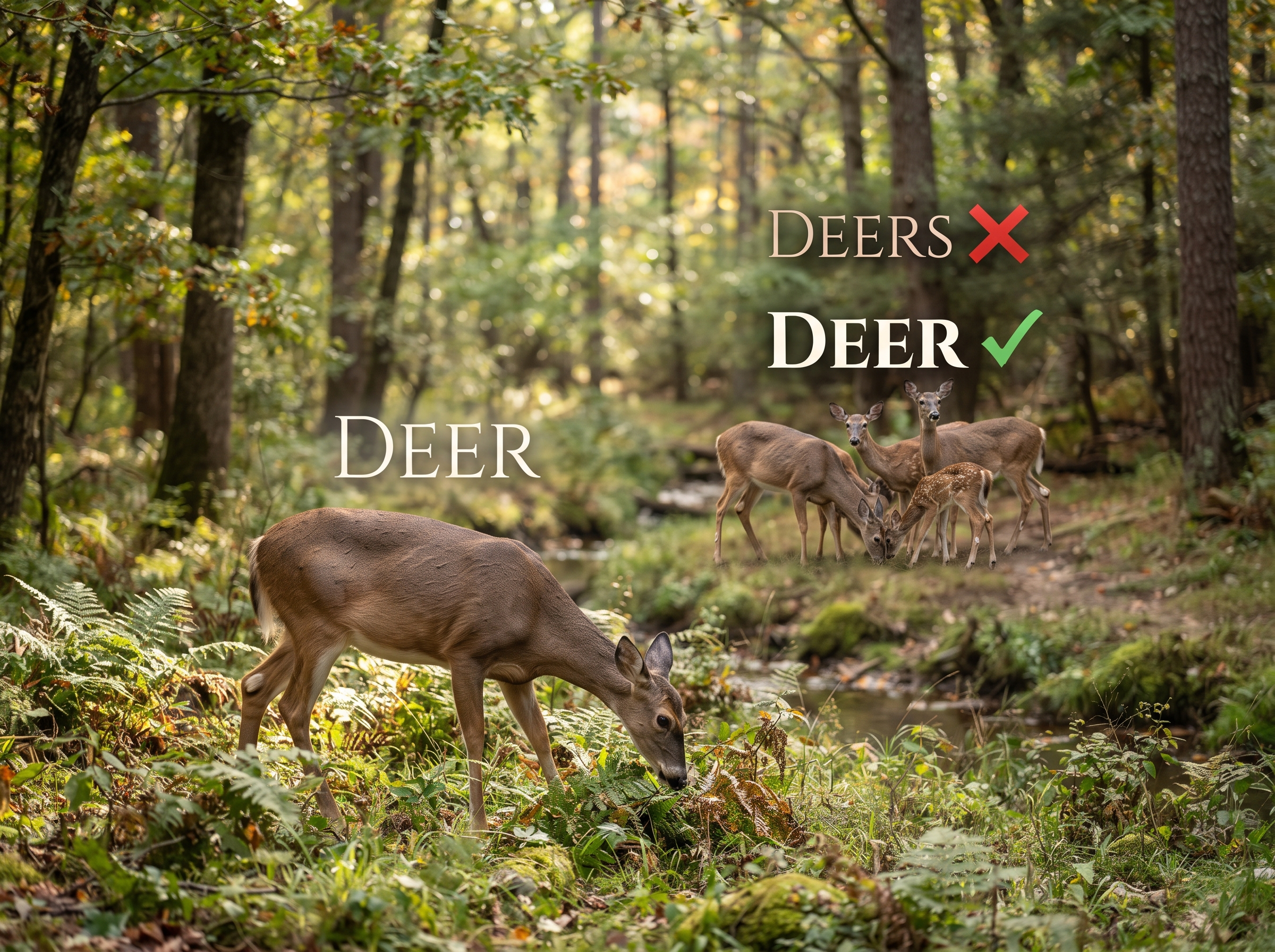
Deers or Deer? Correct Plural, Grammar Rules, and Examples
If you are wondering whether the correct plural is deers or deer, the standard answer in American English is deer. The word stays the same whether you are talking about one animal or several animals. You can say “I saw a deer” for one animal and “I saw three deer” for more than one.
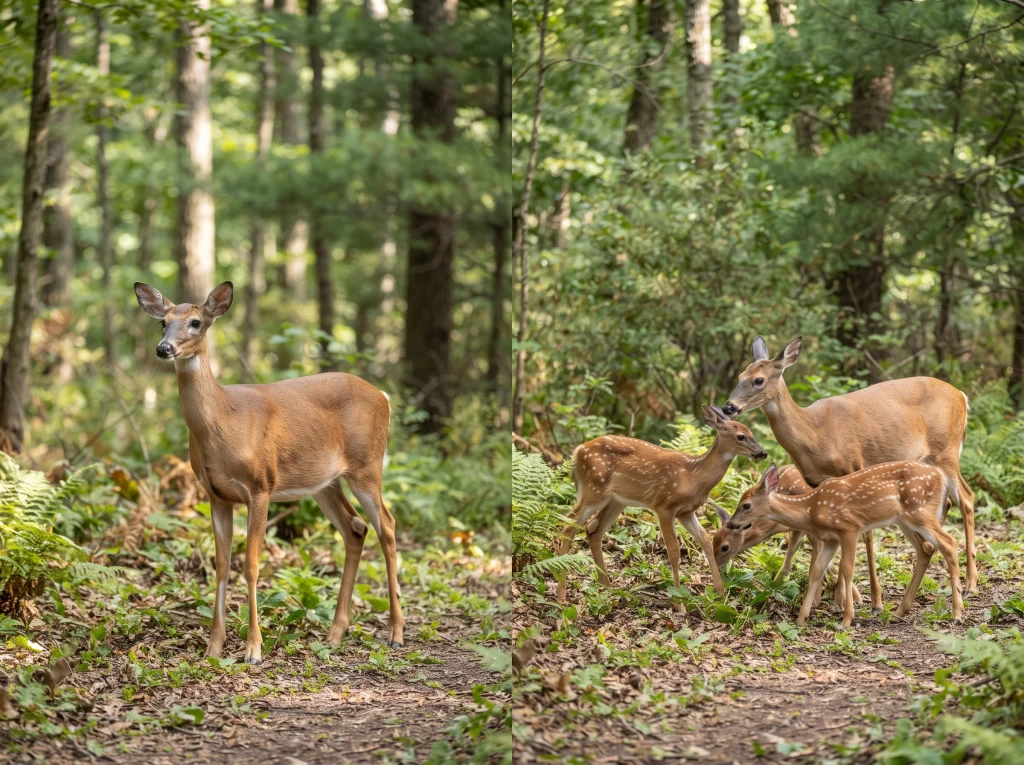
Major English dictionaries list deer as the plural form. Cambridge’s American English dictionary gives the plural as “deer,” while Oxford also lists deer as the plural.
Although some dictionaries record deers as an occasional or alternative plural, it is not the usual form to choose in standard everyday American English.
Idioms About Confidence: https://learnidioms.com/idioms-about-confidence/
Deers or Deer: Which Is Correct?
Deer is the standard plural form.
Use:
I saw one deer near the road.
We saw several deer in the forest.
Five deer crossed the field.
Do not normally write:
We saw five deers in the field.
The reason this can feel confusing is that most English nouns form their plurals by adding -s or -es. For example:
| Singular | Plural |
|---|---|
| dog | dogs |
| car | cars |
| tree | trees |
| horse | horses |
| deer | deer |
| sheep | sheep |
| moose | moose |
Deer belongs to a group of nouns whose singular and plural forms are identical.
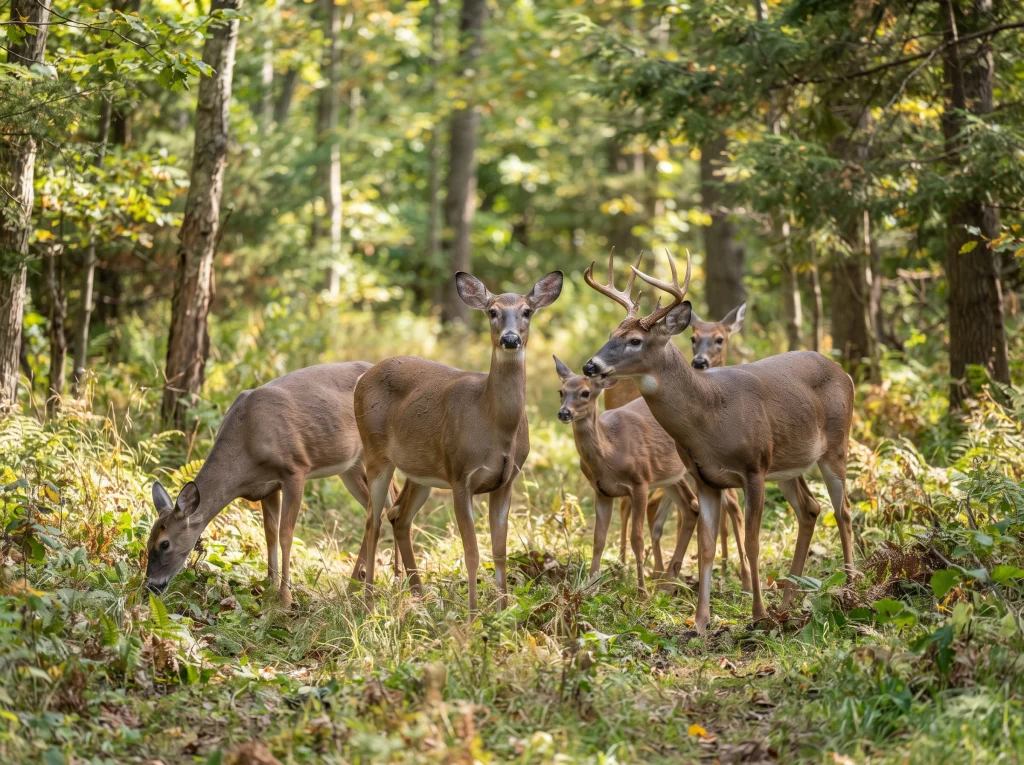
Is Deer Singular or Plural?
Deer can be both singular and plural.
When you are talking about one animal, use a singular determiner or number:
I saw a deer.
One deer was standing beside the road.
When you are talking about more than one, use a plural number, quantifier, or determiner:
I saw two deer.
Several deer were grazing in the meadow.
Many deer live in this area.
The noun itself does not change. Context and the words around it tell the reader whether deer means one animal or multiple animals.
For example, compare these two sentences:
A deer was standing near the fence.
Three deer were standing near the fence.
The first sentence refers to one animal. The second refers to three animals.
Why Is the Plural of Deer Still Deer?
The unchanged plural form comes from the history of the English language. Deer comes from the Old English word dēor, which originally had a much broader meaning related to an animal or beast. Over time, its meaning became more specific.
English has retained the same singular and plural form for deer. Similar patterns appear in words such as sheep and moose.
This means that deer does not need an -s when you are simply talking about multiple animals.
You can remember the pattern like this:
one deer → two deer → many deer
The spelling remains unchanged.
Deer vs. Deers: Comparison Table
| Form | Use | Example |
|---|---|---|
| deer | Singular | I saw a deer. |
| deer | Plural | I saw four deer. |
| deer’s | Singular possessive | The deer’s antlers were large. |
| deer | Plural in possessive construction | The antlers of the deer were large. |
| deers | Occasional alternative plural | Some dictionaries record it, but it is not the usual choice for everyday American English. |
The safest choice for standard American English writing is deer when referring to more than one animal.
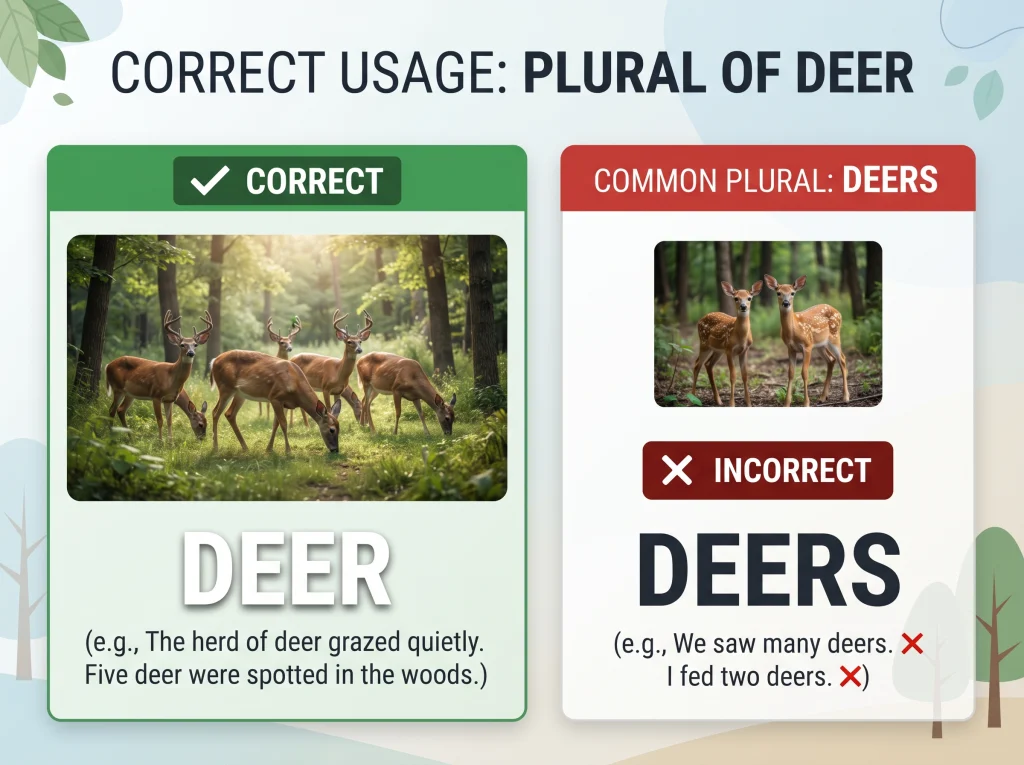
How to Use Deer in a Sentence
The easiest way to use deer correctly is to pay attention to the word before it and the verb that follows it.
One deer
Use a deer or one deer when referring to a single animal.
A deer crossed the road.
One deer was standing in the yard.
Because the subject is singular, use a singular verb such as was.
Two or more deer
Use a number or plural expression with deer.
Two deer crossed the road.
Several deer were eating grass.
Many deer live in the region.
Because the subject is plural, use a plural verb such as were.
A herd of deer
A common expression is a herd of deer.
A herd of deer was moving through the forest.
Here, herd is the grammatical subject, so was agrees with the singular collective noun.
Cambridge and Oxford both provide examples using a herd of deer.
Common Mistakes With Deer
Mistake 1: Adding “-s” to deer
A common mistake is writing:
I saw three deers.
The standard form is:
I saw three deer.
Because deer already has an established unchanged plural form, no -s is needed.
Mistake 2: Using a singular verb with several deer
Another mistake is:
Several deer was running across the field.
The correct sentence is:
Several deer were running across the field.
Although deer looks the same in singular and plural forms, the verb still needs to agree with the meaning of the sentence.
Mistake 3: Using “a” with a plural expression
Do not write:
I saw a several deer.
Instead, write:
I saw several deer.
Use a deer for one animal and several deer for more than one.
Mistake 4: Confusing deer with dear
Deer and dear sound alike in American English, but they have different meanings.
Deer refers to an animal.
We saw a deer in the woods.
Dear can describe someone or something cherished, or it can be used as a form of address.
She is a dear friend.
Oxford lists dear and deer as homophones.
Is “Deers” Ever Used?
You may occasionally encounter deers in dictionaries or real-world writing. This does not mean that deers is the normal plural form for everyday American English.
For example, Collins records deer as the normal plural in its learner dictionary but also notes that some American English dictionary material records deers as an occasional plural.
This explains why you may see deers in some sources. However, if you are writing an email, school assignment, website article, report, or other standard English text, deer is the straightforward choice when you mean multiple animals.
Use:
Several deer were grazing near the lake.
Rather than:
Several deers were grazing near the lake.
If you need to talk about different types, you can make the meaning clearer by using species:
Several species of deer live in North America.
This construction avoids confusion and clearly refers to different kinds of deer.
Deer, Doe, Buck, and Fawn
English has several words that describe deer based on age or sex.
A doe commonly refers to a female deer.
A buck commonly refers to a male deer, particularly in North American English.
A fawn is a young deer.
You may also hear stag for an adult male deer, especially in terminology associated with certain species and varieties of English.
For example:
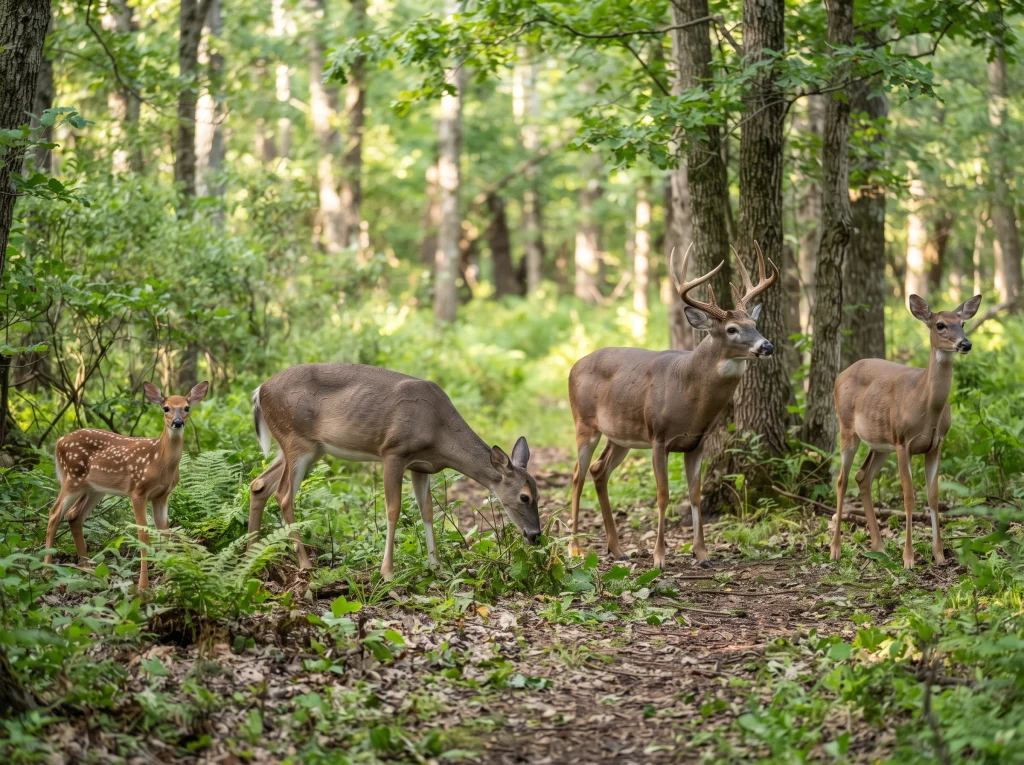
We saw a doe and two fawns.
A buck was standing at the edge of the woods.
Several deer were moving through the field.
These words do not change the plural rule for deer. You can still use deer when speaking generally about multiple animals.
Easy Way to Remember the Plural of Deer
A simple memory trick is:
One deer, two deer, many deer.
Do not automatically add -s just because the word refers to more than one animal.
Think of the pattern:
one sheep → two sheep
one moose → two moose
one deer → two deer
The form remains unchanged.
Another useful clue is the word herd. When you see the phrase a herd of deer, the noun after of stays deer, not deers.
A herd of deer crossed the road.
Three deer crossed the road.
Both sentences use deer correctly.
Deer or Deers in American English
For a U.S. audience, deer is the form to use when you mean more than one animal. Cambridge’s American English dictionary lists deer as the plural, and Oxford also gives deer as the plural form.
There is no separate American spelling such as deers that you need to use. The difference is grammatical rather than a British versus American spelling issue.
If your goal is clear, natural American English, write:
We saw several deer near the highway.
The park has a large population of deer.
Deer often appear near wooded areas.
I Love You Idioms: https://learnidioms.com/i-love-you-idioms/
FAQs:
Conclusion
The standard plural of deer is deer. The word does not normally take -s, so you should write one deer, two deer, several deer, or many deer.
Although some dictionaries record deers as an occasional or alternative plural, deer is the normal choice for standard American English.
When in doubt, remember the simple pattern: one deer, two deer, many deer.





2 Comments