
40 Idioms About Dancing: Meanings, Examples, and Everyday Uses
Dancing gives English a surprisingly rich collection of idioms and expressions. Some describe happiness and celebration, while others refer to avoiding a difficult subject, following someone else’s instructions, dealing with conflict, or doing something independently.
For English learners, these expressions can be confusing because their figurative meanings are often very different from the literal words. When someone says, “Stop dancing around the issue,” they are not talking about moving to music. They mean that the other person is avoiding a direct answer. Similarly, “It takes two to tango” means that two people are involved in a situation, especially when both share responsibility.
Many dancing expressions are informal and conversational, making them useful in everyday American English. Others are older, literary, or less common, so knowing their level of usage helps you choose the right expression for the situation. Common references on dance idioms include expressions such as “cut a rug,” “dance around the issue,” “dance to someone’s tune,” “it takes two to tango,” and “have two left feet.”
What Are Idioms About Dancing?
Idioms about dancing are figurative expressions that use dancing, movement, rhythm, or dance related ideas to describe something beyond literal dancing.
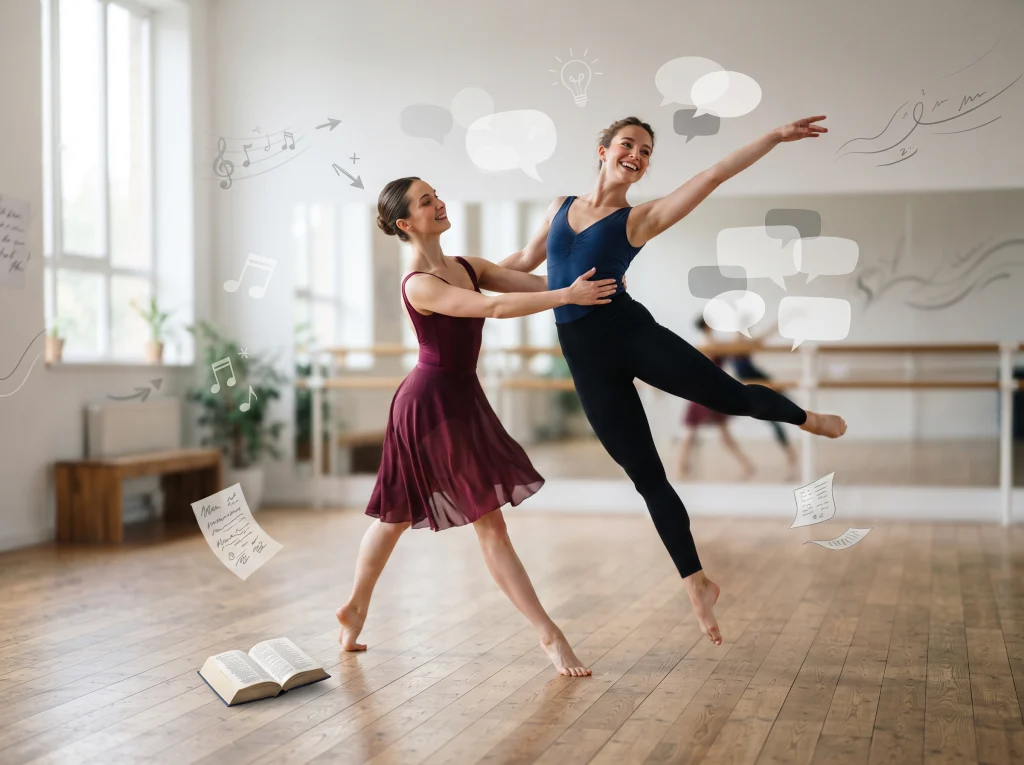
Some are closely connected to actual dancing. For example, cut a rug means to dance energetically. Others use dancing as a metaphor. Dance around the issue means to avoid discussing something directly, while dance to someone’s tune means to do what another person wants.
These expressions are especially useful for learners because they appear in conversations, movies, books, workplace discussions, and informal writing. Learning them as complete phrases rather than translating every individual word makes their meanings easier to understand and remember.
Australian Idioms: https://learnidioms.com/australia-idioms/
40 Common Idioms About Dancing
1. Dance Around the Issue
Meaning: To avoid discussing the main subject directly.
Example:
Stop dancing around the issue and tell me what happened.
This expression is common when someone gives vague answers instead of addressing an uncomfortable question directly.
2. Dance Around the Truth
Meaning: To avoid telling the truth directly.
Example:
He kept dancing around the truth instead of explaining where the money went.
3. Dance to Someone’s Tune
Meaning: To do what another person wants or expects.
Example:
She refuses to dance to her boss’s tune and always speaks her mind.
The expression can suggest that someone has too much influence or control over another person.
4. It Takes Two to Tango
Meaning: Two people are involved in a situation, especially when both share responsibility.
Example:
They both contributed to the argument. It takes two to tango.
The expression is often used when someone tries to blame only one person for a conflict.
5. Cut a Rug
Meaning: To dance energetically or enthusiastically.
Example:
Everyone was cutting a rug at the wedding reception.
This is an informal American expression and is often used humorously when talking about dancing at parties or celebrations.
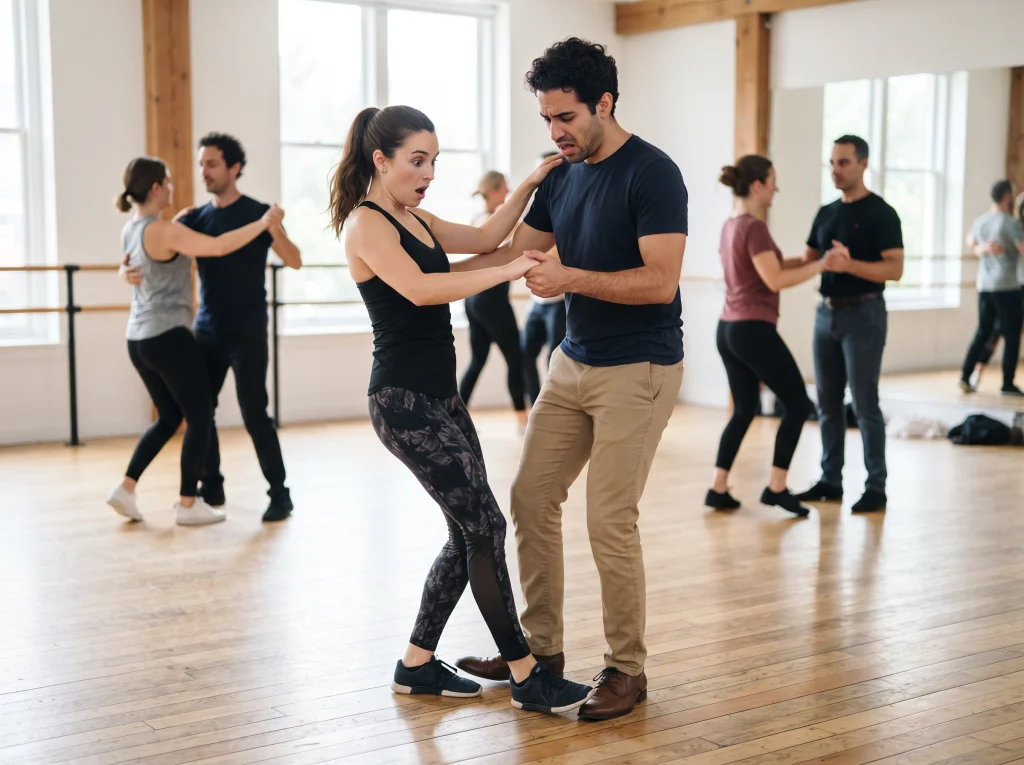
6. Have Two Left Feet
Meaning: To be awkward or clumsy when dancing.
Example:
I love music, but I have two left feet when it comes to dancing.
The phrase can also be used jokingly by someone who is uncomfortable or inexperienced on the dance floor.
7. Dance the Night Away
Meaning: To spend a long time dancing and enjoying yourself.
Example:
We danced the night away at my cousin’s wedding.
It is especially natural when describing parties, weddings, concerts, and other celebrations.
8. Dance on Air
Meaning: To feel extremely happy or excited.
Example:
She was dancing on air after receiving the scholarship.
The expression describes intense happiness rather than literal dancing.
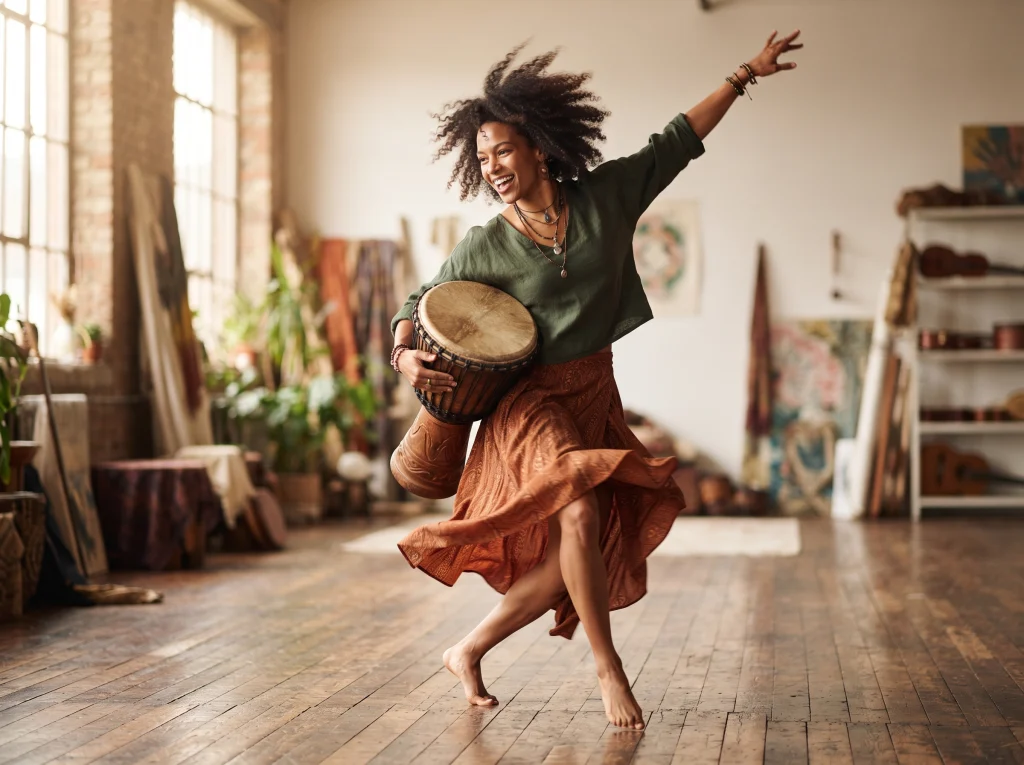
9. Dance to the Beat of Your Own Drum
Meaning: To behave independently and do things in your own way.
Example:
My sister has always danced to the beat of her own drum.
This expression often describes someone who does not feel pressure to follow other people’s choices.
10. Dance to a Different Tune
Meaning: To behave differently from other people or change one’s attitude or approach.
Example:
The manager used to ignore customer feedback, but now he’s dancing to a different tune.
The expression can suggest a significant change in behavior or attitude.
11. Dance Around a Topic
Meaning: To avoid discussing a subject directly.
Example:
The spokesperson danced around the topic instead of giving a clear answer.
It is closely related to dance around the issue and dance around the truth.
12. Make a Song and Dance About Something
Meaning: To make an excessive fuss about something relatively minor.
Example:
Don’t make a song and dance about a small mistake.
The expression is often used when someone complains or reacts more strongly than the situation seems to require.
13. All Singing, All Dancing
Meaning: Having many features, abilities, or impressive qualities.
Example:
They bought an all singing, all dancing home entertainment system.
In modern usage, the expression can describe something that seems to have nearly every feature available.
14. Lead Someone a Merry Dance
Meaning: To cause someone considerable difficulty, confusion, or trouble.
Example:
The complicated paperwork led me a merry dance for several weeks.
The expression can be used seriously or humorously.
15. Dance Attendance On Someone
Meaning: To wait on someone or give them excessive attention and service.
Example:
The young assistant danced attendance on the wealthy client.
This is a relatively old fashioned expression and is more likely to appear in formal, literary, or historical writing than everyday American conversation.
16. Dance the Light Fantastic
Meaning: To dance, especially gracefully or elegantly.
Example:
The couples danced the light fantastic at the formal ball.
This expression has a poetic and literary tone, so it is less common in everyday speech.
17. Dance Until You Drop
Meaning: To continue dancing until you are completely exhausted.
Example:
They planned to dance until they dropped at the New Year’s Eve party.
The phrase can also be used more broadly for doing an activity until you are exhausted.
18. Dance Up a Storm
Meaning: To dance with great energy or enthusiasm.
Example:
She danced up a storm when her favorite song came on.
This expression emphasizes energetic dancing.
19. Out of Step
Meaning: Not following the same rhythm, approach, or ideas as other people.
Example:
The company’s outdated policy is out of step with what younger customers expect.
The expression can be literal when discussing dancing, but it is also widely used figuratively.
20. In Step
Meaning: In agreement or following the same rhythm, direction, or approach as others.
Example:
The new policy keeps the organization in step with changing customer expectations.
Like out of step, this expression can describe both physical movement and figurative agreement.
21. Step on Someone’s Toes
Meaning: To offend someone, interfere with their responsibilities, or cause problems for them.
Example:
I don’t want to step on anyone’s toes, so I’ll check with the project manager first.
The literal image comes from accidentally stepping on another person’s foot while dancing.
22. Step to the Music
Meaning: To move or act according to a particular rhythm or influence.
Example:
The dancers stepped to the music as the band played.
This phrase can be literal or descriptive rather than a fixed idiom, so context matters.
23. Waltz Through Something
Meaning: To complete something easily and with little apparent difficulty.
Example:
She waltzed through the interview and answered every question confidently.
The image suggests someone moving smoothly through a situation.
24. Dance Circles Around Someone
Meaning: To perform much better than another person at something.
Example:
Our new programmer can dance circles around most of us when it comes to solving technical problems.
The phrase is generally figurative and emphasizes a large difference in ability.
25. Dance With Danger
Meaning: To behave in a way that involves serious risk.
Example:
Driving that fast in bad weather is dancing with danger.
This expression is dramatic and works particularly well in storytelling or cautionary contexts.
26. Dance With Death
Meaning: To take an extremely dangerous risk.
Example:
Climbing without proper safety equipment is dancing with death.
The phrase is stronger than simply saying that something is risky.
27. Dance on Someone’s Grave
Meaning: To celebrate or take satisfaction in someone’s downfall or death.
Example:
The rival company was accused of dancing on its competitor’s grave after the business closed.
This expression has a strongly negative tone and should be used carefully.
28. My Dance Card Is Full
Meaning: To be fully occupied or have no available time, appointments, or social opportunities.
Example:
I’d love to join you for dinner, but my dance card is full this week.
Historically, a dance card could list a person’s dance partners and commitments at a social event. Today, the expression is often used humorously to mean being busy.
29. Dance With Someone Cheek to Cheek
Meaning: To dance very closely with another person.
Example:
The couple danced cheek to cheek during the slow song.
Unlike many expressions on this list, the phrase can retain a fairly literal meaning, especially when describing romantic dancing.
30. Dance With Joy
Meaning: To express or feel great happiness.
Example:
The children danced with joy when they heard the good news.
This expression is often used figuratively in storytelling.
31. Break Into a Dance
Meaning: To suddenly begin dancing.
Example:
When her favorite song started playing, she broke into a dance.
It is especially useful for describing a spontaneous reaction to music or happiness.
32. Dance in Someone’s Shadow
Meaning: To remain overshadowed by another person or strongly influenced by them.
Example:
For years, he felt like he was dancing in his older brother’s shadow.
The phrase describes a situation in which someone’s achievements or identity seem less visible because of another person’s presence.
33. Dance to Someone’s Music
Meaning: To follow another person’s wishes or direction.
Example:
The team refused to dance to the contractor’s music.
This is less standard than dance to someone’s tune, so learners should generally prefer the more established form in ordinary American English.
34. Dance With the Times
Meaning: To adapt to current conditions, ideas, technology, or social changes.
Example:
Small businesses have to dance with the times if they want to keep up with changing technology.
This is an informal figurative expression rather than one of the most established dance idioms.
35. Dance Around a Problem
Meaning: To avoid dealing with a problem directly.
Example:
We won’t solve anything if we keep dancing around the problem.
It emphasizes avoidance rather than direct action.
36. Dance Into Trouble
Meaning: To move into a difficult or dangerous situation, often through one’s own actions.
Example:
He danced into trouble by making promises he couldn’t keep.
This is a figurative construction that is more flexible than fixed expressions such as it takes two to tango.
37. Dance Your Way Through Something
Meaning: To move through a difficult situation smoothly, skillfully, or sometimes without addressing every problem directly.
Example:
She danced her way through a difficult interview with confidence.
The meaning depends strongly on context.
38. Dance Around the Answer
Meaning: To avoid giving a clear answer.
Example:
The customer asked for a refund, but the representative kept dancing around the answer.
It is particularly useful when describing evasive communication.
39. Dance to the Rhythm of Something
Meaning: To act according to a particular influence, pattern, or situation.
Example:
The business has learned to dance to the rhythm of changing consumer habits.
This is more creative and flexible than a fixed idiom, so it is best used when the context makes the metaphor clear.
40. Dance Your Way Out of Something
Meaning: To avoid a difficult situation through clever words, charm, or skill.
Example:
He somehow danced his way out of paying the late fee.
The expression can be humorous and often suggests that someone escaped a problem without directly solving it.
Songs With Idioms: https://learnidioms.com/song-with-idioms/
Dancing Idioms About Communication and Avoidance
Several dance expressions are especially useful when talking about communication.
Dance around the issue, dance around the truth, dance around the topic, and dance around the answer all describe forms of indirect communication. They are useful when someone avoids giving a straightforward response.

For example, imagine a manager asks an employee why a project is late. Instead of answering, the employee talks about unrelated problems and gives vague explanations. The manager might say, “Stop dancing around the issue and tell me what happened.”
These expressions are particularly natural in conversations, interviews, meetings, and disagreements.
Dancing Idioms About Relationships and Responsibility
Dance is also used to describe relationships between people.
The best known example is it takes two to tango. It means that two people are involved in a situation, especially when responsibility is shared. It can apply to arguments, business disagreements, relationships, or other conflicts.
Dance to someone’s tune has a different focus. Instead of emphasizing shared responsibility, it describes one person’s influence over another.
Step on someone’s toes also appears frequently in workplace and social situations. Someone may use it when they are worried about interfering with another person’s responsibilities or offending them.
Dancing Idioms About Happiness and Celebration
Dance naturally connects with celebration, so several expressions describe happiness or energetic enjoyment.
Dance on air, dance with joy, break into a dance, dance up a storm, and dance the night away can all describe positive situations.
For example:
We danced the night away at the wedding.
Or:
She was dancing on air after getting the job.
These phrases are generally more natural in casual conversation and storytelling than in formal business writing.
Dancing Idioms About Independence and Conformity
Dance can also represent the way people respond to social pressure.
Dance to the beat of your own drum describes someone who follows their own path rather than simply copying others. It often has a positive or admiring tone.
Out of step, by contrast, often describes someone or something that does not fit current expectations. For example, a company’s outdated technology may be described as being out of step with modern customer needs.
Understanding this contrast helps English learners use these expressions more precisely.
How to Use Dancing Idioms Naturally in American English
The first step is to match the idiom to the situation rather than translating it word for word.
Use piece of dancing imagery such as dance around the issue when someone avoids a direct answer:
Stop dancing around the issue.
Use it takes two to tango when responsibility involves two people:
Don’t blame her alone. It takes two to tango.
Use cut a rug for lively dancing:
We cut a rug at the reception.
Use have two left feet when joking about poor dancing ability:
I have two left feet, so don’t ask me to dance.
Use dance to someone’s tune when describing control or influence:
I’m tired of dancing to his tune.
Use dance to the beat of your own drum when describing independence:
She dances to the beat of her own drum.
Using these expressions in the right context is more important than trying to include them frequently.

Train Idioms: https://learnidioms.com/train-idioms/
Common Mistakes With Dancing Idioms
One common mistake is treating every dance related phrase as a standard idiom. Some expressions are established idioms, while others are creative metaphors or literal descriptions. Piece of cake and it takes two to tango are highly recognizable fixed expressions, while less common constructions may depend heavily on context.
Another mistake is changing the wording of fixed expressions. For example, the established expression is dance to someone’s tune, not usually “dance to someone’s music” when you mean following someone’s wishes.
Learners should also avoid assuming that every expression involving dance is appropriate in every situation. Dance on someone’s grave, for example, carries a strongly negative meaning, while cut a rug is casual and playful.
Finally, remember that idioms can have different levels of formality. Expressions such as dance around the issue work comfortably in many everyday and professional conversations, while dance the light fantastic has a much more literary or playful tone.
Why Learn Idioms About Dancing?
Dancing idioms are useful because they connect physical movement with ideas such as communication, responsibility, independence, happiness, risk, and social behavior.
They also appear in many forms of English. You may encounter them in conversations, novels, television shows, movies, workplace discussions, or informal online writing. Understanding the figurative meaning helps you follow the intended message without interpreting the words literally.
For English learners, these expressions also provide useful vocabulary patterns. Once you understand how English uses movement and rhythm metaphorically, other figurative expressions become easier to recognize.
Sarcastic Idioms: https://learnidioms.com/sarcastic-idioms/
FAQS
Conclusion
Idioms about dancing bring movement and energy into everyday English. Expressions such as dance around the issue, it takes two to tango, cut a rug, have two left feet, and dance to someone’s tune can describe communication, responsibility, dancing ability, influence, and social behavior.




3 Comments