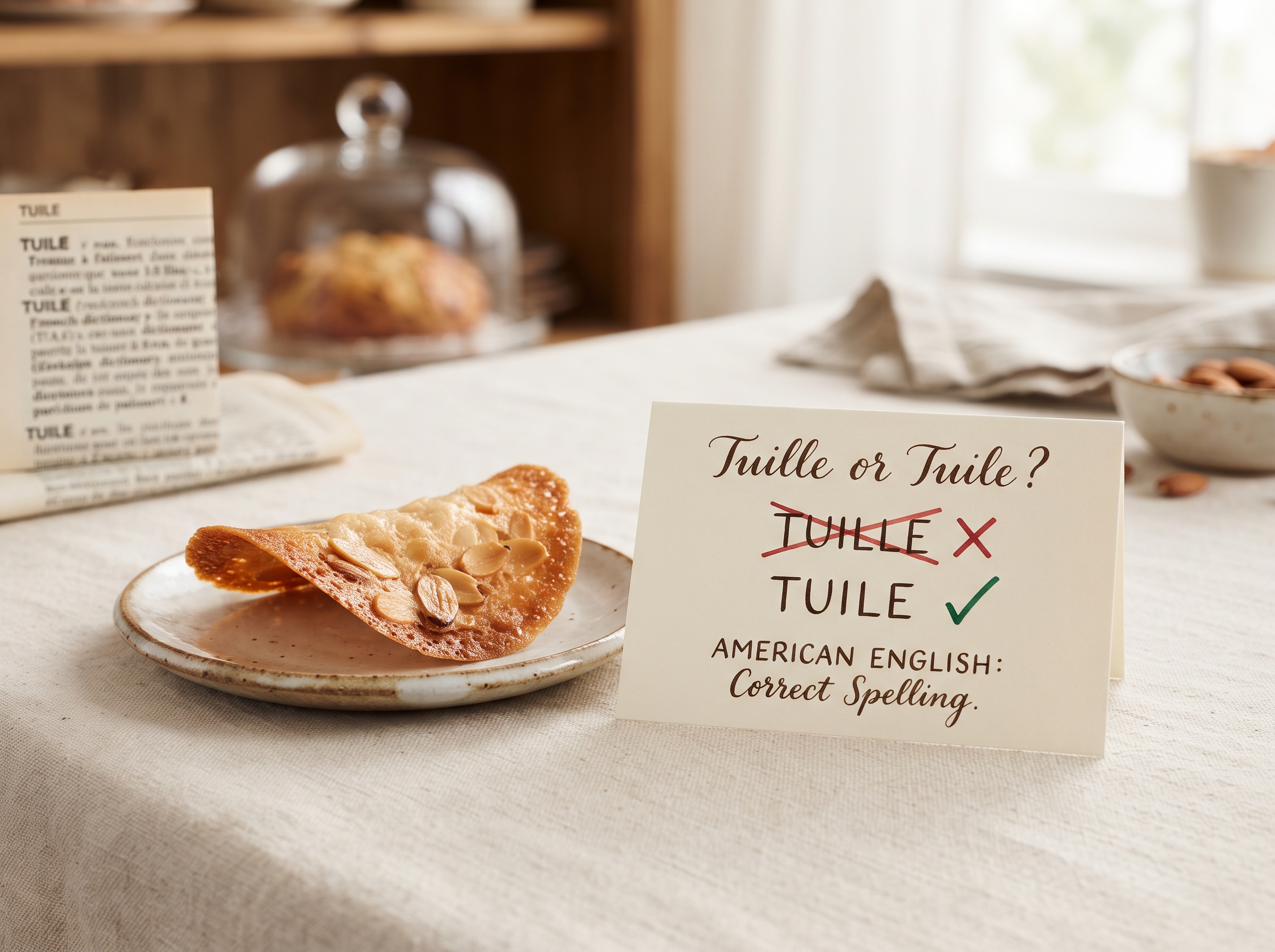
Tuille or Tuile? Which Spelling Is Correct in American English?
If you are unsure whether the correct spelling is tuille or tuile, the correct word is tuile.
Tuile is a French word used in English, especially in cooking and baking, for a thin, crisp cookie or wafer. The word is often associated with delicate French pastries that can be shaped into curved forms while they are still warm.

Tuille is a common spelling mistake. Although it may look natural to English speakers, it is not the standard spelling of the pastry term.
What Does Tuile Mean?
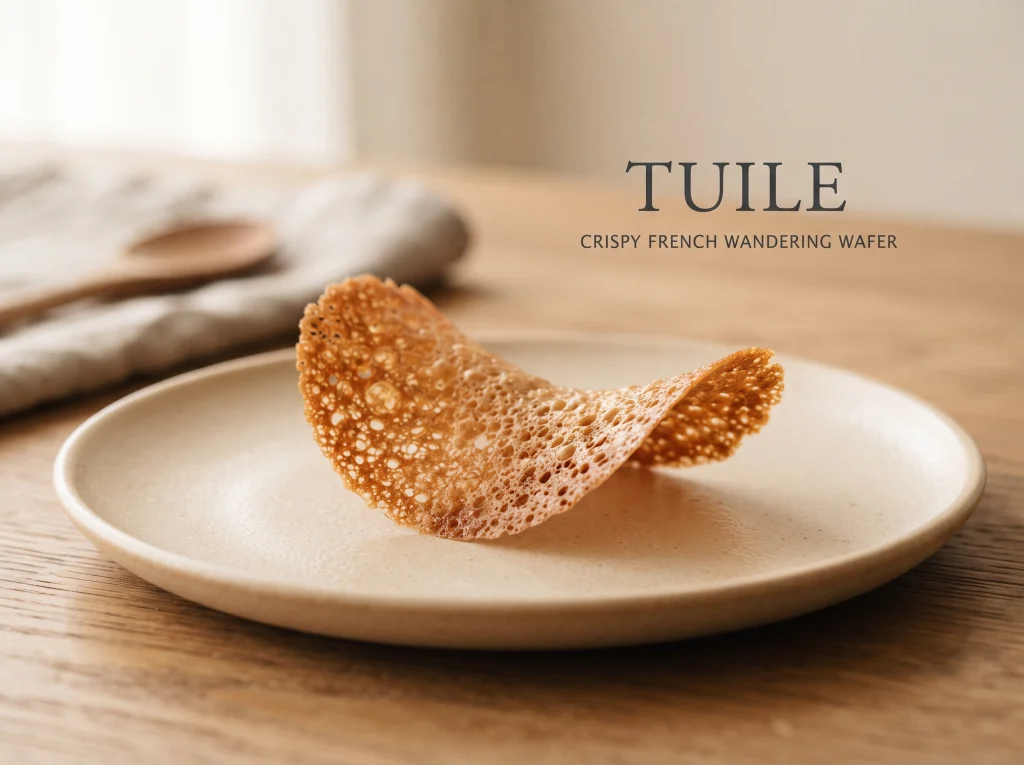
A tuile is a thin, crisp French cookie or wafer. It is often made from a simple mixture that can include butter, sugar, flour, and egg whites.
The word comes from the French word tuile, meaning tile. The name refers to the traditional curved shape of the pastry, which can resemble the curved tiles used on roofs.
Tuiles are often served as a delicate dessert accompaniment. Pastry chefs may use them to add crunch and visual interest to desserts such as ice cream, mousse, custard, or fruit-based dishes.
For example:
The chef placed a chocolate tuile on top of the vanilla mousse.
Here, tuile refers to the thin, crisp pastry used as part of the dessert.
Why Is “Tuille” Incorrect?
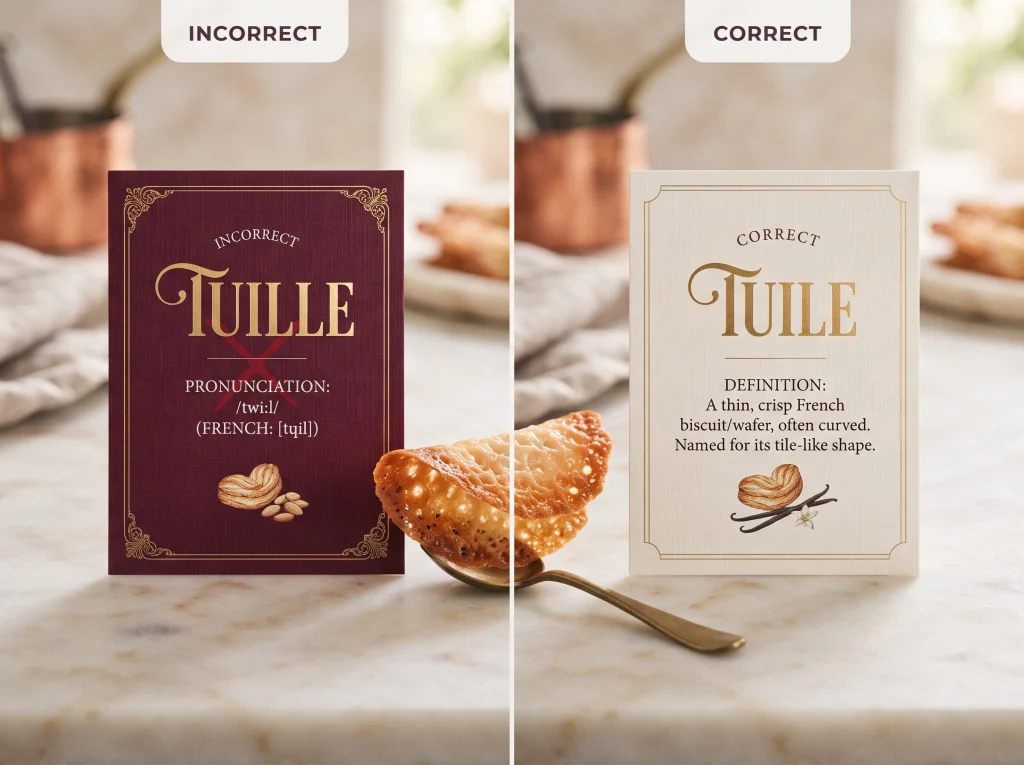
Tuille is generally an incorrect spelling when you mean the French pastry.
The standard spelling is tuile, with one l after the i:
Correct: tuile
Incorrect: tuille
The confusion may happen because English contains many words with double consonants, and the pronunciation of tuile is not immediately obvious from its spelling.
Because tuile is borrowed from French, its spelling follows the French form rather than a typical English spelling pattern.
Tuile vs. Tuille Comparison
| Spelling | Correct? | Meaning |
|---|---|---|
| Tuile | Yes | A thin, crisp French cookie or wafer |
| Tuille | No | Common misspelling of tuile |
If you are writing a recipe, menu, food article, or culinary description, use tuile.
Examples With Tuile
Here are some natural examples:
- The pastry chef made almond tuiles for the dessert.
- A crisp tuile added texture to the chocolate mousse.
- She placed a tuile beside the scoop of vanilla ice cream.
- The recipe makes several thin and delicate tuiles.
- The lemon tuile provided a light crunch.
Notice that the plural is commonly written tuiles.
How to Pronounce Tuile
The pronunciation of tuile can be difficult for English speakers because it comes from French.
In French, the word is commonly pronounced approximately like “tweel”, although the exact French pronunciation includes sounds that do not have a perfect equivalent in standard American English.
When discussing food in English, you may hear tuile pronounced in an anglicized way. The spelling, however, remains tuile.
The pronunciation should not change the spelling.
How to Use Tuile in American English
In American English, tuile is primarily used in culinary contexts. You are most likely to see it in restaurant menus, pastry recipes, cookbooks, baking articles, and professional culinary writing.
A tuile can be made with different flavors and ingredients. Common variations include almond, chocolate, citrus, and other flavors.
The pastry can also be shaped in different ways. Some tuiles are flat, while others are curved or molded into decorative forms.
For example:
Natural:
The restaurant served the panna cotta with a crisp almond tuile.
Natural:
Add a chocolate tuile for extra crunch.
Natural:
The pastry chef shaped the warm tuiles into delicate curves.
In these sentences, tuile functions as a culinary noun.
Common Mistakes With Tuile
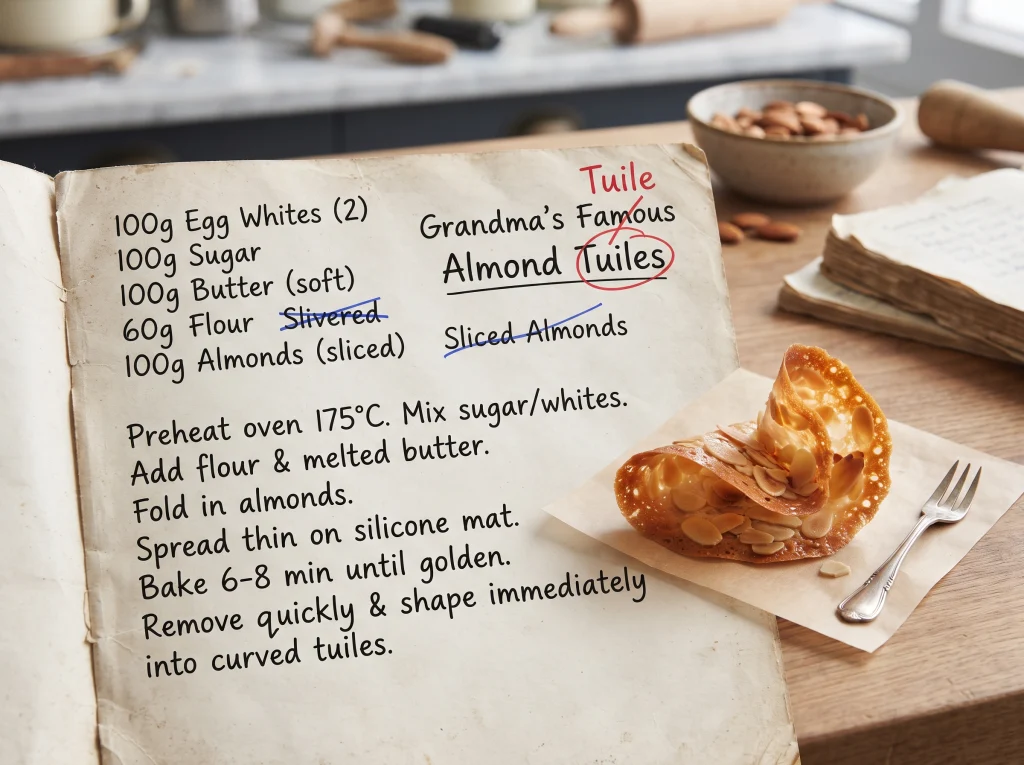
One of the most common mistakes is adding an extra l and writing tuille.
Mistake 1: Writing “Tuille”
Incorrect:
The chef prepared a chocolate tuille.
Correct:
The chef prepared a chocolate tuile.
Mistake 2: Assuming It Is an English Word
Because tuile is used in English, some people may assume that it follows ordinary English spelling patterns. It is actually a French culinary term that has been adopted into English usage.
Mistake 3: Changing the Spelling Based on Pronunciation
The pronunciation can make the spelling seem unfamiliar. However, writing the word according to how it sounds can lead to forms such as tuille or other incorrect variations.
The safest choice is to remember the standard spelling:
T-U-I-L-E
How to Remember the Spelling of Tuile
A simple way to remember tuile is to connect the word with its French meaning of tile.
Think:
Tuile = tile-like pastry
A traditional tuile can have a curved shape similar to a roof tile. This connection can make the spelling easier to remember.
You can also remember the spelling visually:
T U I L E
There is only one L.
So when you are choosing between tuille and tuile, remember:
Tuile has one L.

Is Tuile Used in American English?
Yes. Tuile is used in American English, particularly in culinary and baking contexts. Because it is a French loanword, it may appear more frequently in professional or specialized food writing than in everyday conversation.
You may encounter the term when reading restaurant menus, pastry recipes, culinary textbooks, and dessert descriptions.
The word does not need to be translated when referring to the specific pastry. Using tuile is appropriate in an English-language culinary context.
Is Tuile a Cookie or a Wafer?
A tuile can be described as a thin, crisp cookie or wafer. Its exact preparation and ingredients can vary.
Some tuiles are made with almonds or other nuts, while others are flavored with chocolate, citrus, spices, or other ingredients. Their thin structure allows them to become crisp during baking.
They are often used not only as cookies but also as decorative elements in plated desserts.
Tuille or Tuile: Final Answer
Tuile is the correct spelling.
Tuille is a common misspelling and should generally be avoided when referring to the French pastry.
If you are writing about this dessert in American English, use tuile for the singular and tuiles for the plural.
The easiest spelling rule to remember is simple:
Tuile has one L.

FAQs:
Conclusion
If you are choosing between tuille and tuile, the correct spelling is tuile. It is a French culinary term for a thin, crisp cookie or wafer, often used with desserts. The plural form is tuiles.
Remember that tuile has only one L. Keeping this simple spelling detail in mind can help you avoid the common mistake of writing tuille in recipes, menus, or other culinary writing.