Bored or Board? Meaning, Difference, and Correct Usage in American English
Bored and board are two different English words that sound the same in American English but have completely different meanings. This makes them easy to confuse, especially when writing.
Use bored when you are talking about a feeling of having little interest or nothing enjoyable to do. Use board when you mean a flat piece of material, a group that manages an organization, or the act of getting onto a bus, train, plane, or ship. Cambridge defines bored as feeling unhappy or uninterested because something is not interesting or because you have nothing to do.
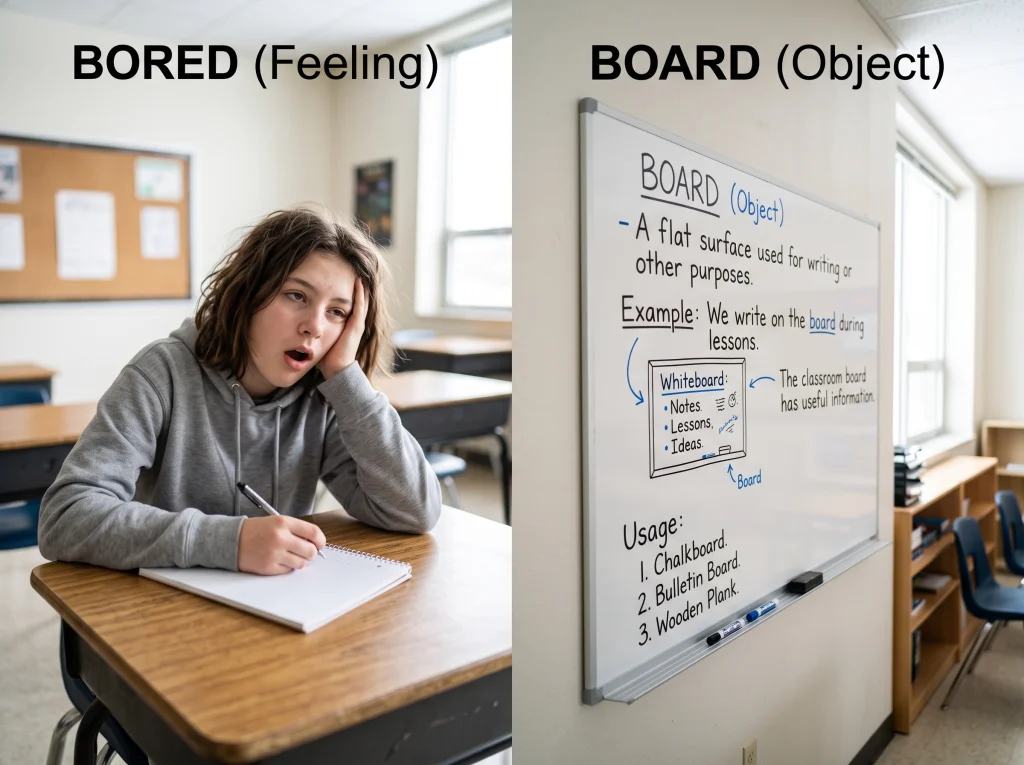
The quickest way to remember the difference is simple:
Bored = a feeling
Board = a thing, group, or action
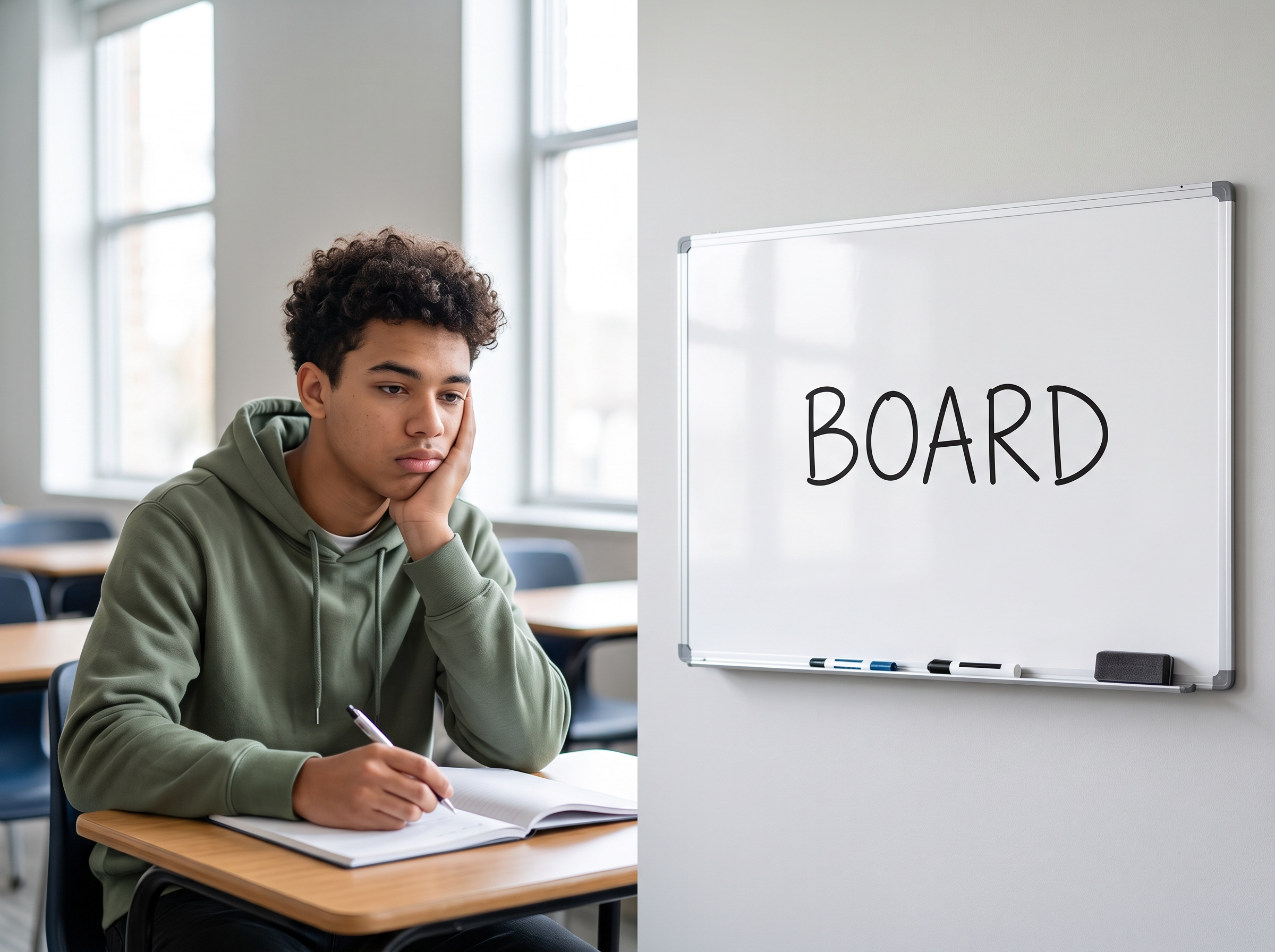
For example, you would write “I am bored”, not “I am board.” However, you would write “The teacher wrote on the board.”
Bored or Board: Which Word Is Correct?
Both bored and board are correct English words, but they are used in different situations.
| Word | Part of Speech | Meaning | Example |
|---|---|---|---|
| bored | Adjective | Feeling uninterested or tired because something is not engaging | I am bored at home. |
| board | Noun | A flat piece of material or a group of people managing something | The teacher wrote on the board. |
| board | Verb | To get onto a bus, train, plane, or ship | We will board the plane soon. |
These words are homophones, which means they have the same pronunciation but different meanings and spellings. Oxford lists board and bored as homophones.
The easiest rule
If you are describing how someone feels, use bored.
I was bored during the movie.
If you are talking about a physical board, organization, or transportation, use board.
She wrote her name on the board.
The board approved the proposal.
We boarded the flight at 7:30 p.m.
What Does Bored Mean?
Bored is an adjective that describes a person who is not interested, entertained, or mentally engaged. It can happen when someone has nothing to do or when an activity feels repetitive or uninteresting.
For example:
- I am bored because there is nothing to do.
- The students were bored during the long lecture.
- She gets bored when she stays home all weekend.
- We were bored waiting for the meeting to start.
The word bored comes from the verb bore, which means to make someone lose interest.
For example:
The long lecture bored the students.
The students became:
The students were bored.
This distinction is useful because bored describes the person’s reaction, while boring describes something that causes that reaction.
What Does Board Mean?
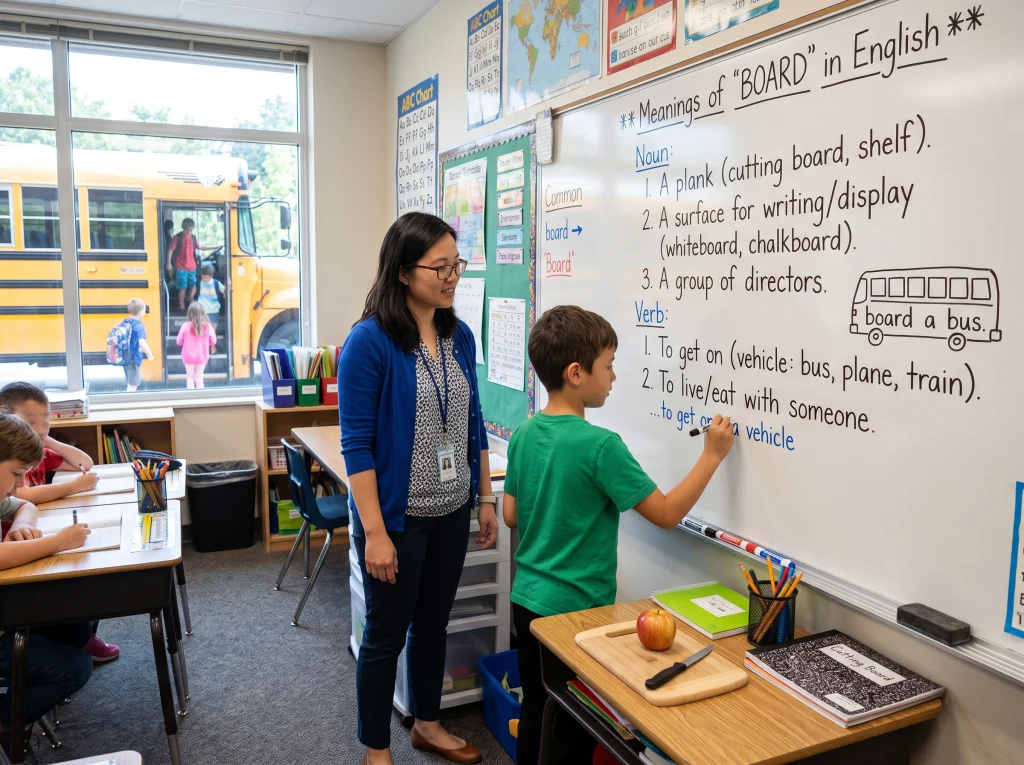
Board has several meanings in American English.
Board as a physical object
A board can be a flat, rigid piece of wood or another material.
Examples include:
- wooden board
- cutting board
- bulletin board
- whiteboard
- scoreboard
- game board
For example:
He placed the vegetables on the cutting board.
The teacher wrote the instructions on the whiteboard.
Board as a group of people
A board can also mean a group of people responsible for managing or overseeing an organization.
For example:
The board approved the new budget.
She serves on the school board.
The board of directors held a meeting on Monday.
Board as a verb
As a verb, board means to get onto a form of transportation such as a plane, train, bus, or ship. Oxford gives examples such as boarding a plane, bus, train, or ship.
For example:
Passengers should board the plane at Gate 12.
We boarded the train in Chicago.
They are waiting to board the bus.
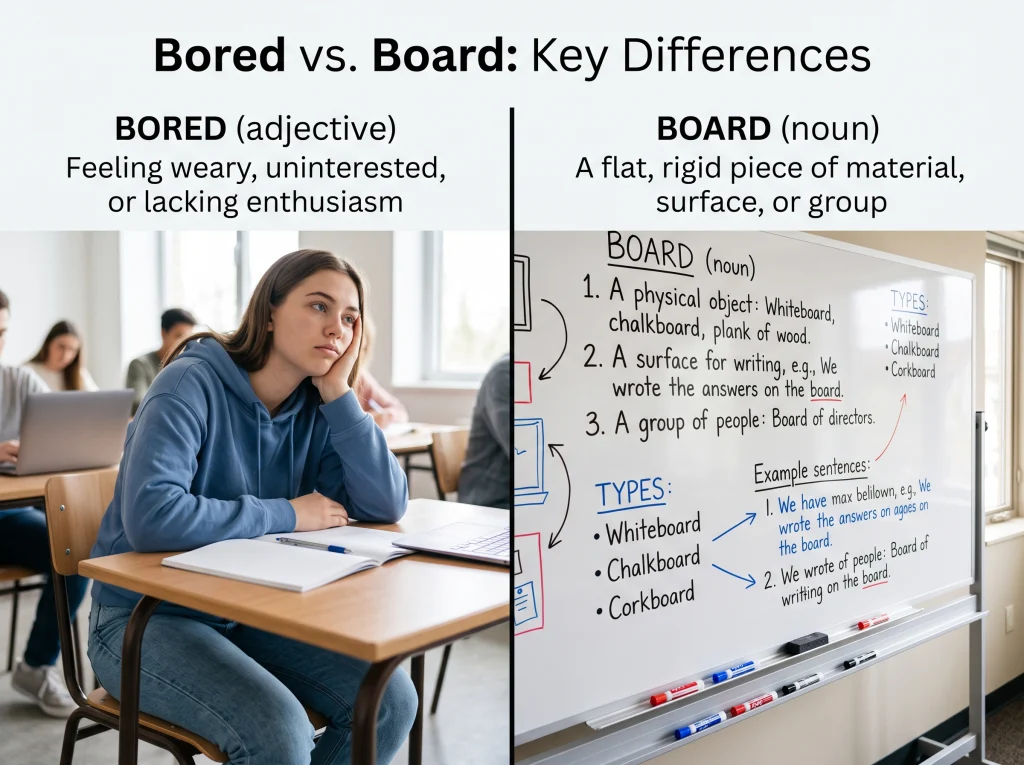
Bored vs. Board: Key Differences
The meanings become much easier to understand when you compare them directly.
| Bored | Board |
|---|---|
| Describes a feeling | Can describe an object, group, or action |
| Usually an adjective | Usually a noun or verb |
| Means uninterested or lacking stimulation | Can mean a flat surface or a management group |
| Related to bore | Related to several different meanings |
| I am bored. | Write it on the board. |
| She looks bored. | The board voted today. |
Consider these two sentences:
I am bored in this class.
I wrote my answer on the board.
The first sentence describes a feeling. The second refers to a physical surface.
Bored and Board Pronunciation
In standard American English, bored and board are pronounced alike or extremely similarly in ordinary speech. Cambridge gives the American pronunciation of bored as /bɔrd/ or /boʊrd/, while Oxford identifies board and bored as homophones.
Because you usually cannot tell the words apart by hearing them, spelling and context are especially important.
For example, if someone says:
“I am bored.”
You know from the sentence that the person is describing a feeling.
But if someone says:
“The board is in the classroom.”
The context tells you that board is being used as a noun.
Bored in Common American English Sentences
Here are some natural examples using bored:
- I was bored during the long meeting.
- The kids were bored because it was raining outside.
- She gets bored when she has nothing to do.
- He looked bored during the presentation.
- We were bored after watching the same movie twice.
- I am bored with doing the same thing every day.
- They became bored while waiting for the game to start.
- My dog seems bored when I am away all day.
- She was bored at home, so she called her friend.
- The students looked bored after three hours of class.
The common pattern is that bored describes the person or animal experiencing the feeling.
Board in Common American English Sentences
Here are examples showing different uses of board:
- The teacher wrote the answer on the board.
- Please put the notice on the bulletin board.
- He cut the vegetables on a wooden board.
- The school board approved the proposal.
- The board of directors met yesterday.
- We need to board the plane by 8:15.
- Passengers are beginning to board the train.
- She boarded the bus downtown.
- The children played a board game after dinner.
- The company board voted on the new policy.
Notice how board can refer to an object, a group, or an action.
Bored vs. Boring
Another common mistake is confusing bored with boring.
The difference is:
Bored describes the person who feels uninterested.
Boring describes the thing that causes the feeling.
Compare:
I am bored.
The movie is boring.
She was bored during the lecture.
The lecture was boring.
You normally would not say:
The movie is bored.
A movie cannot experience boredom. The person watching it can become bored.
A useful pattern is:
The thing is boring. The person is bored.
For example:
The class was boring, so the students became bored.
Common Mistakes With Bored and Board
Because these words sound alike, spelling mistakes are common.
Mistake 1: Writing “board” for a feeling
Incorrect:
I am board today.
Correct:
I am bored today.
The speaker is describing a feeling, so bored is correct.
Mistake 2: Writing “bored” for a physical surface
Incorrect:
Write your answer on the bored.
Correct:
Write your answer on the board.
The word refers to a writing surface, so board is correct.
Mistake 3: Confusing “board” with “bored” when talking about transportation
Incorrect:
We bored the plane at 6 p.m.
Correct:
We boarded the plane at 6 p.m.
The verb is board, with the past tense boarded.
Mistake 4: Confusing “bored” and “boring”
Incorrect:
The students were boring during the lecture.
If you mean the students lost interest, the better sentence is:
The students were bored during the lecture.
If the students themselves were causing other people to lose interest, then boring could be appropriate.
How to Remember Bored vs. Board
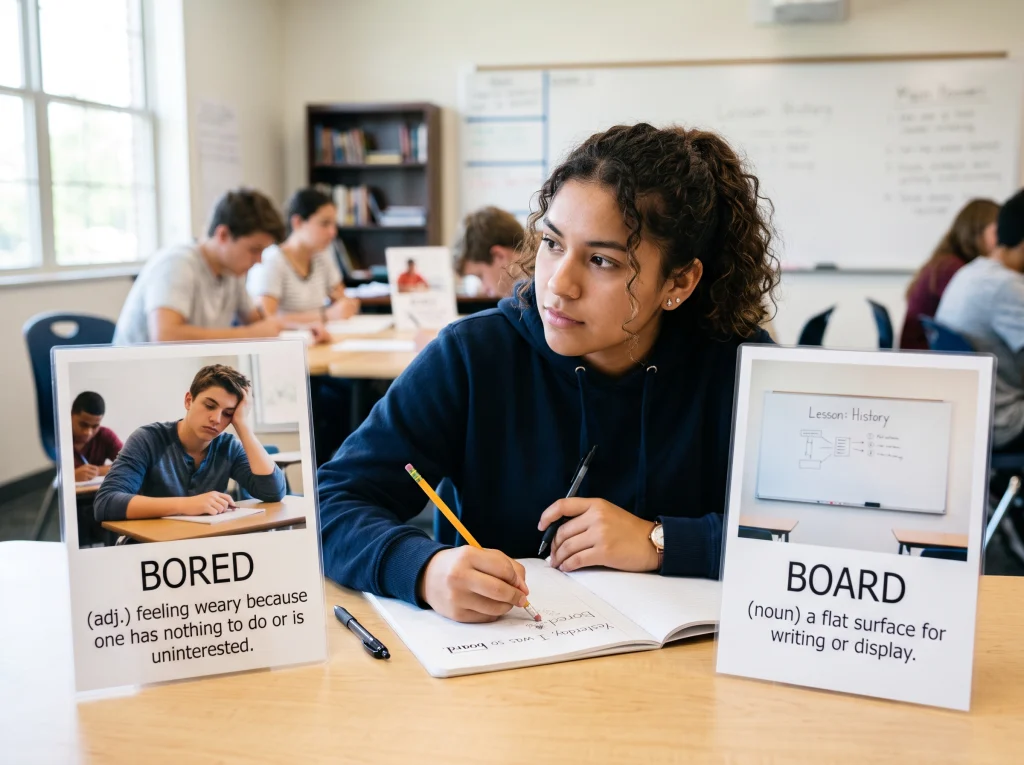
A simple memory trick can help.
Think of bored as a word connected with a feeling.
I am bored.
She feels bored.
They became bored.
Think of board as something you can often see or use.
A wooden board
A whiteboard
A school board
A board game
Board a plane
Another useful clue is the sentence structure. If the word comes after am, is, are, was, were, feel, seem, look, or become and describes someone’s state, bored is often the right choice.
For example:
He looks bored.
We were bored.
She became bored.
If the word refers to a surface, organization, or transportation action, choose board.
Bored or Board: Quick Answer
Bored is an adjective meaning uninterested or tired because something is not interesting or because you have nothing to do.
Board can be a noun meaning a flat piece of material or a group of people, or a verb meaning to get onto a bus, train, plane, or ship.
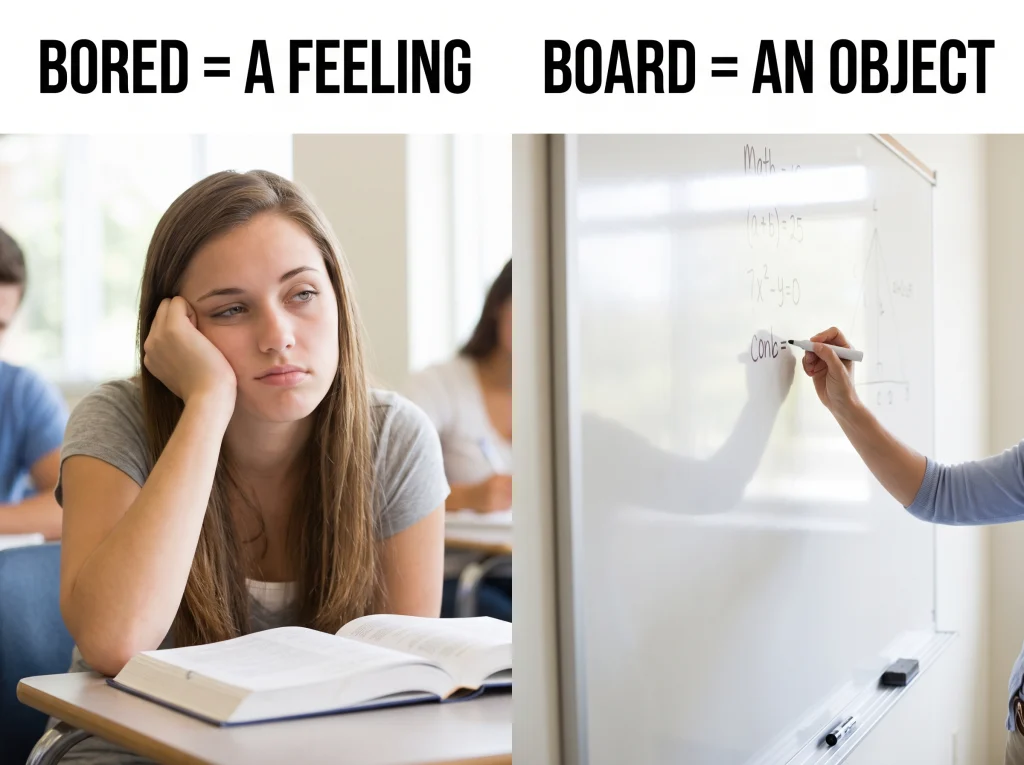
So remember:
I am bored.
Write it on the board.
The board approved the plan.
We boarded the plane.
Although bored and board sound the same, their meanings and grammatical uses are different. Once you connect bored with a feeling and board with an object, group, or transportation action, choosing the correct spelling becomes much easier.
FAQs:
Conclusion
Knowing the difference between bored and board can make your English writing much clearer. Although the two words sound the same in American English, they have completely different meanings. Use bored when you are talking about a feeling of having little interest or nothing enjoyable to do. Use board when you mean a flat surface, a group of people who manage an organization, or the action of getting onto a bus, train, or plane.