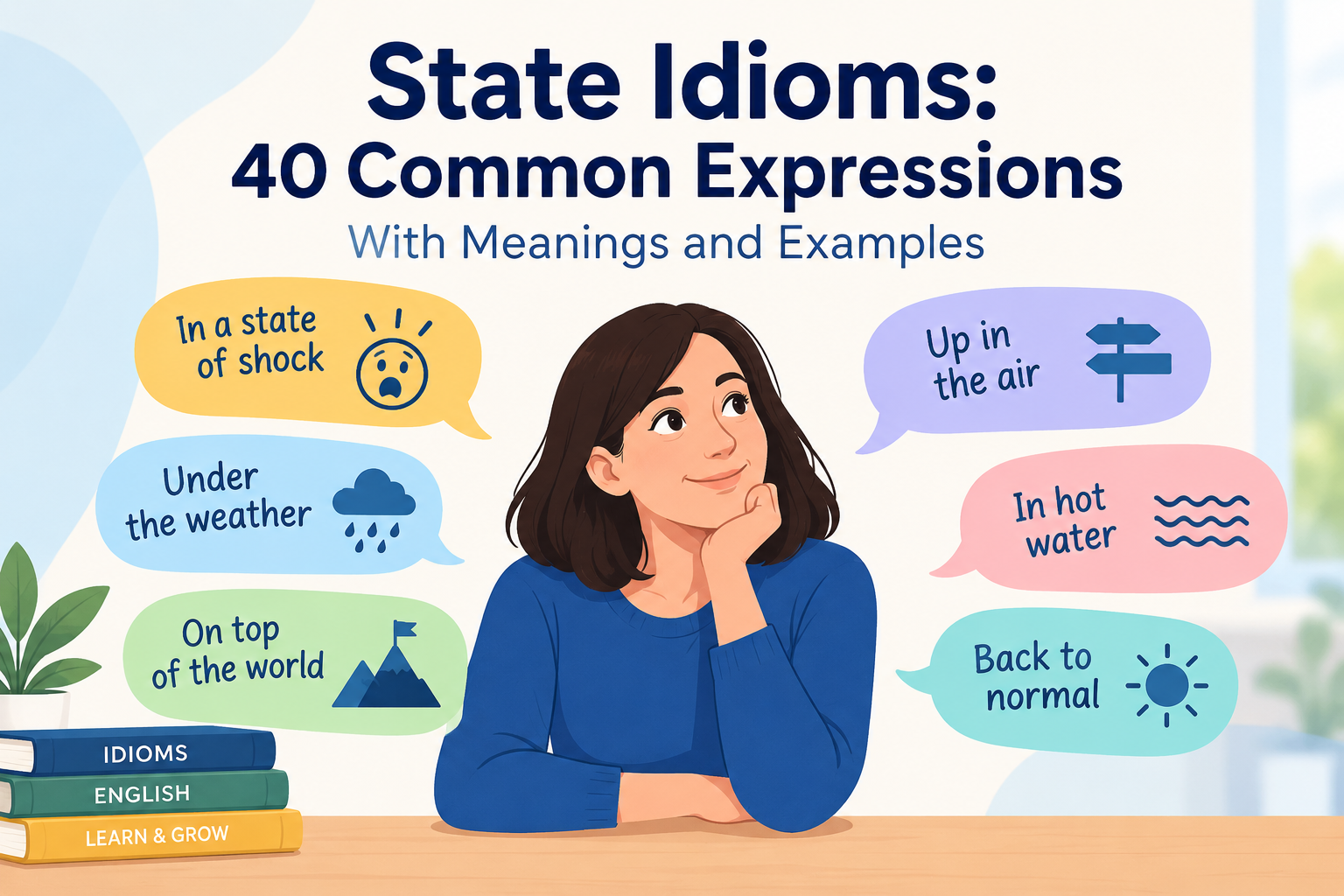
State Idioms: 40 Common Expressions About States and Situations
English has many expressions that describe a person’s condition, emotions, circumstances, or the way something currently exists. Many of these expressions use the idea of a state, even when the word state itself does not appear in the idiom.
For example, someone can be in a state of shock, in a state of confusion, or in a sorry state. These expressions help speakers describe situations in a more natural and expressive way than simple literal language.
In American English, state-related idioms appear in everyday conversations, workplace discussions, news reports, stories, and informal writing. Understanding them can make English easier to follow and help you sound more natural when describing conditions or circumstances.
What Are State Idioms?
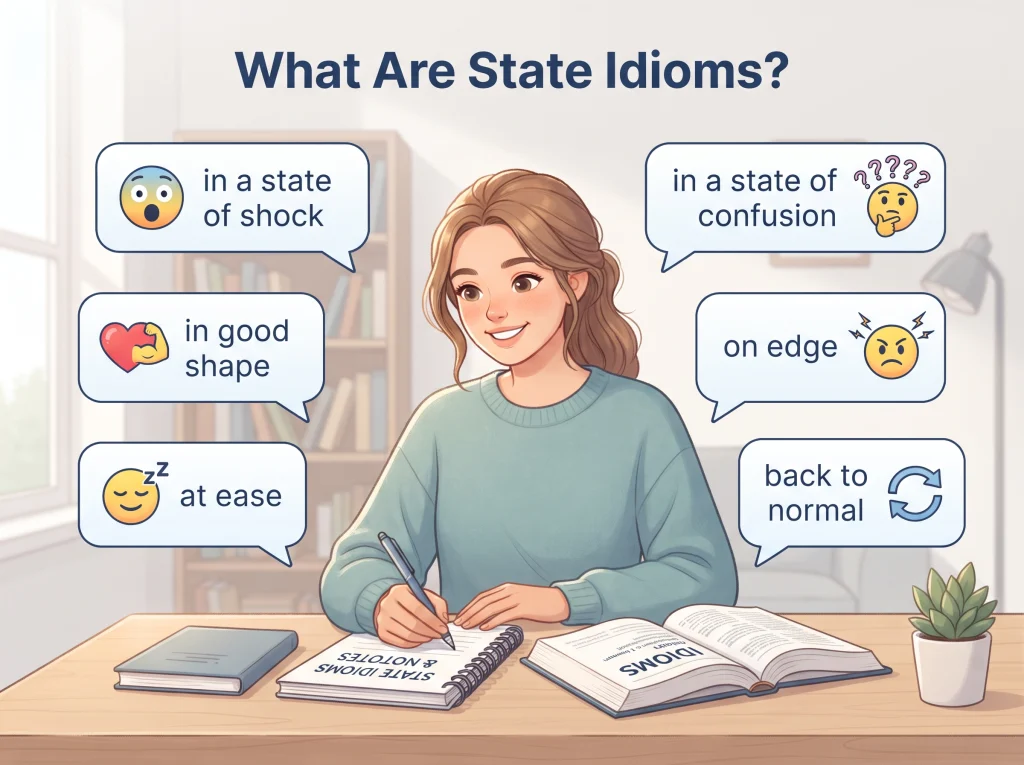
State idioms are expressions that describe a person’s condition, emotional situation, physical condition, circumstances, or the condition of something. Some contain the word state, while others express the same general idea without using it.
For example:
- In a state of shock means extremely surprised or emotionally affected.
- In a state of confusion means unable to think or understand clearly.
- In good shape means in good condition.
- In bad shape means in poor condition.
- Back to normal means returned to the usual condition.
These expressions are often more vivid and natural than literal descriptions.
40 Common State Idioms and Expressions
| Idiom or Expression | Meaning |
|---|---|
| In a state of shock | Extremely surprised or emotionally affected |
| In a state of confusion | Unable to think or understand clearly |
| In a state of panic | Very frightened or anxious |
| In a state of denial | Refusing to accept an unpleasant truth |
| In a state of disbelief | Unable to believe something |
| In a sorry state | In very poor condition |
| In good shape | In good condition |
| In bad shape | In poor condition |
| In top shape | In excellent condition |
| In no shape to | Not physically or mentally able to do something |
| In a state | Very upset or distressed |
| State of mind | A person’s current mental or emotional condition |
| State of affairs | The current situation |
| State of play | The current situation or progress |
| State of emergency | A serious situation requiring special action |
| In the same boat | In the same difficult situation |
| In hot water | In trouble |
| In deep water | In serious trouble |
| Out of sorts | Feeling unhappy, unwell, or unlike oneself |
| Under the weather | Feeling slightly sick |
| At ease | Relaxed and comfortable |
| On edge | Nervous or tense |
| At peace | Calm and free from worry |
| Beside oneself | Extremely upset or excited |
| On top of the world | Extremely happy |
| Down in the dumps | Feeling sad or discouraged |
| In high spirits | Very happy and enthusiastic |
| In low spirits | Feeling unhappy or discouraged |
| Back to normal | Returned to the usual condition |
| In transition | Going through a period of change |
| In flux | Constantly changing |
| Up in the air | Not yet decided or settled |
| At a standstill | Not making progress |
| In full swing | Happening with great activity |
| In effect | Currently operating or being applied |
| In force | Officially active or valid |
| Under control | Being successfully managed |
| Out of control | No longer being successfully managed |
| In working order | Functioning properly |
| Worse for wear | Damaged, tired, or worn after use |
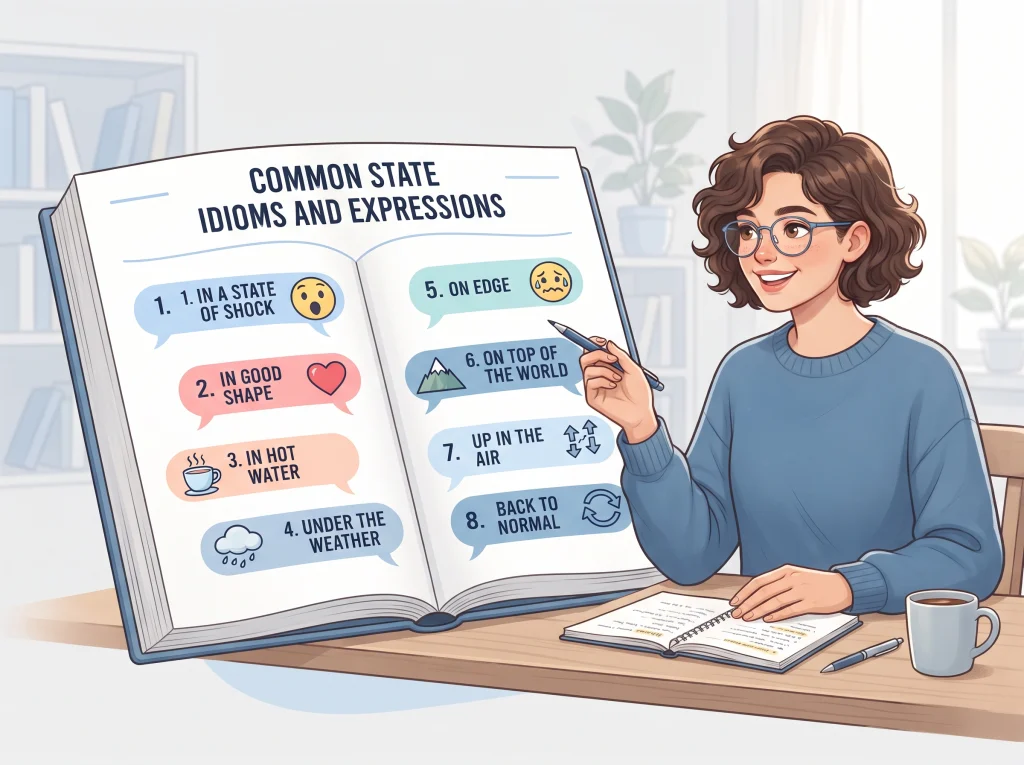
1. In a State of Shock
Meaning: To be extremely surprised, upset, or emotionally affected by something.
Example:
Everyone was in a state of shock after hearing the unexpected news.
2. In a State of Confusion
Meaning: To be unable to think clearly or understand what is happening.
Example:
I was in a state of confusion after receiving three different instructions.
3. In a State of Panic
Meaning: To be extremely frightened or anxious.
Example:
The crowd was in a state of panic when the alarm went off.
4. In a State of Denial
Meaning: To refuse to accept something that is true or happening.
Example:
He was still in a state of denial about losing his job.
5. In a State of Disbelief
Meaning: To be unable to believe that something has happened.
Example:
She sat there in a state of disbelief after winning the competition.
6. In a Sorry State
Meaning: To be in very poor condition.
Example:
The old house was in a sorry state after years of neglect.
7. In Good Shape
Meaning: To be in good physical condition or good overall condition.
Example:
The car is ten years old, but it is still in good shape.
8. In Bad Shape
Meaning: To be in poor condition.
Example:
The roof is in bad shape and needs to be repaired.
9. In Top Shape
Meaning: To be in excellent condition, especially physically.
Example:
She has been exercising regularly and is in top shape for the race.
10. In No Shape to
Meaning: To be physically or mentally unable to do something.
Example:
After working all night, I was in no shape to drive home.
11. In a State
Meaning: To be very upset, worried, or distressed.
Example:
She was in a state after realizing she had lost her phone.
12. State of Mind
Meaning: A person’s current mental or emotional condition.
Example:
Your state of mind can affect how you respond to stressful situations.
13. State of Affairs
Meaning: The current situation, especially when discussing a complicated or unsatisfactory condition.
Example:
The company is trying to improve its financial state of affairs.
14. State of Play
Meaning: The current situation or the amount of progress that has been made.
Example:
The manager explained the state of play before the meeting began.
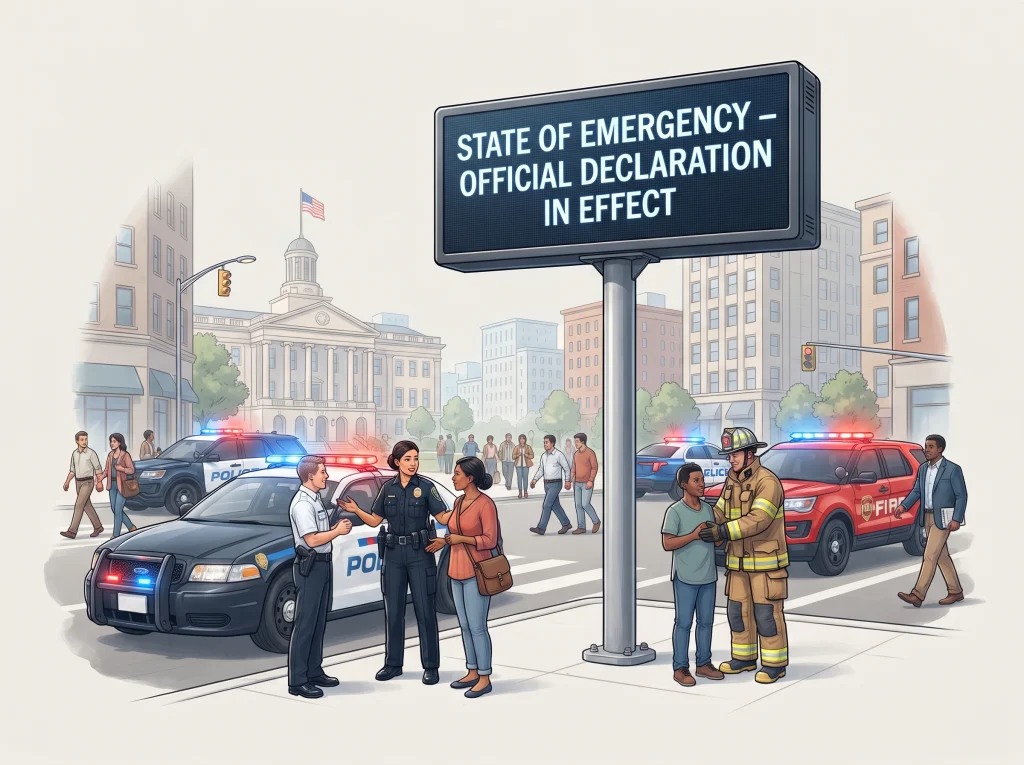
15. State of Emergency
Meaning: An officially recognized serious situation that requires special action.
Example:
The governor declared a state of emergency after the severe storm.
16. In the Same Boat
Meaning: To be in the same difficult or challenging situation as someone else.
Example:
Don’t worry about being behind. We’re all in the same boat.
17. In Hot Water
Meaning: To be in trouble.
Example:
He was in hot water after missing an important deadline.
18. In Deep Water
Meaning: To be in serious trouble or a difficult situation.
Example:
The company could be in deep water if it cannot pay its debts.
19. Out of Sorts
Meaning: Feeling slightly sick, unhappy, or unlike your normal self.
Example:
I’m feeling out of sorts today, so I may go home early.
20. Under the Weather
Meaning: Feeling slightly ill or unwell.
Example:
I’m a little under the weather, so I’ll stay home tonight.
21. At Ease
Meaning: Relaxed, comfortable, and free from worry.
Example:
The friendly conversation helped everyone feel at ease.
22. On Edge
Meaning: Nervous, worried, or tense.
Example:
Everyone was on edge while waiting for the test results.
23. At Peace
Meaning: Calm and free from worry or conflict.
Example:
After talking things through, she finally felt at peace.
24. Beside Oneself
Meaning: Extremely upset, worried, angry, or excited.
Example:
His parents were beside themselves with worry when he didn’t come home.
25. On Top of the World
Meaning: Extremely happy or pleased.
Example:
After getting the promotion, Maria felt on top of the world.
26. Down in the Dumps
Meaning: Feeling sad, discouraged, or unhappy.
Example:
He has been down in the dumps since his team lost the championship.
27. In High Spirits
Meaning: Very happy, cheerful, and enthusiastic.
Example:
The students were in high spirits on the last day of school.
28. In Low Spirits
Meaning: Feeling sad, discouraged, or unhappy.
Example:
She was in low spirits after hearing the disappointing news.
29. Back to Normal
Meaning: Returned to the usual condition after a problem or unusual event.
Example:
After the power was restored, everything was back to normal.
30. In Transition
Meaning: Going through a period of change from one condition or stage to another.
Example:
The company is in transition after changing its leadership.
31. In Flux
Meaning: Constantly changing and not yet settled.
Example:
The plans are still in flux, so we don’t have a final schedule.
32. Up in the Air
Meaning: Not yet decided, settled, or certain.
Example:
Our vacation plans are still up in the air.
33. At a Standstill
Meaning: Completely stopped or making no progress.
Example:
Negotiations have been at a standstill for several weeks.
34. In Full Swing
Meaning: Happening with a lot of activity and energy.
Example:
By noon, the festival was in full swing.
35. In Effect
Meaning: Currently operating or being applied.
Example:
The new parking rules are now in effect.
36. In Force
Meaning: Officially active, valid, or legally applicable.
Example:
The new regulations remain in force until the end of the year.
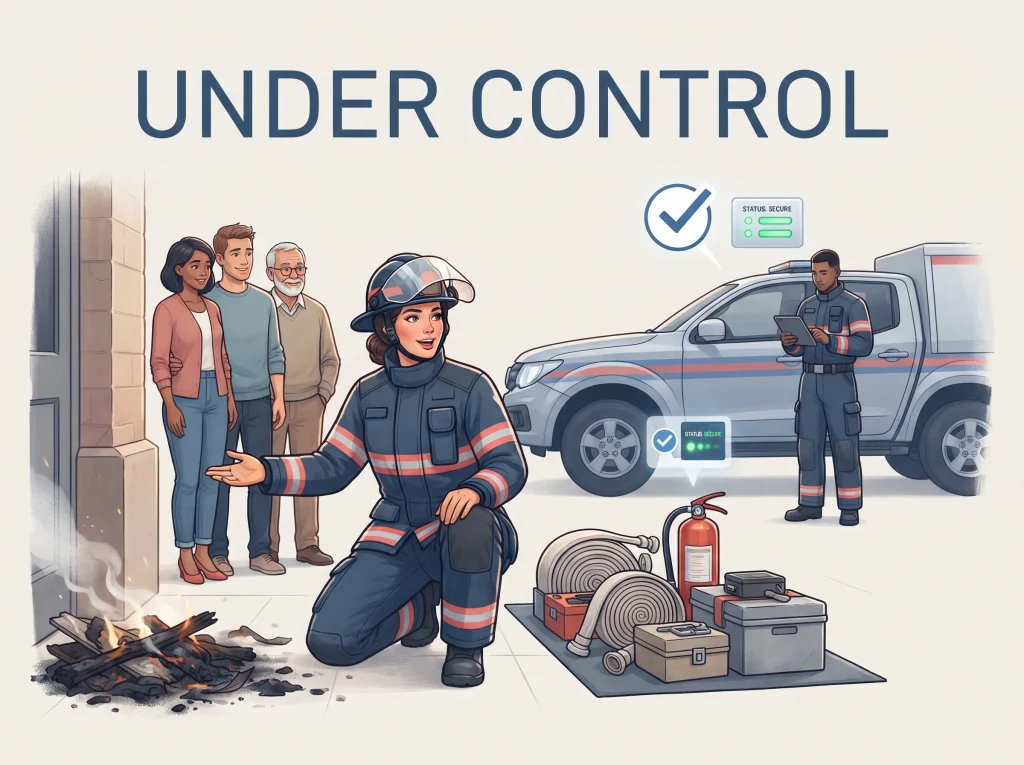
37. Under Control
Meaning: Being successfully managed or kept within acceptable limits.
Example:
The firefighters said the situation was finally under control.
38. Out of Control
Meaning: No longer manageable or properly controlled.
Example:
The crowd became difficult to manage when the concert ended.
39. In Working Order
Meaning: Functioning properly.
Example:
Before the trip, make sure the emergency equipment is in working order.
40. Worse for Wear
Meaning: Tired, damaged, or worn after heavy use or a difficult experience.
Example:
After the long road trip, the old car looked worse for wear.
State Idioms About a Person’s Mental or Emotional Condition
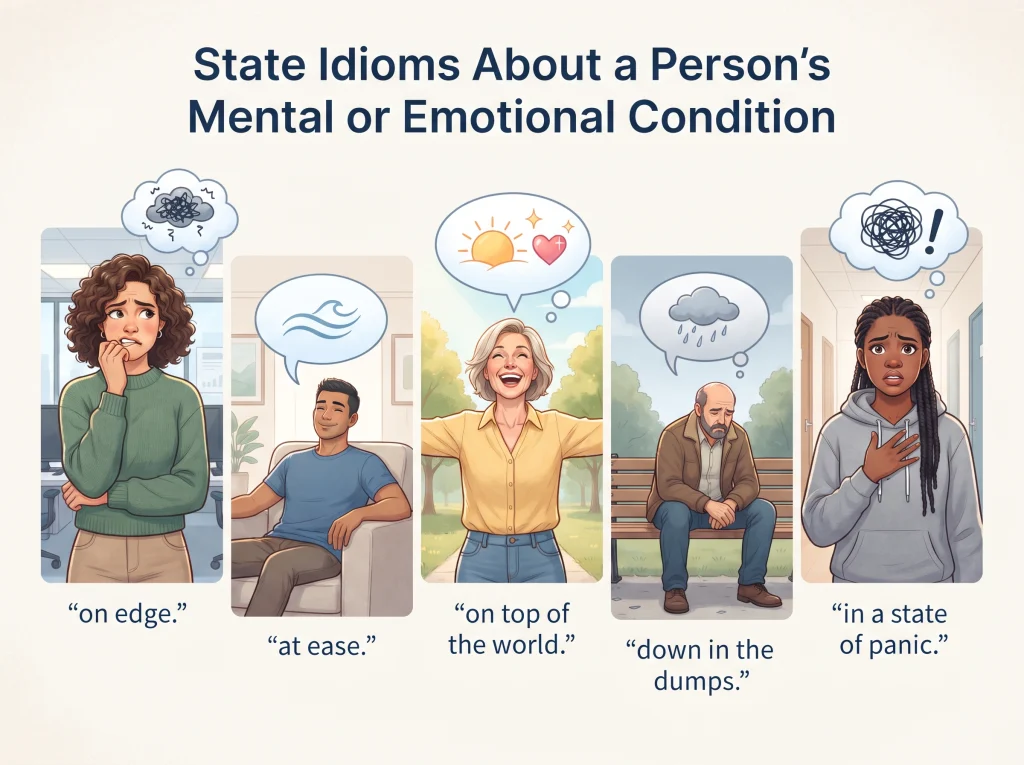
Many state idioms describe how someone feels mentally or emotionally. Expressions such as in a state of panic, on edge, at ease, and in high spirits provide more detail than simply saying someone is happy, nervous, or upset.
Compare these examples:
Simple:
She was nervous.
More expressive:
She was on edge while waiting for the interview.
Simple:
He was very happy.
More expressive:
He was on top of the world after receiving the award.
These expressions are especially useful in conversations, storytelling, and informal American English.
State Idioms About Situations and Conditions
State-related expressions can also describe situations rather than people. State of affairs, state of play, in flux, up in the air, and at a standstill are useful when discussing projects, businesses, plans, negotiations, and other circumstances.
For example:
The project is still in flux, so the final details have not been approved.
Or:
The negotiations are at a standstill because neither side will compromise.
These expressions are common in workplace conversations and news-style language.
State Idioms About Change
Some expressions describe movement from one condition to another. Back to normal, in transition, and in full swing are useful when talking about changes, activities, and progress.
For example:
After the repairs, the office was back to normal.
The organization is in transition after merging with another company.
By Friday evening, the celebration was in full swing.
The exact meaning depends on the situation, so learning these expressions in complete sentences is more useful than memorizing isolated definitions.
How to Use State Idioms Naturally in American English
The best way to use state idioms is to connect them with situations where Americans would naturally use them.
Use under the weather for a mild illness:
I’m feeling a little under the weather today.
Use on edge for nervousness or tension:
Everyone was on edge before the announcement.
Use up in the air when a decision has not been made:
Our plans for Saturday are still up in the air.
Use in good shape when talking about condition:
The house is old, but it’s still in good shape.
Use in full swing when an event or activity is very active:
The party was in full swing when we arrived.
Context matters because some state expressions are casual, while others are more formal. For example, under the weather is common in everyday conversation, while state of affairs is more likely to appear in formal discussions or writing.

Common Mistakes With State Idioms
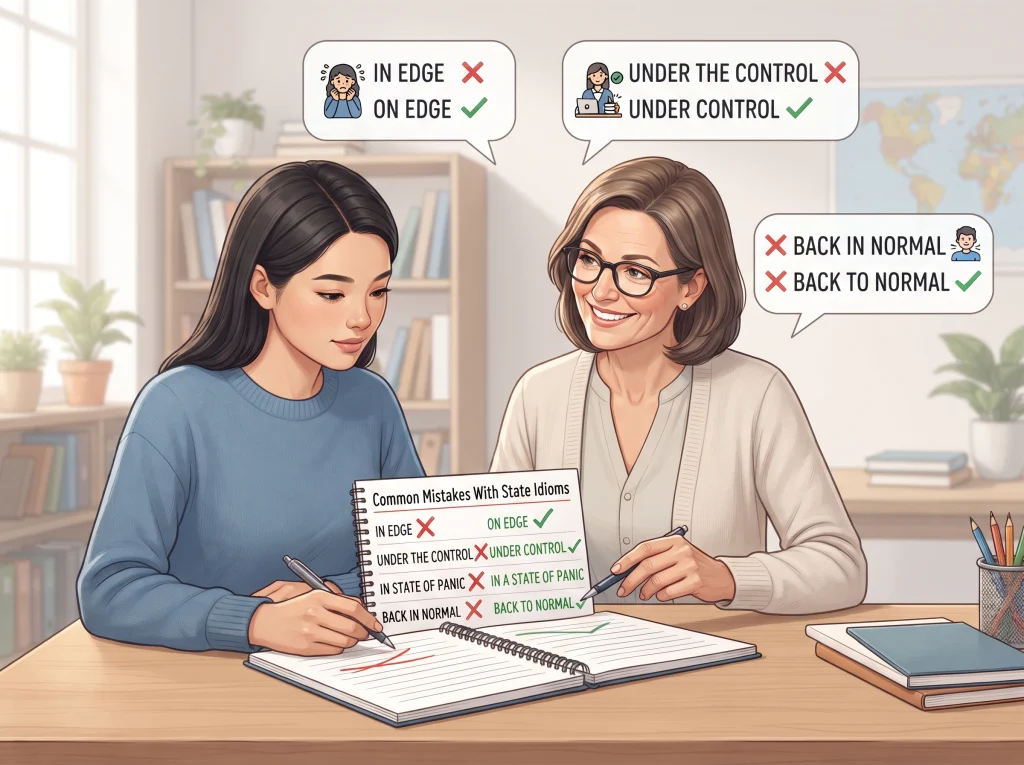
One common mistake is changing an idiom’s wording. Idioms usually have fixed or relatively fixed forms, so changing a word can make the expression sound unnatural.
For example, say:
The project is up in the air.
Not:
The project is up in the sky.
Another mistake is using an idiom without understanding its emotional meaning. In hot water does not literally mean being in hot water. It means being in trouble.
It is also important to consider formality. Expressions such as under the weather, in hot water, and down in the dumps are natural in casual conversation. More formal expressions such as state of affairs, in effect, and in force are better suited to professional, legal, governmental, or formal contexts.
Frequently Asked Questions:
Conclusion
State idioms give American English speakers many ways to describe conditions, emotions, situations, and changes. Expressions such as in a state of shock, in good shape, on edge, under the weather, up in the air, and back to normal can make everyday communication more natural and expressive.