Renovate or Rebuild? Cost, Benefits, and How to Decide
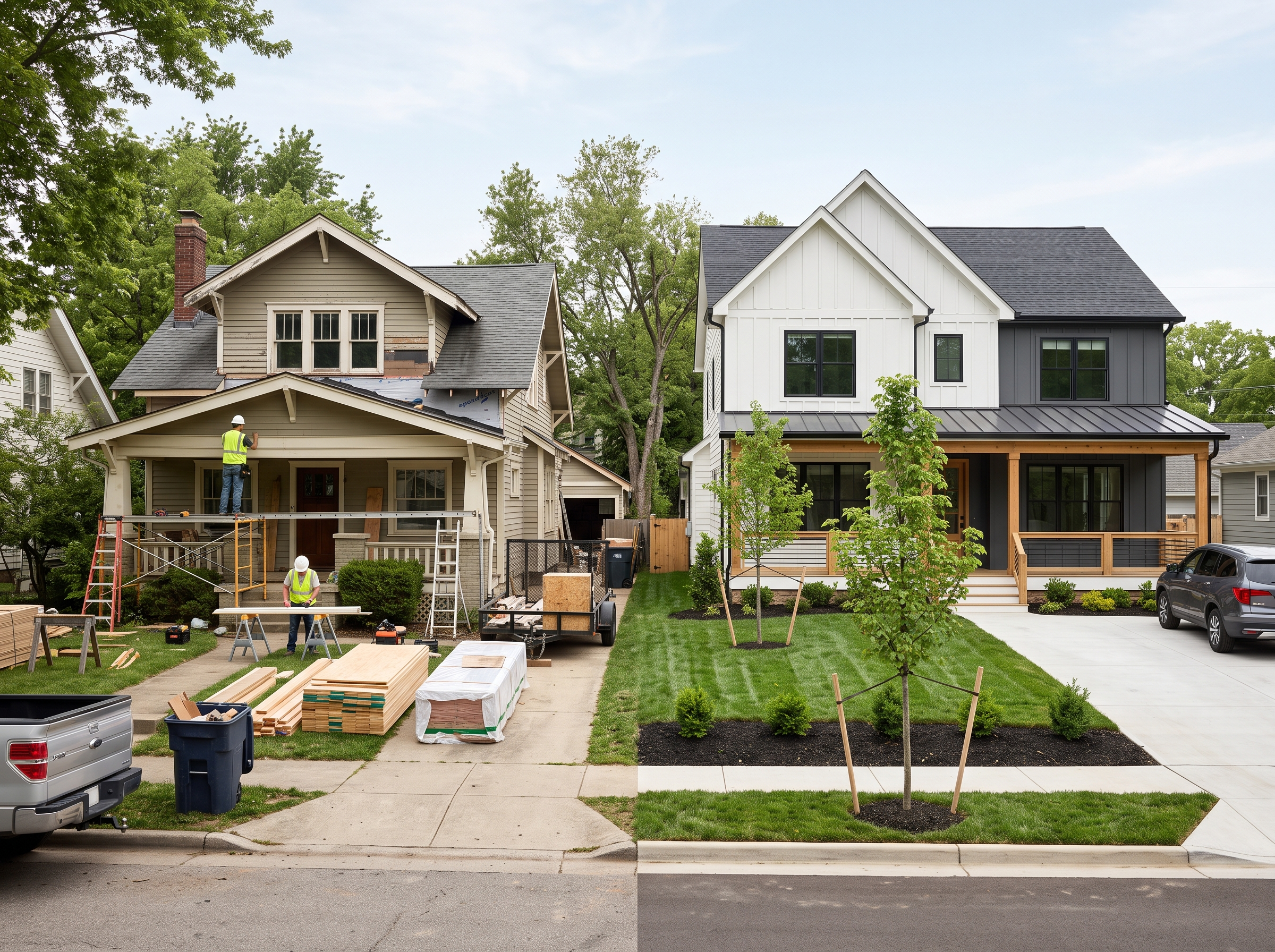
Deciding whether to renovate or rebuild a house can affect your budget, living arrangements, property value, and long-term plans. Renovation allows you to improve an existing home while keeping much of its original structure. Rebuilding involves demolishing some or all of the existing house and constructing a new one, often with a different layout and updated building systems.
The right choice depends on the home’s structural condition, the scope of work, local construction costs, zoning restrictions, and your goals for the property. A house that needs a new kitchen, updated bathrooms, or better insulation may be a good candidate for renovation. A home with serious structural problems, an unsuitable layout, or extensive deterioration may justify a closer look at rebuilding.
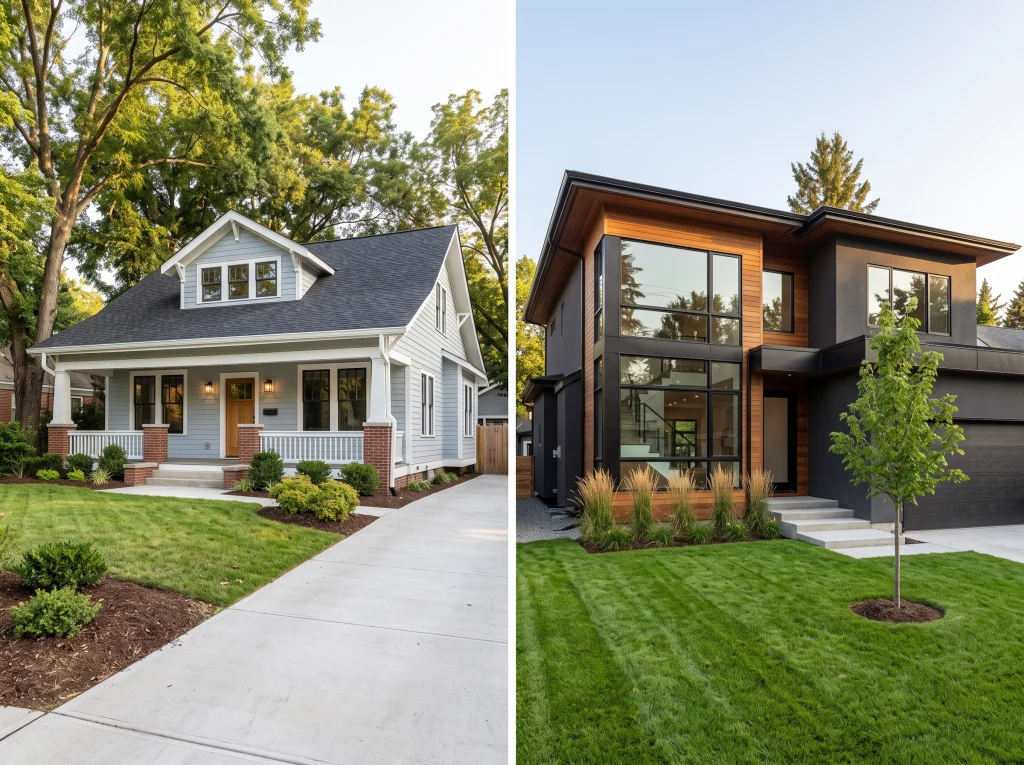
Before committing to either option, compare the total project costs, not just the initial construction estimate. Permits, temporary housing, demolition, utility work, and unexpected repairs can significantly affect the final budget. Understanding these factors will help you decide whether renovating or rebuilding offers the better long-term value.
Renovate or Rebuild: What Is the Difference?
Renovating means improving or changing an existing home, while rebuilding means replacing much or all of the existing structure with a newly constructed house. Renovation can range from cosmetic updates to major structural work. Rebuilding generally provides more freedom to redesign the home’s layout, systems, and features.
For example, renovating might involve replacing kitchen cabinets, remodeling bathrooms, repairing the roof, or converting an unfinished basement into usable space. A more extensive renovation could include removing interior walls, replacing plumbing, or updating electrical wiring.
Rebuilding may involve demolishing the old house and constructing a new one on the same lot. In some projects, homeowners retain part of the existing structure, but the feasibility and legal classification of that work depend on local building rules.
The main distinction is how much of the existing home can be retained and whether its current structure can support the improvements you want.
Renovating vs. Rebuilding: Key Differences
The following comparison highlights the major considerations when deciding between renovation and new construction.
| Factor | Renovating a House | Rebuilding a House |
|---|---|---|
| Existing structure | Retains some or most of the house | Replaces much or all of the structure |
| Initial cost | Often lower for limited improvements | Usually higher because of demolition and new construction |
| Design flexibility | Limited by the existing layout and structure | Greater freedom to design the layout |
| Construction timeline | Often shorter for smaller projects | Usually longer due to demolition and construction |
| Unexpected problems | Hidden damage may increase costs | Site conditions and construction changes may increase costs |
| Energy efficiency | Can improve through targeted upgrades | Easier to integrate modern systems throughout |
| Building codes | Requirements depend on the work and local rules | New construction generally must meet applicable current requirements |
| Historical features | Can preserve original architectural details | May lose features that cannot be economically reproduced |
| Living arrangements | Occupancy may be possible for some projects | Temporary housing is often necessary |
| Best suited for | Homes with a sound structure and workable layout | Homes needing extensive changes or major structural replacement |
Neither option is automatically cheaper or better. A modest renovation can be far more economical than rebuilding, but an extensive renovation with substantial structural repairs may cost enough to make new construction worth considering.
When Renovating a House Makes More Sense
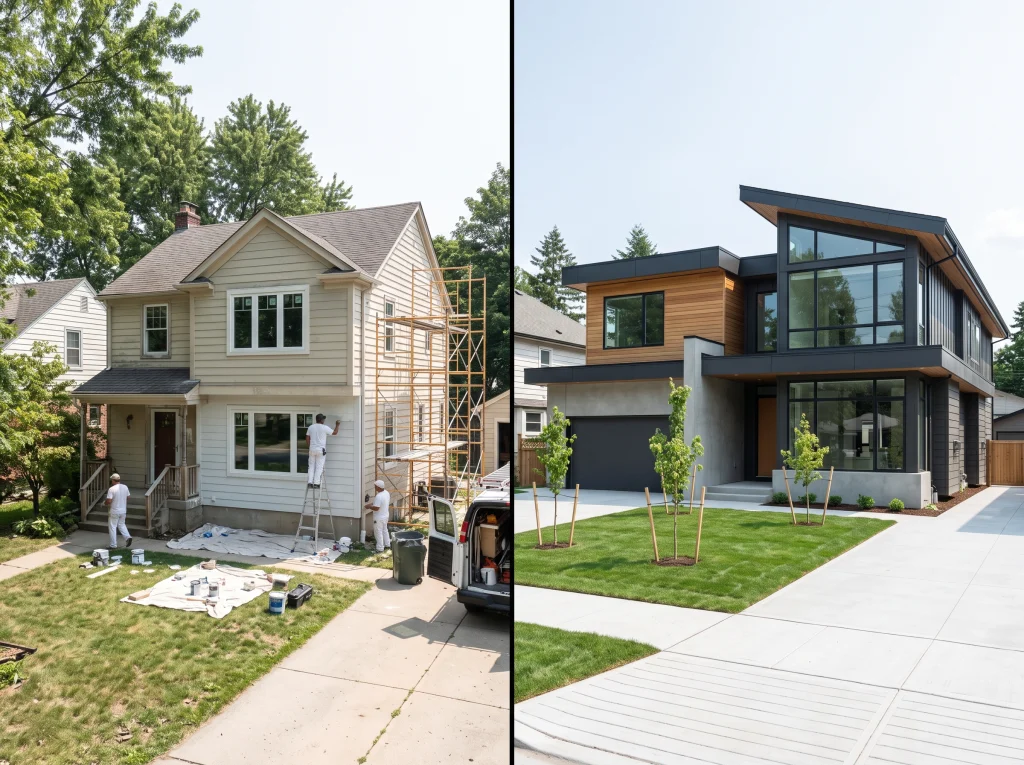
Renovation is often the better choice when the home’s foundation, framing, and overall structure are in good condition. If the house already has a suitable layout and the main problems involve outdated finishes, aging equipment, or limited functionality, targeted improvements can provide meaningful benefits without the expense of starting over.
1. The Structure Is in Good Condition
A solid foundation, stable framing, and a roof structure that can be repaired or retained are valuable starting points. If an inspection confirms that these components are sound, you may be able to direct more of your budget toward the improvements that matter most.
Before beginning major work, ask a qualified home inspector or structural engineer to investigate visible foundation cracks, sagging floors, water damage, and other warning signs. A professional assessment can help distinguish routine repairs from problems that could make renovation much more expensive.
2. You Want to Modernize Specific Areas
Renovation works well when you are satisfied with most of your home but want to improve particular rooms or features. Updating a kitchen, replacing bathroom fixtures, improving lighting, refinishing floors, or adding insulation can make the house more comfortable without requiring complete demolition.
You can also renovate in stages if your budget allows. For example, you might replace an aging HVAC system first, remodel the kitchen later, and improve the exterior after that. However, plan the sequence carefully so new work does not need to be removed or repeated during a later project.
3. You Want to Preserve the Home’s Character
Older houses may have original woodwork, distinctive windows, hardwood floors, or architectural details that are difficult or expensive to reproduce. Renovating allows you to retain these features while improving comfort and functionality.
This can be particularly important for historic homes and properties in neighborhoods with architectural preservation requirements. Before making major changes, check whether the property is subject to historic-district rules or other preservation restrictions.
4. You Need to Control Upfront Spending
A limited renovation generally requires less initial investment than demolishing and rebuilding an entire house. Keeping usable walls, foundations, utility connections, and other existing components can reduce the amount of new construction required.
Renovation is not necessarily inexpensive, though. Replacing several major systems, correcting structural damage, and remodeling every room can turn a seemingly affordable project into a major investment.
When Rebuilding Is the Better Choice
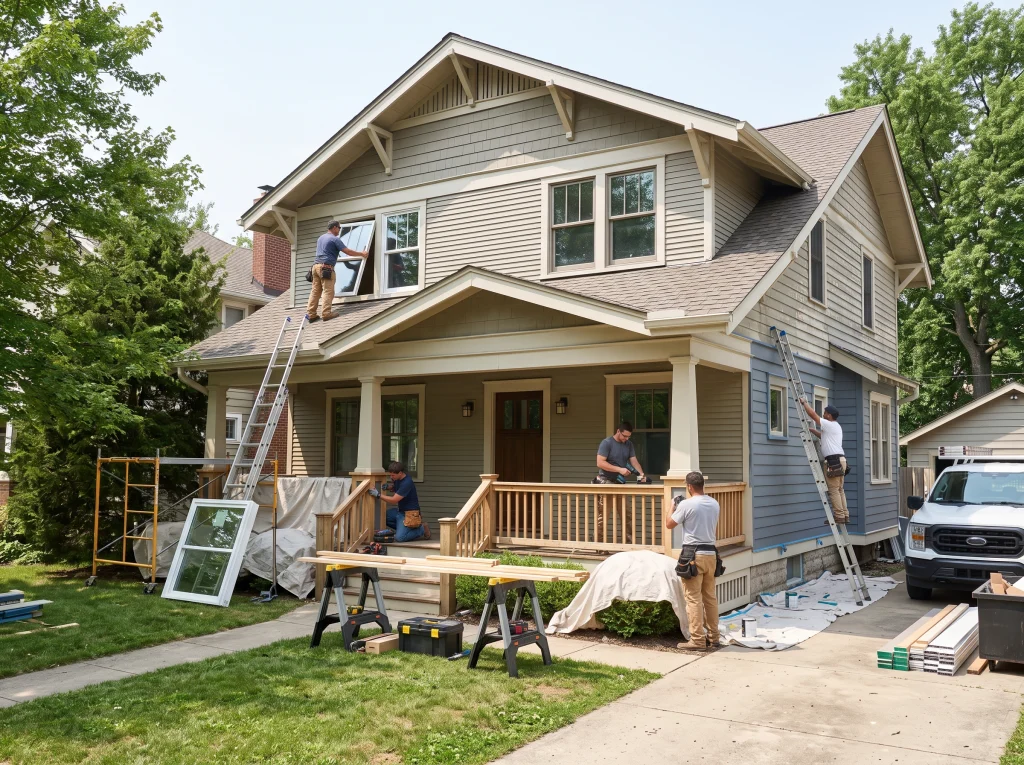
Rebuilding deserves serious consideration when the existing house cannot reasonably accommodate your needs or requires extensive repairs throughout the structure. Although it usually involves more planning and higher upfront expenses, new construction may provide a more practical result when renovation would require replacing many of the same components.
1. The House Has Serious Structural Problems
Significant foundation movement, extensive framing damage, persistent moisture problems, or widespread deterioration can make renovation complicated. If several major structural components need replacement, compare the cost of repairing the existing house with the cost of building a new one.
Structural damage does not automatically mean demolition is necessary. A qualified engineer should evaluate the extent of the problem and whether the building can be repaired safely and economically.
2. The Existing Layout No Longer Works
Some homes have narrow rooms, awkward hallways, insufficient bedrooms, low ceilings, or floor plans that do not suit modern household needs. Renovation can correct many layout problems, but changes involving load-bearing walls, staircases, plumbing locations, or rooflines may require substantial engineering and construction work.
Rebuilding provides greater freedom to arrange bedrooms, bathrooms, living areas, storage, and utility spaces around your priorities. It may be the better option when the desired layout would require extensive alterations to nearly every part of the existing structure.
3. Major Building Systems Need Replacement
An older house may need new electrical wiring, plumbing, heating and cooling equipment, insulation, windows, and roofing at the same time. When these expenses combine with structural repairs and extensive interior work, the total renovation budget can approach the cost of new construction.
A rebuild allows you to coordinate the foundation, framing, insulation, wiring, plumbing, and mechanical systems as part of one construction project. That can simplify integration, although it does not guarantee lower operating costs or eliminate future maintenance.
4. You Want a More Energy-Efficient Home
Older homes can often become more energy efficient through insulation, air sealing, window improvements, and upgraded heating and cooling equipment. The U.S. Department of Energy recommends addressing air leakage and improving the building envelope as important parts of home energy improvements.
Department of Energy
+1
A new home can make it easier to coordinate insulation, air sealing, windows, and mechanical systems from the beginning. However, an existing home may also achieve substantial improvements without being demolished. An energy assessment can help identify which approach makes sense for your property.
5. You Want a Long-Term Custom Design
If you plan to stay on the property for many years, rebuilding may allow you to create a home that better fits your long-term requirements. You can plan accessibility features, wider doorways, fewer steps, additional storage, flexible rooms, and other features before construction begins.
First, confirm that local zoning and building requirements allow the size, height, placement, and design you want. Owning a lot with an existing house does not guarantee that a replacement house can have the same dimensions or footprint.
Renovation vs. Rebuilding Costs
Renovating usually costs less than rebuilding when the existing structure is sound and the work is limited. The difference becomes less predictable when renovation requires extensive structural repairs, major system replacements, or a complete interior reconstruction.
Construction costs vary substantially by region, labor availability, materials, project complexity, and finish quality. National estimates can help with early planning, but they should not replace quotes from local contractors.
What affects the total cost?
| Cost factor | Renovation | Rebuilding |
|---|---|---|
| Demolition | Usually limited to selected areas | May include removal of the entire house |
| Foundation | Often retained if suitable | New foundation work may be required |
| Framing and structure | Repairs or alterations as needed | New framing and structural work |
| Plumbing and electrical | Existing systems may be retained or replaced | New systems are generally installed |
| Design and engineering | Depends on the extent of changes | Often substantial for a custom home |
| Permits and inspections | Depends on the scope and local rules | Includes applicable demolition and construction approvals |
| Temporary housing | May be avoidable for limited work | Often necessary during construction |
| Landscaping and site work | May involve localized repairs | May require substantial restoration or replacement |
A practical way to compare costs
Request two separate estimates for the same property: one for the renovation you want and one for a replacement house with comparable finished space and quality.
For renovation, include structural repairs, demolition within the house, new finishes, major system upgrades, and any required code improvements. For rebuilding, include demolition and disposal, design fees, site preparation, foundation work, construction, utility connections, permits, landscaping, and temporary housing.
Also include a contingency for unforeseen expenses. The appropriate amount depends on the project’s uncertainty, the age of the house, and the quality of the initial investigation.
A useful starting point is to compare the full renovation estimate with the full rebuilding estimate, rather than comparing the renovation contractor’s price with the new home’s framing cost alone.
Some homeowners use a renovation-cost threshold as an early screening tool. For example, if a major renovation is approaching half to two-thirds of the cost of comparable new construction, it may be worth obtaining a detailed rebuild estimate. This is a planning guideline, not a universal financial rule. The final decision should account for structural condition, design goals, financing, local property values, and the value of preserving the existing house.
Factors to Consider Before Making a Decision
Construction estimates are important, but several other factors can determine whether renovation or rebuilding is the better option.
1. Your Long-Term Plans
Think about how long you expect to live in the home and whether your needs may change. If you plan to move within a few years, a major rebuild may be difficult to justify financially. If you intend to stay for decades, investing in a layout that supports your future needs may make more sense.
2. Local Property Values
Compare the expected value of the renovated or rebuilt home with similar properties in your neighborhood. A costly project may not increase the home’s market value by the full amount you spend, especially if the finished property is significantly more expensive than comparable nearby homes.
If resale matters, consult a local real estate professional about recent sales and buyer expectations. Treat projected resale value as an estimate rather than a guarantee.
3. Construction Timeline
Renovation may take less time when the work is limited, but major remodeling can be unpredictable. Contractors may uncover hidden damage, outdated wiring, plumbing problems, or materials that require special handling.
Rebuilding typically requires demolition, design development, permitting, site preparation, and new construction. Weather, material availability, inspections, and contractor scheduling can extend either timeline.
4. Environmental and Safety Concerns
Older homes may contain lead-based paint or asbestos-containing materials. Disturbing these materials can create health hazards, so appropriate inspections and safe handling procedures may be necessary before renovation or demolition.
For many paid renovation projects that disturb paint in homes built before 1978, the Environmental Protection Agency’s Renovation, Repair and Painting Rule requires certified firms and lead-safe work practices, subject to applicable exceptions.
US EPA
+1
Ask qualified professionals to identify potential hazards before work begins and include any required testing, removal, and disposal costs in your budget.
Permits, Zoning, and Building Codes in the United States
Before renovating or rebuilding, verify the requirements that apply to your specific property. Building regulations in the United States are administered through state and local systems, and the exact requirements vary by jurisdiction.
A renovation may require permits for structural alterations, electrical work, plumbing, additions, or other regulated improvements. A complete rebuild generally requires construction approvals and may also require a demolition permit.
Check the following with your local building department:
- Zoning restrictions: Confirm permitted uses, building height, setbacks, lot coverage, and other development limits.
- Building permits: Determine which approvals are required for the proposed work.
- Current building codes: Ask which code provisions apply to renovations, additions, and new construction.
- Historic preservation: Check whether the property or neighborhood has special restrictions.
- Flood zones and environmental conditions: Determine whether additional reviews or construction requirements apply.
- Utility connections: Confirm requirements for water, sewer, electricity, gas, and other services.
Do not assume that a replacement home can automatically occupy the same footprint as the existing house. Local rules may affect how close the structure can be to property lines or whether a nonconforming building can be reconstructed.
How to Decide Whether to Renovate or Rebuild
A structured evaluation can help you avoid making a decision based on appearance or an incomplete estimate.
- Arrange a professional inspection. Evaluate the foundation, framing, roof, moisture conditions, plumbing, electrical systems, and HVAC equipment. Consult a structural engineer if significant structural concerns exist.
- Define your priorities. List the rooms, features, layout changes, and energy improvements you want. Separate essential repairs from optional upgrades.
- Obtain detailed estimates for both options. Ask contractors to specify the scope of work, materials, exclusions, allowances, and potential additional costs.
- Check local regulations. Contact the building department before assuming demolition or reconstruction will be approved as planned.
- Calculate the full project budget. Include professional fees, permits, demolition, construction, temporary housing, storage, landscaping, financing costs, and a contingency.
- Compare long-term benefits. Consider maintenance, energy performance, usable space, accessibility, resale prospects, and how well each option meets your needs.
- Make the decision using verified numbers. Choose the option that meets your requirements within a realistic budget and can be completed legally and safely.
Common Mistakes to Avoid
One common mistake is assuming renovation will always be cheaper. Keeping an existing structure can save money, but extensive structural repairs and the replacement of several major systems can make a renovation unexpectedly expensive.
Another mistake is comparing incomplete estimates. A renovation quote that excludes electrical upgrades or structural repairs cannot be fairly compared with a comprehensive new-construction quote. Make sure both estimates cover comparable finished spaces and clearly identify what is included.
Homeowners should also avoid choosing an option based entirely on resale value. Your plans, comfort, financial circumstances, and the character of the existing home may matter as much as a potential sale price.
Finally, do not begin demolition or major construction before confirming permit requirements, checking for hazardous materials where appropriate, and understanding the property’s structural condition. Early planning can prevent avoidable delays, safety problems, and costly changes.
FAQs:
Conclusion
Choosing whether to renovate or rebuild comes down to the condition of your existing home, the improvements you want, your available budget, and the restrictions that apply to your property. Renovation is often the practical choice when the structure is sound and the changes are manageable. Rebuilding becomes more attractive when extensive repairs, major layout changes, or multiple system replacements make retaining the existing house less practical.