Flora or Fauna? Meaning, Differences, and Examples in Nature
Have you ever wondered whether a tree, flower, bird, or butterfly belongs to flora or fauna? These two terms describe different groups of living organisms found in a particular region, environment, or period of history. Although they are often used together when discussing nature, they do not mean the same thing.
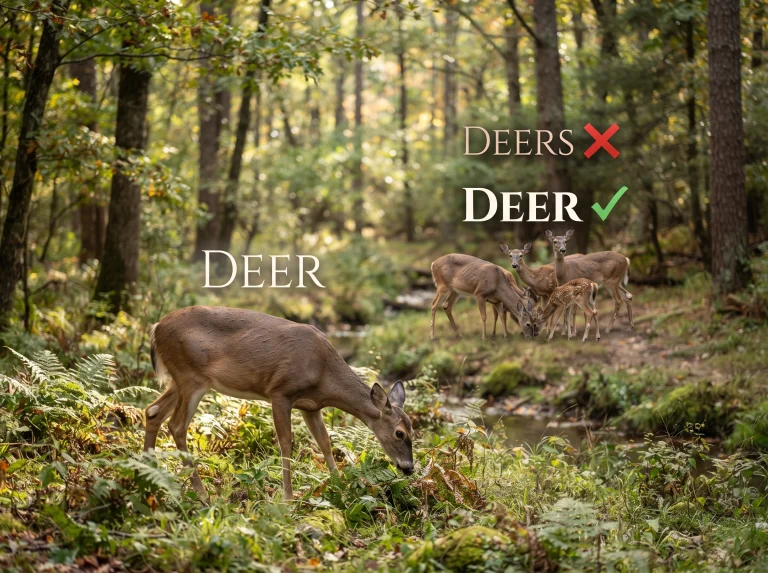
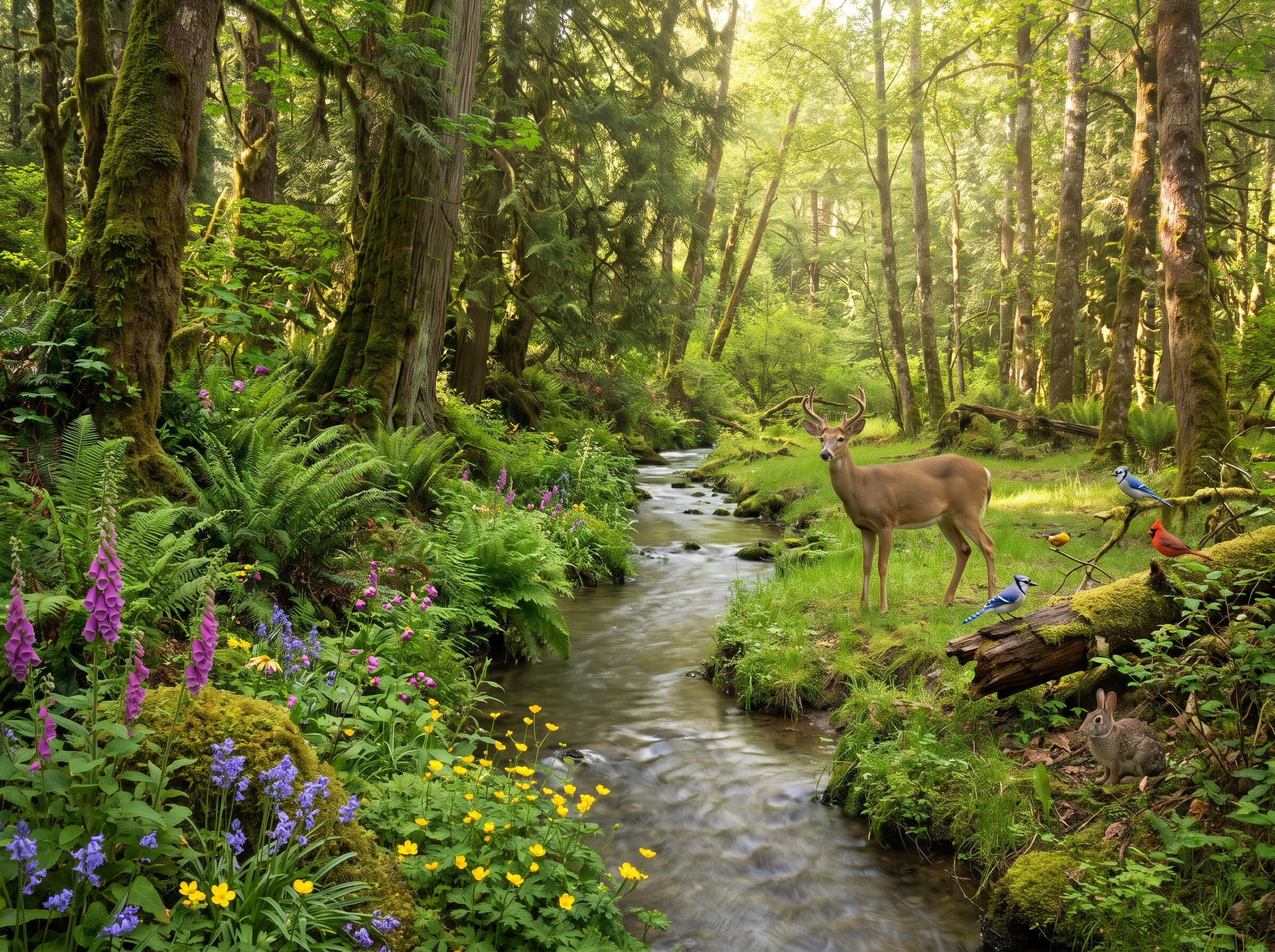
Flora refers to plant life, while fauna refers to animal life. For example, oak trees, wildflowers, and grasses are part of an area’s flora. Deer, eagles, and butterflies belong to its fauna. Understanding the difference between flora and fauna makes it easier to discuss biodiversity, ecosystems, wildlife, and the natural environment.
In this guide, you will learn what flora and fauna mean, how they differ, how to use these terms correctly, and which examples you can find in different parts of the United States.
What Does Flora Mean?
Flora refers to the plant life of a particular geographical area, habitat, or period of time. It includes the different kinds of plants that grow naturally or are present in a specific environment.
Trees, shrubs, grasses, ferns, wildflowers, and many other plant groups contribute to an area’s flora. Depending on the context, the term can describe all plant species in a region or the plants found in a particular habitat.
For example, the flora of the southwestern United States includes desert plants such as saguaro cacti, while the flora of the Pacific Northwest includes evergreen trees, ferns, and mosses.
Examples of Flora
Here are some common examples of flora:
- Trees: Oak, maple, pine, and redwood trees.
- Flowers: Sunflowers, roses, and wildflowers.
- Grasses: Prairie grasses and other grasses found in fields and open landscapes.
- Shrubs: Sagebrush, blueberry bushes, and mountain laurel.
- Desert plants: Saguaro cacti, yuccas, and other drought-tolerant plants.
- Aquatic plants: Water lilies, cattails, and seagrasses.
These examples show that flora includes many different kinds of plants found on land and in water.
The term also appears in scientific writing. For example, a botanist might study the flora of a national park to identify plant species, understand their distribution, or monitor changes in vegetation over time.
What Does Fauna Mean?
Fauna refers to the animal life found in a particular geographical area, habitat, or period of time. It includes animals that live on land, in freshwater, in the ocean, and in the air.
Mammals, birds, reptiles, amphibians, fish, insects, and other animals are all part of fauna. The specific animals found in an area depend on factors such as climate, food availability, water, shelter, and habitat conditions.
For example, the fauna of the Great Plains includes animals such as bison, prairie dogs, coyotes, and various grassland birds. In the Florida Everglades, animals include alligators, wading birds, fish, and turtles.
Examples of Fauna
Common examples of fauna include:
- Mammals: Deer, bears, foxes, and rabbits.
- Birds: Eagles, owls, robins, and wild turkeys.
- Reptiles: Snakes, turtles, and lizards.
- Amphibians: Frogs, toads, and salamanders.
- Fish: Trout, bass, salmon, and other freshwater or marine species.
- Insects: Butterflies, bees, ants, and beetles.
- Marine animals: Dolphins, seals, whales, and sea turtles.
Fauna can be studied at different geographical scales, from the animals living in a small pond to the wildlife found across an entire continent.
For example, a wildlife biologist might study the fauna of a forest to understand animal populations, feeding relationships, migration patterns, and the effects of habitat loss.
Flora vs. Fauna: Key Differences
The main difference between flora and fauna is the type of life each term describes. Flora refers to plants, whereas fauna refers to animals.
Both terms help scientists, environmental researchers, and conservation professionals describe the living organisms found in a particular place.
| Feature | Flora | Fauna |
|---|---|---|
| Meaning | Plant life in an area | Animal life in an area |
| Includes | Trees, grasses, shrubs, and flowers | Mammals, birds, reptiles, fish, and insects |
| Scientific study | Botany and plant ecology | Zoology and animal ecology |
| Main ecological roles | Produce organic matter, provide oxygen, and support habitats | Participate in food webs, pollination, seed dispersal, and other ecological processes |
| Example in a forest | Oak trees, ferns, and wildflowers | Deer, owls, squirrels, and insects |
| Example in a desert | Cacti, yuccas, and desert shrubs | Lizards, snakes, coyotes, and desert tortoises |
1. Flora Consists of Plants, While Fauna Consists of Animals
The simplest way to distinguish the terms is to identify the organism being discussed.
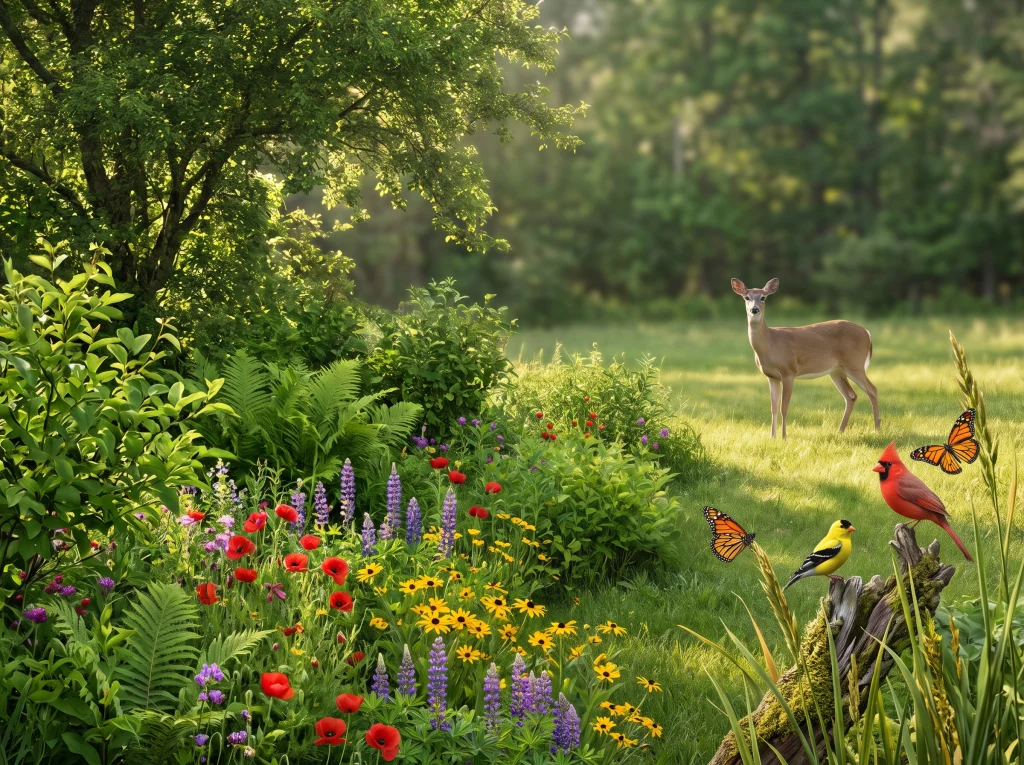
A maple tree is flora because it is a plant. A squirrel living in that tree is fauna because it is an animal. Similarly, wildflowers in a meadow belong to its flora, while butterflies flying among them belong to its fauna.
2. Flora and Fauna Have Different Roles in Nature
Plants form the foundation of many food webs by using sunlight to produce organic matter through photosynthesis. They also provide food, shelter, and nesting sites for numerous organisms.
Animals contribute to ecosystems in different ways. Some eat plants, others hunt animals, and many help pollinate flowers or disperse seeds. Their activities influence how nutrients move through ecosystems and how plant communities change over time.
3. Flora and Fauna Depend on Environmental Conditions
Climate, soil, water, sunlight, and habitat structure influence which plants and animals can survive in a particular area.
For example, cacti and other drought-tolerant plants are well suited to many desert environments. Animals living in those environments often have adaptations that help them cope with limited water and extreme temperatures.
In wetter environments, different plant communities support different animal populations. These relationships help explain why the flora and fauna of a desert differ from those of a rainforest, wetland, or temperate forest.
Examples of Flora and Fauna in the United States
The United States contains a wide range of environments, including deserts, forests, grasslands, wetlands, mountains, rivers, and coastal waters. Each environment supports its own combinations of plant and animal life.
Here are some examples from different regions of the country.
Flora and Fauna of the Southwest
The southwestern United States includes desert environments with hot, dry conditions and limited rainfall.
Flora examples:
- Saguaro cacti
- Creosote bushes
- Desert willows
- Yuccas
- Prickly pear cacti
Fauna examples:
- Coyotes
- Roadrunners
- Desert tortoises
- Rattlesnakes
- Jackrabbits
These plants and animals have adaptations that help them survive in environments where water can be scarce.
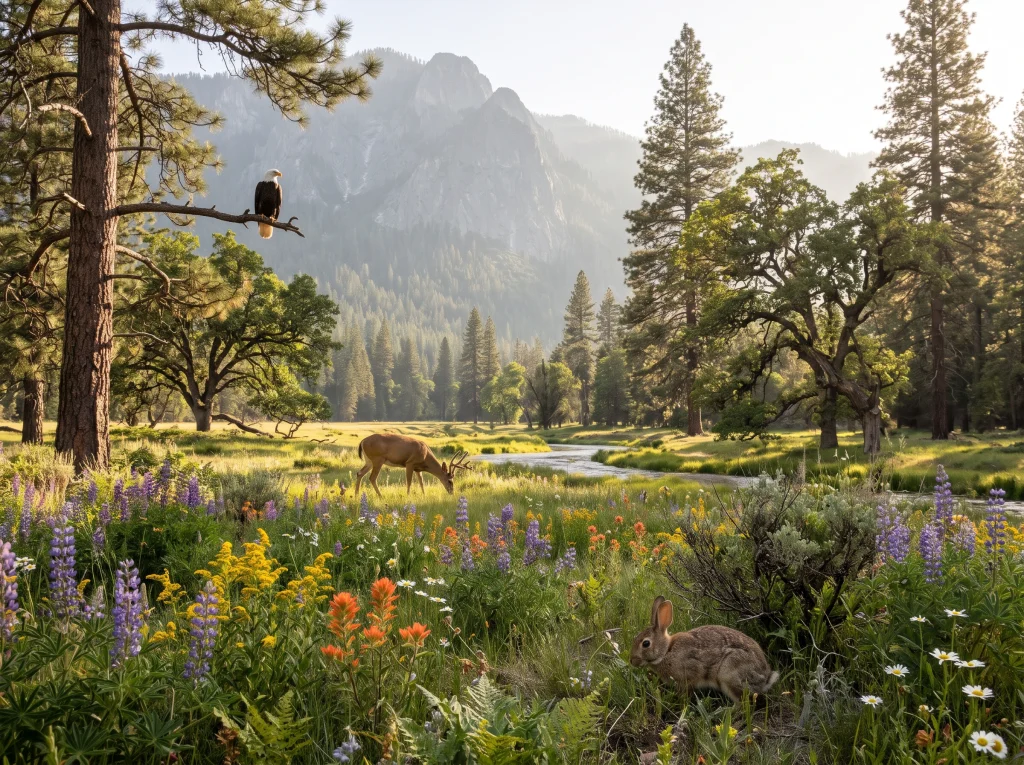
Flora and Fauna of the Pacific Northwest
The Pacific Northwest is known for its forests, rivers, mountains, and coastal ecosystems. Many areas receive substantial rainfall, supporting dense vegetation.
Flora examples:
- Douglas firs
- Western red cedars
- Western hemlocks
- Ferns
- Mosses
Fauna examples:
- Black bears
- Roosevelt elk
- Bald eagles
- Salmon
- River otters
Forests provide food and shelter for many animals, while rivers support fish and other aquatic organisms.
Flora and Fauna of the Great Plains
The Great Plains contain extensive grasslands that support a variety of plants and animals.
Flora examples:
- Prairie grasses
- Purple coneflowers
- Sunflowers
- Prairie clovers
- Native wildflowers
Fauna examples:
- American bison
- Prairie dogs
- Pronghorns
- Coyotes
- Grassland birds
Grassland plants help protect soil and provide food and shelter for wildlife. Grazing animals, predators, insects, and birds contribute to the region’s ecological relationships.
Flora and Fauna of the Florida Everglades
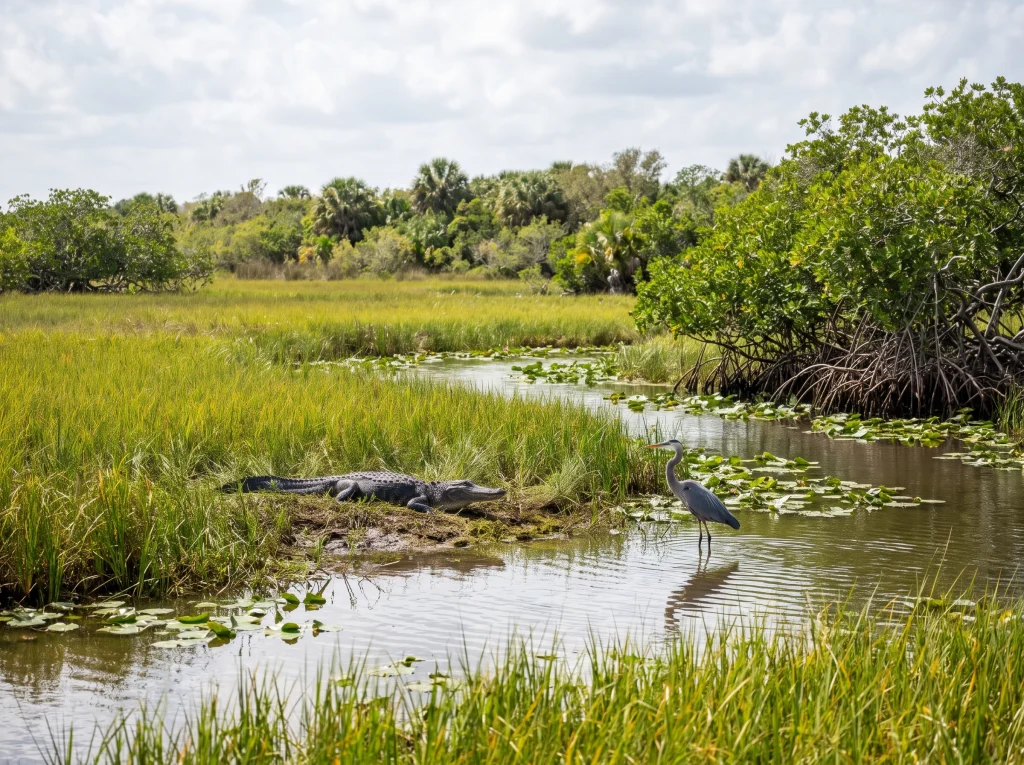
The Florida Everglades is a large wetland ecosystem with freshwater habitats, marshes, and mangrove environments.
Flora examples:
- Sawgrass
- Mangroves
- Pond apple trees
- Cattails
- Aquatic plants
Fauna examples:
- American alligators
- Wading birds
- Fish
- Turtles
- River otters
The region’s water levels, vegetation, and seasonal conditions influence the distribution of plants and animals throughout the wetland.
These examples demonstrate that flora and fauna vary considerably from one U.S. region to another. They also show why protecting habitats is important for maintaining healthy plant and animal communities.
Why Are Flora and Fauna Important?
Flora and fauna are essential components of healthy ecosystems. They support natural processes that make environments suitable for other living organisms, including humans.
Although plants and animals have different functions, their activities are closely connected.
1. They Support Food Chains and Food Webs
Plants produce organic matter that provides energy for many organisms. Herbivores eat plants, while carnivores eat other animals. Omnivores may consume both plants and animals.
These feeding relationships form food chains and more complex food webs. When a species disappears or becomes less abundant, the effects can spread to other organisms that depend on it.
2. They Help Maintain Biodiversity
Biodiversity refers to the variety of life, including differences among species, genetic variation, and ecosystems.
Flora and fauna contribute to biodiversity by providing a wide range of organisms with different characteristics and ecological roles. Greater biological variety can help ecosystems respond to certain environmental changes, although resilience also depends on factors such as habitat quality and ecological conditions.
3. They Support Human Needs
Plants provide food, timber, fibers, and compounds used in medicines. They also contribute to soil protection, carbon storage, and water regulation.
Animals provide important ecological benefits through pollination, seed dispersal, pest control, and other processes. Wildlife and natural habitats also support recreation, tourism, education, and scientific research.
4. They Help Maintain Ecosystem Balance
Different species influence one another through competition, predation, cooperation, and other interactions.
For example, predators can influence prey populations, while pollinators help many flowering plants reproduce. Plants also create habitats that support insects, birds, and mammals.
These relationships do not remain perfectly constant. Instead, ecosystems change in response to weather, seasonal cycles, disturbances, and human activities.
5. They Need Protection From Environmental Threats
Habitat loss, pollution, invasive species, climate change, and other pressures can threaten plant and animal populations.
Conservation efforts aim to protect species and the environments they depend on. In the United States, the Endangered Species Act of 1973 provides a federal framework for protecting listed threatened and endangered species and supporting their recovery.
Protecting both flora and fauna helps preserve the ecological relationships that sustain natural environments.
How Flora and Fauna Depend on Each Other
Flora and fauna are different categories of life, but they frequently depend on each other for survival and reproduction.
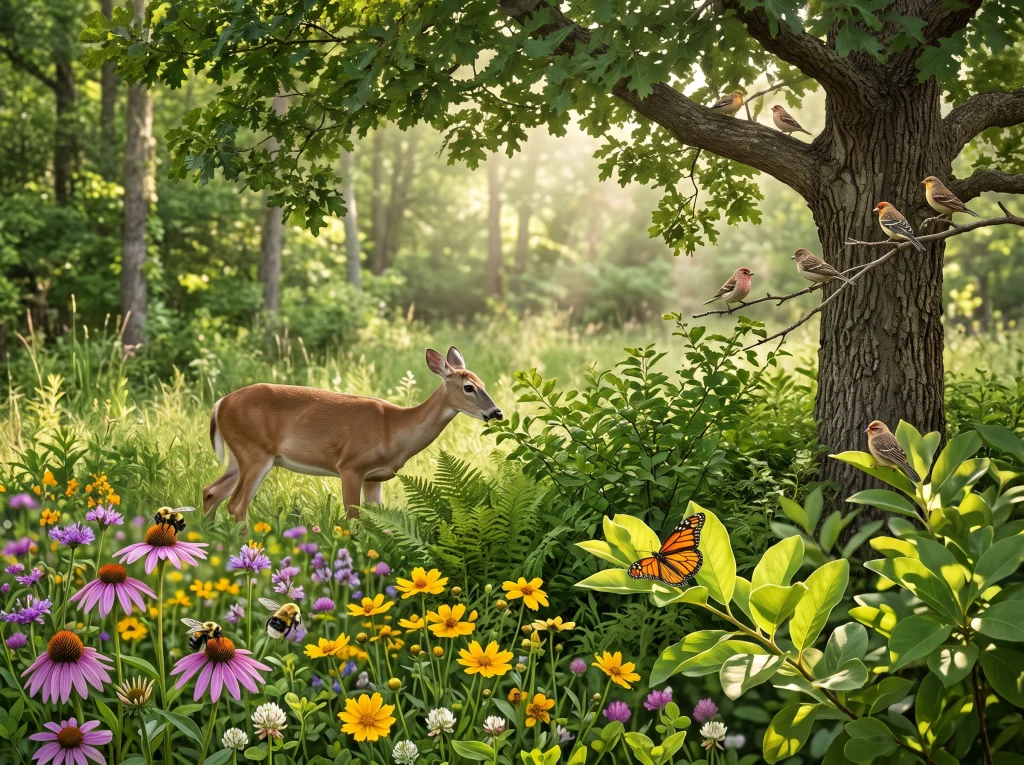
Consider a flowering meadow. Plants provide nectar and pollen for bees and butterflies. These insects transfer pollen between flowers, helping many plants reproduce. Birds may feed on insects and seeds, while shrubs and grasses provide shelter for small mammals.
A forest provides another example. Trees offer nesting sites for birds and other animals, and their fruits and seeds feed numerous species. Some animals disperse seeds to new locations, helping plants spread. When leaves, branches, and organisms decompose, nutrients return to the soil and become available to plants again.
These connections demonstrate that flora and fauna are parts of a larger ecological system rather than separate groups that exist independently.
However, not every plant depends on animals for pollination, and not every animal depends directly on plants for food. The relationships vary by species and ecosystem.
What Is the Difference Between Flora, Fauna, and Ecosystems?
Flora, fauna, and ecosystems are related terms, but each describes something different.
Flora refers to the plant life in a particular area.
Fauna refers to the animal life in that area.
An ecosystem includes the living organisms in an environment and the nonliving components with which they interact. These components include water, air, soil, sunlight, temperature, and other physical or chemical conditions.
For example, a pond’s flora may include water lilies, algae, and other aquatic plants. Its fauna may include fish, frogs, insects, and turtles. The pond ecosystem includes these organisms along with the water, sediments, dissolved nutrients, sunlight, and interactions among them.
Another related term is biota, which refers to the living organisms of a particular region or environment. Depending on how it is used, biota can include more than just plants and animals.
Understanding these distinctions is useful when reading scientific reports, environmental studies, and articles about biodiversity.
How to Remember Flora vs. Fauna
If you frequently confuse flora and fauna, a simple memory trick can help.
Flora = Flowers and plants.
Both words begin with the letter F, and flowers are an easy reminder that flora refers to plant life.
Fauna = Animals.
Think of fauna as the animal life found in forests, fields, deserts, and oceans.
You can also remember the difference through everyday examples:
- A rose bush belongs to flora.
- A butterfly belongs to fauna.
- Pine trees belong to flora.
- Deer belong to fauna.
- Sea grasses belong to flora.
- Dolphins belong to fauna.
When you identify whether an organism is a plant or an animal, choosing the correct term becomes much easier.
FAQS:
Conclusion
Flora and fauna describe two important parts of the natural world. Flora refers to plant life, including trees, grasses, flowers, shrubs, and aquatic plants. Fauna refers to animal life, including mammals, birds, reptiles, amphibians, fish, and insects.
The difference between flora and fauna is straightforward, but both terms help explain the variety of life found in different environments. From the cacti and desert tortoises of the American Southwest to the trees and elk of the Pacific Northwest, plants and animals form interconnected communities that support healthy ecosystems.