Yosemite or Yellowstone? Differences, Attractions, Costs, and Which Is Better
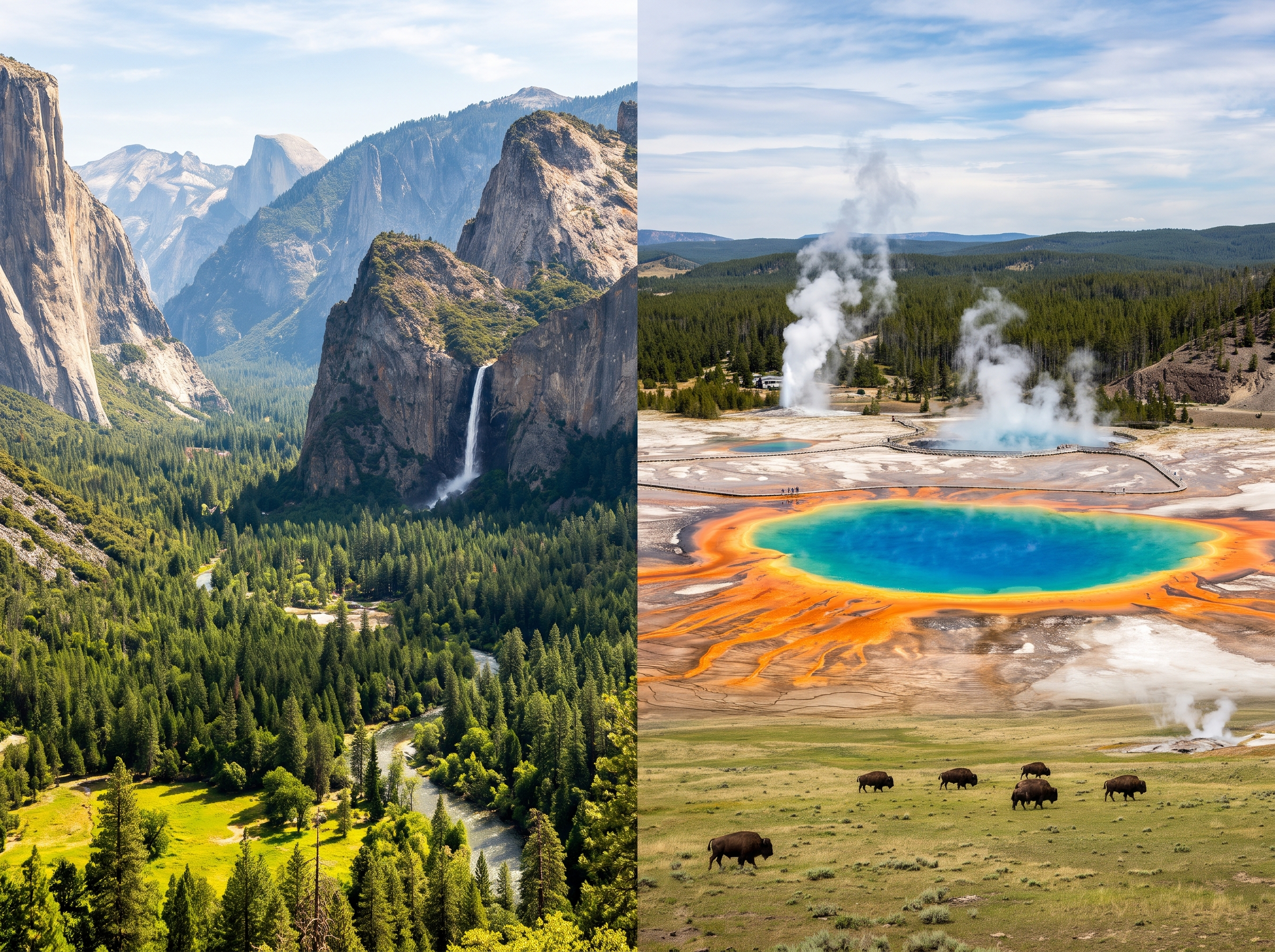
Choosing between Yosemite and Yellowstone can be difficult because both are among the most famous national parks in the United States. However, they offer very different outdoor experiences. Yosemite is known for its enormous granite cliffs, waterfalls, giant sequoias, and dramatic mountain scenery, while Yellowstone is famous for geysers, hot springs, wildlife, and volcanic landscapes.
Yosemite is generally better for visitors who love dramatic mountain views, waterfalls, rock climbing, and scenic hiking. Yellowstone is a better choice for travelers interested in wildlife, geothermal features, large open landscapes, and diverse outdoor activities.
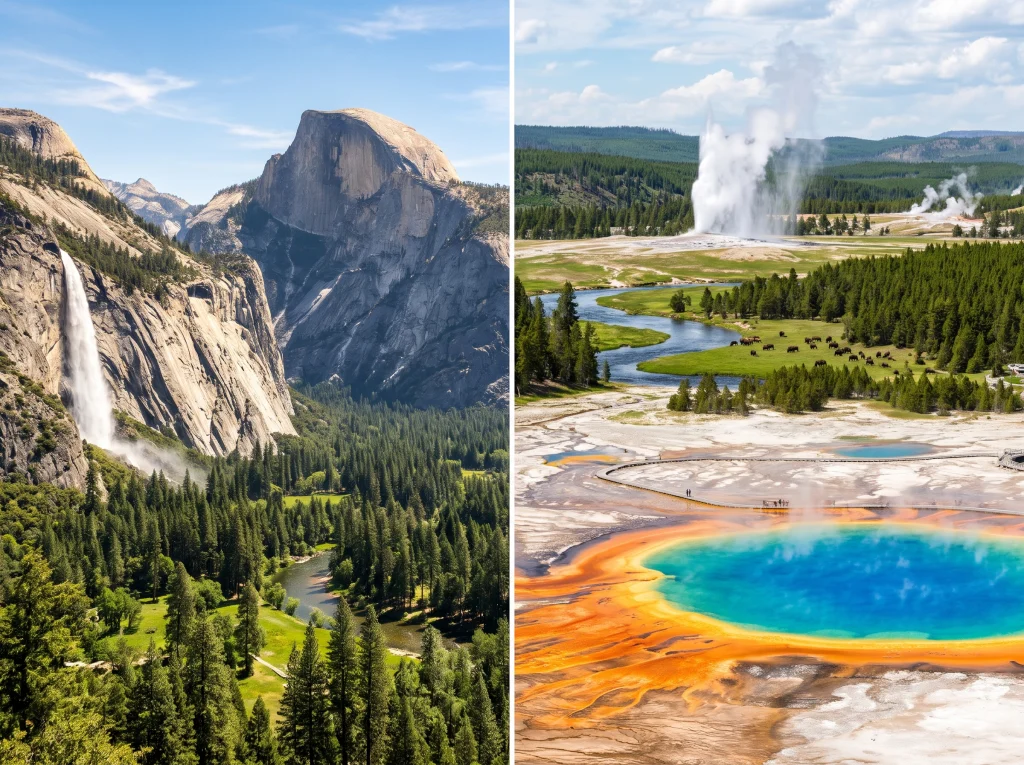
Both parks are worth visiting, but the right choice depends on your travel dates, interests, available time, and budget. Understanding their differences can help you choose the best destination for your next American national park vacation.
Yosemite vs. Yellowstone: Key Differences
The biggest difference between Yosemite and Yellowstone is their natural environment. Yosemite features the dramatic granite landscapes of California’s Sierra Nevada, while Yellowstone protects an enormous volcanic plateau spread across Wyoming, Montana, and Idaho.
Here is a quick comparison:
| Feature | Yosemite | Yellowstone |
|---|---|---|
| Location | California | Wyoming, Montana, and Idaho |
| Established | 1890 | 1872 |
| Approximate size | 1,187 square miles | 3,472 square miles |
| Famous for | Granite cliffs and waterfalls | Geysers and wildlife |
| Major attraction | Yosemite Valley | Old Faithful |
| Famous wildlife | Black bears, deer, coyotes | Bison, elk, wolves, grizzly bears |
| Best scenery | Mountains and waterfalls | Geysers, forests, lakes, and canyons |
| Hiking | Excellent | Excellent |
| Camping | Multiple campgrounds | Multiple campgrounds |
| Ideal trip | 2–4 days | 3–5 days or longer |
Yellowstone is almost three times larger than Yosemite, so visitors generally need more driving time to explore its major attractions. Yosemite has a more concentrated collection of famous landmarks, particularly around Yosemite Valley. National Park Service+1
What Makes Yosemite National Park Special?
Panoramic view of Yosemite Valley with El Capitan and Half Dome from Tunnel View, California.
Yosemite Falls from the Valley
How To Spend 1 Day In Yosemite National Park (Itinerary)
Yosemite National Park is one of America’s most recognizable natural destinations. Located in California’s Sierra Nevada mountains, it is famous for massive granite formations, deep valleys, waterfalls, and ancient giant sequoia trees.
The park covers approximately 1,187 square miles and offers opportunities for hiking, photography, camping, rock climbing, and scenic driving.
Top Attractions in Yosemite
Some of Yosemite’s most popular attractions include:
- Yosemite Valley: A spectacular valley surrounded by granite cliffs, waterfalls, and green meadows.
- Half Dome: An iconic granite formation popular with experienced hikers and climbers.
- El Capitan: A massive granite wall that attracts rock climbers from around the world.
- Yosemite Falls: One of the tallest waterfalls in North America.
- Glacier Point: A scenic overlook offering impressive views of Yosemite Valley and Half Dome.
- Mariposa Grove: Home to more than 500 mature giant sequoias.
Yosemite Valley is particularly suitable for first-time visitors because several famous landmarks are relatively close together. Visitors can enjoy scenic viewpoints, short walks, longer hikes, and photography without traveling across the entire park. National Park Service+1
Why Visit Yosemite?
Yosemite is an excellent choice if you enjoy dramatic mountain scenery and outdoor adventures. Its granite cliffs create a distinctive landscape that looks different from most other national parks.
Spring is especially attractive for waterfall viewing because melting snow increases water flow. Summer provides more access to high-elevation trails, while fall and winter offer quieter scenery and different photographic opportunities.
What Makes Yellowstone National Park Special?
Large Herd of Plains Bison in Lamar Valley, Yellowstone
Yellowstone National Park is the world’s first national park, established on March 1, 1872. It stretches across Wyoming, Montana, and Idaho and is famous for its geothermal activity, diverse wildlife, forests, lakes, and dramatic canyons.
Yellowstone is particularly special because it sits above a large volcanic system. Its underground heat produces geysers, hot springs, mud pots, and other geothermal features.
Top Attractions in Yellowstone
Here are some of the park’s most popular places:
- Old Faithful: A famous geyser that regularly erupts, making it one of Yellowstone’s best-known attractions.
- Grand Prismatic Spring: A colorful hot spring surrounded by bright mineral deposits.
- Mammoth Hot Springs: A collection of distinctive travertine terraces formed by geothermal activity.
- Grand Canyon of the Yellowstone: A dramatic canyon featuring impressive waterfalls.
- Lamar Valley: A popular location for observing wolves, bison, bears, and other wildlife.
- Yellowstone Lake: A large mountain lake surrounded by forests and scenic landscapes.
Yellowstone contains more than 10,000 hydrothermal features and over 500 active geysers. These natural attractions make it particularly interesting for visitors who enjoy geology and unusual landscapes. National Park Service
Why Visit Yellowstone?
Yellowstone offers a combination of natural scenery and wildlife that is difficult to find in one destination. You can watch bison grazing in open valleys, observe geysers erupting, walk along geothermal boardwalks, and explore beautiful lakes and forests.
It is also an excellent destination for families, photographers, wildlife enthusiasts, and travelers interested in geology.
Yosemite vs. Yellowstone: Scenery and Natural Attractions
Both parks have beautiful landscapes, but their scenery is quite different.
Yosemite is famous for its dramatic granite formations and waterfalls. Its mountain scenery creates excellent opportunities for photography, especially around Tunnel View, Glacier Point, and Yosemite Valley.
Yellowstone offers more variety in its geological features. Visitors can see colorful hot springs, steaming geysers, volcanic landscapes, wide grasslands, forests, rivers, and mountain lakes.
| Natural Feature | Yosemite | Yellowstone |
|---|---|---|
| Granite cliffs | Excellent | Limited |
| Waterfalls | Excellent | Excellent |
| Geysers | No major geyser attractions | Excellent |
| Hot springs | No major geothermal attractions | Excellent |
| Giant sequoias | Yes | No |
| Mountain scenery | Excellent | Excellent |
| Volcanic features | Not a main attraction | Excellent |
| Canyons | Yosemite Valley | Grand Canyon of the Yellowstone |
Which has better scenery?
Choose Yosemite if you prefer towering mountains, granite cliffs, and waterfalls. Choose Yellowstone if you want colorful geothermal features, volcanic landscapes, lakes, and open valleys.
Wildlife Viewing and Outdoor Activities
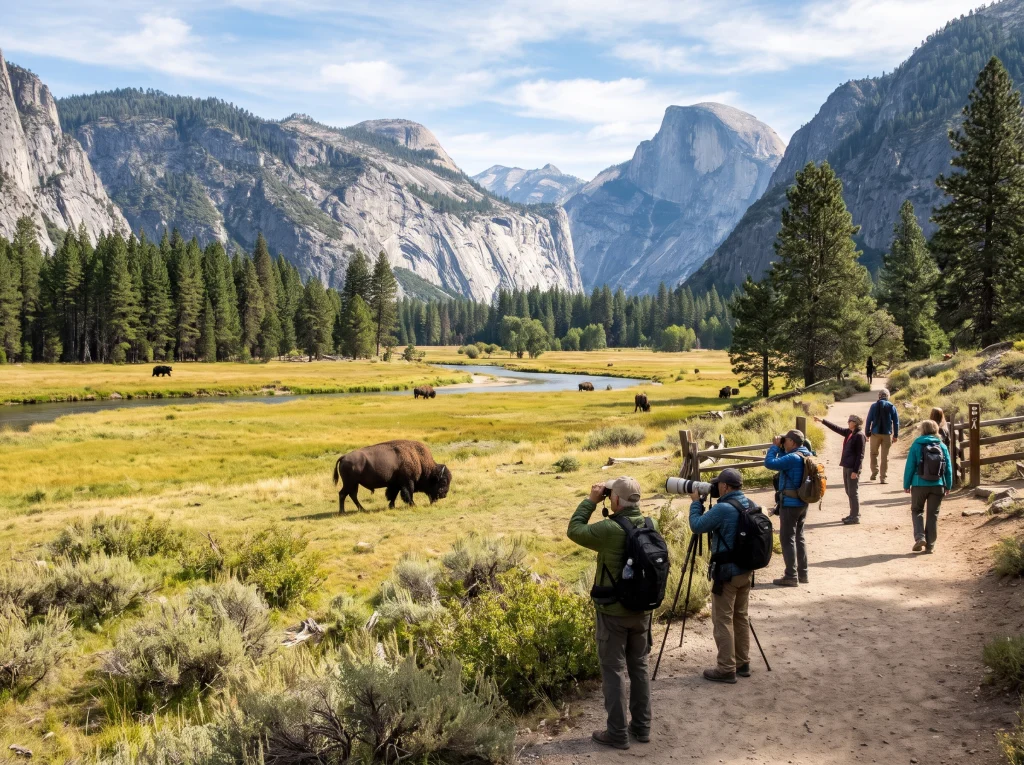
Wildlife is one of the biggest differences between these parks. Yellowstone is generally the stronger choice for visitors whose main priority is seeing large wild animals.
Wildlife in Yosemite
Study Finds Black Bears in Yosemite Forage Primarily on Plants and Nuts
Yosemite supports several wildlife species, including:
- American black bears
- Mule deer
- Coyotes
- Bobcats
- Mountain lions
- Foxes
- Various bird species
Black bears are among the park’s most recognizable animals. Visitors should follow food-storage rules and never approach or feed wildlife.
Wildlife in Yellowstone
Field of Bison in the Lamar Valley
Yellowstone has an especially rich wildlife population. Visitors may encounter:
- American bison
- Elk
- Gray wolves
- Grizzly bears
- Black bears
- Moose
- Pronghorn
- Bighorn sheep
Lamar Valley and Hayden Valley are popular wildlife-viewing areas. Early mornings and evenings often provide good opportunities to observe animals, although sightings are never guaranteed.
Keep a safe distance from all wildlife. Bison and bears can be dangerous, even when they appear calm.
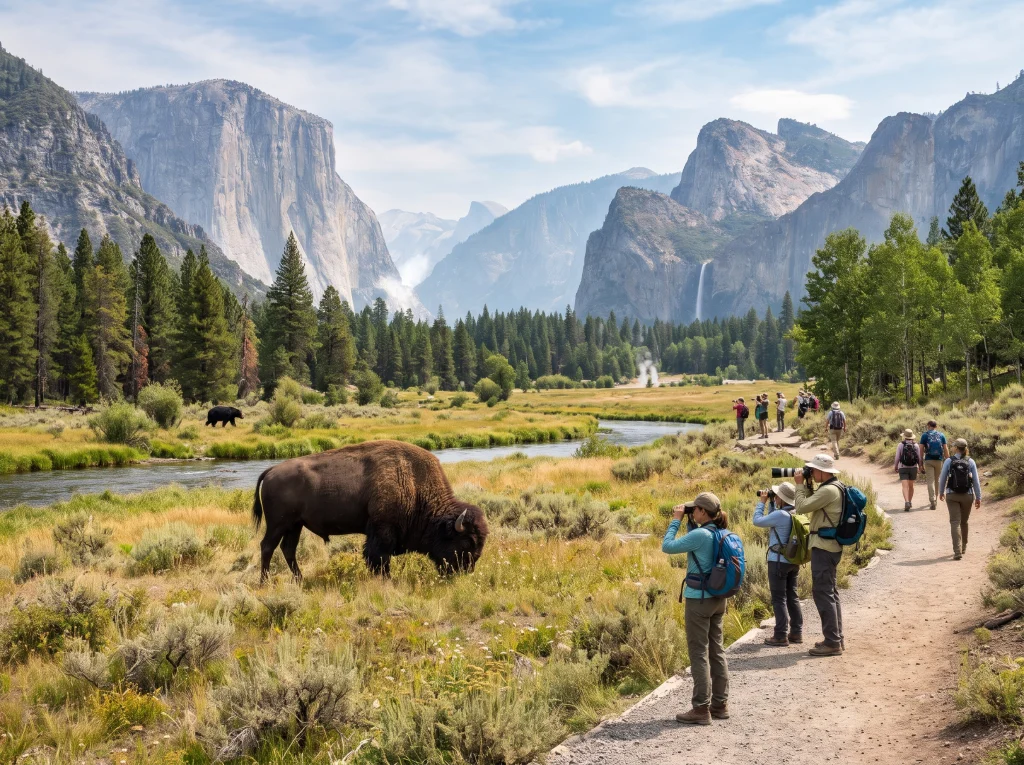
Winner for wildlife: Yellowstone. Its large open valleys and diverse animal populations make it an outstanding destination for wildlife photography and observation.
Hiking and Camping
Both national parks offer excellent hiking and camping opportunities, but the landscapes and trail experiences are different.
Hiking in Yosemite
Yosemite is especially popular with hikers who want dramatic mountain views and challenging trails.
Popular options include:
- Mist Trail
- Lower Yosemite Fall Trail
- Four Mile Trail
- Mirror Lake Trail
- Half Dome Trail
Some routes are suitable for beginners, while others require excellent fitness and preparation. Hiking Half Dome requires a permit when the cables are installed, and visitors should plan ahead for the demanding route.
Camping is also popular, particularly in Yosemite Valley. Campgrounds can fill quickly during busy travel periods, so advance reservations are important.
Hiking in Yellowstone
Yellowstone offers a wide range of trails through forests, mountains, geothermal areas, and open valleys.
Popular hiking areas include:
- Grand Prismatic Spring Overlook Trail
- Mount Washburn
- Fairy Falls Trail
- North Rim Trail
- Mystic Falls Trail
Some trails provide easy walks to scenic viewpoints, while others involve longer distances and elevation changes.
Yellowstone also has numerous campgrounds, including locations near major attractions. Reservations and campground opening dates vary, so check official park information before planning an overnight stay.
Which is better for hiking and camping? Yosemite is particularly attractive for dramatic mountain hikes and granite scenery. Yellowstone is better for hikers who enjoy exploring varied ecosystems, forests, geothermal landscapes, and wildlife habitats.
Best Time to Visit Yosemite or Yellowstone
The best time to visit depends on your preferred activities, weather conditions, and tolerance for crowds.
| Season | Yosemite | Yellowstone |
|---|---|---|
| Spring | Excellent waterfalls, variable weather | Wildlife activity, some snow and road limitations |
| Summer | Hiking, sightseeing, busy conditions | Most roads and facilities open, busy conditions |
| Fall | Cooler weather and colorful foliage | Wildlife viewing and cooler temperatures |
| Winter | Snowy landscapes and winter activities | Snowcoach tours, snowmobiling, and winter wildlife viewing |
Best Time to Visit Yosemite
May and June are particularly attractive for visitors interested in waterfalls because snowmelt increases water flow. July and August are popular for hiking, sightseeing, and exploring higher elevations.
September and October can offer cooler temperatures and fewer visitors than peak summer periods. Winter brings snow-covered scenery, although some roads and facilities close seasonally.
Tioga Road and Glacier Point Road typically close during winter and reopen around late spring or early summer, depending on snow conditions. National Park Service+1
Best Time to Visit Yellowstone
June through September is generally the most convenient period for a traditional Yellowstone road trip. Most roads and visitor facilities are open during the summer season.
May and September are attractive for visitors interested in wildlife and somewhat fewer crowds. October can also provide good wildlife-viewing opportunities, although some facilities and roads begin closing.
Winter offers a completely different experience, with snow-covered landscapes, wildlife viewing, snowshoeing, and guided snowcoach tours. Most park roads close to regular vehicles during winter, so transportation requires additional planning. National Park Service+1
Best overall summer choice: Both parks are excellent from June through August, but expect heavy visitation and book accommodations early.
Entrance Fees, Accommodation, and Travel Costs
The total cost of visiting either park depends on transportation, accommodation, food, camping, and the number of days you spend there.
Entrance Fees
For a standard private vehicle, both Yosemite and Yellowstone list a $35 entrance fee covering seven consecutive days.
| Expense | Yosemite | Yellowstone |
|---|---|---|
| Private vehicle entrance | $35 | $35 |
| Motorcycle entrance | $30 | $30 |
| Individual entrance on foot or bicycle | $20 | $20 |
| Annual park pass | $70 | $70 |
An America the Beautiful annual pass may be a better option if you plan to visit several national parks during the year. Check the current eligibility and coverage rules before purchasing. National Park Service+1
Accommodation Costs
Yosemite offers campgrounds, hotels, cabins, and lodging options inside and outside the park. Yosemite Valley is especially convenient, but accommodations can be difficult to secure during busy periods.
Yellowstone provides campgrounds, lodges, cabins, and hotels across different areas of the park. Staying near the attractions you plan to visit can reduce unnecessary driving.
In both destinations, hotel prices depend heavily on the season, location, and availability. Summer accommodations generally require more advance planning.
Food and Transportation
Both parks have restaurants, general stores, picnic areas, and food services, but choices are more limited than in nearby cities.
A rental car is useful for exploring both parks. Yellowstone requires particularly careful driving plans because of its large size and long distances between major attractions.
For budget-conscious travelers, camping, preparing some meals, and visiting outside peak summer periods can help reduce expenses.
Important 2026 entry update: Yosemite does not require an entrance reservation in 2026, and Yellowstone does not require vehicle reservations. However, entrance fees still apply, and lodging, camping, and certain activities may require separate reservations. In 2026, both parks also charge an additional $100 fee for non-U.S. residents aged 16 and older unless covered by an eligible Annual or America the Beautiful pass. National Park Service+2
How Many Days Do You Need?
The number of days depends on how many attractions you want to visit and whether you enjoy hiking, photography, wildlife watching, or sightseeing.
| Trip Length | Yosemite | Yellowstone |
|---|---|---|
| 1 day | Main Yosemite Valley viewpoints | A few nearby major attractions |
| 2 days | Valley, waterfalls, Glacier Point if accessible | Old Faithful and nearby geothermal areas |
| 3 days | Valley, giant sequoias, scenic hikes | Geysers, canyon, lake, and wildlife |
| 4–5 days | More hiking and surrounding areas | A more complete park experience |
Is One Day Enough?
One day can provide a memorable introduction to either park, but you will need to prioritize.
In Yosemite, focus on Yosemite Valley, Tunnel View, and accessible waterfalls.
In Yellowstone, choose a smaller area and visit attractions such as Old Faithful and nearby geothermal features. Trying to cover the entire park in one day is not practical.
Is Three Days Enough?
Three days can provide a good Yosemite vacation, particularly if you concentrate on the main attractions.
For Yellowstone, three days is a reasonable starting point for visiting major highlights, although four or five days provide more flexibility. Yellowstone’s size and driving distances make a longer stay especially valuable. National Park Service+1
Which National Park Should You Choose?
The best park depends on your interests and the type of vacation you want.
Choose Yosemite if you:
- Love dramatic mountain landscapes.
- Want to photograph waterfalls and granite cliffs.
- Enjoy challenging hiking and rock climbing.
- Want to see giant sequoia trees.
- Prefer visiting several famous attractions in a relatively concentrated area.
Choose Yellowstone if you:
- Want to see bison, wolves, elk, and bears.
- Are interested in geysers and hot springs.
- Enjoy exploring large natural landscapes.
- Want a wildlife-focused road trip.
- Have several days available for sightseeing and outdoor activities.
Is Yosemite or Yellowstone Better for Families?
Both parks are excellent family destinations, but their experiences differ.
Yosemite offers accessible viewpoints, short walking trails, waterfalls, and scenic drives. Families can enjoy many attractions without taking difficult hikes.
Yellowstone offers educational opportunities involving wildlife, geology, geysers, and hot springs. Boardwalks around geothermal areas make several attractions accessible to families, although children must remain on designated paths.
Parents should always supervise children near cliffs, rivers, thermal areas, and wildlife.
Can You Visit Yosemite and Yellowstone on the Same Trip?
Yes, but visiting both parks requires considerable travel planning because they are far apart.
Yosemite is in California, while Yellowstone is primarily in Wyoming, with portions extending into Montana and Idaho. Driving between the parks takes many hours, depending on the route and starting point.
A longer road trip can combine both parks with other destinations in the western United States, but trying to visit both during a short vacation may leave too little time to enjoy either one.
For most travelers, choosing one park for a shorter vacation is more practical.
FAQs:
Conclusion
Yosemite and Yellowstone are two outstanding national parks, but they offer different reasons to visit.
Yosemite is the better choice for travelers who love granite cliffs, waterfalls, mountain scenery, hiking, and giant sequoias. Yellowstone is the stronger option for wildlife watching, geysers, hot springs, volcanic landscapes, and longer road trips.