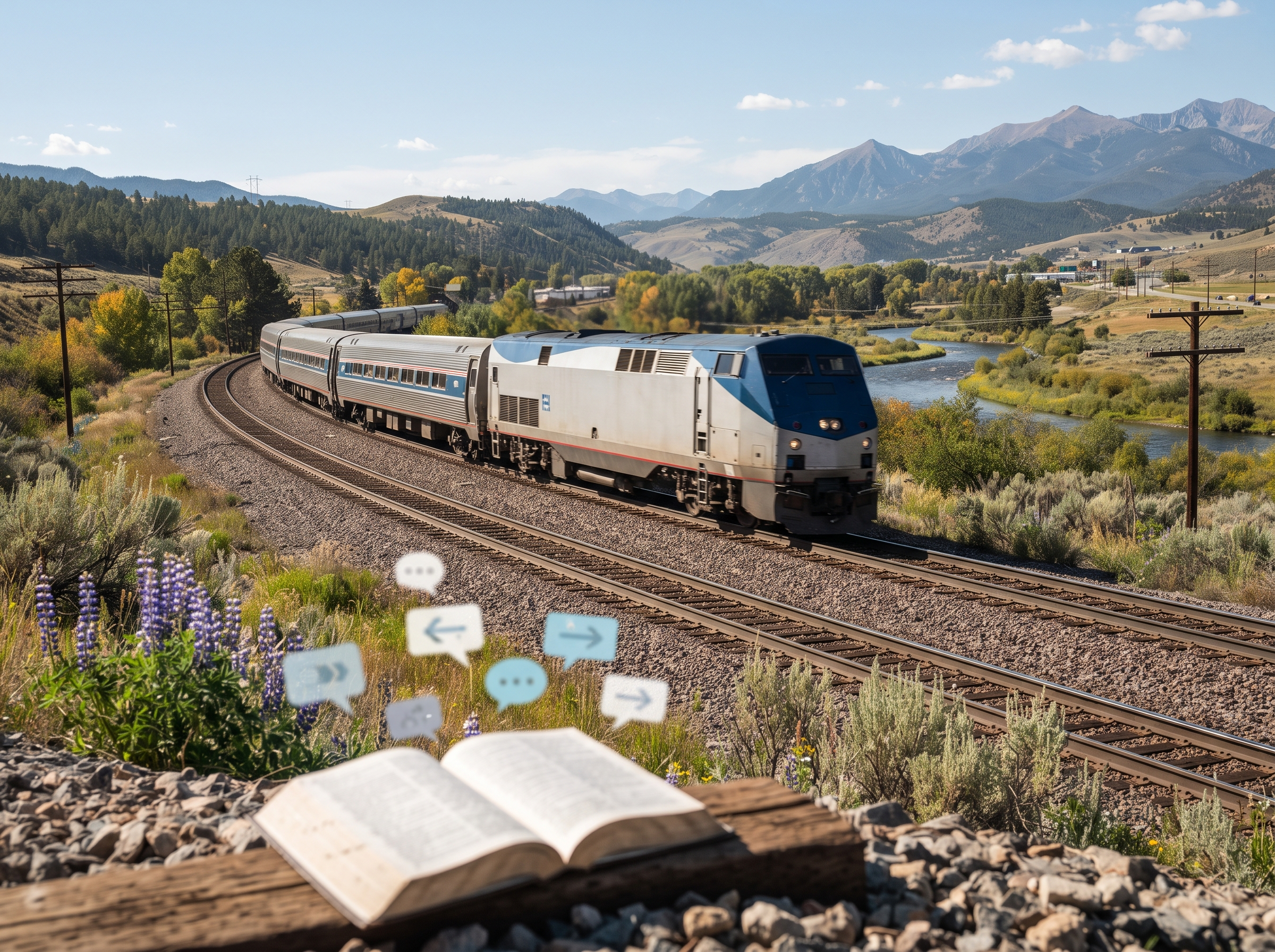
Train Idioms: 25 Common Expressions With Meanings and Examples
Train idioms are expressions that use trains, tracks, rails, stations, or railroad ideas to describe situations beyond transportation. In American English, these expressions can describe progress, direction, opportunities, thoughts, problems, money, and personal behavior. Some are strongly connected to trains, while others use railroad imagery that has become part of everyday English.
The word train itself has several meanings beyond a railroad vehicle. It can also refer to a sequence or series, which helps explain expressions such as train of thought. English dictionaries also recognize established expressions such as train of thought and put something in train.
Learning train idioms can help English learners understand conversations, workplace language, books, movies, and everyday American speech. Here are 25 useful expressions, with simple meanings and natural examples.
What Are Train Idioms?
Train idioms are figurative expressions based on trains and railroad imagery. Instead of talking about an actual train, speakers use words such as track, rail, station, steam, train, and gravy train to describe ideas and experiences.

For example, if someone says, “You’re on the right track,” they usually mean that you are doing something correctly or moving toward the right result. The expression does not necessarily have anything to do with a railroad.
Some expressions are closely associated with trains, while others are broader transportation expressions that use railway imagery. This distinction matters because not every phrase containing a railroad word is a strict dictionary-defined idiom.
Australian Idioms: https://learnidioms.com/australia-idioms/
25 Common Train Idioms and Expressions
1. On the Right Track
Meaning: Doing something correctly or moving in the right direction.
Example:
You’re on the right track with your research, but you need a few more sources.
This is one of the most useful train-related expressions in American English. It can describe schoolwork, business projects, personal decisions, or problem-solving.
2. On the Wrong Track
Meaning: Following the wrong approach or moving in the wrong direction.
Example:
If you think cutting customer service will solve the problem, you’re on the wrong track.
It is commonly used when someone needs to reconsider an idea, plan, or assumption.
3. Train of Thought
Meaning: A connected sequence of ideas or thoughts.
Example:
I lost my train of thought when someone interrupted the meeting.
This expression is especially common in conversation. You might use it when you forget what you were saying or thinking.
4. Go Off the Rails
Meaning: To become uncontrolled, chaotic, or unsuccessful.
Example:
The meeting went off the rails after everyone started arguing.
The British Council also teaches go off the rails as a transport-related idiomatic expression.
The expression can describe a person’s behavior, a project, a conversation, or an entire situation.
5. Off the Rails
Meaning: In a chaotic, uncontrolled, or problematic state.
Example:
The project was going well until the budget went completely off the rails.
Off the rails can describe the condition of something, while go off the rails emphasizes the change from normal or controlled progress.
6. Fast-Track
Meaning: To speed up a process or give something a quicker route toward completion.
Example:
The company fast-tracked her promotion because of her excellent performance.
It is common in business, government, education, and professional settings.
7. Track Record
Meaning: A person’s or organization’s history of performance or achievement.
Example:
The company has a strong track record of developing reliable products.
A track record is especially common in professional and business English.
8. Leave the Station
Meaning: To begin or reach a point where something is already underway.
Example:
We’ve finished the planning stage, and the project has officially left the station.
The literal image is a train departing from a station. Figuratively, it can describe an initiative, project, or process that has begun.

9. That Train Has Left the Station
Meaning: An opportunity or possibility has already passed.
Example:
If you wanted to apply for that position, the deadline was yesterday. That train has left the station.
This expression is often used when someone has waited too long to act.
10. Miss the Train
Meaning: To miss an opportunity or fail to act at the right time.
Example:
If we don’t submit the proposal today, we might miss the train.
The expression comes from the literal experience of arriving too late to catch a departing train. Because timing is central to the image, it can also be used figuratively for opportunities.
11. Full Steam Ahead
Meaning: To move forward with energy, determination, or maximum effort.
Example:
The team received approval, so it’s full steam ahead on the new project.
The expression comes from the era of steam-powered transportation and is now commonly used in a figurative sense.
12. Get Back on Track
Meaning: To return to a successful, organized, or appropriate course of action.
Example:
After a difficult month, we’re finally getting the business back on track.
This expression is useful when something has experienced a setback but is beginning to improve.
13. Keep Something on Track
Meaning: To make sure something continues according to plan.
Example:
Regular meetings help keep the project on track.
You can use this phrase for schedules, projects, teams, budgets, and goals.
14. Get Off Track
Meaning: To stop following the original plan or direction.
Example:
We got off track during the discussion and never returned to the main issue.
This expression is common in meetings and workplace conversations.
15. Jump the Track
Meaning: To move away from the expected direction or behave in an unexpected way.
Example:
The discussion jumped the track when the two managers began arguing about unrelated issues.
This expression is less common than go off the rails, so English learners should generally recognize it rather than force it into everyday conversation.
16. Wrong Side of the Tracks
Meaning: A less wealthy or less prestigious area of a town or community.
Example:
He grew up on the wrong side of the tracks but worked hard to build a successful career.
The phrase can carry social and class-related implications, so context matters. It is often used figuratively rather than as a literal description of railroad locations.
17. Riding the Gravy Train
Meaning: Benefiting from an easy or profitable situation, job, or opportunity.
Example:
Once the company signed that major contract, several departments were riding the gravy train.
A gravy train generally refers to a source of substantial benefit with relatively little effort or difficulty. The expression is listed among established phrases associated with the word “train.”
18. Gravy Train
Meaning: A situation that provides easy financial benefits or advantages.
Example:
For years, the exclusive contract was a gravy train for the company.
The expression can be used as a noun, while riding the gravy train describes benefiting from such a situation.
19. Train Wreck
Meaning: A complete disaster or extremely chaotic situation.
Example:
The presentation turned into a train wreck when the computer stopped working.
The phrase comes from the literal image of a serious train accident but is frequently used figuratively in casual American English.
20. Runaway Train
Meaning: A situation that seems to be moving out of control and becoming difficult to stop.
Example:
Without better planning, the project’s expenses could become a runaway train.
The expression creates a strong image of something moving forward without effective control.
21. Like a Train
Meaning: With great force, speed, or unstoppable momentum, depending on context.
Example:
The new product is selling like a train.
This construction is less standardized than expressions such as on the right track or train of thought, so learners should pay attention to context before using it.
22. Light at the End of the Tunnel
Meaning: A sign that a difficult situation is approaching an end.
Example:
After months of training, she finally sees the light at the end of the tunnel.
Although this is not technically a train idiom, it is strongly associated with railway imagery because trains travel through tunnels. It is best treated as a related transportation expression rather than a strict train idiom.

23. Put Something in Train
Meaning: To set something in motion or begin a process.
Example:
The agreement put several important changes in train.
This expression is established in English, but it is less common in everyday American conversation than get something started or set something in motion. Cambridge Dictionary lists put/set something in train as an idiomatic expression.
24. Set the Wheels in Motion
Meaning: To start a process that will lead to a particular result.
Example:
The new agreement set the wheels in motion for the company’s expansion.
This is a transportation-related expression rather than a strict train idiom, but it fits naturally with the larger group of movement and transportation metaphors in English.
25. Not the Whistle That Pulls the Train
Meaning: Talking or boasting does not produce results; actual work does.
Example:
He talks about his plans constantly, but it’s the work that matters. It’s not the whistle that pulls the train.
The expression appears in historical phrase collections with the meaning that loud talk should not be confused with the work that produces results.
Idioms Flocabulary: https://learnidioms.com/idioms-flocabulary/
Train Idioms About Progress and Direction
Several train expressions are particularly useful when talking about progress.
On the right track means that something is developing correctly. On the wrong track means that an approach is incorrect. Get back on track describes returning to a successful path after a problem, while keep something on track means to prevent a project or plan from losing direction.
These expressions work especially well in American workplaces, classrooms, and everyday conversations.
For example:
We had some problems last month, but the team is back on track.
Your first draft is on the right track.
We need a clear schedule to keep the project on track.
Train Idioms About Problems and Losing Control
Train imagery is also useful for describing situations that become difficult to control.
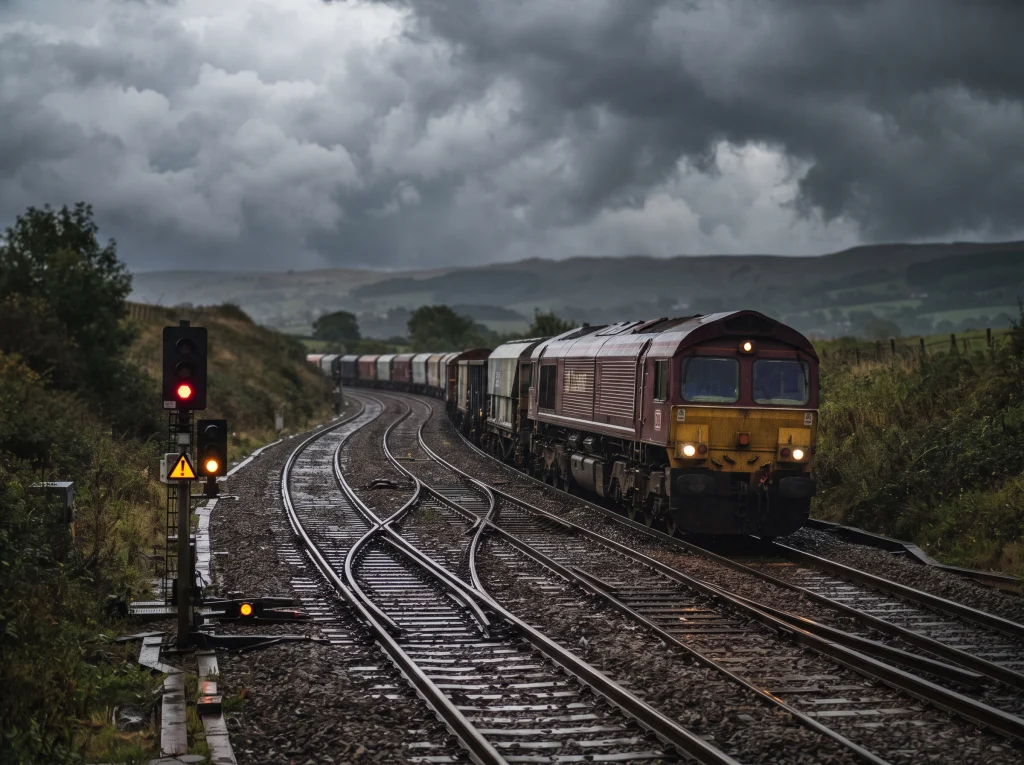
Go off the rails is one of the clearest examples. It can describe a meeting, plan, conversation, relationship, or project that stops progressing normally. Train wreck can describe something that has already become a major failure or chaotic situation, while runaway train suggests that a problem is gaining momentum and may be difficult to stop.
For example:
The negotiation went off the rails after the unexpected announcement.
The event was a train wreck from the beginning.
Rising expenses could become a runaway train.
Train Idioms About Opportunities and Timing
Train expressions often represent opportunities that arrive and depart.
Miss the train can describe failing to take advantage of an opportunity. That train has left the station is useful when the opportunity has already passed and cannot easily be recovered.
These expressions are particularly common when talking about deadlines, careers, business decisions, and personal opportunities.
For example:
Apply now if you want the position. Don’t miss the train.
We waited too long to make an offer. That train has left the station.
Train Idioms About Thinking and Work
Train of thought is one of the most useful expressions for everyday conversation. It refers to the sequence of ideas in someone’s mind.
You might say:
Sorry, I lost my train of thought.
That question interrupted my train of thought.
Other expressions, such as track record, are more common in professional situations. A company’s track record refers to its history of performance, while a person’s track record can describe previous achievements or results.
How to Use Train Idioms Naturally in American English
The best way to use train idioms is to match the expression with the situation instead of adding one simply because it contains a familiar railroad word.
Use on the right track when someone is progressing correctly. Use go off the rails when something becomes chaotic or uncontrolled. Use train of thought when talking about someone’s sequence of ideas. In professional settings, track record, fast-track, and keep something on track can sound natural when discussing performance, schedules, and projects.
It is also important to understand the difference between literal and figurative meanings. If someone says, “The train is late,” they are probably talking about transportation. If they say, “The project has gone off the rails,” they are talking about a problem with the project.
Some expressions in this group are more common than others. English learners should prioritize everyday expressions such as on the right track, train of thought, go off the rails, track record, get back on track, and full steam ahead before trying less common phrases.

Common Mistakes With Train Idioms
One common mistake is assuming that every expression containing train, track, or rail is a standard idiom. English contains many transportation metaphors, but their frequency and naturalness vary.
Another mistake is using an expression in the wrong context. For example, train of thought refers to someone’s sequence of ideas, not their general intelligence or knowledge. Similarly, track record refers to past performance, not a literal record of railroad tracks.
Learners should also avoid changing the wording of established expressions unnecessarily. Saying on the right track is natural, while inventing a different form such as on the correct train track changes the expression and can make the sentence sound unnatural.
Why Learn Train Idioms?
Train idioms are useful because they appear across everyday conversation, professional English, education, media, and informal writing. They also show how English speakers use physical movement to describe abstract ideas such as progress, direction, opportunity, and control.
For English learners, these expressions are particularly valuable because understanding their figurative meanings makes conversations easier to follow. Instead of trying to interpret every word literally, you can recognize the larger expression and understand what the speaker actually means.
The key is to learn each idiom together with its meaning and a natural example sentence. That approach makes it easier to recognize the expression when you hear it and use it appropriately when speaking or writing.
Conclusion
Train idioms add useful imagery to American English. Expressions such as on the right track, train of thought, go off the rails, track record, get back on track, and full steam ahead can describe everything from ideas and projects to opportunities and difficult situations.
Not every railroad-related expression is equally common, so focus first on phrases you are likely to encounter in everyday conversation and professional communication. Once you understand the figurative meaning and context of each expression, train idioms become much easier to recognize and use naturally.
Sarcastic Idioms: https://learnidioms.com/sarcastic-idioms/






2 Comments