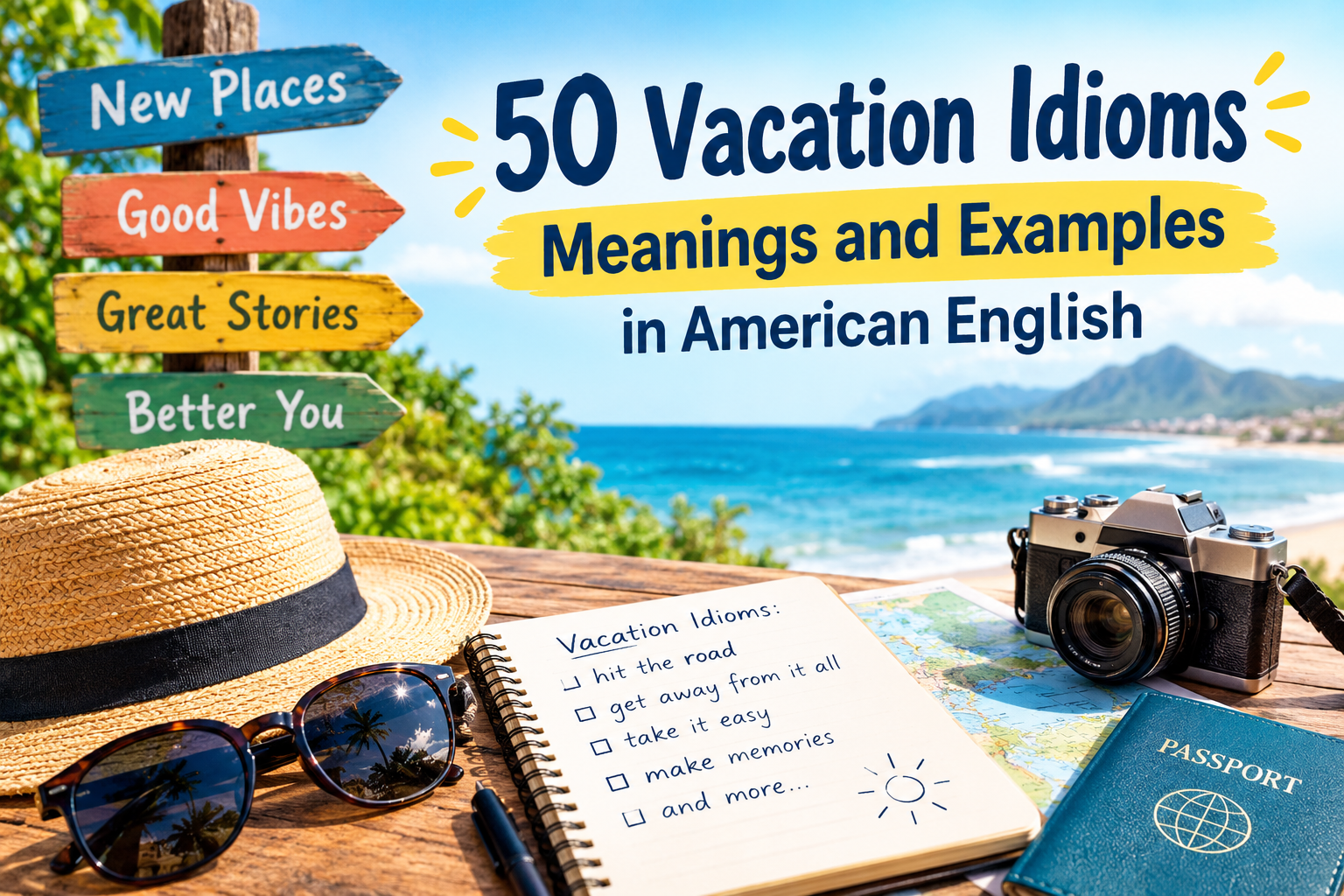
50 Vacation Idioms: Meanings and Examples in American English
Vacations are a wonderful opportunity to relax, spend time with loved ones, visit new places, and take a break from everyday responsibilities. When Americans talk about their travel plans or share stories about a recent trip, they often use colorful expressions that communicate feelings and experiences in just a few words. These expressions are known as idioms, and understanding them can make everyday English conversations easier to follow.
Vacation idioms are especially useful when discussing road trips, beach holidays, family getaways, sightseeing, and time away from work. For example, someone might say they need to “get away from it all” when they want to escape their usual routine. Another person might say they are “itching to travel” because they cannot wait to take another trip.
In this guide, you will learn 50 vacation idioms and travel expressions with simple meanings and practical example sentences. The expressions are organized by topic to help you understand when and how to use them naturally in American English.
What Are Vacation Idioms?
Vacation idioms are figurative expressions used when talking about traveling, relaxing, taking time off, or enjoying new experiences. Their intended meanings often differ from the literal meanings of the individual words.
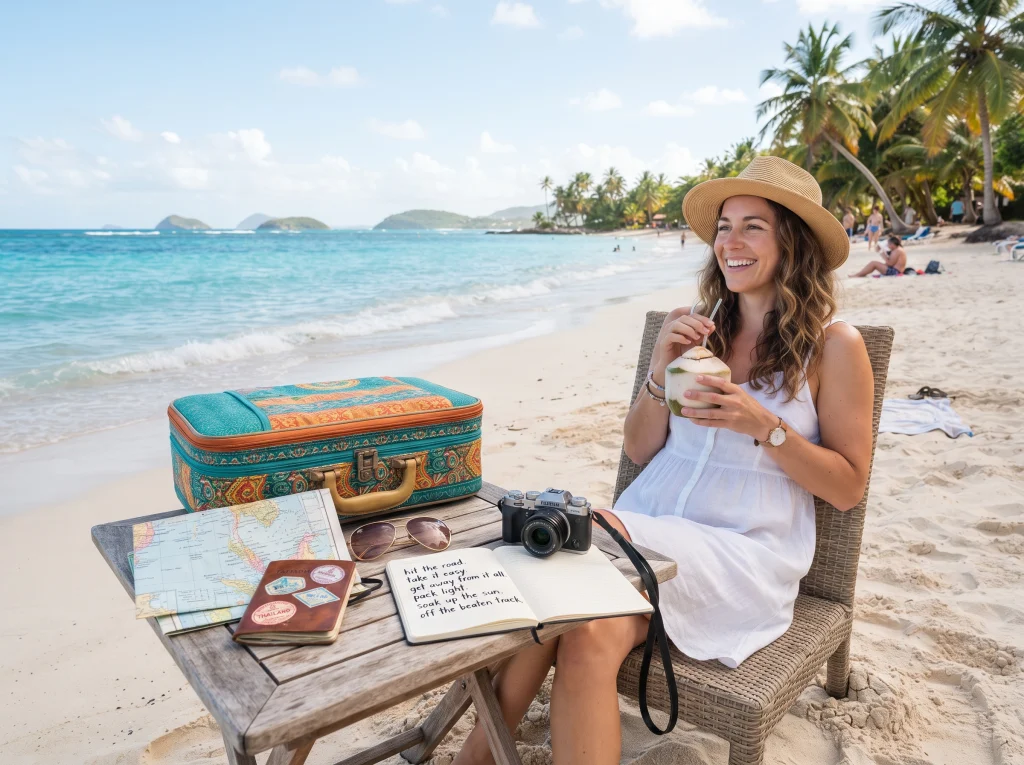
For example, “hit the road” does not mean physically striking a road. It means to begin a journey or leave a place. Similarly, “recharge your batteries” means to rest and regain energy rather than charge an electronic device.
In the United States, the word vacation is commonly used for leisure trips and time away from work or school. The word holiday is frequently associated with occasions such as Thanksgiving, Christmas, and Independence Day, although both words can have broader meanings depending on context.
Learning these expressions can help English learners understand conversations, communicate travel experiences, and make their spoken English sound more natural.
I Love You Idioms:https://learnidioms.com/i-love-you-idioms/
50 Common Vacation Idioms and Their Meanings
The following expressions include idioms and closely related conversational phrases that people use when discussing vacations, travel, and leisure.
Idioms About Relaxing and Taking Time Off
These expressions are useful when talking about rest, stress relief, and enjoying free time.

1. Get away from it all
Meaning: To escape daily responsibilities, stress, or routine for a while.
Example: After months of working overtime, we decided to get away from it all with a quiet weekend in the mountains.

2. Recharge your batteries
Meaning: To rest and regain your energy.
Example: I am taking a week off to recharge my batteries before the busy season begins.

3. Kick back
Meaning: To relax and enjoy yourself without worrying about responsibilities.
Example: We spent the afternoon kicking back by the hotel pool.

4. Take it easy
Meaning: To relax and avoid doing too much.
Example: We do not have any plans for Saturday, so we are going to take it easy.

5. Let your hair down
Meaning: To relax, have fun, and behave more freely than usual.
Example: After finishing her exams, Mia went to the beach with friends to let her hair down.

6. Catch some rays
Meaning: To spend time enjoying the sunshine.
Example: We headed to the beach to catch some rays before dinner.

7. Soak up the sun
Meaning: To enjoy being outside in the sunshine.
Example: The family spent the morning soaking up the sun along the coast.

8. Take a breather
Meaning: To pause and rest, especially after being busy or active.
Example: We stopped at a scenic overlook to take a breather during our hike.

9. A change of scenery
Meaning: A different environment that offers a break from the usual routine.
Example: Spending a few days near the ocean was exactly the change of scenery I needed.

10. Take a load off
Meaning: To sit down and relax after being busy or tired.
Example: Come inside, take a load off, and tell us about your trip.
Idioms About Travel, Adventure, and New Experiences
Use these expressions when discussing road trips, exploring destinations, and the excitement of traveling.

11. Hit the road
Meaning: To begin a journey or leave a place.
Example: We packed the car after breakfast and hit the road toward Colorado.

12. Travel light
Meaning: To travel with only a small amount of luggage.
Example: I prefer to travel light so I can move easily between airports and hotels.

13. Take the scenic route
Meaning: To choose a route for its beautiful views, even if it takes longer.
Example: We took the scenic route through the countryside instead of using the highway.

14. Off the beaten path
Meaning: Away from the usual or popular places that tourists visit.
Example: We found a charming little restaurant off the beaten path.

15. Get itchy feet
Meaning: To feel a strong desire to travel or move somewhere new.
Example: After spending the winter at home, I started getting itchy feet and planning another trip.

16. Catch the travel bug
Meaning: To develop a strong interest in traveling.
Example: I caught the travel bug after my first trip to New York City.

17. The trip of a lifetime
Meaning: An especially memorable or extraordinary journey.
Example: Our family vacation to Alaska was the trip of a lifetime.

18. See the sights
Meaning: To visit interesting or famous places in a destination.
Example: We spent our first day in Washington, D.C., seeing the sights.

19. A tourist trap
Meaning: A place that attracts visitors but may charge high prices or offer an experience aimed mainly at tourists.
Example: The restaurant near the landmark looked like a tourist trap, so we ate somewhere else.

20. Have the time of your life
Meaning: To enjoy yourself extremely much.
Example: The kids had the time of their lives at the national park.
Idioms About Vacation Planning and Departure
These expressions help you talk about preparing for a trip, making plans, and getting ready to leave.

21. Pack your bags
Meaning: To prepare to leave for a trip or move to another place.
Example: Pack your bags. We are leaving for the airport in two hours.

22. Set off
Meaning: To begin a journey.
Example: We set off before sunrise to avoid heavy traffic.

23. Map something out
Meaning: To plan something carefully by deciding how it will happen.
Example: We mapped out our road trip so we would have time to visit several national parks.

24. Get the ball rolling
Meaning: To start a process or activity.
Example: Let’s get the ball rolling by choosing our vacation dates.

25. Pencil something in
Meaning: To make a tentative plan that may change later.
Example: We penciled in a beach weekend for July, but we have not booked anything yet.

26. Be on your way
Meaning: To have started traveling toward a destination or to be ready to leave.
Example: We finished breakfast and were on our way to the airport by eight.

27. Make a beeline for
Meaning: To go directly toward a particular person or place.
Example: As soon as we reached the resort, the kids made a beeline for the swimming pool.

28. In the nick of time
Meaning: Just before it becomes too late.
Example: We arrived at the gate in the nick of time and boarded before the doors closed.

29. All set
Meaning: Fully prepared and ready for something.
Example: We have our tickets, bags, and hotel confirmation, so we are all set for vacation.

30. Tie up loose ends
Meaning: To finish small remaining tasks before leaving or completing something.
Example: I need to tie up a few loose ends at work before starting my vacation.
Idioms About Vacation Problems and Unexpected Situations
Travel does not always go according to plan. These expressions help describe delays, difficulties, and changes.

31. In the same boat
Meaning: To be in the same situation as someone else, especially a difficult one.
Example: Our flight was canceled, but at least we were in the same boat as hundreds of other passengers.

32. Miss the boat
Meaning: To miss an opportunity.
Example: We missed the boat on the early hotel discount because we waited too long to book.

33. Take a rain check
Meaning: To postpone an invitation, activity, or plan until another time.
Example: We had to take a rain check on the boat tour because of the storm.

34. Hit a snag
Meaning: To encounter an unexpected problem or obstacle.
Example: Our road trip hit a snag when we got a flat tire outside the city.

35. Throw a wrench in the works
Meaning: To cause a problem that disrupts a plan or process.
Example: The unexpected storm threw a wrench in the works and forced us to change our itinerary.

36. A blessing in disguise
Meaning: Something that initially seems unfortunate but later turns out to be beneficial.
Example: Missing our original train was a blessing in disguise because the next one took a more beautiful route.

37. Go back to the drawing board
Meaning: To start planning again because the original idea or plan did not work.
Example: Our campground was fully booked, so we had to go back to the drawing board and find another place to stay.

38. Play it by ear
Meaning: To decide what to do as a situation develops rather than making a fixed plan.
Example: We have a few ideas for the weekend, but we will play it by ear depending on the weather.

39. Roll with the punches
Meaning: To adapt calmly to difficulties or unexpected changes.
Example: Our hotel reservation was lost, but we rolled with the punches and found another place nearby.

40. Smooth sailing
Meaning: A situation that progresses easily without major problems.
Example: After getting through airport security, the rest of our trip was smooth sailing.
Idioms About Enjoyment, Memories, and Returning Home
These expressions are helpful when describing memorable vacations, happy moments, and the return to everyday life.

41. Live it up
Meaning: To enjoy yourself fully, often by doing exciting or entertaining things.
Example: We decided to live it up on our last night in Las Vegas and enjoy a special dinner.

42. Have a whale of a time
Meaning: To have a very enjoyable time.
Example: The children had a whale of a time at the water park.

43. Home away from home
Meaning: A place away from your actual home where you feel comfortable and welcome.
Example: We have stayed at the same family cabin for years, and it feels like a home away from home.

44. Make memories
Meaning: To create experiences that you will remember in the future.
Example: We took the kids camping to make memories they would cherish for years.

45. A trip down memory lane
Meaning: An experience that brings back memories of the past.
Example: Looking through our old vacation pictures was a trip down memory lane.

46. Back to square one
Meaning: To return to the beginning after an attempt or plan fails.
Example: Our connecting flight was canceled, and we were back to square one with our travel arrangements.

47. Back to the grind
Meaning: Returning to work or routine after a break.
Example: Our beach vacation was wonderful, but now it is back to the grind at the office.

48. Call it a day
Meaning: To stop an activity or work for the time being.
Example: After visiting three museums, we decided to call it a day and head back to the hotel.

49. Pick up where you left off
Meaning: To resume an activity from the point where you previously stopped.
Example: After returning from vacation, I picked up where I left off on my work project.

50. All good things must come to an end
Meaning: Even enjoyable experiences eventually finish.
Example: We wished we could stay at the lake another week, but all good things must come to an end.
How to Use Vacation Idioms Naturally in American English
Knowing an idiom’s meaning is only the first step. To use it naturally, pay attention to the situation, the tone of the conversation, and the way the expression fits into a sentence.

1. Match the idiom to the situation
Choose an expression that accurately describes what is happening. For example, use “hit the road” when you are beginning a trip, “take it easy” when you want to relax, and “hit a snag” when an unexpected problem interrupts your plans.
2. Use idioms in everyday conversations
Many vacation expressions are informal and work particularly well when speaking with friends, family, or coworkers.
For example:
- “We are hitting the road early tomorrow.”
- “I really need to recharge my batteries.”
- “Let’s play it by ear and see how the weather looks.”
3. Avoid using too many idioms together
One well-chosen idiom often sounds more natural than several expressions crowded into one sentence. Instead of saying, “We hit the road, caught the travel bug, lived it up, and had a whale of a time,” choose the expression that best communicates your main point.
4. Practice with your own vacation stories
Think about a trip you have taken or one you would like to take. Describe when you left, what you enjoyed, whether you faced any problems, and how you felt afterward. Try including two or three suitable idioms in your story.
Common Mistakes When Learning Vacation Idioms
English learners sometimes misunderstand vacation idioms because their literal meanings do not explain their intended meanings.
| Idiom | Common misunderstanding | Correct meaning |
|---|---|---|
| Hit the road | Physically striking a road | Begin a journey or leave |
| Miss the boat | Missing an actual boat | Miss an opportunity |
| Catch the travel bug | Catching an illness | Developing a strong desire to travel |
| Take a rain check | Checking whether it will rain | Postponing a plan until another time |
| Recharge your batteries | Charging electronic batteries | Resting to regain energy |
| Off the beaten path | Walking on a damaged path | Away from popular or usual destinations |
Another common mistake is using an expression in a situation that does not fit its meaning. For example, “a blessing in disguise” describes something that initially appears unfortunate but eventually proves beneficial. It should not be used for every ordinary inconvenience.
Remember that context matters. Listening to how people use idioms in conversations, television shows, podcasts, and travel stories can help you understand their tone and appropriate usage.
Frequently Asked Questions About Vacation Idioms
Conclusion
Vacation idioms make it easier to describe the excitement of traveling, the comfort of relaxing, and the unexpected moments that can happen along the way. Expressions such as “hit the road,” “get away from it all,” and “smooth sailing” allow you to communicate familiar experiences in a concise and conversational way.