Sevilla or Seville? Meaning, Differences, Attractions, and Travel Guide
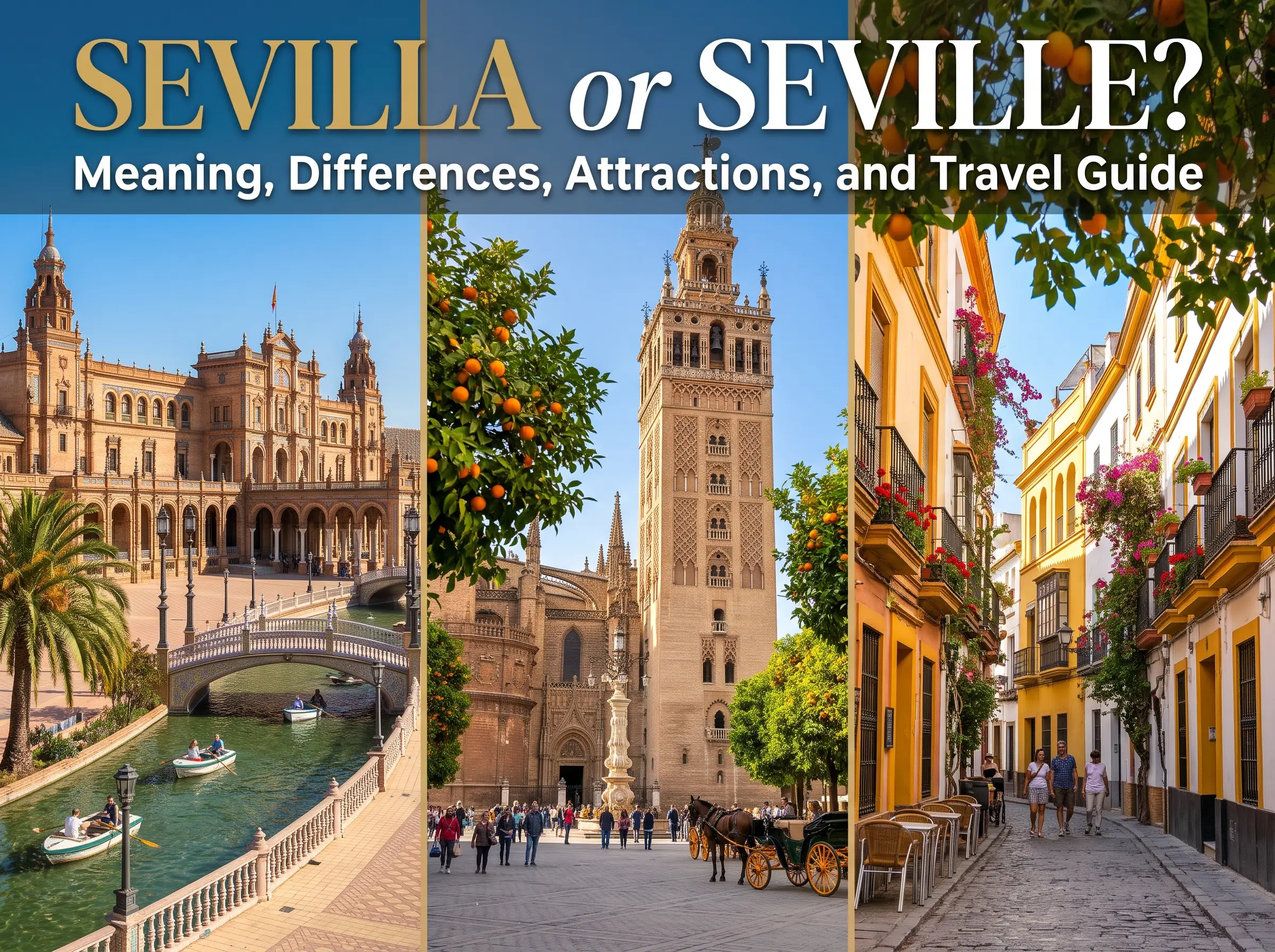
If you are planning a trip to southern Spain, you may notice that one famous destination appears under two different names: Sevilla and Seville. Both refer to the same beautiful city in Andalusia, known for its historic architecture, flamenco dancing, traditional Spanish food, and lively streets.
The difference is mainly linguistic. Sevilla is the Spanish name, while Seville is the English name for the same city. You do not need to choose between two destinations when comparing Sevilla or Seville because both names identify the capital of Andalusia.
For American travelers, understanding the difference can make searching for flights, hotels, attractions, and travel information easier. This guide explains the two names, compares their usage, and covers the best attractions, local food, transportation, and travel tips for visiting this historic Spanish city.
Sevilla or Seville: What’s the Difference?
Sevilla and Seville are two names for the same city in southwestern Spain. Sevilla is the official Spanish-language name, while Seville is the traditional English-language form.
The city is located along the Guadalquivir River and serves as the capital of the autonomous community of Andalusia. It is one of Spain’s best-known cultural destinations, attracting visitors interested in architecture, history, music, food, and traditional festivals.
Here is a simple comparison:
| Feature | Sevilla | Seville |
|---|---|---|
| Language | Spanish | English |
| Location | Andalusia, Spain | Andalusia, Spain |
| Country | Spain | Spain |
| Meaning | Spanish city name | English city name |
| Destination | Same city | Same city |
| Common usage | Spanish maps and local communication | English travel guides and websites |
For example, a Spanish resident might say, “Vivo en Sevilla,” meaning “I live in Seville.” Both sentences refer to exactly the same location.
When searching for accommodation or attractions, you may encounter either spelling. Using both terms can help you find a wider range of travel information.
Why Does the City Have Two Names?
The difference between Sevilla and Seville comes from language and historical naming traditions. Spanish speakers use “Sevilla,” while English speakers traditionally use the adapted name “Seville.”
Many European cities have different names in different languages. For example, München is known as Munich in English, while Firenze is called Florence. Sevilla and Seville follow the same naming pattern.
The Spanish name is used on local road signs, train stations, official documents, and Spanish-language websites. English-language travel publications commonly use Seville because it is familiar to international readers.
Both names are correct in their respective language contexts. If you are booking a hotel or searching for a flight from the United States, either spelling can help you find the destination.
Sevilla vs. Seville: Key Differences
Although the names are different, there are no differences in location, attractions, climate, or culture.
| Comparison | Sevilla | Seville |
|---|---|---|
| Official Spanish spelling | Yes | No |
| Traditional English spelling | No | Yes |
| Country | Spain | Spain |
| Region | Andalusia | Andalusia |
| Local language | Spanish | Spanish |
| Famous landmark | Real Alcázar | Real Alcázar |
| Main airport code | SVQ | SVQ |
| River | Guadalquivir | Guadalquivir |
One useful distinction is that Sevilla is also the name used by local institutions, including the city’s football club, Sevilla FC. International English-language publications generally use Seville when discussing the destination.
For American visitors, searching for “Seville, Spain” is often the easiest way to find English travel information, while “Sevilla, España” is useful when looking for local Spanish resources.
Best Things to Do in Sevilla (Seville)
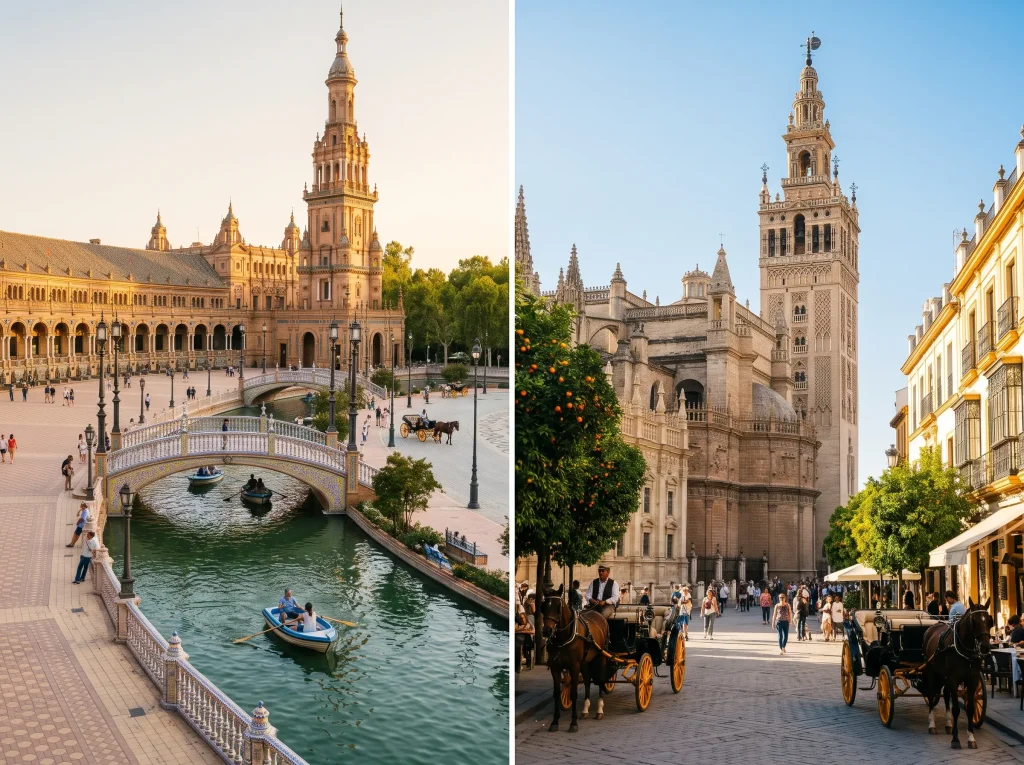
Seville offers a combination of historic monuments, beautiful public spaces, traditional neighborhoods, food markets, and live entertainment. Many of its most famous attractions are located within walking distance of one another.
4.7
4.6
4.8
3.9
4.7
Use two fingers to move the map
Use ctrl + scroll to zoom the map
1. Visit the Royal Alcázar of Seville
How to spend the perfect weekend in Seville – Lonely Planet
Séville : Accès rapide à l’Alcazar avec visite guidée | GetYourGuide
7
The Royal Alcázar of Seville is one of the city’s most impressive historic landmarks. This royal palace complex features beautiful courtyards, detailed decorative tiles, carved arches, and peaceful gardens.
Its architecture reflects several historical influences, including Islamic and Christian traditions. Visitors can explore its decorated rooms, landscaped gardens, and impressive palace spaces.
The Alcázar is also a popular filming location, including for the television series Game of Thrones. Booking tickets in advance is advisable, particularly during busy travel periods.
2. Explore Seville Cathedral and La Giralda
10 Things Seville, Spain is Known For
Seville – Indoor of Cathedral Santa Maria de la Sede.
Book Seville Cathedral Tickets & Tours | Headout
6
The Seville Cathedral is one of the largest Gothic churches in the world. Its impressive interior contains religious artwork, historical monuments, and the tomb traditionally associated with Christopher Columbus.
The adjoining La Giralda is the cathedral’s famous bell tower. Visitors can climb its ramps to enjoy panoramic views of the city.
The cathedral, Giralda, and nearby Royal Alcázar are among Seville’s most important historic attractions. Spain.info+1
3. Take Photos at Plaza de España
10 Best Fully Guided Tours in Spain 2026/2027 – TourRadar
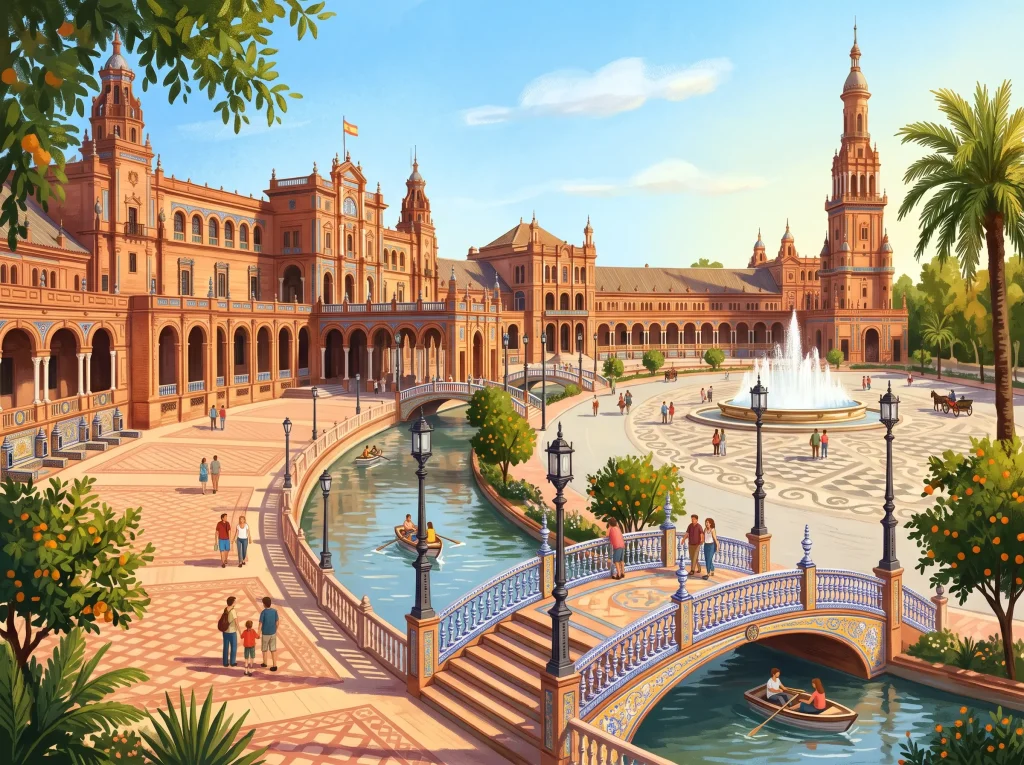
Plaza de España is one of the most recognizable public spaces in Spain. Its large semicircular building features decorative ceramic tiles, beautiful bridges, a central fountain, and a canal.
The square was built for the Ibero-American Exposition of 1929. Its colorful architecture makes it especially popular with photographers and visitors.
You can walk around the square, admire the detailed tilework, or take a small boat ride along the canal when available.
4. Walk Along the Guadalquivir River
The Best Time To Visit Seville: A Month-By-Month Guide
The Guadalquivir River adds another beautiful feature to Seville’s historic landscape. Walking along its banks provides views of bridges, historic buildings, boats, and riverside restaurants.
The Torre del Oro is one of the best-known landmarks beside the river. This historic defensive tower now houses a maritime museum.
Visitors can also enjoy boat trips to see parts of the city from the water.
5. Explore the Triana Neighborhood
Seville Fair 2026: What To Know Before You Go
Discover Authentic Artisan Workshops in Triana, Seville
My Blog: Travel tales & tips for planning your own adventures – Enjoy Living Abroad
5
Triana is known for its traditional ceramics, flamenco culture, lively restaurants, and colorful streets.
Located across the Guadalquivir River from the historic center, Triana offers a different atmosphere from the main tourist areas. Calle Betis is particularly popular for riverside views, cafés, and evening dining.
You can also visit local ceramic shops and enjoy traditional Andalusian food in neighborhood restaurants. Spain.info+2
Food, Culture, and Local Traditions
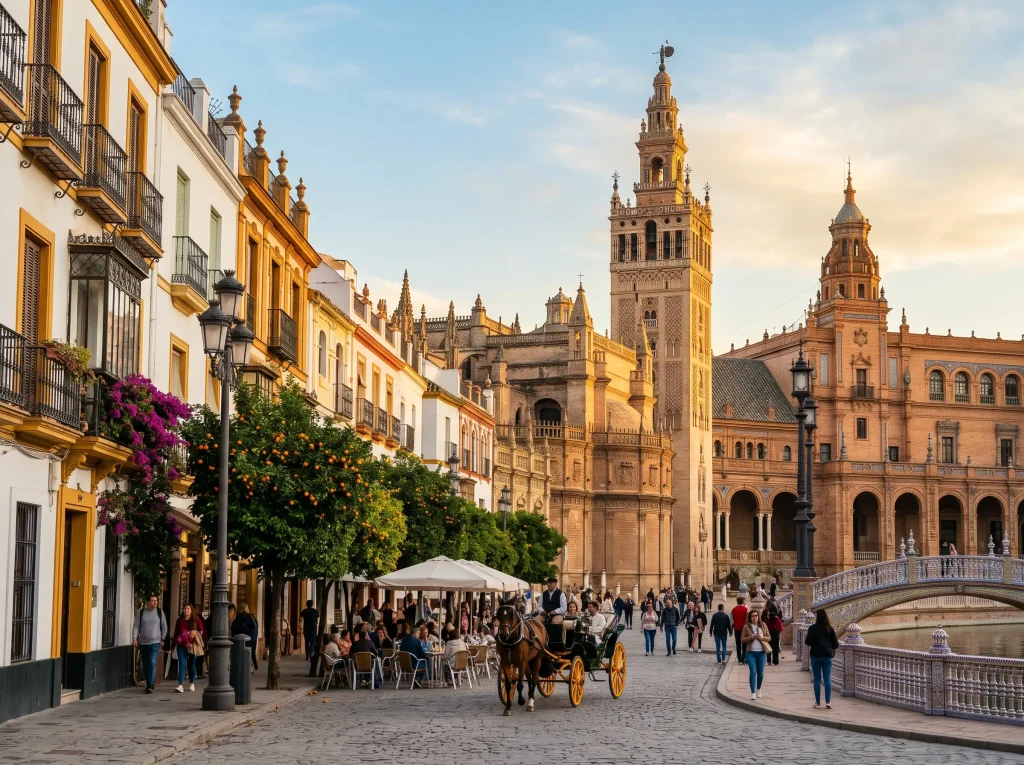
Seville is an excellent destination for travelers interested in Spanish food and Andalusian traditions. Its culinary culture revolves around tapas, shared meals, local ingredients, and lively restaurants.
Traditional Foods to Try
BARES SEVILLA ESPINACAS | Las mejores espinacas con garbanzos de Sevilla
Fish & Seafood recipes | Cuisine and Gastronomy | Andalucia.com of Andalucia, Southern Spain
6
Some popular local dishes include:
- Tapas: Small portions of food served in bars and restaurants, often shared among friends.
- Gazpacho: A chilled tomato-based vegetable soup, especially popular during warm weather.
- Salmorejo: A thick, chilled tomato and bread soup often topped with egg and cured ham.
- Espinacas con garbanzos: Spinach cooked with chickpeas and traditional seasonings.
- Pescaíto frito: Small pieces of fish coated and fried until crispy.
- Jamón Ibérico: A famous Spanish cured ham made from Iberian pigs.
Triana, Santa Cruz, and El Arenal are popular areas for traditional tapas and local dining. Turismo Andalucía+1
Flamenco Dancing and Music
lacasadelflamencosevilla.sacatuentrada.es
Flamenco is one of Andalusia’s most recognizable cultural traditions. It combines expressive dancing, singing, guitar music, and rhythmic handclapping.
Seville has many venues where visitors can watch live performances. Traditional flamenco shows, particularly in Triana and the historic center, offer an opportunity to appreciate this important part of local culture.
Semana Santa and Feria de Abril
Hermandades y cofradías de la Semana Santa de Sevilla
Feria de Abril 2023: ¿qué tiempo va a hacer en Sevilla?
Two major celebrations shape Seville’s cultural calendar.
Semana Santa, or Holy Week, takes place during the week leading up to Easter Sunday. Religious brotherhoods organize processions through the streets, featuring elaborate floats, traditional clothing, and music.
Feria de Abril, or April Fair, is a major spring festival featuring decorated tents, traditional dresses, dancing, food, and social gatherings.
Both events attract many visitors, so accommodation and transportation should be arranged early if you plan to attend. Spain.info+2
Best Time to Visit Sevilla
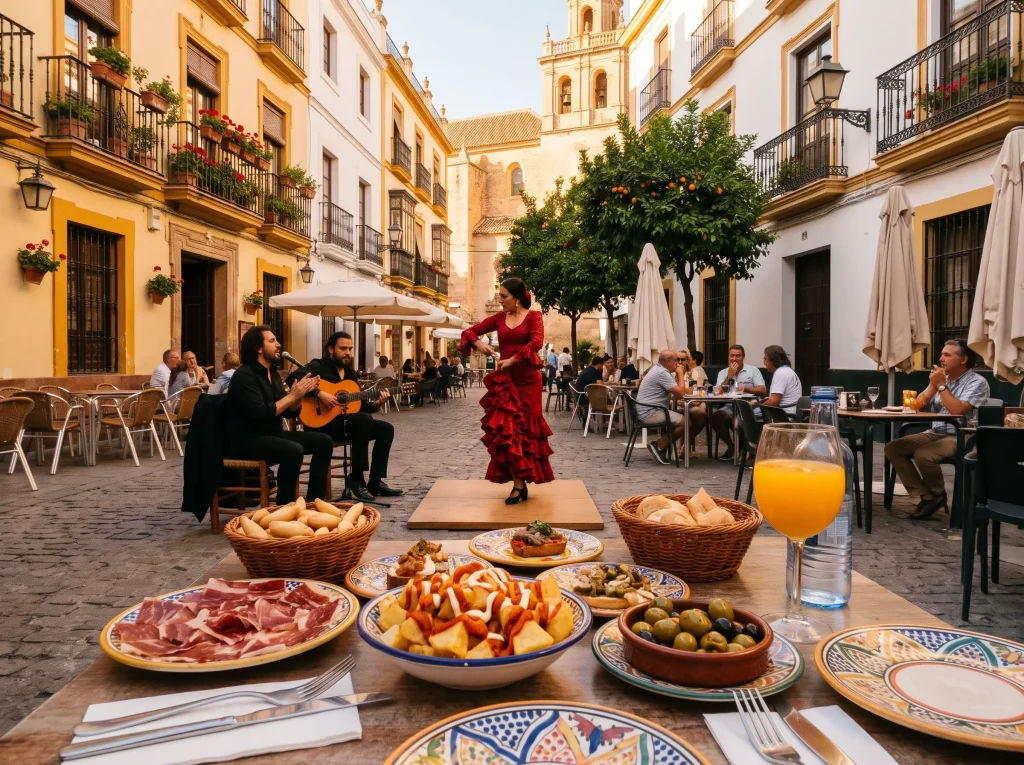
The best time to visit Seville is generally spring or fall, when temperatures are more comfortable for walking and sightseeing.
| Season | Weather and atmosphere | Travel recommendation |
|---|---|---|
| Spring (March to May) | Pleasant temperatures, flowers, festivals | Excellent for sightseeing |
| Summer (June to August) | Extremely hot and sunny | Plan activities early or late |
| Fall (September to November) | Warm days and cooler evenings | Excellent for relaxed travel |
| Winter (December to February) | Mild temperatures and fewer crowds | Good for cultural sightseeing |
Spring is particularly attractive because orange trees bloom and major celebrations take place. However, Holy Week and the April Fair can bring higher hotel prices and larger crowds.
Summer requires more planning because temperatures can exceed 100°F (38°C), particularly in July and August. Visitors should schedule outdoor activities for early mornings and evenings and take breaks during the hottest part of the day.
Fall is another excellent option for travelers who prefer fewer festival crowds and comfortable sightseeing conditions. Turismo de la Provincia de Sevilla+2
How to Get Around Seville
Seville is a relatively walkable city, particularly around its historic center. Many major attractions, including the cathedral, Alcázar, and Santa Cruz neighborhood, are close enough to visit on foot.
Walking
Walking is one of the best ways to explore the narrow streets, historic squares, and traditional neighborhoods. Wear comfortable shoes because some streets have uneven paving and cobblestones.
Public Transportation
The city offers several transportation options:
- City buses: Useful for reaching areas outside the historic center.
- Metro: Helpful for certain longer journeys across the city.
- Tram: Connects parts of the central area.
- Bicycle rental: Seville has an extensive cycling network and a public bike-sharing service.
Airport Transfers
Seville Airport (SVQ), also called San Pablo Airport, is approximately 10 kilometers from the city center.
Travelers can reach central Seville by airport bus, taxi, or car. The airport bus generally takes around 35 minutes, depending on traffic. Spain.info+2
Where to Stay in Sevilla
Choosing the right neighborhood can make your visit more convenient. Seville offers accommodation ranging from luxury hotels to boutique properties and budget-friendly hostels.
Santa Cruz
Best for first-time visitors who want to stay near the cathedral, Alcázar, historic streets, and major attractions.
El Arenal
Suitable for travelers interested in riverside walks, restaurants, historic attractions, and evening entertainment.
My Blog: Travel tales & tips for planning your own adventures – Enjoy Living Abroad
Triana
A good choice for travelers interested in local culture, ceramics, flamenco, and traditional food.
Alameda de Hércules – Visita Sevilla – EN
Alameda de Hércules
Popular with visitors who enjoy cafés, nightlife, independent restaurants, and a lively atmosphere.
For a first visit, Santa Cruz or El Arenal offers convenient access to many major attractions. Triana is worth considering if you prefer a neighborhood with a strong local identity.
Travel Tips for American Visitors
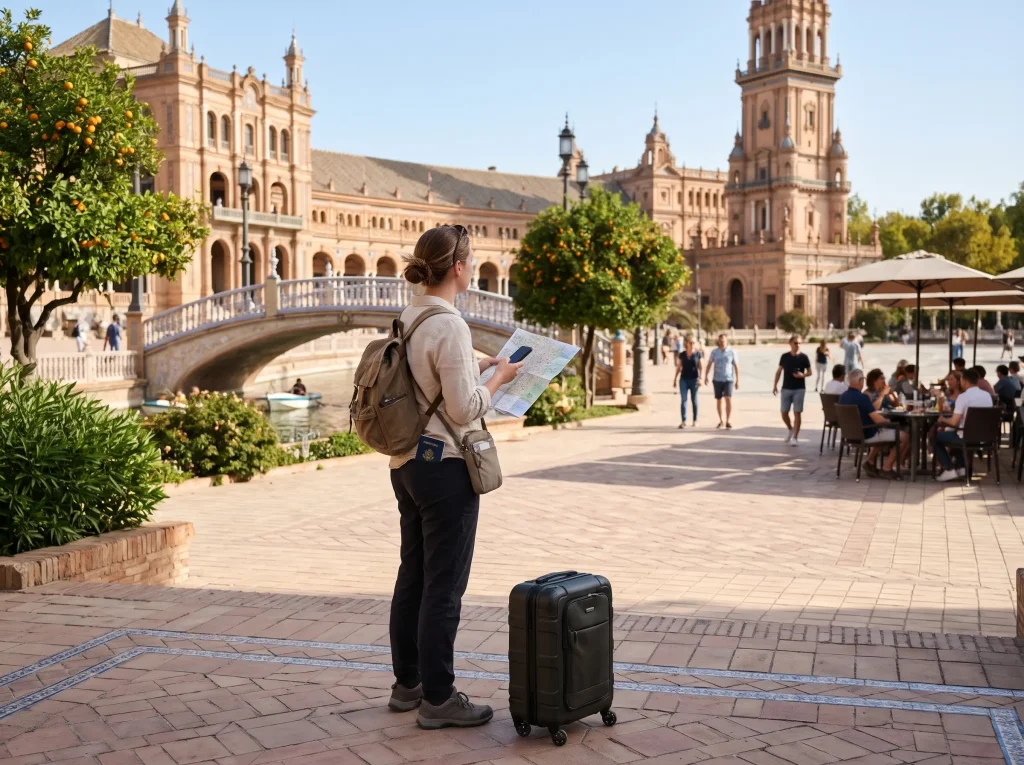
If you are traveling from the United States to Seville, a little preparation can make your trip easier.
1. Check your entry requirements: U.S. citizens generally do not need a visa for short tourist visits to Spain within the Schengen Area, subject to the applicable 90-day limit in any 180-day period. Check current entry requirements before departure.
2. Carry euros: Spain uses the euro (€). Credit and debit cards are widely accepted, but carrying some cash is useful for small purchases.
3. Prepare for different electrical outlets: Spain uses Type C and Type F outlets and a 230-volt electrical supply. American visitors may need a plug adapter and, for incompatible appliances, a voltage converter.
4. Book major attractions ahead: The Royal Alcázar and Seville Cathedral can become busy, especially during spring festivals and holiday periods.
5. Learn a few Spanish phrases: Simple expressions such as “Hola” (hello), “Gracias” (thank you), and “Por favor” (please) can make everyday interactions easier.
6. Plan around the heat: Summer temperatures can be intense. Carry water, use sun protection, and schedule outdoor sightseeing for cooler hours.
7. Consider the train: Spain’s high-speed AVE service connects Seville with Madrid and other major cities. Santa Justa is the city’s main railway station. Spain.info+2
Frequently Asked Questions:
Conclusion
Sevilla and Seville are two names for the same historic city in southern Spain. Sevilla is the Spanish spelling, while Seville is the traditional English version. Neither name refers to a different destination.
Whether you call it Sevilla or Seville, the city offers beautiful architecture, historic palaces, flamenco performances, traditional tapas, and lively neighborhoods. From the Royal Alcázar and Seville Cathedral to Plaza de España and Triana, there is plenty to enjoy during a visit.