Sitted or Seated? Meaning, Difference, and Correct Usage in American English
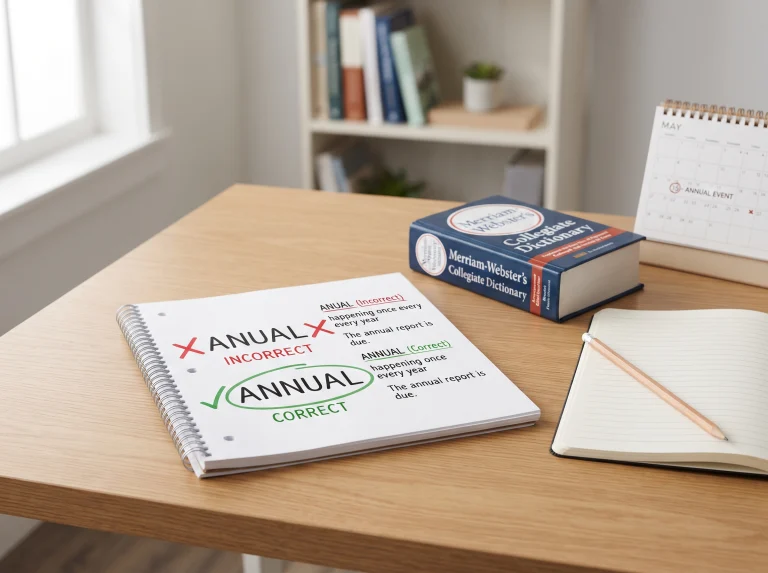
If you have ever wondered whether to say “sitted” or “seated,” you are not alone. English learners often assume that sit should become sitted because many English verbs form their past tense by adding -ed. However, sit is an irregular verb, so it does not follow that pattern.
In standard American English, “sitted” is not the correct past tense of “sit.” The correct past tense is “sat,” while “seated” is a separate word that comes from the verb seat. Cambridge lists the forms of sit as sit, sitting, sat, and sat.
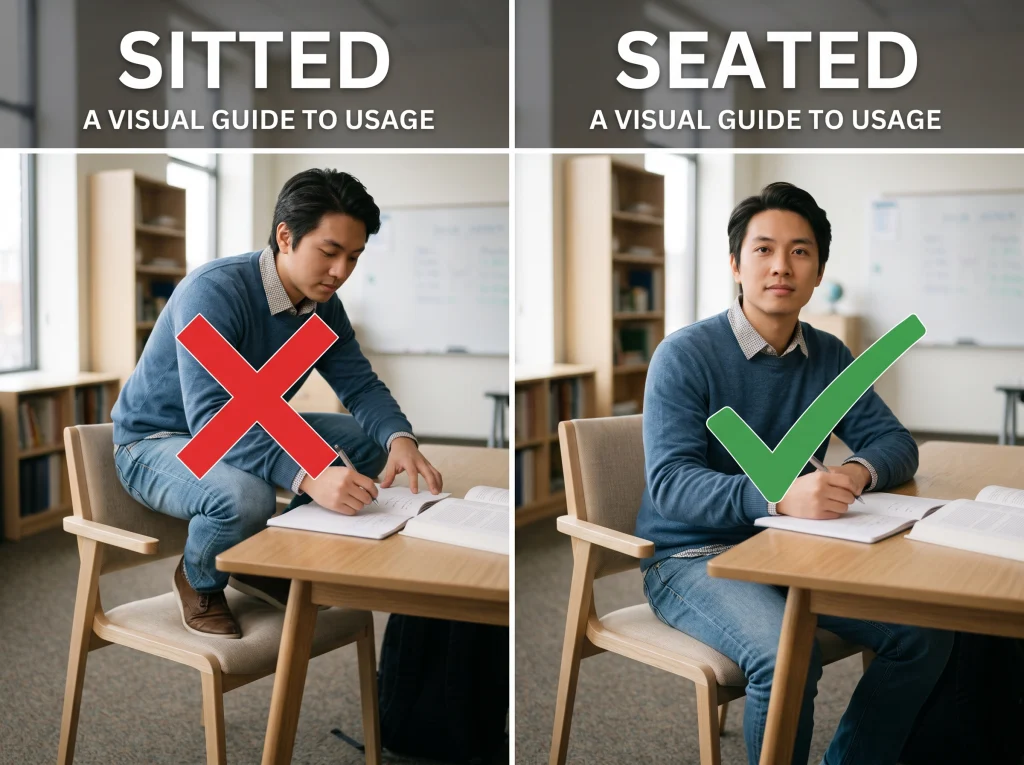
The easiest way to remember the difference is simple: you sat in a chair, you are sitting in a chair, and you are seated in a chair. You normally do not say “I sitted in a chair.”
Sitted or Seated: Which Is Correct?
Seated is a correct English word, but “sitted” is not the standard past form of “sit.”
The verb sit has these important forms:
| Verb form | Correct word | Example |
|---|---|---|
| Base form | sit | I sit here every morning. |
| Present participle | sitting | I am sitting here now. |
| Simple past | sat | I sat here yesterday. |
| Past participle | sat | I have sat here before. |
| Related verb | seat | Please seat the guests. |
| Past form of seat | seated | The guests were seated. |
The important point is that sat is the past tense and past participle of sit. Seated belongs to the different verb seat, although it is also commonly used as an adjective describing someone’s position.
So:
- ❌ I sitted on the chair.
- ✅ I sat on the chair.
- ✅ I was sitting on the chair.
- ✅ I was seated on the chair.
What Does “Sitted” Mean?
“Sitted” is generally considered an incorrect or nonstandard form in modern standard American English.
People usually use sitted because they assume that sit follows the regular pattern of verbs such as walk → walked or talk → talked. But English contains many irregular verbs, and sit is one of them.
Instead of saying:
“She sitted beside me.”
say:
“She sat beside me.”
For an ongoing action, say:
“She was sitting beside me.”
And when describing someone’s position, you can say:
“She was seated beside me.”
Learning the three words sat, sitting, and seated will help you avoid most mistakes involving sitted.
What Does “Seated” Mean?
Seated means being in a sitting position or being placed in a particular seat.
It comes from the verb seat, which can mean to put someone in a seat or provide enough seating for people. The verb seat has regular forms such as seat, seated, and seating.
For example:
- The guests were seated at the table.
- Please remain seated during the presentation.
- We were seated near the front.
- She was seated beside her parents.
“Seated” can sound somewhat more formal than simply saying “sitting.” Oxford notes that be seated is a formal way to say that someone is sitting and is also commonly used as a formal invitation, as in “Please be seated.”
Sitted vs. Seated: Key Differences
The biggest difference is that sitted is not the standard form of sit, while seated is a correct word derived from seat.
| Word | Correct? | Main use | Example |
|---|---|---|---|
| Sitted | ❌ No | Not standard American English | I sitted there. |
| Sat | ✅ Yes | Past tense of sit | I sat there yesterday. |
| Sitting | ✅ Yes | Present participle | I am sitting there. |
| Seated | ✅ Yes | Describes someone in a seat | She was seated there. |
| Seat | ✅ Yes | Verb meaning to put someone in a seat | Please seat the guests. |
The distinction becomes easier when you think about the action involved.
Sit describes the act or position of sitting:
I sat in the chair.
Seat can describe putting someone into a seat:
The host seated us near the window.
Seated describes the resulting position:
We were seated near the window.
When to Use “Sat”
Use sat when talking about an action that happened in the past.
Examples:
- I sat beside my brother.
- She sat on the couch.
- We sat at the kitchen table.
- He sat near the window.
- They sat together during the movie.
- I sat down after work.
“Sat” is the simple past form of sit. Cambridge and Oxford both list sat as the past form of sit.
For example:
Incorrect:
I sitted on the sofa last night.
Correct:
I sat on the sofa last night.
When to Use “Sitting”
Use sitting when the action is happening now or was continuing at a particular time.
Examples:
- I am sitting on the couch.
- She is sitting at her desk.
- They were sitting outside.
- He has been sitting here for an hour.
- We were sitting near the entrance.
“Sitting” is the -ing form of sit. It is often used with forms of be, such as am sitting, is sitting, are sitting, was sitting, and were sitting.
Notice the difference:
I sat in the chair yesterday.
I am sitting in the chair now.
The first sentence describes a completed past action. The second describes an action or position happening now.
When to Use “Seated”
Use seated when you want to describe someone as being in a sitting position or when someone has been placed in a particular seat.
Examples:
- Everyone was seated before the meeting began.
- Please remain seated.
- We were seated at a table near the window.
- The audience was seated when the show started.
- The restaurant seated us immediately.
“Seated” is especially common in formal announcements, restaurants, ceremonies, meetings, theaters, and other situations involving assigned or organized seating.
For example, a restaurant employee might say:
“Your party will be seated shortly.”
A teacher might say:
“Please remain seated.”
At a formal event, an announcement might say:
“Once everyone is seated, the ceremony will begin.”

Common Mistakes With Sitted and Seated
One of the most common mistakes is using sitted as the past tense of sit.
Incorrect:
She sitted next to me.
Correct:
She sat next to me.
Another mistake is using seated when the sentence needs the simple past form sat.
Less natural for a simple past action:
I seated on the couch.
Correct:
I sat on the couch.
The verb seat is normally transitive when it means to put someone somewhere, so you would say:
The host seated me near the window.
You would not normally say:
The host sat me near the window.
However, sit can also be used transitively in certain constructions, such as “She sat the child on the chair,” so context matters. Oxford documents both intransitive and transitive uses of sit.

Sitted, Sat, Sitting, and Seated Examples
Here are some common American English sentences that show the difference clearly:
- I sat in the front row.
- She sat beside her friend.
- We sat at the table for dinner.
- He is sitting on the porch.
- They are sitting in the waiting room.
- I was sitting near the door.
- Everyone was seated before the presentation began.
- Please remain seated until the plane stops.
- The hostess seated us near the window.
- The audience was already seated.
Compare these incorrect and correct sentences:
| Incorrect | Correct |
|---|---|
| I sitted on the chair. | I sat on the chair. |
| She sitted beside me. | She sat beside me. |
| We sitted at the table. | We sat at the table. |
| He is sitted here. | He is sitting here. |
| They were sitted in the room. | They were seated in the room. |
| I have sitted here before. | I have sat here before. |
How to Remember the Difference
A simple memory trick is to remember:
Sit → Sat → Sitting
These are the main forms you need when talking about the action of sitting.
Then remember:
Seat → Seated
This pair describes the separate verb seat.
You can also use this simple rule:
Past action:
I sat down.
Action happening now:
I am sitting down.
Position or formal wording:
I am seated.
If you see sitted, stop and ask yourself whether you mean sat or seated. In standard American English, one of those will usually be the correct choice.
Sitted or Seated in Common American English
In everyday American conversation, sat and sitting are extremely natural.
You might hear:
“I sat over there.”
“I’m sitting in the living room.”
“Can you sit here?”
“Please sit down.”
Seated is also completely correct, but it can sound more formal depending on the context.
For example:
“Please sit down.”
sounds natural and conversational.
“Please be seated.”
sounds more formal and is common in ceremonies, announcements, performances, and official settings. Oxford specifically identifies be seated as a formal expression for being or becoming seated.
The choice therefore depends not only on grammar but also on the situation and tone.

Frequently Asked Questions:
Conclusion
The difference between sitted and seated becomes much easier once you remember that they do not belong to the same verb. Sitted is not the standard form you should use in American English. The past tense of sit is sat, and its present participle is sitting.
Seated is a correct word that comes from seat and is commonly used to describe someone who is in a sitting position. When you are talking about a simple past action, choose sat. When describing an action in progress, choose sitting.