Manor or Manner? Meaning, Difference, Spelling, and Examples
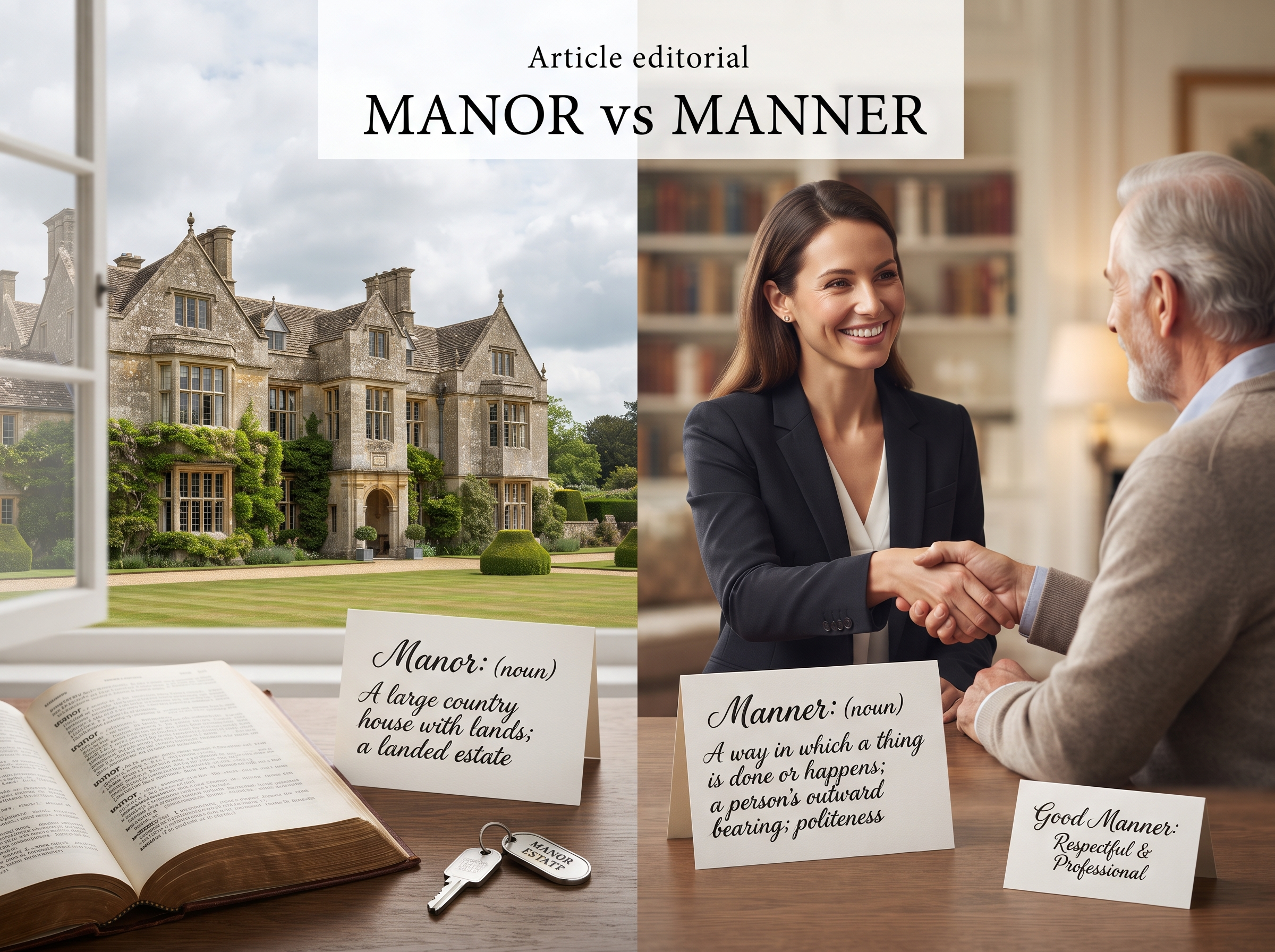
Manor and manner are both correct English words, but they have completely different meanings. They are easy to confuse because they are pronounced the same in American English. The correct choice depends on what you are trying to describe.
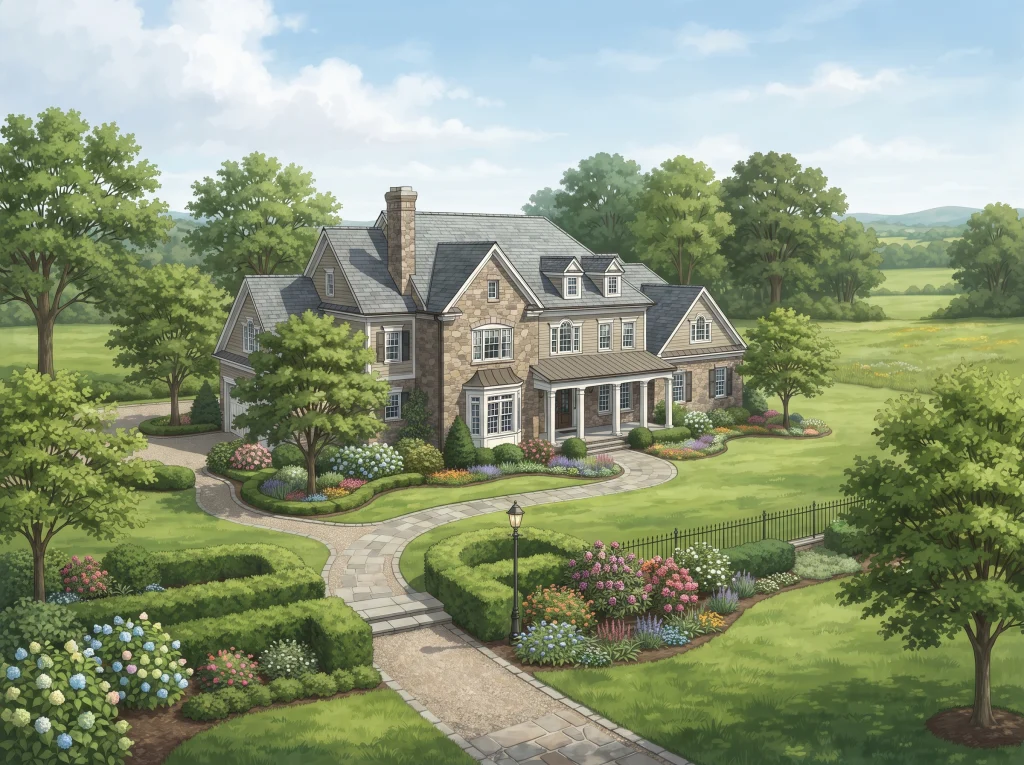
Use manor when you mean a large house, especially a large country house traditionally connected with an estate. Use manner when you mean the way something is done, the way someone behaves, or a particular style or type.
For example:
- The family lived in an old manor surrounded by gardens.
- She answered the question in a polite manner.
The spelling difference is small, but the meanings are not interchangeable.
Manor or Manner: Quick Answer
The easiest way to remember the difference is:
Manor = a large house or estate.
Manner = a way of doing something or behaving.
| Word | Meaning | Example |
|---|---|---|
| Manor | A large house, traditionally associated with an estate | They visited an old manor in the countryside. |
| Manner | A way of doing something or behaving | He spoke in a calm manner. |
Both words are nouns, and both are pronounced the same in American English.
Simular or Similar: https://learnidioms.com/simular-or-similar/
What Does Manor Mean?
Manor is a noun that refers to a large old house in the country, especially one historically connected with land or an estate. The word also has a historical meaning connected with an estate or territorial unit under a lord’s control. In modern English, it commonly refers to the large house itself.
For example:
- The historic manor attracts visitors every summer.
- They restored the old manor and turned it into a museum.
- The family owns a beautiful manor surrounded by farmland.
- We stayed near an eighteenth-century manor during our trip.
- The children imagined living in a huge manor.
The word manor is generally associated with a substantial or historic house. It is similar in meaning to expressions such as manor house, although a manor can have a broader historical connection to the land and estate surrounding it.
Manor in American English
American English speakers may encounter manor when discussing historic homes, estates, architecture, literature, or fictional properties. The word can also appear in proper names, such as the name of a historic property or residential development.
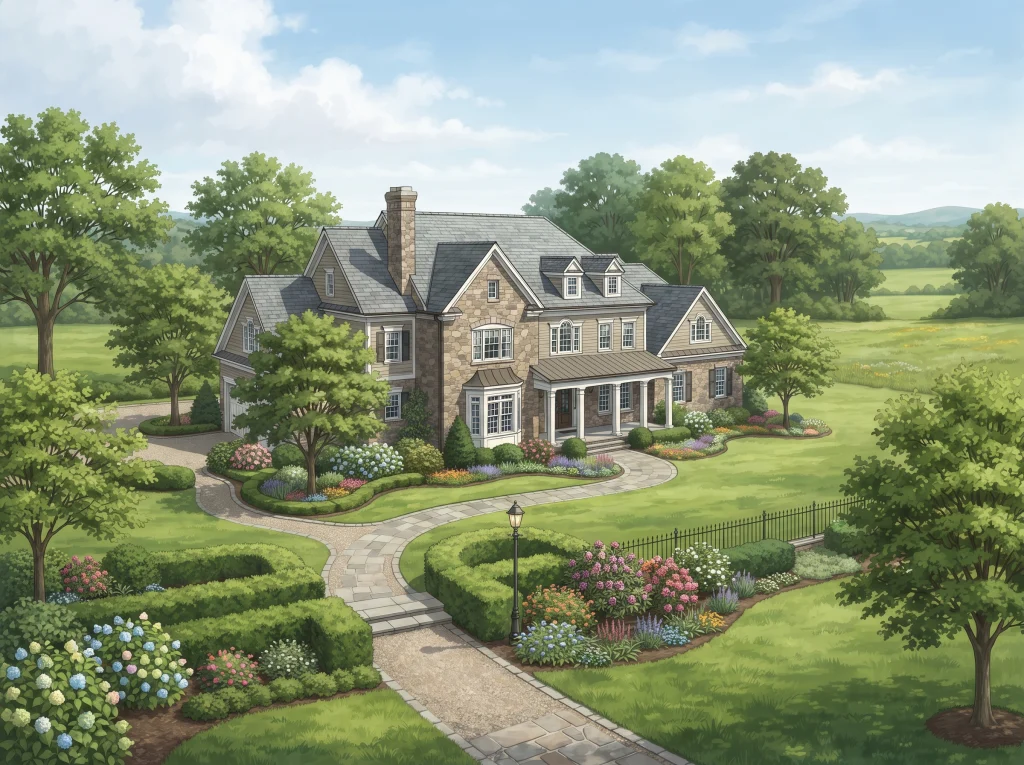
The important point is that manor refers to a place or property, not to someone’s behavior or method.
For example:
The old manor stood at the end of a long driveway.
Here, manor refers to the house.
What Does Manner Mean?
Manner is a noun that usually refers to the way something is done or the way someone behaves. It can describe a person’s behavior, attitude, style, method, or way of doing something.
For example:
- She spoke in a friendly manner.
- The work was completed in an orderly manner.
- He handled the situation in a professional manner.
- Her quiet manner made her seem reserved.
- The teacher explained the lesson in a clear manner.
The word also appears in the phrase in a manner of speaking, which means roughly “in a way” or “so to speak.”
Manner and Behavior
One common meaning of manner relates directly to how a person behaves toward other people.
For example:
The doctor had a warm and reassuring manner.
Here, manner describes the doctor’s way of interacting with people.
Another example is:
His manner changed when he heard the news.
In this sentence, manner refers to his behavior or outward way of acting.
The plural manners has another familiar meaning: polite ways of behaving in social situations. Expressions such as good manners, bad manners, and table manners use the plural form.
Manor vs. Manner Comparison
Although manor and manner sound alike, their meanings and uses are different.
| Feature | Manor | Manner |
|---|---|---|
| Part of speech | Noun | Noun |
| Main meaning | A large house or estate | A way, method, or behavior |
| Common context | Homes, estates, history, architecture | Behavior, actions, methods, style |
| Pronunciation in American English | /ˈmæn.ər/ | /ˈmæn.ər/ |
| Example | The manor has beautiful gardens. | She answered in a polite manner. |
| Related expression | manor house | good manners |
Both words are pronounced alike in American English, which makes them homophones. Their spellings must therefore be learned from context.
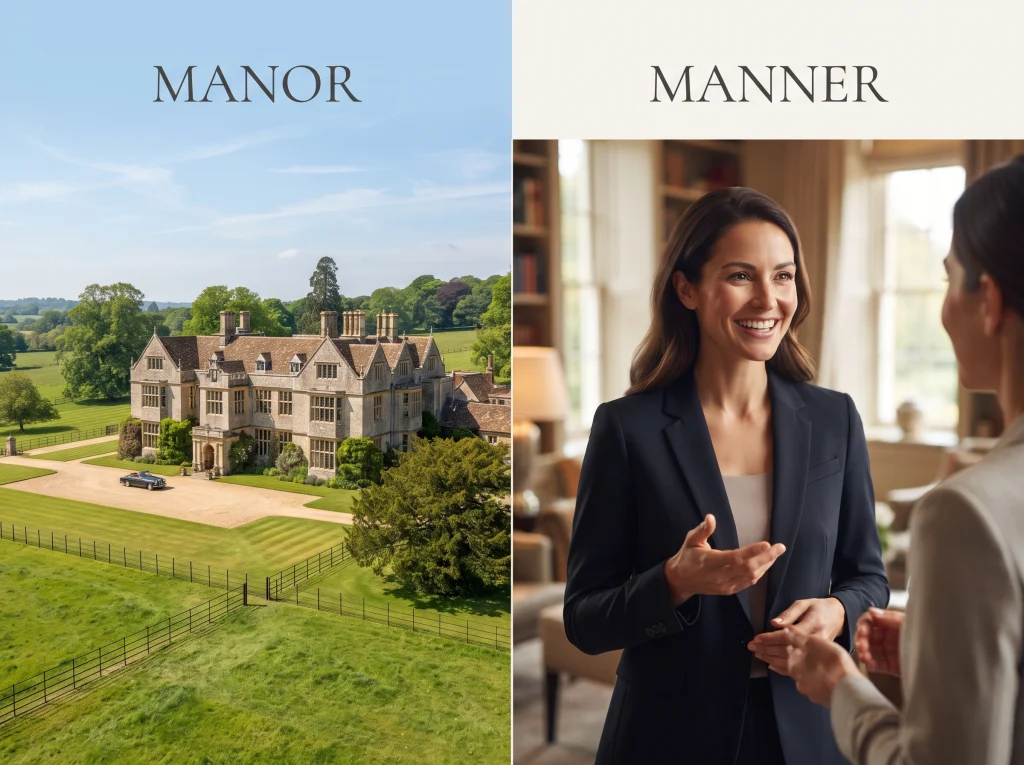
Manor and Manner in Common American English Sentences
Seeing the two words in complete sentences makes the difference easier to recognize.
Examples With Manor
- The historic manor was surrounded by tall trees.
- The family purchased an old manor in the countryside.
- The manor has been preserved as a historic property.
- Tourists visited the restored manor during the summer.
- The children explored every room in the large manor.
- A stone wall surrounded the manor and its grounds.
In each example, manor refers to a house or property.
Examples With Manner
- She answered the question in a polite manner.
- Please complete the form in the requested manner.
- He spoke in a calm manner.
- The manager handled the complaint in a professional manner.
- Her friendly manner made everyone feel comfortable.
- The instructions explain the process in a simple manner.
In these examples, manner refers to the way something is done or the way someone behaves.

Common Mistakes With Manor and Manner
The most common mistake is using manor when the sentence needs manner.
For example:
Incorrect:
She spoke in a polite manor.
Correct:
She spoke in a polite manner.
The sentence describes how she spoke, so manner is the correct word.
Another common mistake happens when someone uses manner to describe a large house.
Incorrect:
They visited an old manner in the countryside.
Correct:
They visited an old manor in the countryside.
The sentence refers to a large historic house, so manor is correct.
Manor vs. Manner in Fixed Expressions
Some common expressions can help you identify manner.
Examples include:
- in a professional manner
- in an orderly manner
- in a polite manner
- in a similar manner
- in a different manner
- manner of speaking
- manner of behavior
- good manners
- bad manners
- table manners
When the meaning involves how something is done or how someone behaves, manner is generally the appropriate spelling.

How to Remember the Difference
A simple memory trick is to connect manor with a house.
Think:
Manor = mansion-like house
The spelling of manor has only one n after the first vowel.
For manner, remember that it has two n’s and is associated with the way something is done or the way someone behaves.
Think:
Manner = method or behavior
For example:
- The manor is a building.
- Her manner is polite.
- The manor has large rooms.
- She completed the task in an efficient manner.
Another useful test is to replace the word with a simpler word.
If you can replace it with house, you probably need manor.
They visited the old manor.
They visited the old house.
If you can replace it with way, you probably need manner.
He spoke in a respectful manner.
He spoke in a respectful way.
This replacement test can make the spelling much easier to remember.

FAQS:
Manor or Manner: Which Word Should You Use?
Use manor when you are talking about a large house or an estate, particularly one with historical or architectural significance.
Use manner when you are talking about the way something is done, the way someone behaves, or a particular style or type.
Compare these two sentences:
The guests arrived at the old manor.
The guests were welcomed in a friendly manner.
The first sentence refers to a place. The second describes how something was done.
The key difference is simple: manor is connected with a house or estate, while manner is connected with a way, method, or behavior. Once you connect each spelling with its meaning, it becomes much easier to choose the right word.