Simular or Similar? Which Spelling Is Correct in American English?
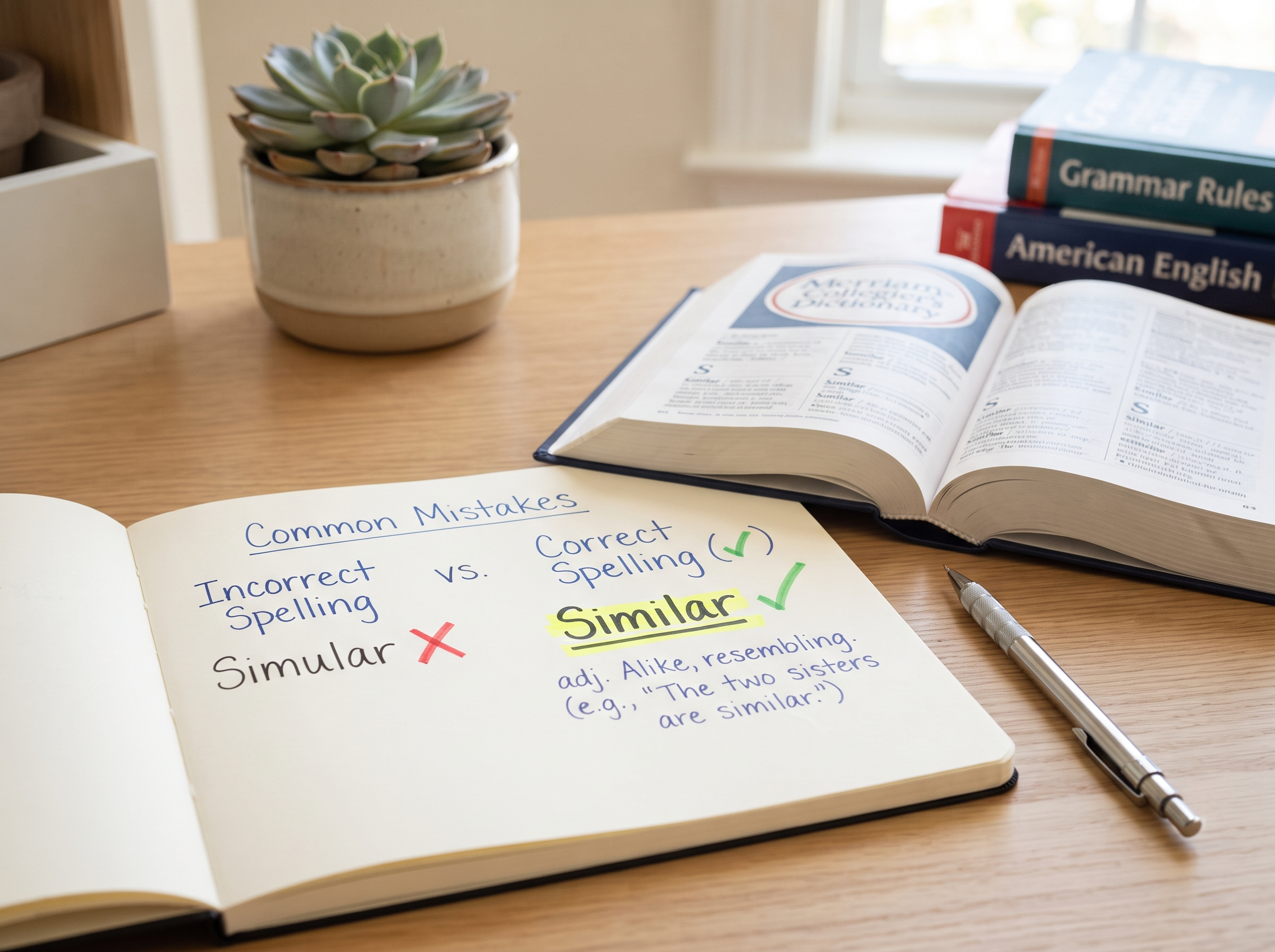
If you are unsure whether to write simular or similar, the correct spelling for the usual meaning of “alike” or “nearly the same” is similar. The standard spelling is S-I-M-I-L-A-R.
For example:
The two houses look similar.
The spelling simular is not the standard modern spelling when you want to describe two things that are alike. However, simular does appear in some dictionaries as an archaic English word meaning simulated, false, counterfeit, or imitative.

For everyday American English, use similar when you mean that people, objects, ideas, or situations have characteristics in common.
Simular or Similar: Which Spelling Is Correct?
Similar is the correct spelling when you mean “alike,” “resembling,” or “nearly the same.”
| Spelling | Standard modern usage | Meaning |
|---|---|---|
| similar | Yes | Alike or having features in common |
| simular | No for this meaning | An archaic word meaning simulated or false |
Examples:
Correct: The two cars are similar.
Incorrect for this meaning: The two cars are simular.
Correct: We have similar opinions.
Incorrect for this meaning: We have simular opinions.
American English dictionaries define similar as something that is nearly but not exactly the same or that has a resemblance to something else.

Why Is Similar the Correct Word?
The standard English word is similar, spelled:
S-I-M-I-L-A-R
It is an adjective used to describe something that resembles another person or thing.
For example:
- The two shirts are similar.
- Sarah and Emma have similar interests.
- These two buildings have a similar design.
- My experience was similar to yours.
- The two answers are very similar.
Oxford’s American English dictionary defines similar as something like another person or thing but not exactly the same.
The spelling simular may look natural because English has words such as regular, popular, circular, and particular. It can also be confused with simulate, which contains a u. But when you mean “alike,” the correct spelling is similar.
What Does Similar Mean in American English?
Similar means having qualities, characteristics, appearances, or features that are alike, although the things being compared are not necessarily identical.
For example:
The two phones have similar features.
This means the phones share some features, but they are not necessarily the same phone or exactly identical.
Another example is:
My brother and I have similar interests.
This means both people enjoy some of the same things.
The word can describe people, objects, ideas, experiences, situations, designs, behaviors, results, and many other things.
Common meanings of similar
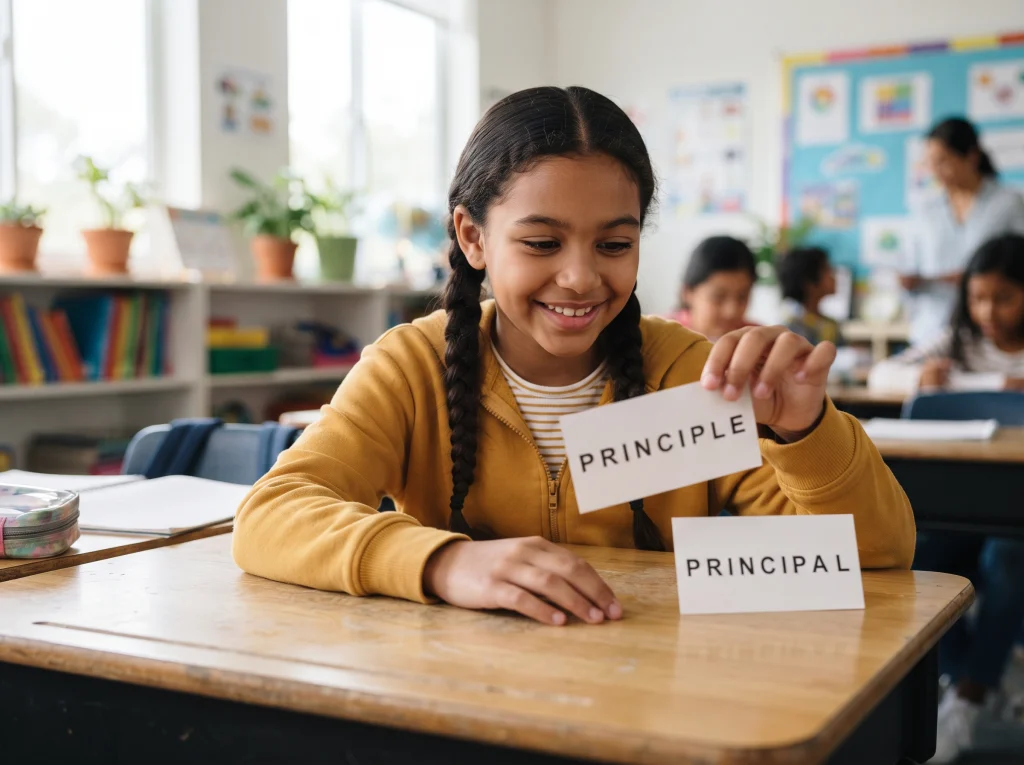
Similar can mean:
- alike in appearance
- alike in characteristics
- close in nature
- comparable in some way
- having several features in common
- nearly the same without being identical
In geometry, similar has a more specific meaning. Similar figures have the same shape, although their sizes or positions can differ.
Similar Pronunciation
In American English, similar is commonly pronounced approximately:
SIM-uh-ler
Dictionaries give the American English pronunciation as approximately /ˈsɪmələr/ or /ˈsɪm·ə·lər/.
Because the middle vowel can sound reduced in normal speech, some people may hear the word differently from how it is spelled. This can contribute to the spelling mistake simular.
Remember that pronunciation does not change the standard spelling.
Correct: similar
Incorrect for the meaning “alike”: simular
Why Do People Spell Similar as Simular?
The confusion between similar and simular is understandable because the two forms look and sound close.
One reason is the pronunciation of similar. The unstressed vowel in the middle of the word may not sound as clear as the written i.
Another reason is the word simulate. Simulate means to create an imitation of something or to make something appear real. It is spelled with a u, so people sometimes transfer that spelling pattern to similar.
Compare these words:
- similar = alike or resembling
- simulate = imitate or create a representation of something
- simulated = artificially reproduced or imitated
The connection between the meanings can make the spelling especially easy to mix up.

Similar vs. Simular
The two words are not interchangeable in standard modern American English.
Similar is the normal word used when two things have characteristics in common.
The two paintings are similar.
Simular is recorded in dictionaries as an archaic word. Collins lists it in American English as an archaic adjective or noun, with meanings related to something simulated, false, counterfeit, or imitative.
Dictionary.com likewise lists simular as an archaic adjective meaning simulated, false, counterfeit, imitative, or simulative.
Therefore, if your sentence means “alike”, choose similar.
How to Use Similar in a Sentence
The word similar is very common in American English and can be used in several sentence patterns.
Similar + noun
Use similar directly before a noun.
We bought similar cars.
The students had similar questions.
They wore similar jackets.
Similar to + noun
A very common structure is similar to.
This design is similar to the original.
My answer is similar to yours.
The new model is similar to the older version.
Oxford specifically gives similar to as a common usage pattern.
Similar in + noun
You can also use similar in when describing the particular quality in which two things resemble each other.
The two products are similar in size.
The houses are similar in design.
The students are similar in age.
Similarly
The adverb form is similarly.
The second group responded similarly.
The two machines operate similarly.
Similarly means “in a similar way” or “in the same general way.”
Common Mistakes With Similar
Mistake 1: Writing simular instead of similar
Incorrect:
The two products are simular.
Correct:
The two products are similar.
The second i in similar is important.
Mistake 2: Writing similiar
Another common spelling error is adding an extra i.
Incorrect:
The results were similiar.
Correct:
The results were similar.
The correct spelling is:
S-I-M-I-L-A-R

Mistake 3: Writing similair
Some writers reverse the final letters.
Incorrect:
These colors are similair.
Correct:
These colors are similar.
Remember that the ending is -lar, not -lair.
Mistake 4: Using similar when you mean identical
Similar does not normally mean exactly the same.
For example:
The two dresses are similar.
This means the dresses resemble each other. It does not necessarily mean they are identical.
If two things are exactly alike, identical may be the more precise word.
How to Remember the Spelling of Similar
A simple way to remember similar is to focus on the middle of the word:
SIM-I-LAR
The correct spelling contains imi after the first letter pattern:
S I M I L A R
Not:
S I M U L A R
You can also connect the word with its meaning:
similar = alike
When you want to say that two things are alike, remember similar with the second i.
A useful sentence to remember is:
The two ideas are similar.
Similar vs. Same
Similar and same are related, but they do not have exactly the same meaning.
Similar means that two things share characteristics but are not necessarily identical.
The two houses are similar.
Same generally means that two things are identical in the relevant sense or that they are one and the same thing.
We ordered the same meal.
Compare these examples:
The two phones are similar.
The phones may have similar features but could be different models.
We bought the same phone.
This normally means the phones are the same model or type.
Using similar instead of same can therefore make a sentence less absolute.
Similar vs. Simulate
The spelling confusion can also happen because similar and simulate look related.
Similar is an adjective meaning alike or resembling something.
The two designs are similar.
Simulate is a verb meaning to imitate or reproduce the conditions or appearance of something.
The software can simulate real driving conditions.
The words have different grammatical roles and meanings:
| Word | Part of speech | Meaning | Example |
|---|---|---|---|
| similar | Adjective | Alike or resembling | The two plans are similar. |
| simulate | Verb | Imitate or reproduce | The program can simulate traffic. |
| simulated | Adjective | Artificially reproduced or imitated | The students practiced in a simulated environment. |
This distinction can help prevent the simular spelling mistake.

Is Simular a Real Word?
Yes, simular can be found in English dictionaries, but it is not the normal modern word for “alike.”
Collins lists simular as an archaic word. In American English, it can mean a person or thing that simulates, or it can describe something simulated, false, counterfeit, imitative, or simulative.
That means saying simply that simular “does not exist” would be incomplete. The important distinction is how the word is being used.
If you are writing ordinary modern American English and want to say that two things are alike, use similar.
Examples of Similar in American English
Here are some natural examples:
- The two restaurants have similar menus.
- My new laptop is similar to my old one.
- We had similar experiences in college.
- The twins look very similar.
- These two colors are similar.
- The results were similar in both tests.
- They have similar goals for the project.
- The two apartments are similar in size.
- Her situation was similar to mine.
- The new design looks similar to the original.
Each example uses similar to express resemblance or shared characteristics.
FAQs:
Final Answer: Simular or Similar?
When you mean alike, resembling, or nearly the same, the correct spelling is similar.
Correct: similar
Incorrect for this meaning: simular
The standard spelling is:
S-I-M-I-L-A-R
Although simular exists as an archaic dictionary word with meanings connected to imitation or something false or simulated, it is not the word you normally want in modern American English when describing two things that are alike.
When in doubt, remember:
Similar means alike.


8 Comments