Skip to content

Learn Idioms

  • Easy Idioms Drawing
  • Pant or Pant
Learn Idioms
  • CCD or CCD? Meaning, Differences, and Correct Usage
    Idioms

    CCD or CCD? Meaning, Differences, and Correct Usage

    ByEmma Collins October 16, 2026October 16, 2026

    The abbreviation CCD can have different meanings depending on the subject, industry, and context. When comparing “CCD or CCD,” both sides contain the same letters, so there is no spelling difference to explain. Instead, the intended meaning must be identified from the context in which the abbreviation appears. For readers in the United States, CCD…
    Read More CCD or CCD? Meaning, Differences, and Correct UsageContinue

  • Insue or Ensue? Meaning, Difference, and Correct Spelling.
    Idioms

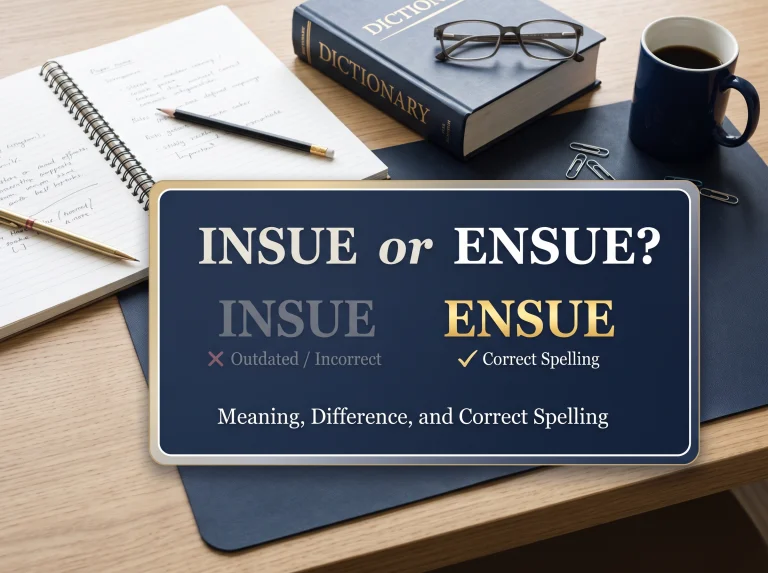
    Insue or Ensue? Meaning, Difference, and Correct Spelling

    ByEmma Collins October 16, 2026October 16, 2026

    Have you ever wondered whether to write insue or ensue when describing something that happens after an event? The correct choice in modern American English is ensue. It is a verb that means to happen afterward, particularly as a result of something that occurred earlier. For example, “A heated argument ensued after the meeting” means…

    Read More Insue or Ensue? Meaning, Difference, and Correct SpellingContinue

  • Hopped or Hoped? Meaning, Difference, and Correct Usage in American English.
    Idioms

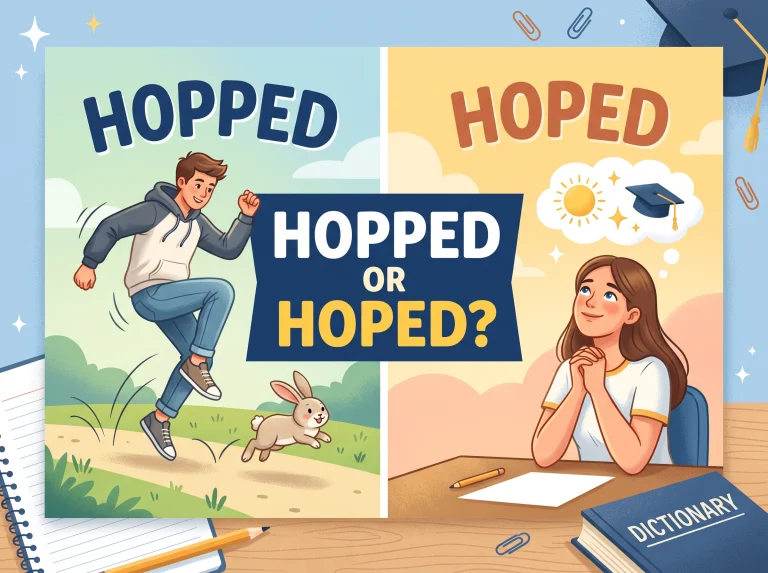
    Hopped or Hoped? Meaning, Difference, and Correct Usage in American English

    ByEmma Collins October 16, 2026October 16, 2026

    Hopped and hoped are both correct English words, but they come from two different verbs and have completely different meanings. The only difference in spelling is one letter, yet choosing the wrong word can change the meaning of an entire sentence. Use hopped when you mean the past tense or past participle of hop, usually…

    Read More Hopped or Hoped? Meaning, Difference, and Correct Usage in American EnglishContinue

  • Waving or Waiving_ Meaning, Difference, and Correct Usage in American English.
    Idioms

    Waving or Waiving? Meaning, Difference, and Correct Usage in American English

    ByEmma Collins October 6, 2026October 6, 2026

    Waving and waiving sound the same, but they have completely different meanings. This makes them easy to confuse, especially when writing quickly or using them in professional communication. Waving comes from the verb wave and usually means moving your hand or another object from side to side. Waiving comes from the verb waive and means…

    Read More Waving or Waiving? Meaning, Difference, and Correct Usage in American EnglishContinue

  • “Sitted or Seated_ Meaning, Difference, and Correct Usage in American English.”
    Idioms

    Sitted or Seated? Meaning, Difference, and Correct Usage in American English

    ByEmma Collins October 5, 2026October 5, 2026

    If you have ever wondered whether to say “sitted” or “seated,” you are not alone. English learners often assume that sit should become sitted because many English verbs form their past tense by adding -ed. However, sit is an irregular verb, so it does not follow that pattern. In standard American English, “sitted” is not…

    Read More Sitted or Seated? Meaning, Difference, and Correct Usage in American EnglishContinue

  • Buy or Bye? Meaning, Difference, and Correct Usage in American English.
    Idioms

    Buy or Bye? Meaning, Difference, and Correct Usage in American English

    ByEmma Collins October 5, 2026October 5, 2026

    If you are confused about buy or bye, you are dealing with two words that sound exactly the same but have completely different meanings. Buy is related to purchasing something, while bye is a casual way to say goodbye. Because they have the same pronunciation, the correct choice depends entirely on the meaning of the…

    Read More Buy or Bye? Meaning, Difference, and Correct Usage in American EnglishContinue

  • Bored or Board_ Meaning, Difference, and Correct Usage in American English.
    Idioms

    Bored or Board? Meaning, Difference, and Correct Usage in American English

    ByEmma Collins October 5, 2026October 5, 2026

    Bored and board are two different English words that sound the same in American English but have completely different meanings. This makes them easy to confuse, especially when writing. Use bored when you are talking about a feeling of having little interest or nothing enjoyable to do. Use board when you mean a flat piece…

    Read More Bored or Board? Meaning, Difference, and Correct Usage in American EnglishContinue

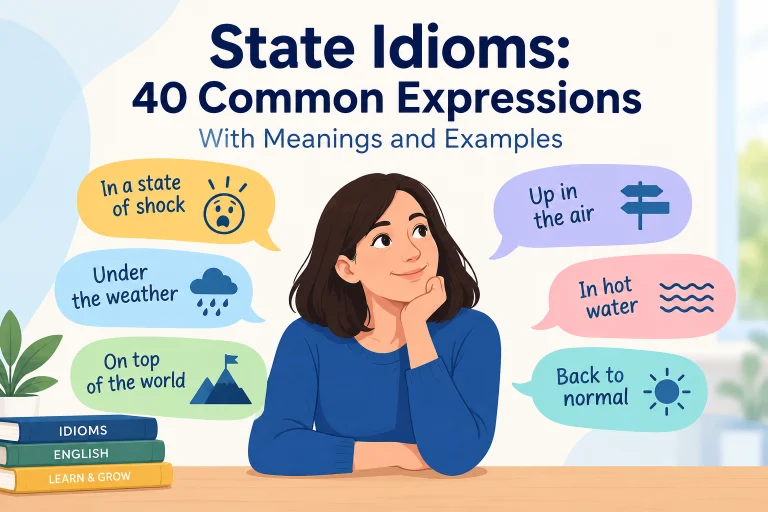
  • State Idioms: 40 Common Expressions With Meanings and Examples
    Idioms

    State Idioms: 40 Common Expressions About States and Situations

    ByEmma Collins October 5, 2026October 5, 2026

    English has many expressions that describe a person’s condition, emotions, circumstances, or the way something currently exists. Many of these expressions use the idea of a state, even when the word state itself does not appear in the idiom. For example, someone can be in a state of shock, in a state of confusion, or…

    Read More State Idioms: 40 Common Expressions About States and SituationsContinue

  • “40 Relax Idioms: Common Expressions for Rest, Calm, and Stress Relief.
    Idioms

    40 Relax Idioms: Common Expressions for Rest, Calm, and Stress Relief

    ByEmma Collins October 5, 2026October 5, 2026

    After a long workday, a stressful week, or a busy schedule, Americans often use more than the simple word “relax” to describe slowing down and feeling comfortable. Expressions such as “take it easy,” “chill out,” “kick back,” and “put your feet up” make everyday conversations sound more natural and expressive. Relax idioms can describe taking…

    Read More 40 Relax Idioms: Common Expressions for Rest, Calm, and Stress ReliefContinue

  • French Food Idioms_ 30 Common Expressions With Meanings and Examples.
    Idioms

    French Food Idioms: 30 Common Expressions With Meanings and Examples

    ByEmma Collins October 5, 2026October 5, 2026

    French food idioms make everyday French especially colorful. A conversation about work, money, emotions, arguments, or personal behavior can suddenly include bread, cheese, carrots, apples, mustard, or wine. The literal words may sound strange to an English speaker, but the figurative meaning is often very clear once you know the expression. French has many food-related…

    Read More French Food Idioms: 30 Common Expressions With Meanings and ExamplesContinue

Page navigation

Previous PagePrevious 1 … 4 5 6 7 8 … 17 Next PageNext

2026

© 2026 Learn Idioms - WordPress Theme by Kadence WP

  • Easy Idioms Drawing
  • Pant or Pant