Cancell or Cancel? Which Spelling Is Correct in American English?
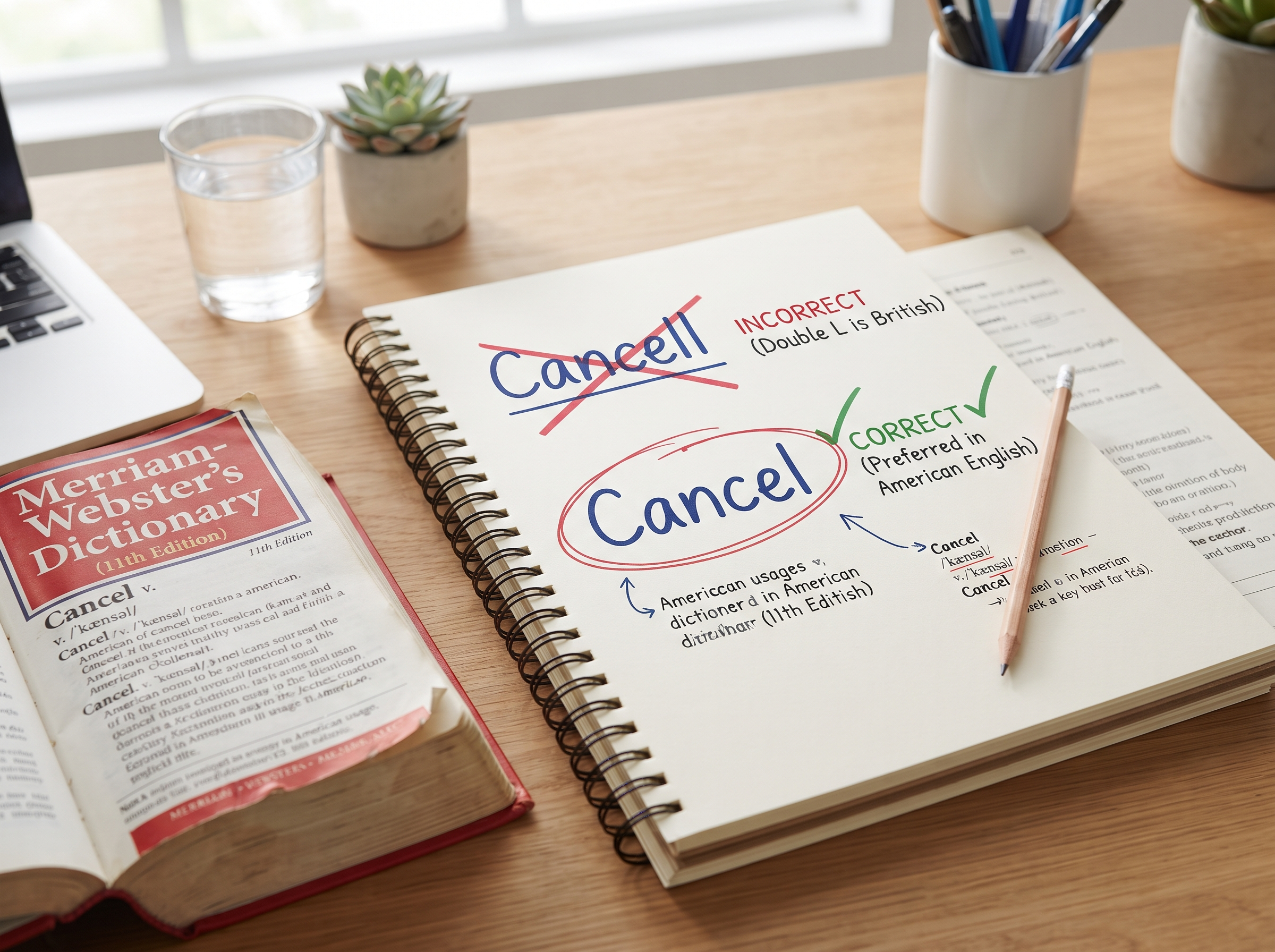
If you are wondering whether the correct spelling is cancell or cancel, the answer is cancel. In standard American English, the verb is spelled C-A-N-C-E-L, with only one l at the end.
Cancell is not the standard spelling of the English verb. If you are writing an email, school assignment, business message, website, or other English content, use cancel.

The word cancel means to decide that something planned will not happen, or to stop an order, service, or arrangement that you no longer want. Cambridge’s American English dictionary gives examples involving canceled meetings, appointments, events, and services.
For example:
I need to cancel my appointment.
Not:
I need to cancell my appointment.
The confusion often comes from the fact that some forms of cancel use two l’s in British English. American English generally uses one l in forms such as canceled and canceling.
Cancell or Cancel: Which Is Correct?
Cancel is the correct spelling.
| Spelling | Correct? | Example |
|---|---|---|
| cancel | Yes | I need to cancel the reservation. |
| cancell | No | I need to cancell the reservation. |
The standard American English spelling is:
C-A-N-C-E-L
There is only one l at the end.
The incorrect form cancell is easy to create because English has several verbs that double their final consonant when certain suffixes are added. However, cancel follows a different spelling pattern in American English.
What Does Cancel Mean in American English?
Cancel is a verb that means to decide that something arranged in advance will not happen. It can also mean stopping an order or service that you no longer want.
For example:
The airline canceled the flight.
I had to cancel my appointment.
We canceled our dinner plans.
She canceled her magazine subscription.
The word can be used for events, plans, appointments, subscriptions, orders, reservations, and many other arrangements.
It can also mean officially ending something such as a contract, agreement, or obligation in certain contexts.

Why Is Cancel Spelled With One L?
In American English, the base form of the verb is cancel, with one l.
The spelling can become confusing when you change the word into different grammatical forms. American English generally uses:
- cancel
- canceled
- canceling
- cancellation
British English commonly uses cancelled and cancelling with two l’s. Cambridge specifically identifies the American forms as canceled and canceling, while noting the British forms cancelled and cancelling.
This difference is one of the main reasons English learners may see both one-l and two-l spellings.
Cancel as a Verb
Cancel is most commonly used as a verb.
It can describe stopping something that was planned:
We had to cancel the meeting.
It can describe stopping a service:
I canceled my subscription.
It can describe ending an appointment:
She canceled her dental appointment.
It can describe stopping an order:
The customer canceled the order.
It can describe ending a reservation:
They canceled their hotel reservation.
The word can be used both transitively and intransitively depending on the sentence.
Cancel Something
When cancel has a direct object, the object tells you what is being stopped.
Please cancel the reservation.
They canceled the event.
I canceled my flight.
Cancel
The verb can also be used without directly naming the thing being canceled.
Sorry, I have to cancel.
I cannot make it tonight, so I need to cancel.
This usage is common in everyday American conversation. Cambridge gives examples of cancel being used this way for plans and arrangements.
Cancel as a Noun and Related Words
Cancel is primarily used as a verb, but several related forms are important for English learners.
Cancellation
Cancellation is the noun form referring to the act or result of canceling something.
The flight was delayed because of several cancellations.
There is a cancellation fee for late changes.
Cambridge defines cancellation as the act of deciding that an event will not happen or stopping an order.
Canceled
Canceled is the standard American English past tense and past participle.
The game was canceled because of rain.
She canceled her appointment yesterday.
Cambridge’s Essential American Dictionary specifically lists canceled as the past tense and past participle of cancel.
Canceling
Canceling is the standard American English present participle.
We are canceling the event.
He is canceling his subscription.
American English generally uses one l in canceling.
Cancel vs. Cancell Comparison
The difference between cancel and cancell is straightforward.
| Feature | Cancel | Cancell |
|---|---|---|
| Standard American English | Yes | No |
| Spelling | C-A-N-C-E-L | C-A-N-C-E-L-L |
| Meaning | Stop or call off something | Not a standard English word |
| Example | Cancel the meeting. | Incorrect |
| Correct base form | Yes | No |
If you see cancell in English writing, it is generally a spelling error rather than an alternative form of cancel.

American English: Canceled or Cancelled?
This is where the spelling becomes more interesting.
In American English, the usual spelling is:
canceled
In British English, you will commonly see:
cancelled
Compare:
American English: The game was canceled.
British English: The game was cancelled.
Both forms are used in English, but if your target audience is in the United States, canceled is the preferred American spelling. Cambridge’s American English dictionary lists canceled as the past tense and past participle.
This distinction is useful for writers creating content specifically for American readers.
American English Spelling
cancel
canceled
canceling
British English Spelling
cancel
cancelled
cancelling
The base form cancel is the same in both varieties. The difference becomes especially noticeable when suffixes are added.
Canceling or Cancelling?
For American English, the standard form is generally canceling, with one l.
For example:
We are canceling the meeting.
The airline is canceling several flights.
British English commonly uses:
We are cancelling the meeting.
Both spellings can be found in English, but canceling is the form to use when following standard American English conventions. Cambridge identifies canceling as the U.S. present participle.
Common Mistakes With Cancel
Mistake 1: Writing Cancell
The most direct mistake is adding an unnecessary second l to the base form.
Incorrect: Please cancell my order.
Correct: Please cancel my order.
Remember that the base form has only one l.
Mistake 2: Using Cancelled in American English Without a Reason
Cancelled is a legitimate English spelling, especially in British English. However, American English generally uses canceled.
For a U.S. audience:
Preferred: The event was canceled.
British form: The event was cancelled.
Mistake 3: Writing Canceling With Two L’s in American English
American English normally uses:
canceling
not:
cancelling
This is another difference between American and British spelling conventions.
Mistake 4: Confusing Cancel With Call Off
Cancel and call off can have similar meanings when talking about plans or events.
They canceled the meeting.
They called off the meeting.
Both sentences can mean that the meeting will not take place.
However, cancel is broader and can be used for subscriptions, orders, appointments, reservations, and other services.

How to Remember the Spelling of Cancel
A simple way to remember the base spelling is:
Cancel = one L
Think of the word in its simplest form:
C-A-N-C-E-L
Do not add a second l to the base word.
Then remember the American English forms:
cancel → canceled → canceling
This pattern is particularly useful if you regularly write for a U.S. audience.
You can also remember that the noun has a different spelling:
cancellation
So:
I need to cancel the order.
The cancellation was confirmed.
Learning the word family together makes the spelling easier to remember.
Examples of Cancel in Sentences
Here are natural examples of cancel in American English:
- I need to cancel my appointment.
- The school canceled classes because of the storm.
- We decided to cancel the trip.
- Please cancel my subscription.
- She had to cancel dinner plans.
- The airline canceled the flight.
- They canceled the meeting at the last minute.
- He canceled his reservation.
- We may have to cancel the event.
- I called the hotel to cancel the booking.
- The customer canceled the order.
- They canceled the concert because of severe weather.
- She canceled her membership online.
- I am sorry, but I have to cancel.
- The company canceled the service.
These examples show how broadly cancel can be used in everyday American English.

Cancel in Common American English Phrases
Cancel an Appointment
I need to cancel my doctor’s appointment.
This means you will no longer attend the scheduled appointment.
Cancel a Reservation
We had to cancel our restaurant reservation.
This means you told the restaurant that you will no longer use the reservation.
Cancel a Subscription
I canceled my streaming subscription.
This means you stopped the subscription.
Cancel an Order
The customer called to cancel the order.
This means the customer no longer wants the order.
Cancel Plans
We had to cancel our weekend plans.
This means the planned activities will not happen.
Cancel a Meeting
The manager canceled the meeting.
This means the meeting will not take place.
Cancel Out
The phrasal verb cancel out has a different meaning. It means that two effects balance or offset each other.
The extra income canceled out the additional expenses.
Cambridge lists cancel something out as a phrasal verb related to cancel.
What Is the Difference Between Cancel and Cancellation?
Cancel is generally a verb.
We need to cancel the reservation.
Cancellation is a noun.
The cancellation was confirmed.
The distinction is similar to other verb and noun pairs in English.
Cancel: the action of stopping something.
Cancellation: the act or result of stopping something.
For example:
The airline canceled the flight.
The flight cancellation caused problems for passengers.
Cambridge recognizes cancellation as the noun describing the act of stopping an event, order, or arrangement.

FAQs:
Conclusion
The correct spelling is cancel, not cancell.
In standard American English, the base verb is spelled C-A-N-C-E-L with one l. It means to stop something that was planned, such as an appointment, event, reservation, order, subscription, or meeting.